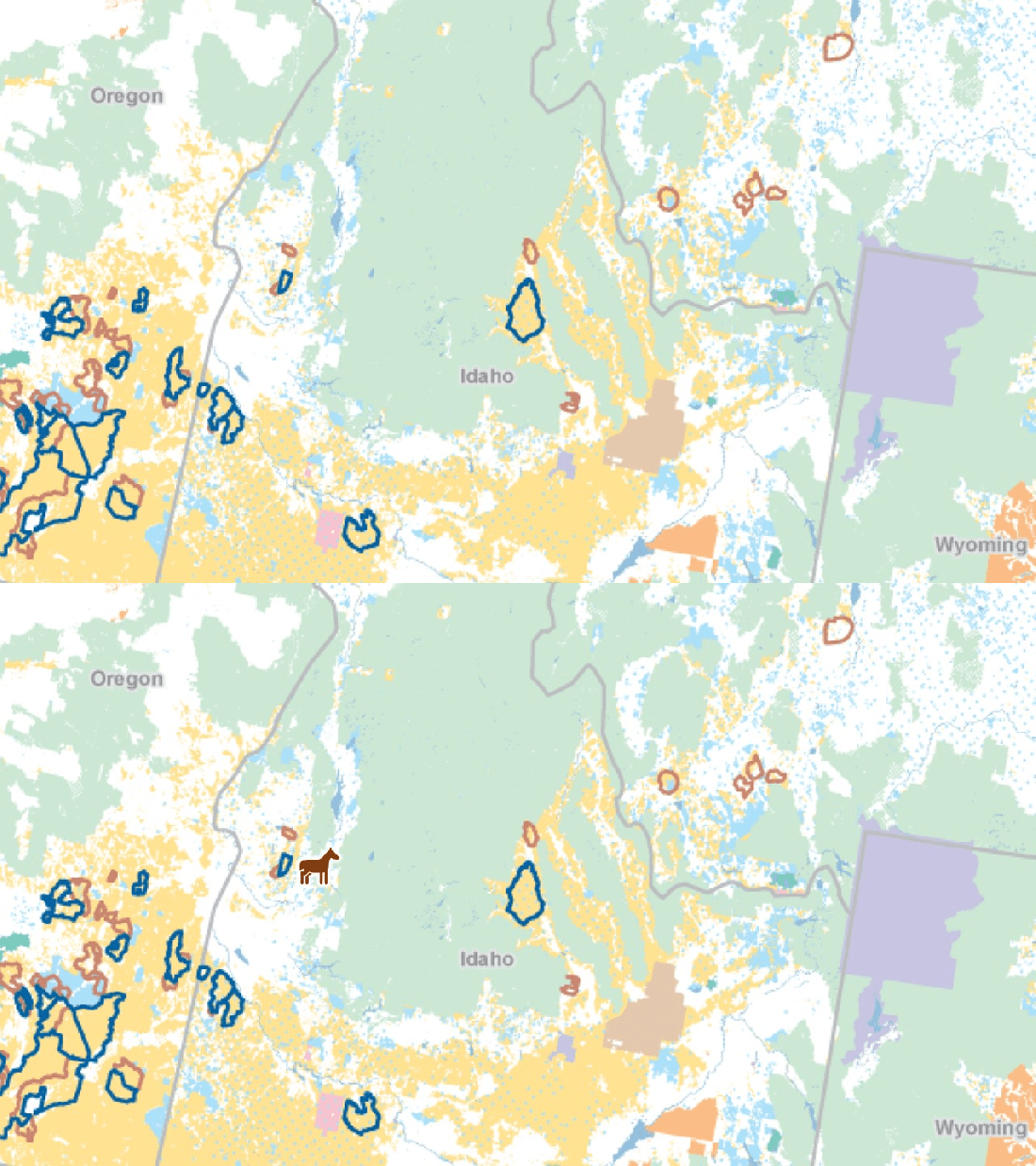
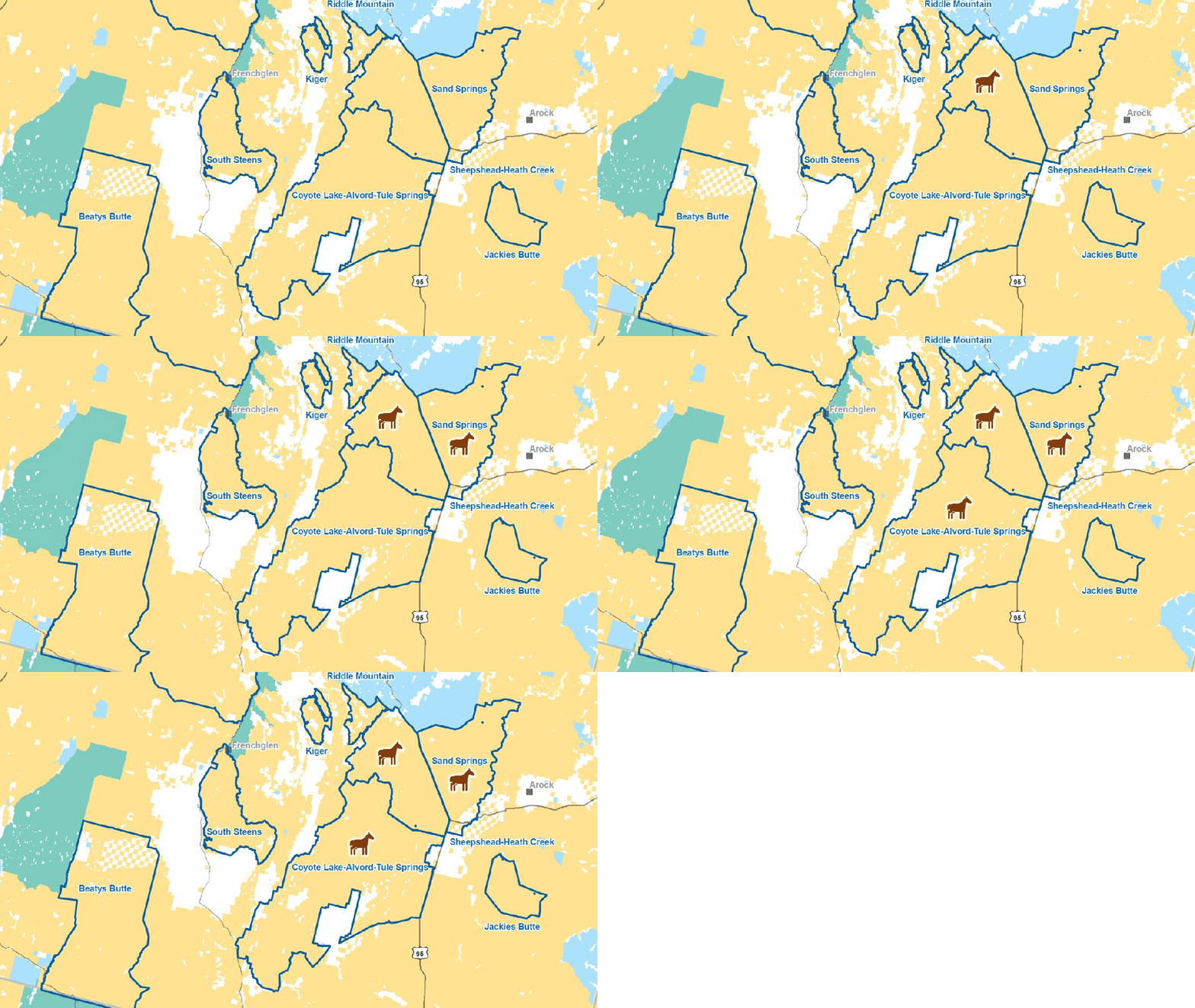
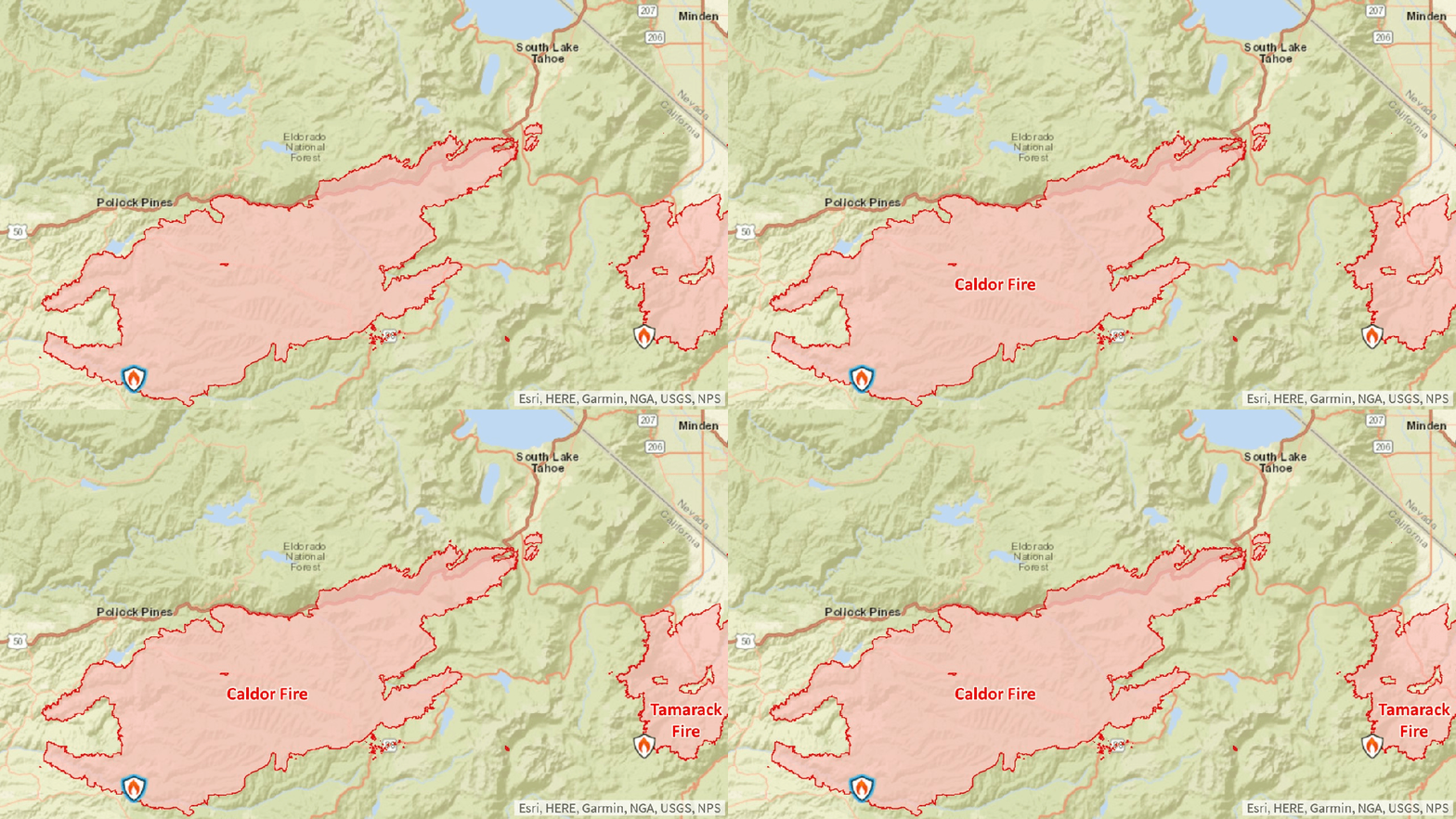
The incident started on August 15, with 162 horses captured, 131 shipped and one death. The gather page said body condition scores were four to five.
Category: Range
On the range
Letter About West Douglas Roundup Draws Backlash
The writer of the original piece, posted on August 5, criticized the ranchers.
In two subsequent letters, both posted yesterday, the ranchers push back.
The author of one response said the roundup was necessary due to the drought and loss of forage by the Oil Springs fire.
Let’s accept that as true. When conditions improve, are the horses going to be returned? Of course not! The goal was not to save them, but to get rid of them.
What do you suppose will return to normal levels when food and water reappear?
Another letter points to rangeland degradation caused by wild horses, citing the benefits of permitted grazing.
Problem is, the data don’t support the claim: Approximately 74% of BLM grazing land in Colorado does not meet standards for rangeland health.
The area accessible to wild horses in the state is tiny compared to the acreage designated for livestock.
Wild Horses ‘Sell’ Real Estate?
Check out this listing in the Minden/Gardnerville area of western Nevada. The property features wild horses (probably associated with the Pine Nut Mountains HMA).
The agent is a PZP darter and occasionally writes about getting rid of them in Horse Tales, a trade publication from the same area.
Stone Cabin Emergency Roundup Starts This Week
BLM announced today that 450 wild horses will be removed from the Stone Cabin HMA, starting on or about August 19, due to inadequate forage.
Horses will be drawn into the traps with water and hay and the incident will not be open to public observation.
The HMA covers 407,700 acres near Tonopah, NV and has an AML of 364. The aimed-at stocking rate is 0.9 wild horses per thousand acres, slightly less than the average rate of one wild horse per thousand acres across all HMAs.
Stone Cabin foals are often dark in color but transition to roan in three or four years, continuing to become more grey until they are nearly white by age 15.
The first roundup under the WHB Act occurred here in 1975.

Western Horse Watchers was unable to find an environmental assessment in ePlanning for resource enforcement actions in the HMA, so grazing status is unknown.
Captured animals will be taken to the off-range corrals in Sutherland, UT.
A page for gather stats and daily reports has not been created as of today.
West Douglas Aftermath
Gather ops concluded on August 13 with 457 horses captured and eleven deaths, but the disposition of 109 unaccounted-for horses is not known. No additional shipments have been reported.
A notice at the gather page says that 52 horses taken near the Utah state line were tested for equine infectious anemia, all negative, but will be separated from other animals at the off-range corrals until they are cleared of any potential infections.
RELATED: West Douglas Roundup Day 19.
Antelope Roundup Day 14
The incident began on August 2. Gather stats through August 15:
- Horses captured: 1,101, up from 954 on Day 12
- Average take: 78.6 horses per day
- Capture goal: 2,200
- Removal goal: 2,200
- Returned: 0
- Deaths: 4, no change from Day 12
- Shipped: 958, up from 727 on Day 12
The death rate is 0.4%.
Foals accounted for 17.8% of the horses gathered. Of the adults, 44.5% were male and 55.5% were female.
Body condition scores were not reported.
The gather page shows 1102 horses captured but the daily figures sum to 1101. The page also shows 962 horses shipped but the daily reports yield 958.
Day 14 ended with 139 unaccounted-for animals.
Other statistics:
- AML: 789 (four HMAs involved)
- Forage assigned to horses: 9,468 AUMs per year
- Pre-gather population: 6,032 plus foals
- Forage liberated to date: 13,212 AUMs per year
- Water liberated to date: 11,010 gallons per day
- Forage assigned to livestock: 72,946 AUMs per year (estimated)
- Horses displaced from HMAs by livestock: 6,079 (12% of off-range holding)
- True AML: 6,868
RELATED: Antelope Roundup Day 12.
Conger Roundup Day 5
The incident began on August 11. Gather stats through August 15:
- Horses captured: 121, up from 59 on Day 3
- Average take: 24.2 horses per day
- Capture goal: 320
- Removal goal: 296
- Returned: 0
- Deaths: 1
- Shipped: 87, up from 27 on Day 3
One death occurred on Day 5 due to pre-existing conditions. No details were given.
Foals accounted for 27.3% of the horses gathered. Of the adults, 38.6% were male and 61.4% were female.
Body condition scores were not reported.
Day 5 ended with 33 unaccounted-for horses.
Other statistics:
- AML: 80
- Forage assigned to horses: 960 AUMs per year
- Pre-gather population: 355
- Forage liberated to date: 1,452 AUMs per year
- Water liberated to date: 1,210 gallons per day
- Forage assigned to livestock: Unknown
- Horses displaced from HMA by livestock: Unknown
- True AML: Unknown
RELATED: Conger Roundup Day 3.
Onaqui Debate Simmers
Voluntary reductions in livestock grazing don’t change land-use plans. When conditions improve, grazing will resume at normal levels. Story by FOX 13 News of Salt Lake City.
RELATED: Onaqui Wild Horses Returned to Range.
Mustang Monday
On the Salt River with Larry J Dub. No youngsters though, thanks to the advocates.
Getting to Lagomarsino Canyon and Its Petroglyphs
A map at AllTrails dot com shows the route described in the story by Nevada Appeal, starting at the Storey County fire station. It’s about seven miles each way.
An alternate route, mentioned in the article, involves Long Valley Road, which passes by the Chalk Hills.
Western Horse Watchers has not made the journey but it’s on the bucket list.
Most of the land in this area is privately owned.
Antelope Roundup Day 12
The incident began on August 2. Gather stats through August 13:
- Horses captured: 954, up from 814 on Day 10
- Average take: 79.5 horses per day
- Capture goal: 2,200
- Removal goal: 2,200
- Returned: 0
- Deaths: 4, no change from Day 10
- Shipped: 727, up from 514 on Day 10
The death rate dropped to 0.4%.
Foals accounted for 17.1% of the horses gathered. Of the adults, 44.8% were male and 55.2% were female.
Body condition scores were not reported.
The gather page says 730 horses shipped but the daily reports yield 727.
Day 12 ended with 223 unaccounted-for animals (954 – 4 – 727).
Other statistics:
- AML: 789 (four HMAs involved)
- Forage assigned to horses: 9,468 AUMs per year
- Pre-gather population: 6,032 plus foals
- Forage liberated to date: 11,448 AUMs per year
- Water liberated to date: 9,540 gallons per day
- Forage assigned to livestock: 72,946 AUMs per year (estimated)
- Horses displaced from HMAs by livestock: 6,079 (12% of off-range holding)
- True AML: 6,868
RELATED: Antelope Roundup Day 10.
Black Mountain Roundup, Part 2, Day 156
The incident began on March 9, a resource enforcement action that follows a wild burro removal in 2020. Gather stats through August 11:
- Burros captured: 369, up from 303 on Day 132
- Average take: 2.4 burros per day
- Capture goal: 500
- Removal goal: 500
- Returned: 0
- Deaths: 0
- Shipped: 306, up from 209 on Day 132
Foals represented 15.2% of the burros gathered. Of the adults, 59.1% were male and 40.9% were female, not what you’d expect to find in a sample of n = 313 adults taken from a simple random process centered at 50% males / 50% females.
There were 63 burros in the unaccounted-for category at the end of Day 156.
Gather ops are not open to public observation.
Supplemental statistics:
- AML: 478
- Pre-gather population: Unknown
- Forage liberated to date: 2,214 AUMs per year
- Water liberated to date: 1,845 gallons per day
- Forge assigned to livestock: 7,333 AUMs per year (estimated)
- Burros displaced from HMA by livestock: 1,222
- True AML: 1,700
RELATED: Black Mountain Roundup, Part 2, Day 132.
Conger Roundup Day 3
The incident began on August 11. Gather stats through August 13:
- Horses captured: 59
- Average take: 20 horses per day
- Capture goal: Unknown
- Removal goal: 296
- Returned: 0
- Deaths: 0
- Shipped: 27
Foals accounted for 25.4% of the horses gathered. Of the adults, 40.9% were male and 59.1% were female.
Body condition scores were not reported.
Day 3 ended with 32 unaccounted-for horses.
Supplemental statistics:
- AML: 80
- Forage assigned to horses: 960 AUMs per year
- Pre-gather population: 355
- Forage liberated to date: 708 AUMs per year
- Water liberated to date: 590 gallons per day
- Forage assigned to livestock: Unknown
- Horses displaced from HMA by livestock: Unknown
RELATED: Conger Roundup in Progress.
Advocates Have Answer to Wild Horse Problem?
If we get rid of them they can stay. That’s the mentality of Wild Horse Connection, surrogate on the Virginia Range for the Campaign Against America’s Wild Horses.
Specifically, from their web site, “If you work with us, follow the laws, and leave the management of the horses to WHC, then we can keep the horses where they belong.”
They’re PZP zealots, and their ruinous darting program is the centerpiece of a story published today by Courthouse News.
These idiots are also feeding the horses. It’s like Salt River 2.0 except there’s no river.

Remember, you are inferior and the advocates are superior, in all ways. Shut up and do as you’re told.
RELATED: Virginia Range Darting Program Coordinator Still Not Named?
West Douglas Roundup Day 19
The incident began on July 26. Gather stats through August 13:
- Horses captured: 457, up from 431 on Day 17
- Average take: 24 horses per day
- Capture goal: 450
- Removal goal: 450
- Returned: 0
- Deaths: 11, up from 9 on Day 17
- Shipped: 337, no change from Day 17
The goal has been reached and gather ops have concluded.
One death occurred on Day 18 and another on Day 19, both attributed to pre-existing conditions. The death rate climbed to 2.4%. The summary at the gather page shows ten horses lost but the daily reports yield eleven.
Body condition scores were not reported.
Foals accounted for 19.3% of the horses gathered. Of the adults, 42.5% were male and 57.5% were female.
Day 19 ended with 109 unaccounted-for horses. Field work will likely continue until all animals are shipped. None will be returned.
Other statistics:
- AML: 0
- Forage assigned to horses: 0
- Pre-gather population: 450
- Forage liberated to date: 5,484 AUMs per year
- Water liberated to date: 4,570 gallons per day
- Forage assigned to livestock: Unknown
- Horses displaced from HA by livestock: Unknown
RELATED: West Douglas Roundup Day 17.
Woman in Minnesota Sees What Advocates Can’t—or Won’t
Check out this letter to the Morrison County Record of Little Falls, MN.
Send your donations to her!
Western Horse Watchers believes that all of the off-range corrals and long-term pastures could be emptied three to five times over by ending public-lands ranching in wild horse and burro areas where it occurs.
There would be no excess animals, no overpopulation and no need for PZP darting.
Virginia Range Darting Program Coordinator Still Not Named?
Somebody needs to step up. How about one of the Sand Wash advocates who won’t acknowledge the presence of livestock in the HMA?
Maybe one of volunteers at the Salt River Wild Horse Darting Group, eager to get away from the tyrant and make a name for himself?
A bureaucrat said there are too many wild horses on the Virginia Range so it’s time to get off your butt and do something about it.
Apply here.
RELATED: Coordinator for Virginia Range Darting Program Not Identified?

Unexpected Petroglyph at Lagomarsino Canyon?
We know what it can’t be because they didn’t exist at the time.

Image from video of Lagomarsino Petroglyphs by storiesbyalex.
Pintos and Petroglyphs on the Virginia Range
A story posted yesterday by Nevada Appeal describes the rock art at Lagomarsino Canyon, north of Virginia City, believed to be as much as 10,000 years old.
As a bonus, you might see a few wild horses getting in and out of there. (No paved roads, 4WD recommended.)
The coordinates of the site are 39.442980, -119.567228, according to Google Maps.
Conger Roundup in Progress
The incident started August 11, according to the gather page, with 19 horses captured, including nine stallions, seven mares and three foals. No deaths were reported.