Rider’s Body Picked Clean of Organs by Hospital Vultures?

A story posted yesterday by the Los Angeles Times suggests that she’s still on life support, contrary to a report earlier this week by the Turlock Journal, so the best pieces can be harvested.  Then they will pull the plug.

Just three days after admission, doctors said she was brain dead, so, with some hesitation, the family agreed to part her body out.

With no second opinions, no additional tests, no waiting to see what happens?

Is this how Obamacare works?

As of today, the investigation focuses on the driver.

RELATED: Distracted Driver Didn’t Kill Rider.

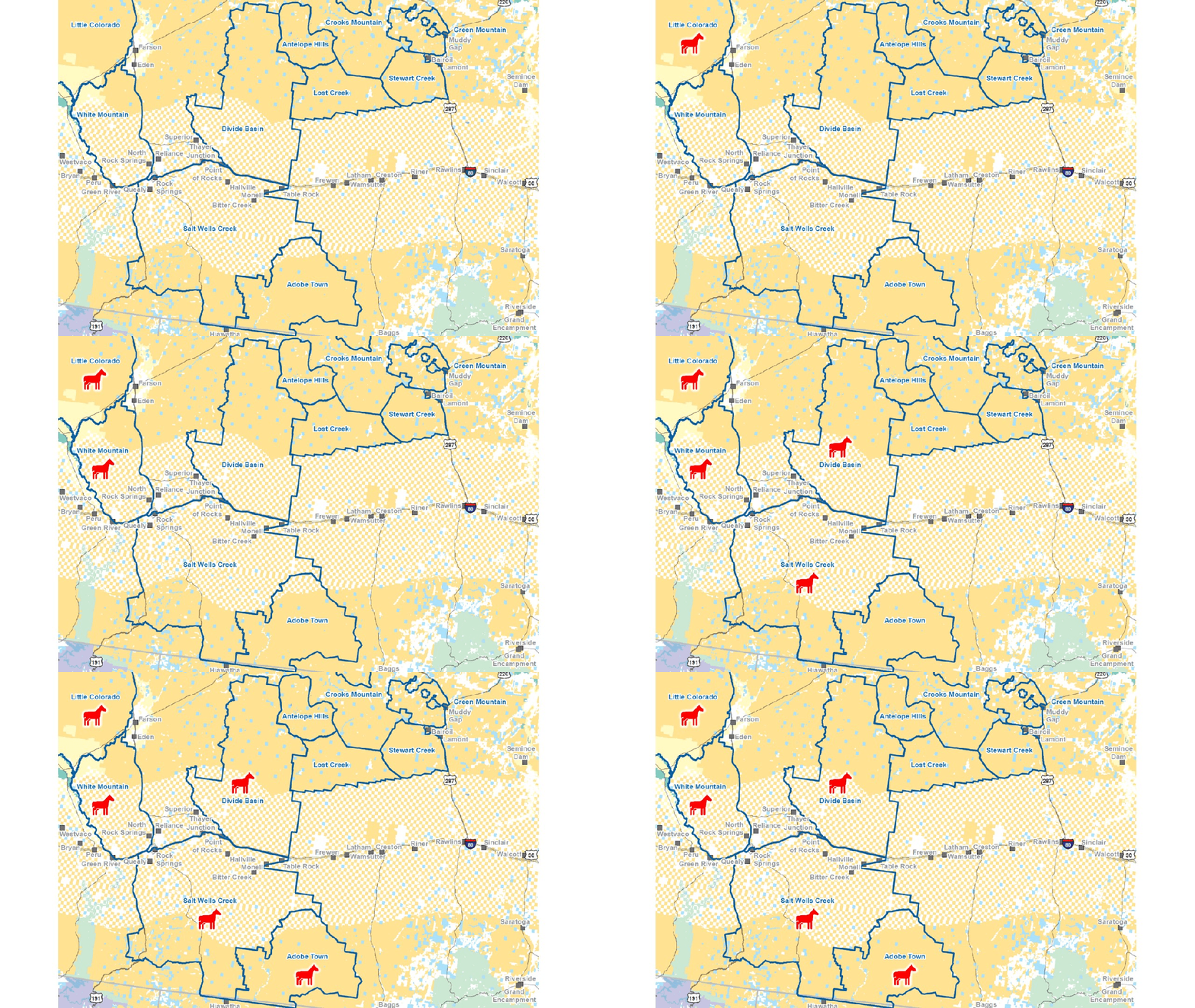
Antelope Roundup Day 16

The incident began on August 2.  Gather stats through August 17:

  • Horses captured: 1,244, up from 1,101 on Day 14
  • Average take: 77.8 horses per day
  • Capture goal: 2,200
  • Removal goal: 2,200
  • Returned: 0
  • Deaths: 5, up from 4 on Day 14
  • Shipped: 1,185, up from 958 on Day 14

A stallion was put down on Day 16 due to blindness.  The death rate is 0.4%.

Foals accounted for 17.9% of the horses gathered.  Of the adults, 44.6% were male and 55.4% were female.

Body condition scores were not reported.

Day 16 ended with 54 unaccounted-for animals.

The gap between males and females is larger than expected for a simple random process centered at 50% males / 50% females producing groups of n = 1,021 adults.  The sex of the foals was not provided.

Other statistics:

  • AML: 789 (four HMAs involved)
  • Forage assigned to horses: 9,468 AUMs per year
  • Pre-gather population: 6,032 plus foals
  • Forage liberated to date: 14,928 AUMs per year
  • Water liberated to date: 12,440 gallons per day
  • Forage assigned to livestock: 72,946 AUMs per year (estimated)
  • Horses displaced from HMAs by livestock: 6,079 (12% of off-range holding)
  • True AML: 6,868

RELATED: Antelope Roundup Day 14.

Border Patrol Intercepts Horse Trailer, 27 Democrat Votes Lost

The driver of the truck said he was dispatched to a ranch near San Antonio to pick up horses and knew he was transporting something illegal but did not know what, according to a report posted yesterday by the Laredo Morning Times.

The story did not indicate how many carrots were needed to load the trailer and what would have happened to the horses had the driver reached his destination.

Horse Trailer 08-18-21

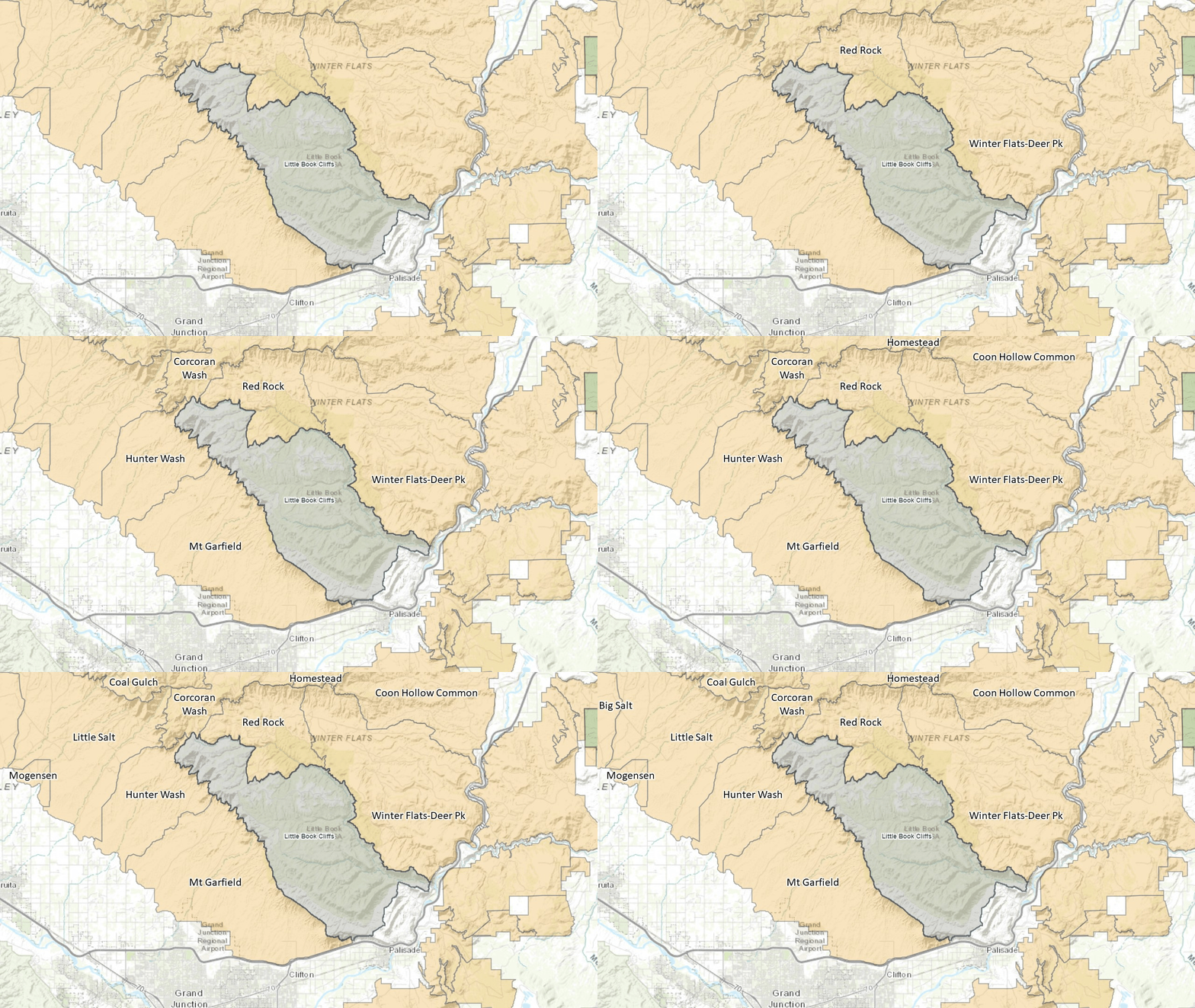
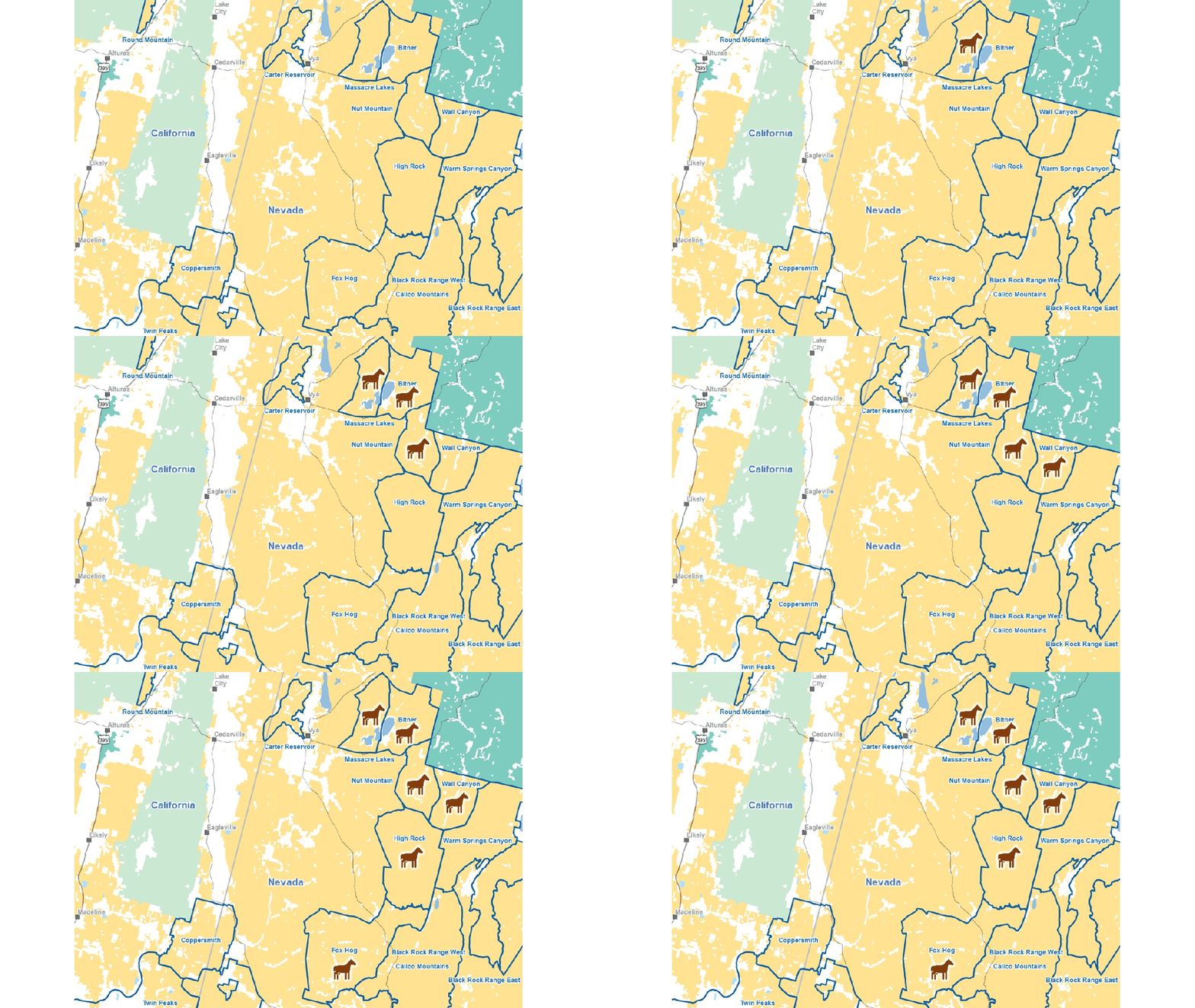
Conger Roundup Day 7

The incident began on August 11.  Gather stats through August 17:

  • Horses captured: 160, up from 121 on Day 5
  • Average take: 22.9 horses per day
  • Capture goal: 320
  • Removal goal: 296
  • Returned: 0
  • Deaths: 1, no change from Day 5
  • Shipped: 124, up from 87 on Day 5

The death rate is 0.6%.

Foals accounted for 25.0% of the horses gathered.  Of the adults, 40.8% were male and 59.2% were female.

Body condition scores were not reported.

Day 7 ended with 35 unaccounted-for horses.

Given the high percentages of mares and foals in the total, is the contractor targeting family bands?

Other statistics:

  • AML: 80
  • Forage assigned to horses: 960 AUMs per year
  • Pre-gather population: 355
  • Forage liberated to date: 1,920 AUMs per year
  • Water liberated to date: 1,600 gallons per day
  • Forage assigned to livestock: Unknown
  • Horses displaced from HMA by livestock: Unknown
  • True AML: Unknown

RELATED: Conger Roundup Day 5.

Ivermectin Flying Off Shelves?

Although not approved by the FDA to treat Covid-19, it’s selling like hotcakes, according to a story posted yesterday by KOAM News of Pittsburg, KS.

The one-horse pony and usurper of the White House, his illicit administration and godless political party, along with their sycophants in the media, want you to take the clotshot instead, so roll up your sleeves when the third dose becomes available.

RELATED: Yes We Have No Ivermectin.

Ivermectin Paste Durvet 08-18-21

Climate Change Driving Wild Horse Roundups?

We’ve never seen this before.  Dry conditions out west.  Worsened by global warming.

We should give it a name.  Western Horse Watchers proposes Megadrought Sandy.

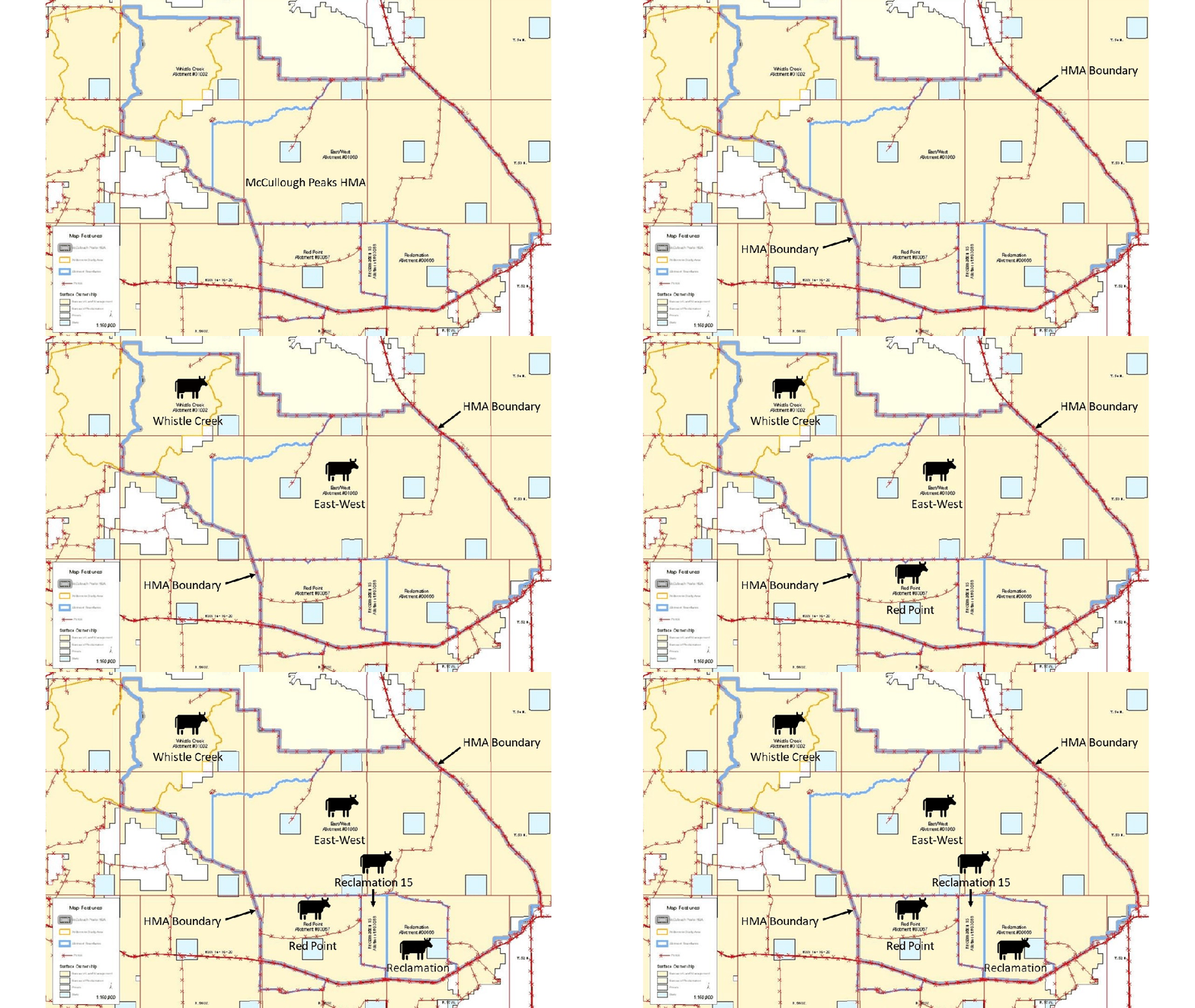
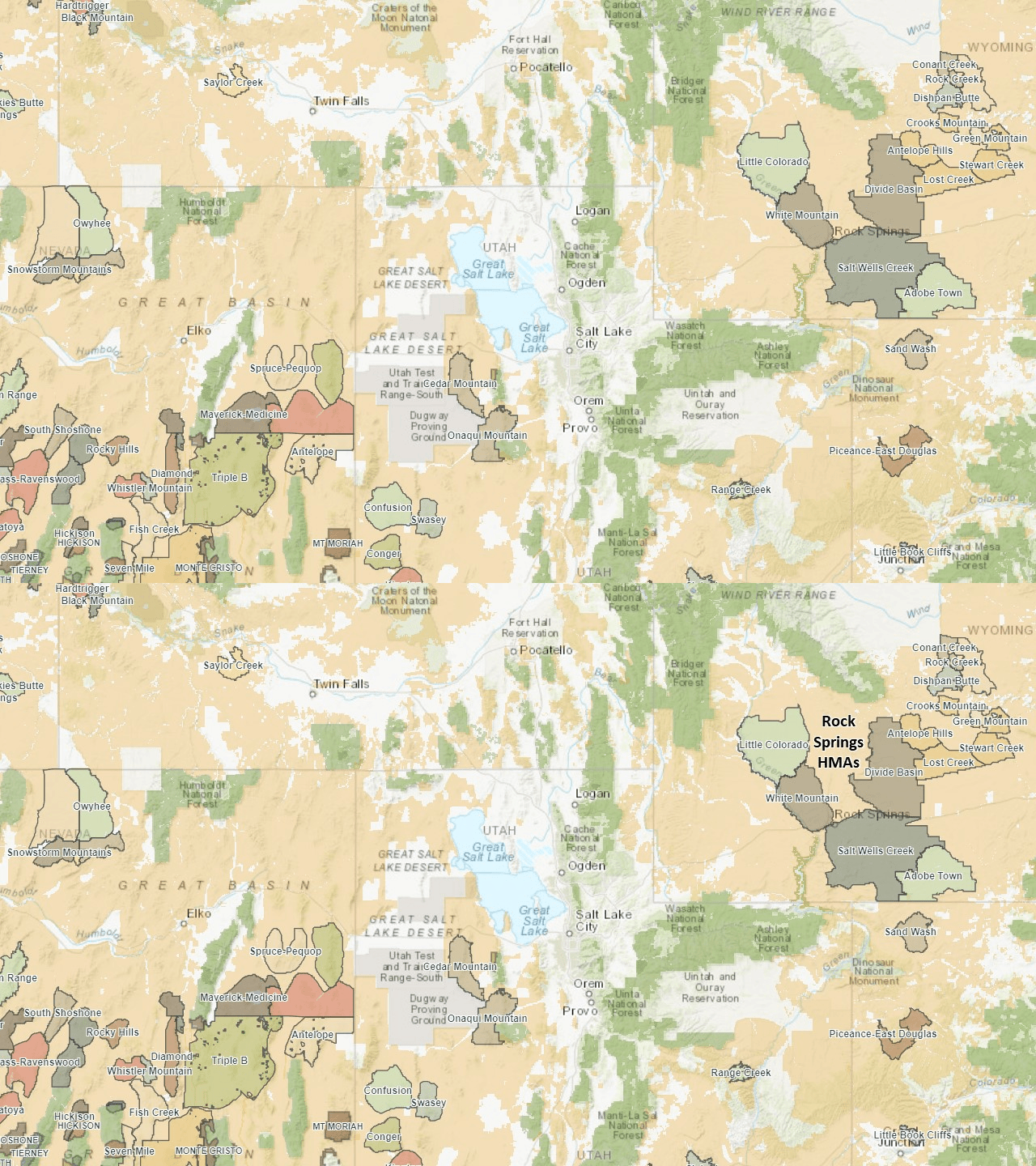
As for the horses, how many HMAs are not occupied by privately owned livestock?

How can emergency roundups provide relief to fragile ecosystems without similar cutbacks in permitted grazing?

When conditions improve, will the horses be returned to the range?

The government is not trying to save wild horses, but to insulate the public-lands ranchers from the effects of temporary changes in the weather, and improve their fortunes in the future.  What drives this obsession?

Man-made climate change is a lie, despite what you might read in stories like this one by AP News.

If you want to get off the grid and put your car on blocks, knock yourself out.

Stinkingwater Roundup Day 3

The incident began on August 15.  Gather stats through August 17:

  • Horses captured: 294
  • Average take: 98.0 horses per day
  • Capture goal: 420
  • Removal goal: 390
  • Returned: 0
  • Deaths: 2
  • Shipped: 292

One death occurred on Day 1 and another on Day 2, both due to pre-existing conditions.

Foals accounted for 26.9% of the horses gathered.  Of the adults, 42.8% were male and 57.2% were female.

Body condition scores were fours and fives.

Day 3 ended with no unaccounted-for animals.  Gather operations will likely conclude in another day or two.

Other statistics:

  • AML: 80
  • Forage assigned to horses: 960 AUMs per year
  • Pre-gather population: 449
  • Forage liberated to date: 3,528 AUMs per year
  • Water liberated to date: 2,940 gallons per day
  • Forage assigned to livestock: 8,455 AUMs per year (estimated)
  • Horses displaced from HMA by livestock: 705
  • True AML: 785

RELATED: Stinkingwater Roundup Begins.

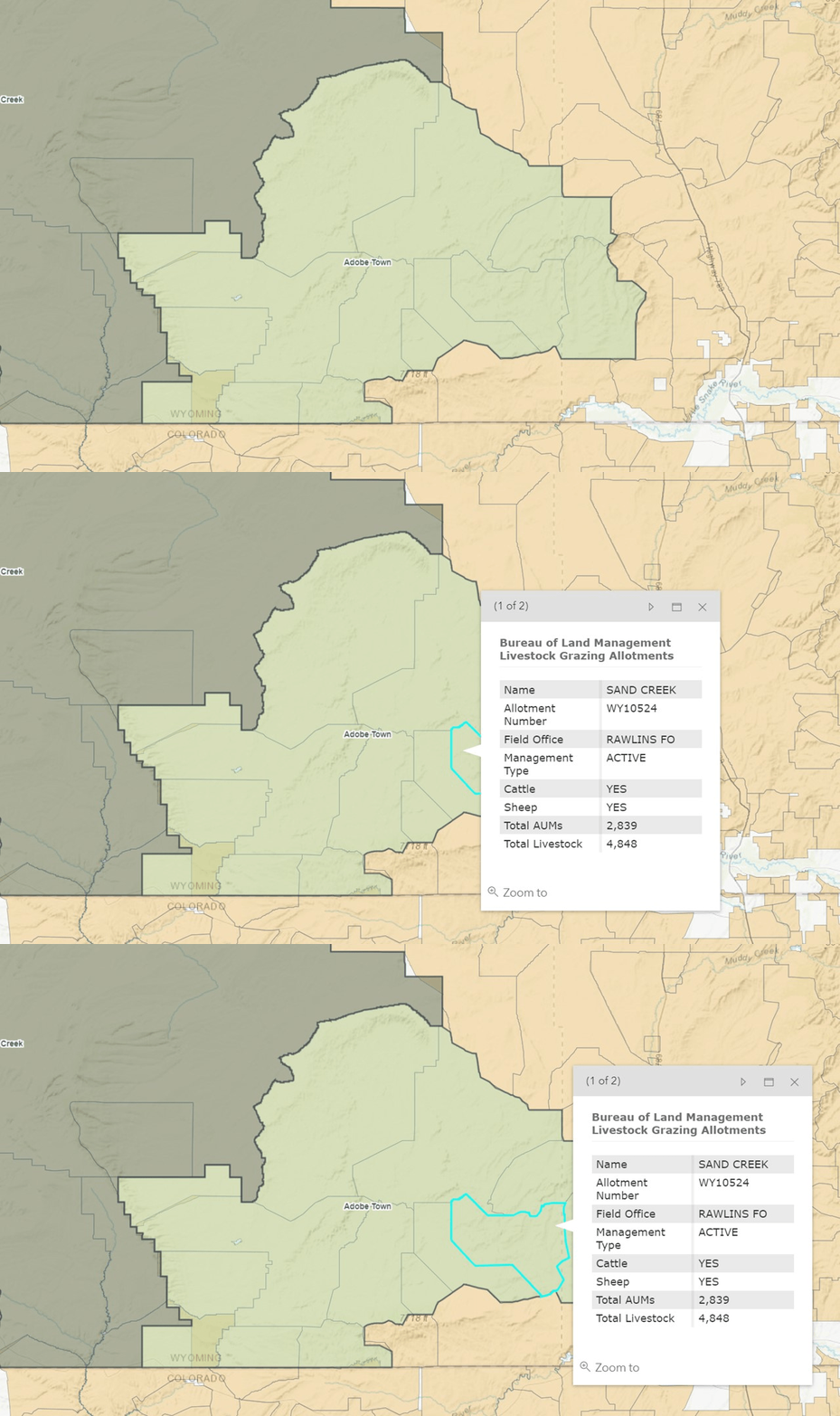
Sand Wash Decision Reached

A Decision Record for resource enforcement actions in the Sand Wash Basin HMA over the next ten years was signed today, according to a BLM news release.

The Proposed Action, authorized thereby, features gathers and removals to low end of AML, fertility control and sex ratio skewing via selective return.  Refer to page 14 in the Final EA, posted with other project documents.

A roundup is set to begin in the area on September 1 per the latest schedule.

RELATED: Comments Invited on Draft EA for Sand Wash Gather Plan.

Wild Horse Connection Thrives on Double Standard

Management of the Virginia Range mustangs should be left to them.

If you get too close to wild horses, you might receive a citation.

If you feed them you might be accused of unlawful conduct.

If you shoot them with darts you might be charged with animal cruelty.

Not so for the advocates.

WHC Arrogance 08-13-21

This is the double standard of the wild horse world.

RELATED: Advocates Have Answer to Wild Horse Problem?

Letter About West Douglas Roundup Draws Backlash

The writer of the original piece, posted on August 5, criticized the ranchers.

In two subsequent letters, both posted yesterday, the ranchers push back.

The author of one response said the roundup was necessary due to the drought and loss of forage by the Oil Springs fire.

Let’s accept that as true.  When conditions improve, are the horses going to be returned?  Of course not!  The goal was not to save them, but to get rid of them.

What do you suppose will return to normal levels when food and water reappear?

Another letter points to rangeland degradation caused by wild horses, citing the benefits of permitted grazing.

Problem is, the data don’t support the claim: Approximately 74% of BLM grazing land in Colorado does not meet standards for rangeland health.

The area accessible to wild horses in the state is tiny compared to the acreage designated for livestock.

RELATED: What’s Missing from America’s Public Lands?