You won’t be respected by all sides if you think their land should be managed as specified in the original statute (horses and wildlife, no livestock, no PZP).
Beliefs like that may get you branded as a wild horse conservative.

Western Horse Watchers Association
Exposing the Hypocrisy, Lies and Incompetence of the Wild Horse Advocates
On the range
You won’t be respected by all sides if you think their land should be managed as specified in the original statute (horses and wildlife, no livestock, no PZP).
Beliefs like that may get you branded as a wild horse conservative.
Table 1 in the Final EA for resource enforcement actions provides AMLs for the five HMAs, from which forage requirements can be computed. Table 8 provides forage allocations to livestock inside the HMAs.

The 2,165 horses allowed by plan receive 25,980 AUMs per year, compared to 191,791 AUMs per year for privately owned livestock.
The HMAs cover 3,436,096 acres of public and private lands in southwestern Wyoming.
Livestock receive 7.4 times more forage than the horses. Would you call that a thriving ecological balance? Would you call it a balance? Would you say the HMAs are managed principally for wild horses?
The forage assigned to livestock would support an additional 15,982 wild horses, 32% of the horses in off-range holding!
The True AML for the five HMAs would be 18,147. The pre-gather population of 5,105 is well within that range.
If the HMAs were managed according to plan, livestock would be the primary consumer of resources in Adobe Town, Great Divide Basin and White Mountain. They would be the principal consumer of resources in Salt Wells Creek and Little Colorado.
The Rock Springs RMP Amendments, not yet approved, will make things worse, by closing three of the HMAs and downsizing a fourth. Little Colorado won’t be affected, because, as you can see from the data above, it’s been zeroed out already.
RELATED: Rock Springs Roundup Starts in Two Weeks.

The incident began on September 15. Gather stats through September 24:
Two horses were put down on Day 8, two on Day 9 and two on Day 10, all due to pre-existing conditions. The death rate is now 3.5%, up from 2.4% on Day 7.
The daily reports point to IM 2021-007, Euthanasia of Wild Horses and Burros Related to Acts of Mercy, Health or Safety, as justification for the deaths.
Foals represented 23.1% of the horses gathered. Of the adults, 37.2% were male and 62.8% were female.
Body condition scores were not provided.
Day 10 ended with 56 unaccounted-for animals. The report did not indicate if the stallion returned that day was an escape or a release.
Other statistics:
RELATED: Jackson Mountains Roundup Day 7.
Not mentioned in the following trailer:
The off-range corrals at 1:13, flooded with horses, displaced from their home range by privately owned livestock.
The trainers, competitions and shows at 1:34, boosting interest in adoptions, so more can be removed from the range.
The advocates at 2:24, darting rifles in hand, helping the government get rid of the horses, with benefits accruing to the ranchers.
If the film has a downstream focus, as suggested in the video, it will be of little help to America’s wild horses. The problem is upstream, in the land-use plans and the rules that tilt the playing field in favor of the ranchers.
Approximately 70% of the wild horses in five HMAs will be removed from public and private lands in the Wyoming checkerboard, beginning on or after October 7, according to a BLM news release.
The roundup will fulfill a court order known as the Rock Springs Consent Decree.
Helicopters will push the horses into the traps and the operation will be open to public observation.
The capture goal is 4,400 and the removal goal is 3,500. Mares returned to the HMAs will be treated with contraceptives.
The pre-gather population is approximately 5,100 and the combined AML is 2,145.
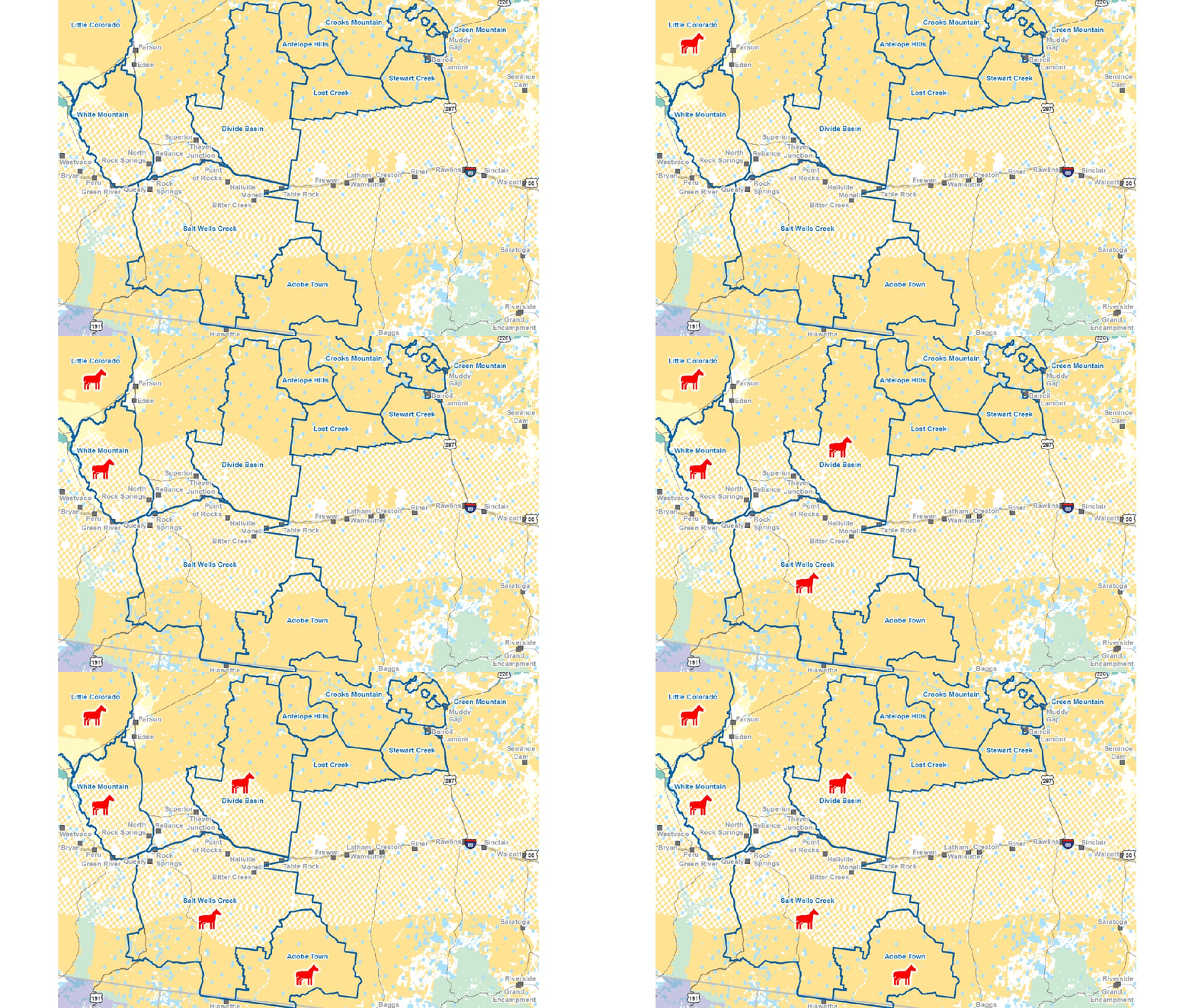
All of the HMAs are subject to permitted grazing, as shown in Table 8 of the Final EA for resource enforcement actions therein. Maps were posted with other project documents.
The destination of captured animals was not specified in the announcement.
Gather stats and daily reports will be posted to this page.
A story in today’s edition of The Salt Lake Tribune looks at HMAs and grazing allotments in Utah, especially those managed by the Fillmore Field Office.
The article said the office reported 1% of the allotments by acreage with substandard conditions due to grazing, but the Allotment Information report in RAS shows 33.6% of the public acres in the Improve category.
Earlier this year Western Horse Watchers found that approximately 57% of the public acres in Utah grazing allotments do not meet standards for rangeland health.
RELATED: Livestock Impede Sage-Grouse Recovery on Public Lands?
The Marr Plan Action Team will hold a rally at the BLM Rock Springs Field Office, 280 US Highway 191 in Rock Springs, WY, according to a story posted today by Wyo4News.
Although indicated when the Decision Record was signed in July, the incident does not appear in the latest schedule.
Western Horse Watchers was unable to find a web site for the Marr Plan Action Team.
The incident began on September 8. Gather stats through September 22:
The cumulative total at the gather page is 844.
A colt and and two studs were put down on Day 13, and a filly on Day 14, due to pre-existing conditions. The death rate is now 1.2%.
Foals represented 20.8% of the horses gathered. Of the adults, 44.4% were male and 55.6% were female.
Body condition scores ranged from 2.5 to 4.
The location of gather activity was not reported. Three HMAs are involved in the roundup.
Day 15 ended with 140 unaccounted-for animals.
Other statistics:
RELATED: Barren Valley Roundup Day 12.
The incident began on September 15. Gather stats through September 21:
A mare was put down on Day 6 because of starvation, followed by another on Day 7 for the same reason. The death rate is now 2.4%.
Could those mares be nursed back to health at a rescue? The rationale for both deaths was given by IM 2021-007, Euthanasia of Wild Horses and Burros Related to Acts of Mercy, Health or Safety.
Foals represented 23.0% of the horses gathered. Of the adults, 35.6% were male and 64.4% were female.
Body condition scores were not provided.
Day 7 ended with 104 unaccounted-for animals.
Other statistics:
RELATED: Jackson Mountains Roundup Day 5.
The incident began on September 16. Reports covering activity through September 21 have been posted to the Modoc news page:
The progress report for Days 3 and 4 was a bit confusing. The correct interpretation is that helicopters were grounded on Day 4 and no horses were gathered. The cumulative total through Day 4 was 49, not 98.
Foals represented 14.0% of the horses captured. Of the adults, 51.2% were male and 48.8% were female.
Body condition scores were not provided.
The number of unaccounted-for animals is not known.
Other statistics:
RELATED: Devil’s Garden Roundup Day 4.
Wild horses were blamed for most of the problems in a USGS study published earlier this year, while the effects of public-lands ranching were overlooked, according to a news release by the Public Employees for Environmental Responsibility.
The announcement said the study is being used as part of the rationale for removing thousands of free-ranging horses from their habitat.
RELATED: Keep Wild Horses in Check to Save Greater Sage-Grouse?
Resource enforcement actions will begin on September 27, according to yesterday’s news release. The driver is overpopulation, not inadequate food or water.
Helicopters will push the animals into the traps and the operation will be open to public observation.
The capture goal is 1,220 and the removal goal is 1,050. Mares returned to the area will be treated with contraceptives. All burros will be removed.
The six HMAs in the Complex cover 396,674 acres. The stocking rate for the 496 horses allowed by plan is 1.3 animals per thousand acres.
The pre-gather population is thought to be around 1,300.
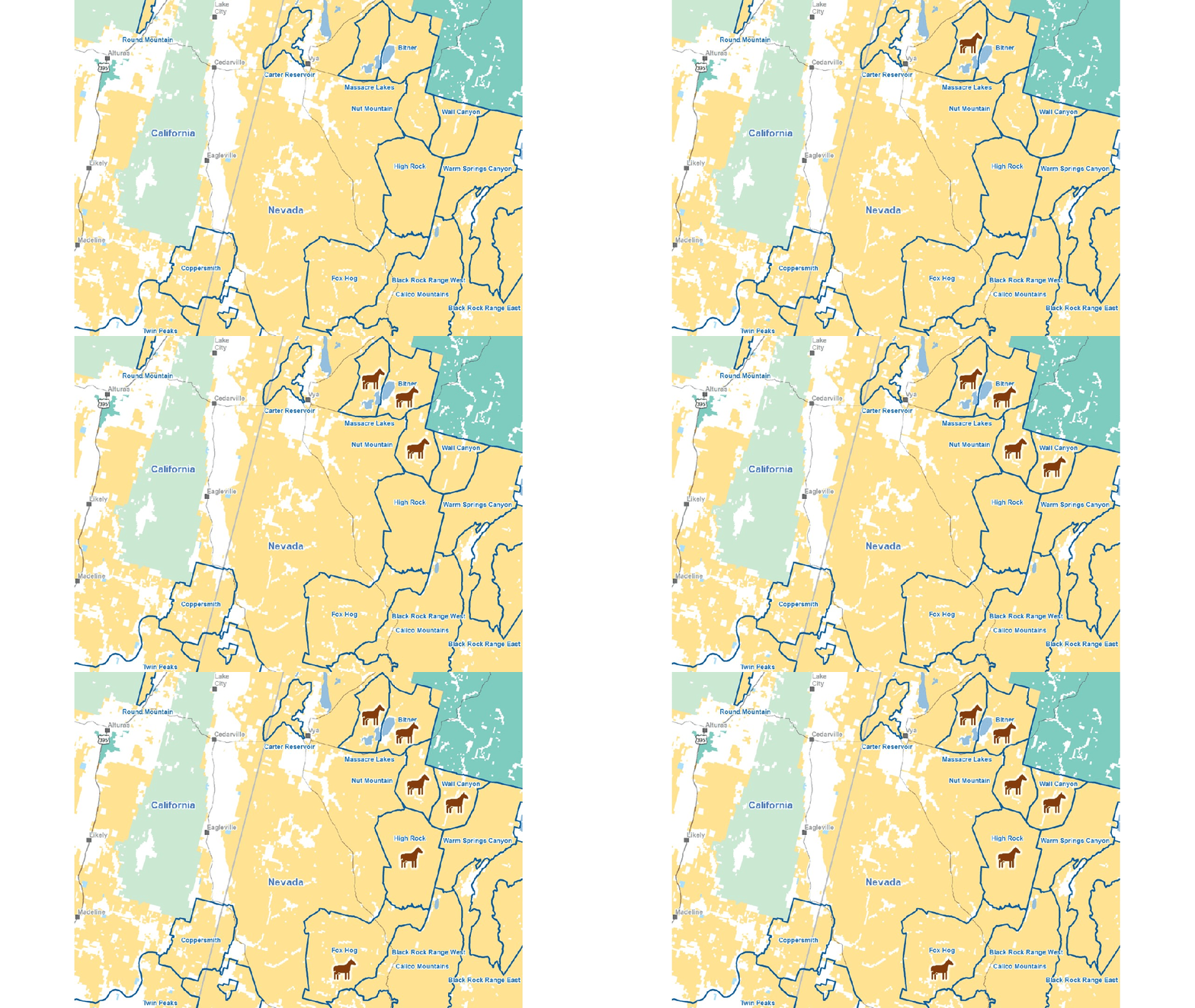
The six grazing allotments that overlap the Complex are listed in Table 3-2 and shown in Appendix G of the Final EA. The amount of forage shifted to livestock inside the HMAs is not known.
Captured animals will be taken to the off-range corrals at Litchfield, east of Susanville, CA, and potentially other holding facilities.
A link to the gather stats and daily reports was not provided, but will likely be found on this page.
The colt, born on Saturday, is the ninth foal of the year, bringing the herd size to 105.
The target range is 110 to 130, according to a story in today’s edition of OBX Today, with birth rates controlled by the advocates, not the horses.
The incident began on September 8. Gather stats through September 19:
Reports for Days 9 – 12 were posted today.
Helicopters were grounded on Day 11 due to high winds and gather ops were cut short on Day 12 for the same reason.
The cumulative total at the gather page is 712. There is a discrepancy in the figures for Day 10.
A mare was put down on Day 9 due to blindness. The death rate is now 1.0%.
Foals represented 20.7% of the horses gathered. Of the adults, 44.6% were male and 55.4% were female.
Body condition scores ranged from 2.5 to 4.
Three HMAs are involved in the roundup.
Day 12 ended with 55 unaccounted-for animals.
Other statistics:
RELATED: Barren Valley Roundup Day 7.
The incident began on September 16. Reports covering activity through September 19 have been posted to the Modoc news page:
Gather operations were cut short yesterday by weather.
The death rate is unknown.
The breakdown between stallions, mares and foals was given for Day 4 only.
Body condition scores were not provided.
The number of unaccounted-for animals is not known.
Losses to the economy of Modoc County, mentioned in the Day 1 report, means the horses have been trying to reclaim some of their food from the public-lands ranchers.
Other statistics:
RELATED: Devil’s Garden Roundup Begins.
The incident began on September 15. Gather stats through September 19:
Two mares were put down on Day 4 because of hernias and a foal was euthanized because it was orphaned, boosting the death rate to 3.2%.
No effort was made to place the foal with a rescue, such as the nearby Chilly Pepper Miracle Mustang? All three deaths were justified by IM 2021-007, Euthanasia of Wild Horses and Burros Related to Acts of Mercy, Health or Safety.
Foals represented 22.2% of the horses gathered. Of the adults, 29.6% were male and 70.4% were female.
Body condition scores were not provided.
Day 5 ended with 34 unaccounted-for animals.
Other statistics:
RELATED: Jackson Mountains Roundup Day 3.
On Assateague Island with The OutDoor Explorer.
There are many other dewormers on the market, overlooked, or intentionally omitted, by the writer of this story in The Washington Post.

The incident began on September 1. Gather stats through September 18:
No horses were caught on Days 13, 14, 16 and 17. Previously, no gather activity was reported on Day 12 but now the page shows 24 horses captured. The cumulative total of 256 does not agree with the sum of the daily numbers.
One horse was put down on Day 15 because of fractured neck, taking the death rate to 3.1%.
The rate at Stone Cabin, where horses are baited into the traps, is ten times higher than that for the cruel and inhumane helicopter roundup at Sand Wash Basin, so described by the advocates.
Foals represented 14.6% of the horses gathered. Of the adults, 46.6% were male and 53.4% were female.
Body condition scores were not reported.
Day 18 ended with 22 unaccounted-for animals.
Other statistics:
RELATED: Stone Cabin Roundup Day 12.
The warning was cancelled by NV Energy, so the horses have water for another day.

The trailcams took over 8,000 photos from April to July but only one foal was spotted at the water tanks, thanks to the advocates.
RELATED: NV Energy Warns of Intentional Power Outage on Virginia Range.

