With few exceptions, the advocates apply the chemical to keep the pests in check, so ranchers can access most of their food.
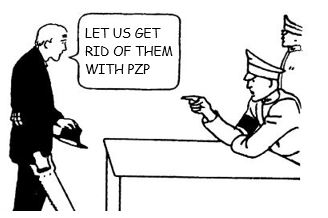
They are stupid beyond imagination, enemies of the horses!
RELATED: Yes, We Have No Authority?

Western Horse Watchers Association
Exposing the Hypocrisy, Lies and Incompetence of the Wild Horse Advocates
Opinion
With few exceptions, the advocates apply the chemical to keep the pests in check, so ranchers can access most of their food.
They are stupid beyond imagination, enemies of the horses!
RELATED: Yes, We Have No Authority?
The numbers are changing minute by minute, but as of this evening, the total was 2,577.
The Cloud Foundation has also issued an Action Alert, with a recommendation to be courteous, factual, and polite when commenting on the project.
Only four days left.
RELATED: Pryor Comments Pass 1,500.

The Senate Agriculture & Natural Resources Committee passed the bill on April 20 by a vote of 5 to 1, according to a report posted this morning by Colorado Politics.
The measure was referred to the Committee on Appropriations.
In an attempt to sell poison as medicine, Amendment L.002 changed “FERTILITY CONTROL METHODS” to “IMMUNOCONTRACEPTIVE FERTILITY CONTROL VACCINES.”
Why not say “RESTRICTED-USE PESTICIDES?”
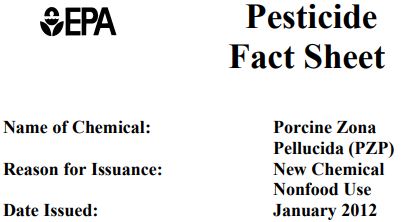
The fertility control program would manage the herds through “humane, nonlethal and safe fertility control methods,” and would ban the use of lethal population management or surgical sterilization.
Chemical sterilization is OK, apparently.
How do you know that SB23-275 is bad for wild horses?
The advocates are for it.
An animal you’re trying to eradicate with a restricted-use pesticide.
Sometimes referred to as a beloved/innocent/treasured horse or burro.
Never let the public know your true intentions.
RELATED: BLM to Trial New Herbicides on Cherished Plants and Weeds.

The advocates think that by putting “humane” in front of terms like “management,” “fertility control,” “outcomes” and “alternatives to helicopters” you’ll think they’re a voice for wild horses.
Similarly, if they put “humanely” in front of “reducing the herd size,” you’ll agree with them that not only is getting rid of wild horses acceptable, it’s the right thing to do and you should be paying for it.

The ranchers couldn’t have asked for a better bunch of hucksters.
Although 215 trespass horses have been trapped and removed in the past year, the Forest Service hasn’t made a dent in the overall numbers, according to a report dated April 21 by the White Mountain Independent.
A spokesman said the Forest Service will likely have to enter into a long-term contract to keep the herd from rebounding.
What do you suppose that might involve?
Advocates with the Salt River Wild Horse Darting Group, an affiliate of the Campaign Against America’s Wild Horses, a leader in the wild horse removal industry, have already offered to get rid of the herd with a safe, proven and reversible fertility control program that sterilizes the mares in four to five years.
The contract would likely amount to a memorandum of understanding or zero-dollar purchase order.
Donors to these organizations would foot the bill, not taxpayers.
Ranchers in the area, the leading beneficiary of the effort, could pick up an easy tax deduction.
RELATED: Salt River Advocates Mobilize in Favor of Alpine Ranchers.
The population estimate as of March 1 was 82,833, according to a BLM blog post dated April 21, only 499 more than the same time last year.
Permitted grazing, which occurs in most of the areas identified for wild horses and burros, was not mentioned.
Predators are few and far between according to the article, yet the advocates count on them to take out any foals that slip through their darting programs.
To achieve the goal of managing healthy wild horses and burros on healthy public lands, the bureaucrats beat down the herds with helicopters and the advocates snuff out new life with pesticides, so ranchers can access most of their food and water.
Not exactly what Velma and the 92nd Congress intended.
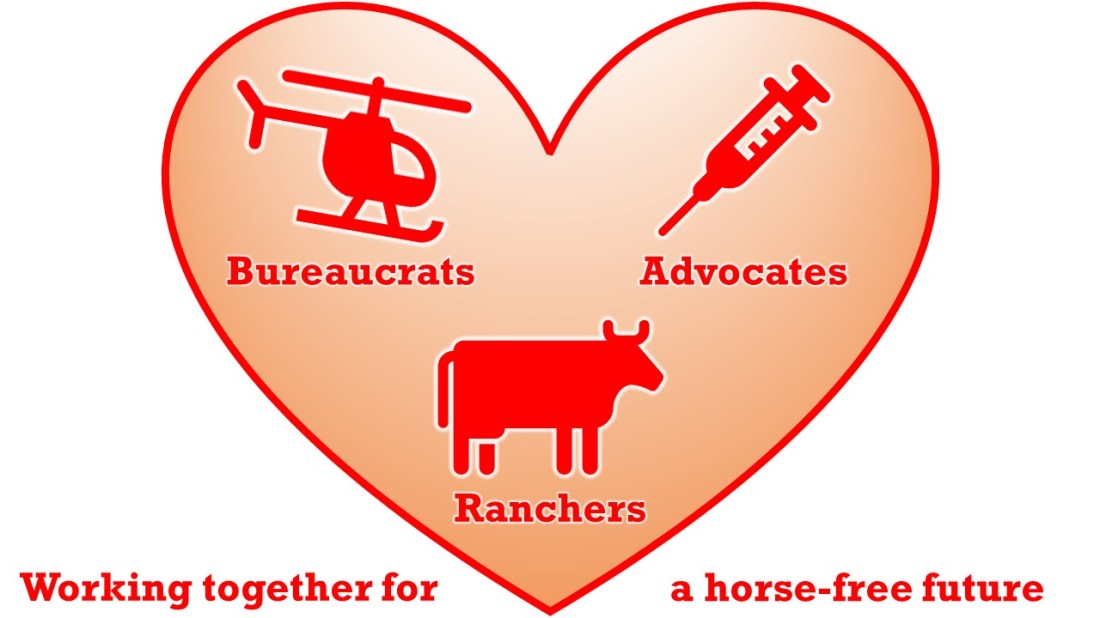
They’re a native keystone species vital to the health of our public lands, according to a news release on EIN, but we need to drive their numbers down with a restricted-use pesticide so ranchers can access most of their food and water.

Who promotes such legislation? The PZP darters and their allies. Totally self-serving.
If you want to help America’s wild horses, stay home.
RELATED: State Lawmakers Introduce Colorado Wild Horse Project.
What do you call a restricted-use pesticide that destroys the ovaries of mares in four to five years? A vaccine.
What do you call a mare whose ovaries have been destroyed by said pesticide, or nearly so? Self-boosting.
Next time a storm moves through your area, try this experiment.
Grab an umbrella and head out the door. Hold the umbrella at your side. Rain falls on your head.
Now, hold the umbrella over your head. Rain can’t reach your head.
Try it again. By your side, head gets wet. Above, head stays dry.
If you try it next month, you’ll get the same results.
Next year, same.
The effect of the umbrella is reversible.
This is not true for the Montana Solution.
The advocates have been telling you for years that PZP is a sperm blocker, an umbrella of sorts, that wears off after a few years when the treatments are stopped.
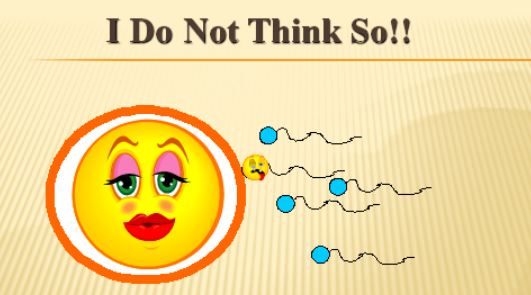
Unfortunately, if the umbrella has been in place for five years and you remove it, there will be no raindrops falling on your head.
PZP is not reversible, as the advocates claim. Rather, it is a sterilant.
Results from Assateague Island prove it.
In a similar manner, the advocates are destroying the herds on the Virginia Range, Salt River and the HMAs listed on the latest roundup schedule.
If they told you the truth about their darting programs, the injuries and infections, the increasing death rates, shrinking herds, abnormal sex ratios and sterilization of mares, you’d withdraw your financial support immediately.
So, they conceal their enmity with euphemisms like “safe, proven and reversible,” hoping you won’t catch on.
RELATED: Foal-Free Friday, Avoiding the “S-Words” Edition.
NOTE: Examples of these lies, such as this one, can usually be found on the propaganda page of Lucky Three Ranch.
The same way you treat your cherished ants and roaches. Except they deliver their pesticide with gas-fired darts.
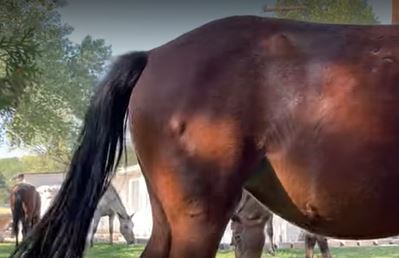
Don’t worry, it’s safe, proven and reversible. Similarly, carbon is a pollutant, men can be women, and water flows uphill.

Last year, she blew smoke up your butt about HMAPs.
This year, it’s habitat fragmentation.

Anything to distract from the real problem, public-lands ranching, which devours entire HMAs and beyond, the driver of the overpopulation narrative and the reason why the off-range corrals and long-term pastures are flooded with “excess” animals.
Pummeling the mares with restricted-use pesticides only helps the ranchers.

The Campaign Against America’s Wild Horses, a leader in the wild horse removal industry, has issued an Action Alert, reposted on the propaganda page of the Lucky Three Ranch, urging its followers to speak out against the proposed management plan, and they are now flooding the project with the same stupid comments.
The plan would cut the population in half, according to CAAWH, exactly what it’s trying to do on the Virginia Range, if not more.
These people are charlatans, no longer deserving of your financial support.
RELATED: Pryor Comments Pass 1,000.

The bureaucrats, ranchers and advocates are united in their belief that wild horse reproduction is the problem, not the reproduction rate.
If you’re at 3X AML, you’re not interested in slowing the growth rate but reversing it.
Given that AMLs are small relative to the available resources, the conflict between wild horses and privately owned livestock can be alleviated by confining the ranchers to their base properties in a year-round off season and expecting them to pay (OMG) the going rate to feed their animals, but that’s taboo in the Love Triangle and fringe groups like the Wild Horse Fire Brigade.
The decision earlier this week to test two new fertility control drugs is just the latest attempt to eradicate the pests in favor of the most noble and deserving nonnative species on America’s public lands.
What’s the difference between long-lasting contraception (that can be achieved with just one dose) and sterility?
Not much. But you can’t call it sterility and you can’t refer to the experiments as sterilization research. Off limits.
You can talk about self-boosting mares, but not in mixed company.
Using the Rule of 72 for a quick estimate, you need a growth rate of 72 ÷ 5 = 14.4% per year to double the herd size in five years. If the death rate is six percent per year, the required birth rate is 20.4% per year.
You need a growth rate of 18% per year, and a birth rate of 24% per year, to double the herd size in four years, as some land managers and wild horse detractors claim.
What do the data indicate? Consider the results from last year’s roundups that started on or after July 1 (after foaling season). These figures are based on the daily reports, which may differ slightly from the cumulative totals posted to the gather pages.

The weighted average birth rate was 17.4%, implying a growth rate of 11.4% per year.
The death rate this year may be higher than normal, as previously discussed.
On average, one foal was born to every 2.6 mares. Each mare produced 0.38 foals.
With the probability of a mare delivering a live foal slightly more than one out of three, the advocates target every animal they can get their sights on.
Why? Because their goal is one of the S-words.
Hopefully their enmity and mettle will appeal to the bureaucrats and ranchers, who, like them, want the wild herds minimized and domestic herds maximized.
RELATED: Foal-Free Friday, Busting the Myth of Reversibility Edition.

The wild horse advocates are trying to snuff out new life by poisoning the mares with a restricted-use pesticide.
RELATED: CAAWH Distributes More Lies about VR Darting Program.

The bill would create the Wild Horse Management Project, a nonprofit, state-owned entity that manages and operates programs benefitting wild horses and supports wild horse management.
The project would provide state-level coordination, partnership development, and paid human resource development to support the work of those delivering contraceptives through darting, among other things.

Are you surprised by any of this?
Who do you suppose is pushing it?
A hearing by the Senate Agriculture & Natural Resources Committee has been set for April 20, according to the home page of SB23-275.
The Zoom webinar is free, but registration is required. Refer to this news release on EIN for more information.
Attend at your own risk. Might be an infomercial for the Montana Solution.
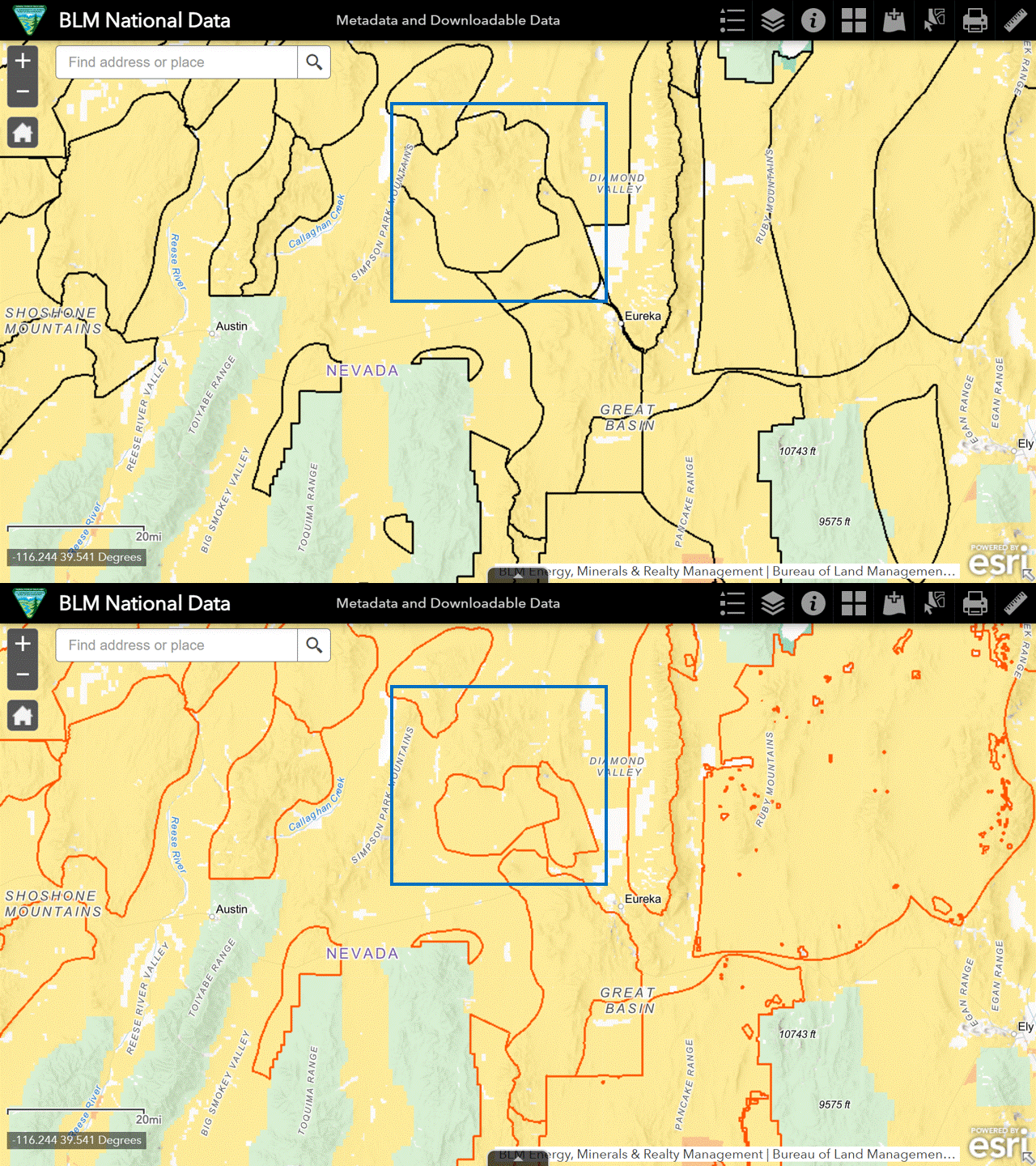
Almost half, according to the following map from the National Data Viewer.
The HMAs, currently managed for wild horses, are shown in orange, while the HAs, where horses were found in 1971, are drawn in black.
The bureaucrats have empowered themselves to take away roughly half of their land, not just in the Roberts Mountain Complex, but across the American west, then give most of the remaining food and water to privately owned livestock.
Of the land taken away, almost all of the food and water have been assigned to livestock.
How do the advocates respond to this injustice?
“You need to manage the numbers to fit what’s available for the horses.”
They are defeatists, no longer worthy of your financial support.
Here are the requirements for managing land principally but not necessarily exclusively for wild horses and burros:
Today, management actions are designed to achieve and maintain Appropriate Management Levels, an undefined term that appears in the current statute.
There is nothing in the statute that says AMLs must be small relative to the available resources!
They are, however, because the bureaucrats, who never have to face the voters, write their own rules, known as regulations.
Regulations are inferior to laws, which are written and approved by the people’s representatives, and must be consistent with them.
In America, we tell the government what to do, not the other way around.
Pay no attention to the Democrat Party and its sycophants, they are enemies of your liberty and autonomy.
RELATED: Decision Published for Roberts Mountain Complex.
The Maryland side of Assateague Island, a paragon of wild horse management according to the advocates, is a disaster.
The population in 2016, when the safe, proven and reversible darting program was shut off, was around 85.
Last month, it was 75.
The population should have doubled or tripled. Look at the increase from 1976 to 1987 in this chart.

The herd has been ruined by the Montana Solution. Most of the mares are sterile.
Which ones aren’t?
The ones with nice colors. And bad feet, unfortunately.
In determining birth rates and breeding patterns, the advocates select for characteristics they think are desirable, not for traits essential to their survival.
Ruggedness and self-reliance take a back seat to exhibition, marketing and tourism.
The advocates know, and have always known, that PZP is a sterilant. That’s why they invented euphemisms like “self-boosting” to describe barren mares.
They’ve been lying to you for years.
They are not voices for the horses.
Why are you still giving them money?
Here we go again, just like McCullough Peaks.
The advocates probably issued a call to action, complete with talking points, and their followers are now flooding the project with the same stupid comments.
“Less Gonacon, more PZP.”
RELATED: Pryor Mountain EA Tops Most Active List.

Most of us refer to them as the Theodore Roosevelt wild horses but one group refers to them as the Teddy Roosevelt wild horses, as if they’re old hunting buddies.
Any guesses?
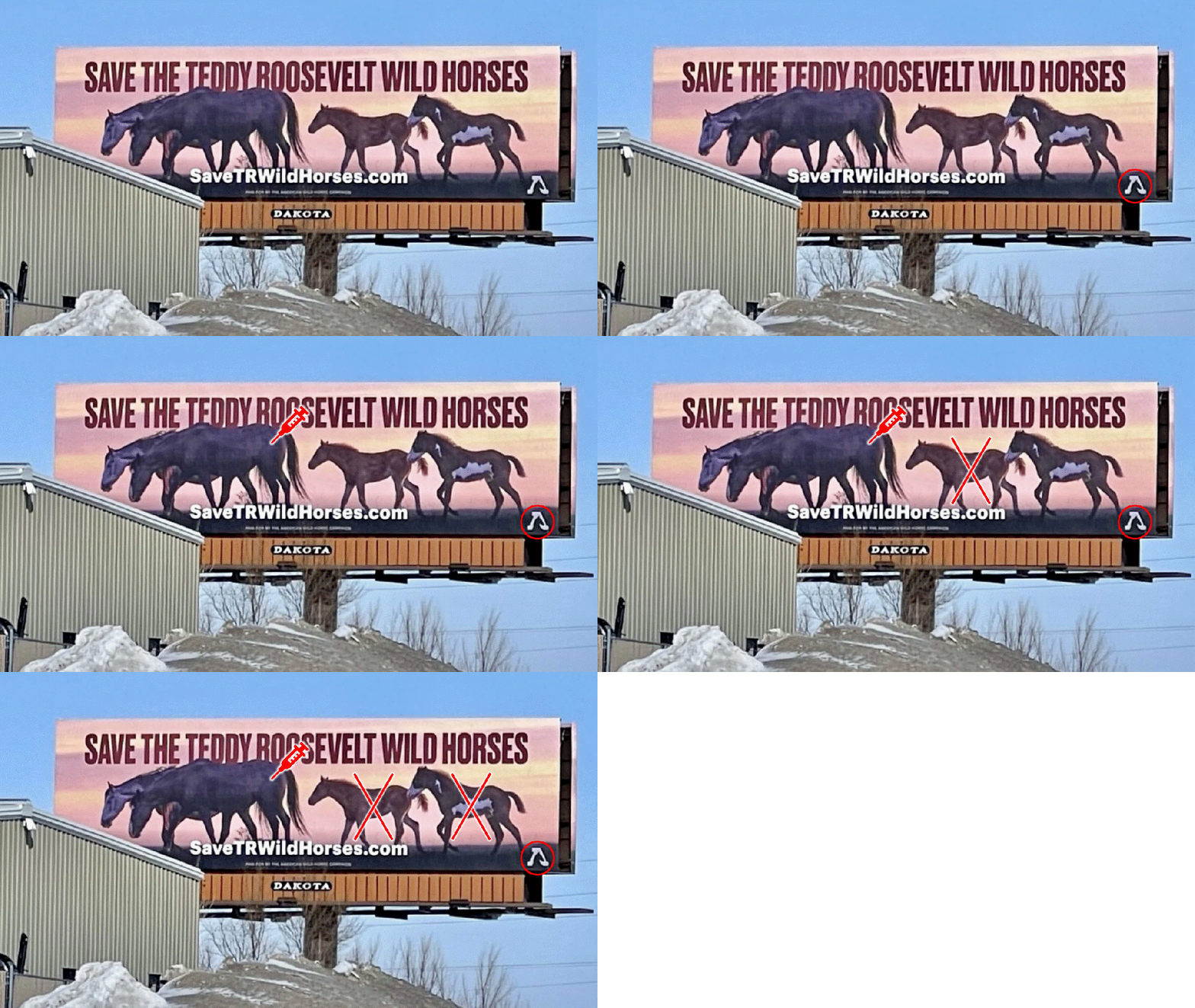
They’re a recognized leader in the wild horse removal industry.
They’re destroying the ovaries of the Virginia Range mares with their favorite pesticide.
What they want most is a contract with the Park Service to carry out Alternative C, the Proposed Action, in the new livestock management plan.
If you still can’t figure it out, read this story by The Dickinson Press.
RELATED: Conflicting Priorities at TRNP?
 Western Horse Watchers Association