Comments Invited on Stewart Creek Pest Control Plan

A preliminary environmental assessment for remote darting in the HMA has been posted for public review.

The plan would be effective for ten years, according to the news release.

The Proposed Action, discussed in Section 2.1 of the EA, calls for the use of PZP, GonaCon and PZP-22.

The goal is to reduce growth rates to five percent per year or less.

Treatment would be withdrawn after five years, until the mares produce foals—which they won’t, because they’re sterile.  The ten-year timeframe is not necessary.

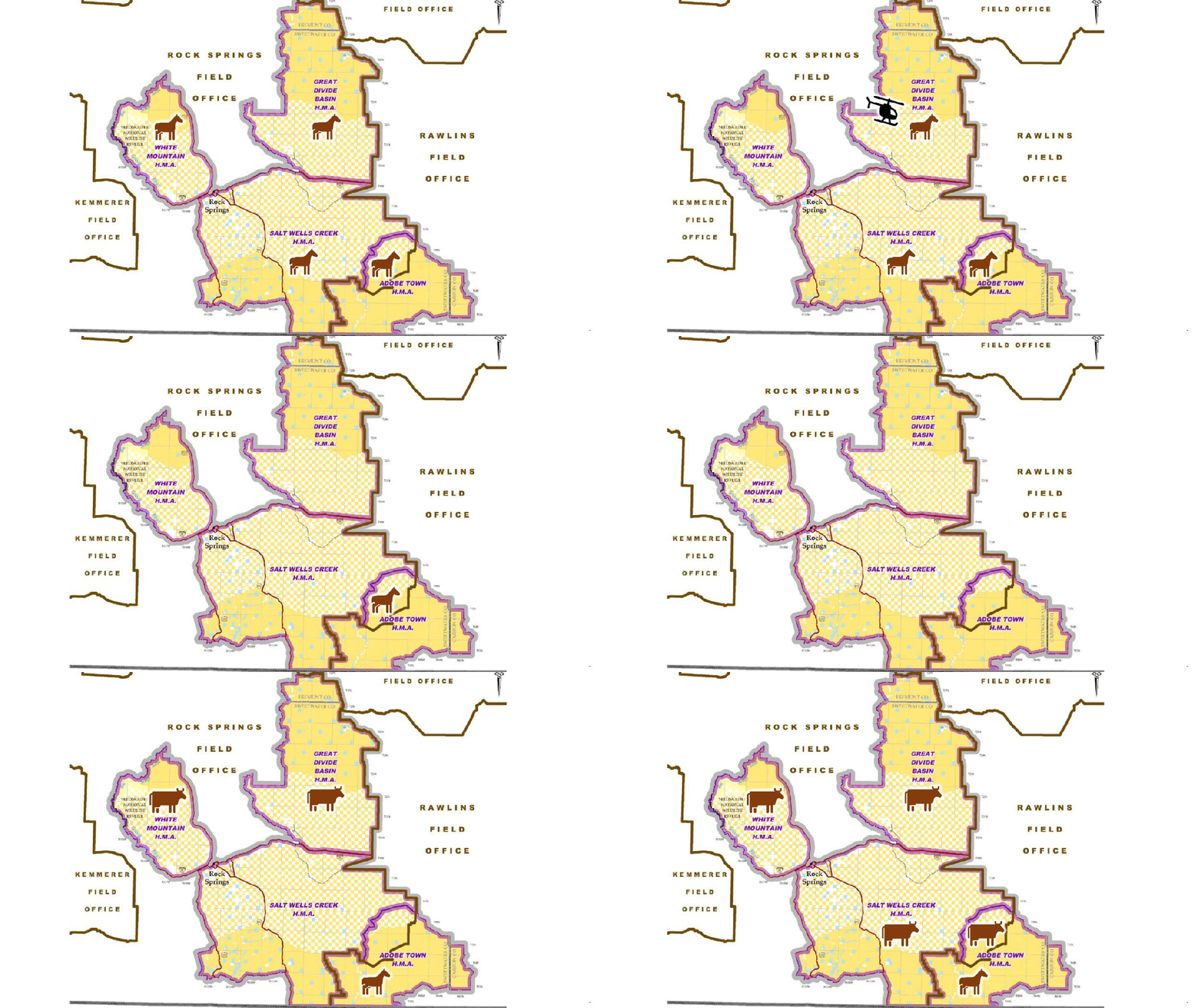
Stewart Creek HMA Map 12-15-21

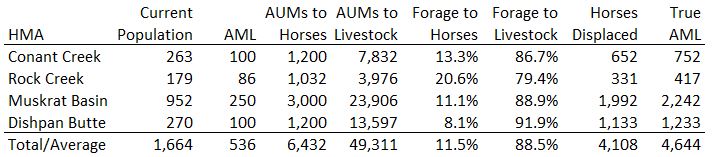
The HMA is subject to permitted grazing and the management plan assigns four times more forage to livestock than the horses.

The darting program will keep the resource scales tipped in favor of the public-lands ranchers for longer periods or time, perhaps indefinitely, which is what the advocates are trying to accomplish in other areas.

Comments will be accepted until January 17.

The news release said that they can be submitted electronically at the NEPA page for the project, but Western Horse Watchers was unable to find the link.  E-mail addresses for BLM staff were provided.

Fox-Lake Range Roundup Day 3

The incident started on December 11.  Helicopters did not fly on Days 2 and 3 due to inclement weather, according to the gather page.

To date, 36 horses have been captured, with none shipped and one dead.

The pre-gather population was approximately 0.8X AML.

Given that most of the returned horses will be treated with GonaCon, the operation could be classified as pest control.

RELATED: Fox-Lake Range Roundup Begins.

Countdown to 50 | 2 Days to Go

Reports about free-roaming horses and burros usually do not mention permitted grazing and how the original WHB Act was altered at the behest of ranching interests.

The new priorities, which protect the public-lands ranchers, not the horses and burros, are reflected in the current statute and the federal regulations affecting those animals.

Today we we acknowledge the role of big tech and the media in controlling what the American people see and hear about wild horses and burros.

Search results point to groups that accept the overpopulation narrative, promote PZP darting and other means of population suppression, and are helping the government achieve and maintain AMLs—which are biased in favor of the ranchers.

Film crews don’t go back to the HMAs after roundups to see what type of animals filled the void and follow-up reports suggest the horses are better off in the gulags.

Is it because they’re not curious or are they just following orders?

These people don’t bring you the truth, they insulate you from it.

RELATED: Countdown to 50 | 3 Days to Go.

In Loving Memory of Mom

She would have been 93 today but left this world on December 4.

Her favorite, a lemon tree by the round pen, carries on without her, as we all are.

She stopped coming out to the ranch in 2018.  She would usually drop off something for me to eat, say hi to the horses, then go work on the tree.

The visit would last about an hour.  I was usually cleaning one of the corrals.

After pruning a few branches and removing the fruit that had ripened, she’d carry them back to her car and drive home.

How I miss those days.

Lemon Tree by Roundpen 12-12-21

Countdown to 50 | 3 Days to Go

The current statute, and the program arising therefrom, have a downstream focus that can be summarized as ‘Off the Range.’  This is the realm in which the advocates operate.

The proactive approach, codified in the original Act, is gone.

Today we recognize the importance of an upstream focus in protecting these animals, which requires an understanding of cause and effect.

A process is a series of steps that must be carried in a specified order to achieve the desired results.  The steps are often described in a procedure.

Causes are upstream in the process, effects are downstream.

If a plane crashes, do the investigators look at events that occurred 24 hours after it hit the ground?

Of course not!  They look upstream in the flight process to identify actions or conditions that may have contributed to the crash.  The investigation may take them through events that occurred minutes, days or months before.

Improvements to safety and reliability, designed to prevent future crashes, focus on those actions and conditions, which, in the final report, are identified as causes.

If you want to help America’s wild horses, don’t focus on the horses.  The advocates focus on the horses.

Instead, look upstream in the management process, understand why they’re being forced off their home range, and address those causes for a lasting solution.

RELATED: Countdown to 50 | 4 Days to Go.

Fixing Wet Spots

A few weeks ago this corner of the corral was a pond.  The addition of some fill material made things better but it was still wet, suggesting there was another source of water.

You might point to the horses in the shelter, and you’d be right, but the hose used to fill their water buckets, seen in the photo, was leaking.  That was fixed on December 9.

How do you know if you addressed the cause of a problem?  It goes away.

Getting rid of the horses is not an option.  Throwing out some kitty litter to absorb the moisture doesn’t fix the leak and only prolongs the problem.

Fixing Wet Spots 12-11-21

Mind Not Required

Which is easier?

A. Digging through ePlanning and RAS for the necessary data, computing the resource allocations, and demonstrating that an HMA can support six times more wild horses than the government allows.

B. Pulling the trigger on your darting rifle and denying the transmission of life, with benefits accruing to the public-lands ranchers.

Which one is better for the horses in the long run?

Which one will be featured in Google search results?

How Many Wild Horses Can the Fox-Lake Range HMA Support?

The 204 horses allowed by plan require 2,448 AUMs per year.

Table 7 in the Final EA for resource enforcement actions in the Smoke Creek Complex identifies two allotments that intersect the HMA.  Pole Canyon is 100% inside, along with 90.3% of Rodeo Creek.  Click on image to open in new tab.

Fox-Lake Range Allotments 12-09-21

The Allotment Master report shows 540 AUMs per year available to livestock in Pole Canyon and 5,542 AUMs per year at Rodeo Creek.

The total estimated forage inside the HMA, assuming the resource is evenly distributed across the allotments, is 2,448 + 540 + .903 × 5,542 = 7,992 AUMs per year.  The actual amount may be a little higher due to an allowance for wildlife.

The number of wild horses the HMA can support, if it was managed principally for those animals as specified in the original statute, is 7,992 ÷ 12 = 666.  This is the True AML.

The number of wild horses displaced from the HMA by privately owned livestock is (540 + .903 × 5,542) ÷ 12 = 462, about 0.9% of those in off-range holding.

True AML = AML + Horses displaced

The advocates will tell you that the question is almost impossible to answer, but it’s not that difficult if you’re willing to dig through ePlanning and RAS for the relevant data.

RELATED: Fox-Lake Range Allotment Status.

Countdown to 50 | 4 Days to Go

The addition of AMLs to the original Act put an end to the idea that areas identified for wild horses and burros would be devoted principally but not necessarily exclusively to their welfare.

This undefined concept has shifted large amounts of resources from wild horses and burros to privately owned cattle and sheep.

In this regard the truth is a bit technical and requires some basic analytical skills to articulate.

Today we recognize the importance of data in helping others understand how their public lands are managed.

For example, in the five HMAs subject to the Rock Springs roundup, livestock receive 7.4 times more forage than the horses.  The forage assigned to livestock would support an additional 16,000 wild horses, for a True AML that exceeds 18,000.

There is no overpopulation and no justification for a roundup or darting program.

The horses displaced by livestock in these HMAs account for almost one third of those in off-range holding.

The advocates want you to follow the science (of population suppression) but they don’t want you to follow the math.  They are servants of the public-lands ranchers.

RELATED: Countdown to 50 | 5 Days to Go.

Wild Horse Management

Fox-Lake Range Allotment Status

Section 3.9 in the 2017 Final EA for resource enforcement actions in the Smoke Creek Complex identifies two allotments that overlap the HMA.

The Western Watersheds map shows the arrangement.

Fox-Lake Range Allotments 12-09-21

The Allotment Master report supplies acreage, management status and active AUMs.

Fox-Lake Range Allotment Calcs 12-10-21

Pole Canyon is in the Custodial category, which hides its condition.  All of the acreage and AUMs come from public lands, so it should be classified as Improve or Maintain.

Rodeo Creek is in the Improve category, representing 93% of the grazing land associated with the HMA.

About 90% of Rodeo Creek is inside the HMA, according to Table 7 of the EA.

If forage is evenly distributed across the allotment, .9 × 5,542 = 4,988 AUMs per year have been taken from the horses and given to the permittee.

Pole Canyon is 100% inside the HMA, with all of the forage assigned to livestock.

The total forage available for grazing inside the HMA would be 540 + 4,988 = 5,528 AUMs per year, about 2.3 times higher than the 2,448 AUMs per year assigned to the horses, reinforcing yesterday’s assertion that the aim of the wild horse and burro program is to minimize its impact on the grazing program.

RELATED: Fox-Lake Range Wild Horse Roundup Announced.

Countdown to 50 | 5 Days to Go

Relocation of wild horses and burros to areas of the public lands where they were not found in 1971 was prohibited by the original Act.  That provision carried over into the current statute.

Today we recognize the importance of protecting their land.

Policies and plans that put ranching interests far above those of the horses and burros must be blasted out and replaced with others that reflect the will of the American people, expressed through their elected representatives, fifty years ago.

Don’t expect any leadership from the advocates in this regard, they are already whipped.

RELATED: Countdown to 50 | 6 Days to Go.

Cattle and Horses

Remove Advocates from Virginia Range Now!

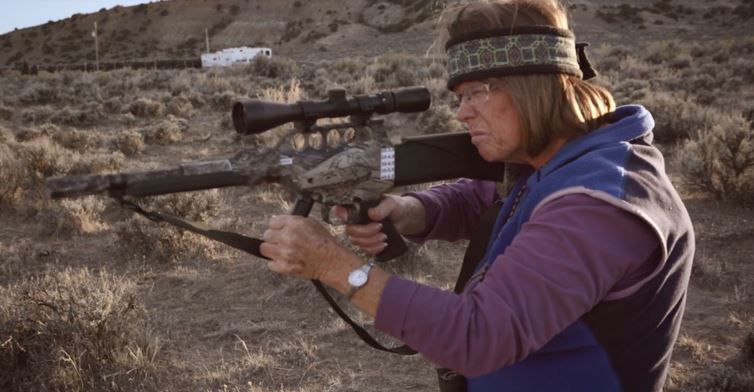
The Animal Industry Update for the December 8 Board of Agriculture Meeting indicates that the Campaign Against America’s Wild Horses fired 350 doses (of PZP) into the herd in one month, equivalent to 4,200 doses per year!

This one-sided war on the mustangs rivals the largest of the helicopter roundups and is a throwback to the ‘fast-disappearing’ days.

Contact information for the Nevada Board of Agriculture can be found here.

Responsibility for the situation lies with the Nevada Department of Agriculture.

RELATED: Virginia Range Advocates Report to Nevada Board of Agriculture.

Countdown to 50 | 6 Days to Go

In the original Act, free-roaming horses and burros were to be protected from capture, branding, harassment and death.

Today we see widespread capture, branding, harassment and death, inflicted mostly by the government and the advocates.

VR Darting Injury 09-15-21

Why?  Because most of the resources in areas set aside for wild horses and burros have been assigned to privately owned cattle and sheep.

The wild horse and burro program is a pest control program designed to minimize its impact on the grazing program.

That’s what you’re supposed to celebrate on December 15.

RELATED: Countdown to 50 | 7 Days to Go.