The advocates want the same thing as the bureaucrats and ranchers: Fewer horses on the range. Ever notice that?
RELATED: Nuttiness of Wild Horse World.


Western Horse Watchers Association
Exposing the Hypocrisy, Lies and Incompetence of the Wild Horse Advocates
Opinion
The advocates want the same thing as the bureaucrats and ranchers: Fewer horses on the range. Ever notice that?
RELATED: Nuttiness of Wild Horse World.
Western Horse Watchers agrees: The numbers show that many areas set aside for wild horses are managed primarily, if not principally, for livestock. That’s why the animals are being forced off their home range at a record pace.
Data from the Pancake roundup, discussed in a BLM blog post, indicate five horses lost (0.24%) due to injuries sustained in the incident. Not mentioned are the 21 horses put down (shot dead?) due to physical defects.
The number of horses that would be lost if the roundup didn’t occur? Zero.
Ten horses were lost in the Rock Springs roundup due to injuries sustained in the incident (0.24%), plus 27 put down due to physical defects, compared to zero if the incident didn’t occur.
The number of horses shipped from the Rock Springs HMAs was not provided, so the results cannot be checked for balance and the number of unaccounted-for animals cannot be determined.
Thus, it is true, the figures don’t lie—if you can get them.
On Day 4 of the Jackson Mountains roundup, not considered in the post, a foal was put down because it was an orphan. That was its only shortcoming. The government has since tried to cover it up.
Links to roundups in 2021 have been removed from the Nevada gather page, but the daily reports for Jackson Mountains can be found here. The final death rate was 5.9%!
The writer(s) of the blog post indicated that the Pancake herd boomed as food and water dwindled, suggesting that other factors may be more important for the support of life on western rangelands.
That’s what a Rock Springs resident told Wyoming Public Media in a story posted yesterday. They won’t be starving to death in the winter.
The government, media and advocates have done a fine job covering for the public-lands ranchers, brainwashing the American people about the situation out west.
The Rock Springs HMAs could not be overpopulated with 5,105 wild horses (before the roundup), when the BLM authorizes privately owned livestock equivalent to 15,982 horses in the same area, on top of the 2,145 horses allowed by plan.
The horses displaced from the HMAs by permitted grazing represent almost one third of those in off-range holding.
The advocates won’t tell you the truth about wild horses because the rationale for their darting programs would fall to the ground. They are far more concerned about their standing with the bureaucrats and ranchers.
Refer to the audio segment posted today by KNPR Radio of Las Vegas.
The herds must still be managed (for the benefit of the public-lands ranchers).
There will be fewer injuries (but there will still be roundups).
Management plans (that favor the ranchers) won’t change.
Just use a more humane approach (but keep the gravy train going).
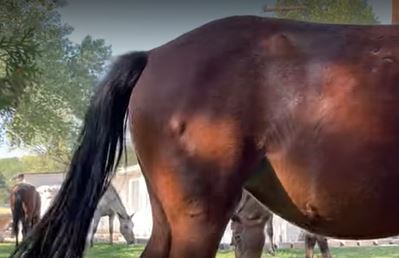
Resource enforcement goal before the ban: 22,000 captured and 19,000 removed.
Resource enforcement goal after the ban: 22,000 captured and 19,000 removed.
RELATED: Anti-Helicopter Chatter Too Far Downstream to Help Wild Horses.
As if right on cue, the executive director of the Campaign Against America’s Wild Horses told FOX 5 News of Las Vegas in a report posted yesterday that her group supports the ill-advised plan to end helicopter roundups and the use of fertility control vaccines to eradicate wild horses.
Ranchers in the Pancake Complex receive over five times more forage than the horses, yet this woman, and other like her, want to target the horses.
RELATED: Anti-Helicopter Chatter Too Far Downstream to Help Wild Horses.
No youngsters have been captured eight days into the roundup.
Apparently, the Pancake herd didn’t get the memo. Twelve percent of the captured animals were foals, in a roundup that ended yesterday.
If you’re an advocate, there is much to cheer about at the HMA, as noted previously.
The group, which represents the interests of farmers and ranchers in the state, said in news release posted today by the Elko Daily Free Press that HR 6635, legislation that would ban the use of helicopters in wild horse and burro roundups, would seriously thwart the efforts of the BLM to achieve AMLs as well as restore the condition of rangelands that provide habitat for wildlife and multiple-use stakeholders.
Helicopter roundups are the only cost-effective method available for gathering the necessary number of animals over vast and difficult terrain, according to the writers, who did not explain that AMLs are usually small relative to the available resources.
Western Horse Watchers has not seen any critiques of the proposal by groups representing drilling and mining interests.
RELATED: Anti-Helicopter Chatter Too Far Downstream to Help Wild Horses.
The Sulphur HMA features everything they demand, yet it is a disaster for the horses.
RELATED: Lots to Celebrate at Sulphur HMA, If You’re an Advocate.
Here are some of the highlights:
The advocates are pleased with these results. The herd is well on its way to extinction, with benefits accruing to the public-lands ranchers.
This is what you’re supporting when you give them money.
RELATED: Youngsters Hard to Find at Sulphur HMA.
Figures for Day 4 of the roundup show zero foals captured to date.

With no new blood hitting the ground, the herd will shrink without the aid of helicopters and the ranchers will be able to enjoy everything their allotments have to offer.
How much longer before the advocates point to the HMA as a paragon of wild horse management? It even has a herd management area plan (HMAP)!
RELATED: Sulphur Roundup Day 3.
A report posted yesterday by the Las Vegas Review-Journal says lawmakers want the BLM to replace helicopters with wranglers and spend more money on fertility control to manage (i.e., inhibit) population growth.
The proposal does not address the cause of roundups: Resource management plans that put ranching interests far above those of the horses.
It’s a stupid idea, prompted, at least in part, by the advocates.
If legislators want to help America’s wild horses, let them unwind all of the changes to the WHB Act and restore it to its original form.
RELATED: End Helicopter Roundups?
The advocates are trying to convince you that they care about wild horses, by protesting the BLM’s resource enforcement goals for FY 2022, while they’re getting rid of as many as possible with PZP.
The Virginia Range darting program, sponsored by the Campaign Against America’s Wild Horses, is equivalent to five Desatoya roundups every year.
Similar programs are taking root in other areas.
In most cases, helicopters effect large changes in herd sizes over a few days or a few weeks, with the advocates protecting the ranchers after the fact in a mopping up role.
But on the Virginia Range, the advocates have been given authority for the entire operation, with goals to be achieved over a much longer timeframe, mostly by attrition.
What about accountability to the public? Western Horse Watchers has not seen any reports on deaths or injuries attributable to the field work, changes in herd behavior due to the increased presence of humans in their habitat, or trends in the sex ratios and death rates of the bands.
We don’t even know the final population target.
RELATED: Can Darting Programs Compete with Helicopter Roundups?
Up until a few days ago, if you searched Google for “wild horse” or “wild horses,” Wild Horse Education would appear at or near the top of page 1.
Now, following the Pancake lawsuit, the site has disappeared from those results.
Interesting how that works.
The column begins on page 8 of the January edition.
In typical fashion, the executive director of the Campaign Against America’s Wild Horses feigns outrage at the government’s FY 2022 resource enforcement goals, which will take 19,000 wild horses and burros off the range, while praising the fertility control programs in Colorado and Utah that make sure the herds never bounce back.
The ranchers couldn’t have asked for a better stooge.
RELATED: Criticize Livestock, Dart Horses.
With six more week of winter on the way, livestock operators, eager to access the AUMs on your public lands, especially in areas set aside for wild horses and burros, may have to wait a bit longer until conditions improve.
One thing they won’t have to face this year is the rising cost of feed.
The advocates, allies of the bureaucrats and ranchers, look to the new year with guarded optimism, knowing that Congress has provided funding for the Montana Solution, which protects livestock, not the horses and burros.
Only in the wild horse world can you say that privately owned livestock far outnumber wild horses on America’s public lands, and that substandard conditions are due mostly to livestock, but we need to get rid of the horses.
RELATED: Criticize Livestock, Dart Horses.

The price of hay has climbed 32% in this area since July and equestrians are now paying around $125 per AUM to feed their horses, but the public-lands ranchers will continue to pay $1.35 per AUM, according to today’s news release.
The grazing program insulates the ranchers on the cost side from the realities of a free market, as noted previously.
By moving horses into feedlots and livestock onto the range, taxpayers bear the burden of rising feed prices, not the ranchers.
Refer to document #2021-008799 at the Humboldt County Recorder’s office. The price, address and closing date match the listing on Redfin.
At this point, a connection with Simplot seems dubious.
If you can’t access the deed online, you can view it here.
RELATED: Site of New Off-Range Corrals Sells for $3.8 Million.
The BLM has already signed off, but what type of challenges will the company face getting the project approved?
In an area where state and local governments sympathize with the public-lands ranchers, the plans will probably pass through the permitting process like red clover through a bull.
RELATED: Site of New Off-Range Corrals Sells for $3.8 Million.

An opinion piece published Thursday by the Reno Gazette Journal, in response to a story appearing the day before, claims that the reporter failed to explain why the BLM continues to aggressively remove wild horses from western rangelands.
The response didn’t either, so lets take a closer look.
Overpopulation, excess animals. The terms appear in the original statute but were not clarified until 1978, when Appropriate Management Levels were introduced.
AMLs are small relative to the available resources because most of them have been assigned to privately owned livestock. There is nothing in the current statute that says they must correspond to 20% or less of the authorized forage, but that’s how they’re structured.
Grazing fees. Public-lands ranchers pay about five cents on the dollar to feed their animals, compared to the going rate. The grazing program insulates them on the cost side from the realities of a free market.
Public-lands ranching is government dependency and redistribution of wealth, which the writer overlooks. State and federal agencies operate taxpayer-funded programs that alleviate adverse conditions, improving the ranchers’ fortunes.
Ranching income and profitability are inversely related to the number of horses allowed on the range, contrary to the writer’s claim. By getting rid of the horses, roundups help the ranchers access all of the AUMs on their permits. The advocates reinforce the effort with their darting programs.
Land ownership. The public acres in an allotment or HMA or WHT belong to the American people, not the permittee, as implied in the commentary. Grazing is a privilege, not a right. In the U.S., the people tell government what to do, not the other way around.
If the ranchers cited in the article couldn’t graze those allotments due to lack of forage, did they leave the profession? Or did they continue operations on rented pastures or their deeded acres, importing feed as necessary?
If they can do that during droughts and off-seasons, why not do that year around?
The writer did not cite any adverse impacts to drilling and mining in Nevada attributable to wild horses.
 Western Horse Watchers Association