Virginia Range Darting Stats

The Campaign Against America’s Wild Horses posted the numbers to their donations page on EveryAction.

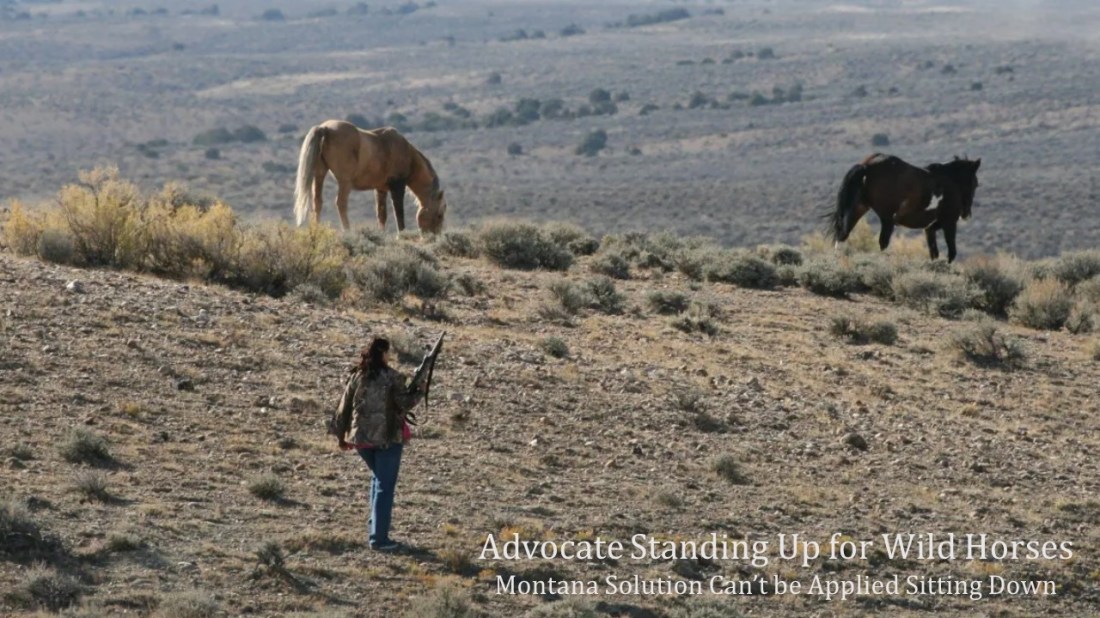
There have been no roundups because the advocates are achieving same results with the Montana Solution.  The herd has likely reached the tipping point and is now dying off.

Would you be surprised if they receive support from the bureaucrats and ranchers?

Virginia Range Darting Stats 04-26-22

Western Horse Watchers believes they are underreporting (ahem, cough-cough, lying about) the reduction in birth rates, based on trailcam images over the past year.

The mares have received an average of 3.3 treatments each, so they are about two years away from sterilization.

Will the advocates back off, allowing the mares to foal, or will they press on with their anti-horse agenda, ruining the herd but pleasing the bureaucrats and ranchers whom they adore?

RELATED: Virginia Range Darting Program Threatens All Wild Horses.

‘Full Frontal’ Pulls Trigger on Wild Horses

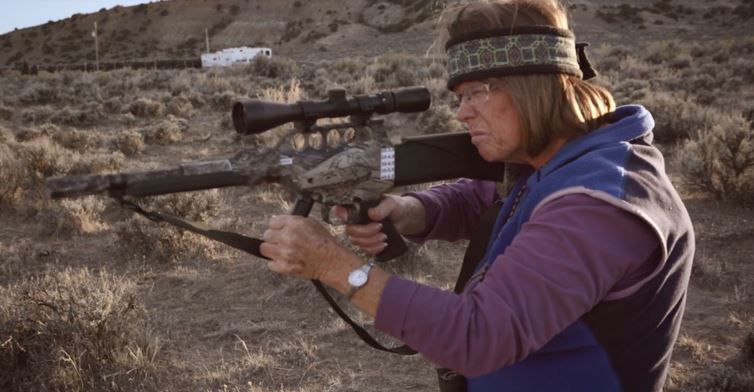
You knew this story was DOA with the introduction of the PZP fanatics at 0:50.

Note the “Stay Wild” cap.  Big red flag.

The woman interviewed at 1:57 claims the livestock industry drives most of the roundups, yet her organization is as eager to get rid of the horses as the ranchers.

Poorly researched and off the mark, the report gets an F.

And contrary to the advice in the video description, don’t give these people a penny.

RELATED: Virginia Range Darting Program Threatens All Wild Horses.

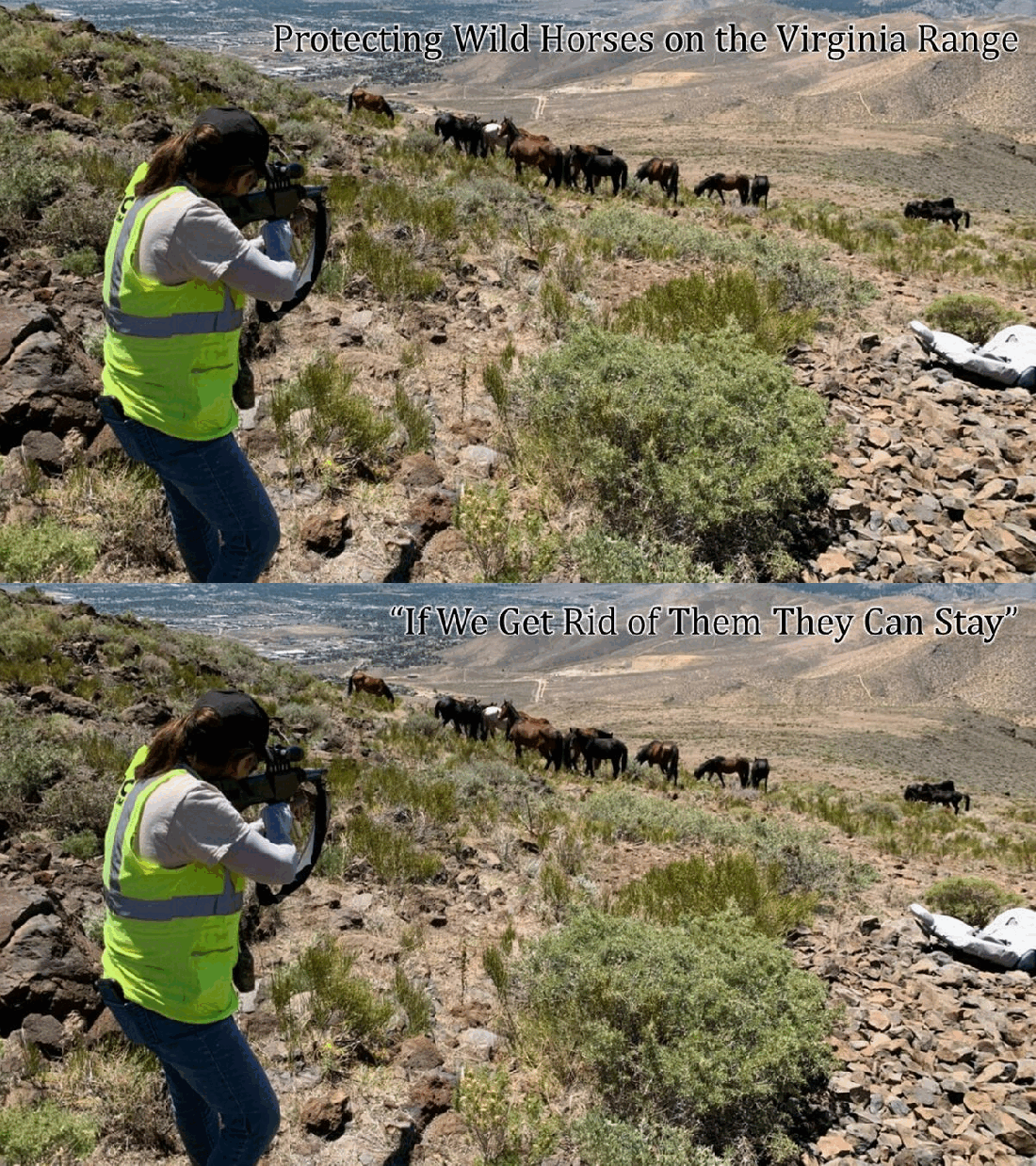
Virginia Range Darting Program Threatens All Wild Horses

Even now, three years after the Nevada Department of Agriculture allowed the PZP fanatics to resume their eradication of the herd, the Virginia Range contradicts the government narrative about the carrying capacity of western rangelands.

“There is attrition in the range and the foal numbers are down, and so we see a reduction in population,” an advocate told a reporter for Courthouse News in the article last August.

Indeed, trailcams installed by Western Horse Watchers only detected one foal in 2021, not seen in subsequent images and probably lost to predators.

Before the advocates got involved, the Virginia was supporting ten wild horses per thousand acres, maybe a bit more, compared to one wild horse per thousand acres on public lands managed by the BLM (27,000 animals on 27 million acres).

The total number of animals allowed by plan includes burros, so if you corrected for that the target rate would be less than one wild horse per thousand acres.

But the bureaucrats at NDA, an agency staffed by ranchers and ranching sympathizers, among others, claim that the Virginia Range can only support 600 wild horses and ideally no more than 300.  The latter figure works out to—wait for it—one wild horse per thousand acres, in line with the BLM narrative!

So the bureaucrats are coordinating their efforts to deceive the public, with the full cooperation of the advocates.

If they achieve their goals on the Virginia Range, “they will provide a valuable template that can be reliably exported to other management areas throughout the American West,” as stated in the article.

RELATED: Move Over Cattoor, Advocates Want Larger Share of Market.

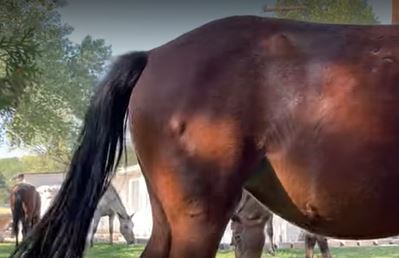
Progression of Injuries VR 07-30-21

WHC Scrubs References to PZP?

The article last August by Courthouse News said the Nevada Department of Agriculture had contracted with Wild Horse Connection to implement the fertility control program on the Virginia Range, an area where 3,000 or so horses wander over a triangle-sized piece of desolate land that extends from Reno to Fernley in the east and to Carson City in the south.

A keyword search of their site for “PZP” yielded no results.

No PZP at WHC 04-20-22

Additional searches for “fertility,” “dart” and “vaccine” produced no matches, while a search for “horse” yielded 21 hits.

Are they ashamed of what they’re doing to the horses?  Probably not.  But they know donations will dry up if the truth gets out.

Their home page features a mare and foal—exactly what they’re trying to prevent—and their projects page includes several photos of a cattle guard that can trap wild horses, as seen recently at the Salt River.

Like the Salt River Wild Horse Darting Group, WHC is a surrogate of the Campaign Against America’s Wild Horses.

RELATED: Advocates Have Answer to Wild Horse Problem?

Trajectory of Wildh Horse Fertility Control Program 04-11-21

Grazing Service Alive and Well at BLM

This article in the Daily Camera of Boulder, CO refers to the anti-horse bias at the BLM, which dates back to its predecessor, the Grazing Service.

But it’s not just horses.  Anything that interferes with public-lands ranching is targeted.

Examples include wildlife, invasive weeds and trees that crowd out forage.

BLM3

The article includes a post-roundup photo of Sand Wash Basin showing hundreds, if not thousands, of sheep dotting the landscape.

But it does not mention the BLM’s partners in the management process, who protect the ranchers after the fact with the Montana Solution.

In the case of Sand Wash Basin, it’s SWAT, a group that helps the agency enforce the RMP that assigns 79% of the available forage to livestock while guaranteeing that the 1,402 horses displaced from the HMA by permitted grazing never come back.

Good job guys, a fine example of the Love Triangle on America’s public lands.

RELATED: No More Large-Scale Roundups at Sand Wash Basin?

How to Help Three Fingers and Jackies Butte Horses

Like other HMAs, their AMLs are small relative to the available resources because most of them have been assigned to privately owned livestock.

This is a condition that the PZP fanatics won’t even acknowledge, let alone challenge.

Their mission is to protect the ranchers, not the horses, which is why you shouldn’t be giving them money.

Would Herd Management Area Plans (HMAPs) help?

The BLM allocated forage for livestock in the 2002 Record of Decision for the Southeastern Oregon Resource Management Plan, which was carried forward from the 1984 Southern Malheur Rangeland Program Summary, according to Section 3.2.2 of the Draft EA for resource enforcement actions in the HMAs.

If the HMAPs did not alter the specifications of the RMP, they could only ratify and reinforce current practices, which are biased in favor of the ranchers.

RELATED: How Many Wild Horses Can Jackies Butte HMA Support?

Pancake Gather Plan

CAAWH Marks Three Years on Virginia Range

There is no column in the current edition of Horse Tales by the real estate agent and PZP darter in the Minden/Gardnerville area but there is an acknowledgement by the Campaign Against America’s Wild Horses at the bottom of page 18 about the outpouring of support for their work.

Their goal is to convince the bureaucrats that PZP darting is a viable alternative to helicopter roundups and that there is better way of enforcing the lopsided resource allocations that put ranching interests far above those of the horses.

RELATED: Three Out of Four Americans Duped by Advocates?

Rescue of Salt River Stallion Captured on Film

The story begins at 0:52.  The advocates get involved at 3:15.

Why is there a cattle guard in an area frequented by wild horses and why would they offer assistance to an animal they’re trying to eradicate?

The woman on the ground at 4:17 might be wearing a “Stay Wild” cap, a signal to others that she’s down with the Montana Solution.

RELATED: Salt River Stallion Freed from Cattle Guard.

Crocodile Tears at Currituck Outer Banks?

The advocates are devastated, or so they say, according to a post on socialist media.

Advocates Devastated 04-16-22

If you’re a purveyor of the Montana Solution, are you really annoyed by the loss of a wild horse?

The death of Charlie, first foal of 2022, is the latest in a string of incidents in the area.

These are the headlines from the past year!

All of this while the advocates bill themselves as “The Official & Only Non-Profit Protectors of the Wild Horses.”

RELATED: What Will Happen to Mom of New Currituck Foal?

What Will Happen to Mom of New Currituck Foal?

She’s reached her quota.  The herd is too important to leave its genetics to nature.

Will the advocates put her back on PZP for the rest of her life or at least until she’s sterile so another mare can have her turn?

From this viewpoint, horses lost to contaminated water, collisions with vehicles, damaged fences, or otherwise removed from the area, are a good thing, they take some pressure off the darting budget.

RELATED: Fourth Foal of Year Appears on Currituck Outer Banks.

Move Over Cattoor, Advocates Want Larger Share of Market

The wild horse removal business is getting crowded.

The Campaign Against America’s Wild Horses is hiring, more volunteers are making the pilgrimage to Billings and every mare has a target on her.

Wild Horses Through the Eyes of the Advocates 01-19-22

The new pest control program for the Three Fingers and Jackies Butte HMAs, with its mandate for intensive fertility control, will be cheered by the advocates, who will not only embrace it but offer to apply it, assuring that most of the resources in the area go to the public-lands ranchers.

RELATED: Draft EA for Three Fingers and Jackies Butte Out for Review.

Bold Prediction for Motorized Equipment Hearing

The advocates will argue that helicopters are cruel and inhumane and that the herds should be managed with PZP.

The cattlemen will claim that the HMAs are overpopulated and that the government should get rid of them with helicopters.

Protect Wild Horses from Advocates 08-29-21

There will be no voices for the horses and nothing good will come out of it because it’s focused on the wrong things.

The meeting, set for April 26, will be livestreamed.

RELATED: Public Hearing Next Month Regarding WHB Management.

Additional Comments Sought for Pryor Management Plan Update

Comments submitted during the scoping period in 2020 need not be resubmitted, according to today’s news release, but an additional document regarding genetic diversity has been posted to the project folder for public review.

The goal is to improve herd genetics, but not at the expense of ecosystem sustainability and the available resources.

The Western Watersheds map shows the WHR is surrounded on three sides by grazing allotments, both Forest Service and BLM.  Grazing does not occur inside the WHR.

Pryor Mountains WHR Map 03-30-22

The map does not show the portion of the WHR managed by the Forest Service.

Bringing in horses from other areas dilutes herd identity.

It’s a management trick that boosts genetic diversity while keeping herd sizes small, a nod to the public-lands ranchers.

In the future, you won’t be able to adopt a Pryor Mountains horse, only a horse captured in the Pryor Mountains WHR.

RELATED: Comments Invited on Pryor Management Plan Update.

Rising Price of Hay Explained

The following video, produced for the Nevada Rangeland Resources Commission, offers two possibilities (4:42 to 6:39).

  • There are too many horses on the range – Ranchers are removing livestock from their allotments and feeding them on their own property, increasing demand
  • There are too many horses off the range – The government is removing them from the same allotments and feeding them in holding facilities, driving up demand

Can both be true?

The sad part is that the ranchers must operate their businesses on their own land and pay the going rate to feed their animals.  Nobody in this country is expected to do that.

The price of hay in this area is now around $125 per AUM.  This comes as a shock to the ranchers, who have been insulated from the realities of a free market, at least on the cost side, for decades.

World events and the ill-advised policies of the current administration have no effect.

Although probably not intended by its producers, the film shows how to fix the Wild Horse and Burro Program: Confine the ranchers to their base properties and let them pay market rates to feed their animals.  No more gravy train, no more sucking on the government teat.

UPDATE: Video replaced by newer version.

Motorized Equipment Hearing in the News

This story by KLAS News of Las Vegas notes that the online meeting will consider the use of helicopters in the management of wild horses and burros, which Dina Titus and her supporters want to ban.

Roundups will still occur and resource allocations that strongly favor the public-lands ranchers will not be changed.

It’s a stupid idea which explains why the advocates like it.

H.R. 6635, the ‘Save a Horse, Hire a Cowboy’ Act, was introduced in Congress on February 7 and referred to the House Natural Resources Committee.

RELATED: Public Hearing Next Month Regarding WHB Management.

How to Estimate the Carrying Capacity of HMAs

The method has been demonstrated numerous times on these pages:

  • Identify the allotments that intersect the HMA
  • Determine the forage assigned to livestock inside the HMA
  • Convert that amount to wild horses
  • Add the result to the current AML

The third step yields the number of animals displaced from the HMA by permitted grazing—adopted, sold or shipped to long-term holding.

The final value is the True AML, the number of animals the area could support if it was managed principally for wild horses, as specified in the original statute.

Today’s news release by the BLM regarding the FY 2023 budget suggested that AMLs represent carrying capacities, which they do not, except for four HMAs where permitted grazing does not occur.

The advocates don’t want you looking at the numbers because the rationale for their darting programs would fall to the ground.

You don’t ask a poor man how to get rich and you don’t ask the advocates how to save wild horses.

RELATED: White House Seeks $153 Million for WHB Program in FY 2023.

Land Can Only Support 04-21-21