This story by ABC Fox Montana in Missoula speaks volumes about the way the media react to events involving wild horses.
Who will get rid of them?
Apparently, they didn’t think about calling the advocates.

Western Horse Watchers Association
Exposing the Hypocrisy, Lies and Incompetence of the Wild Horse Advocates
Opinion
This story by ABC Fox Montana in Missoula speaks volumes about the way the media react to events involving wild horses.
Who will get rid of them?
Apparently, they didn’t think about calling the advocates.
You have to. Taking them off the range with the Montana Solution would be much more difficult sitting down.
On the other hand, in view of the extended timeframe to achieve the desired results, as opposed to the cruel and inhumane helicopter roundups, you’ll definitely want to bring a lawn chair with your darting gear.

Would the one-horse pony travel to Texas if the victims were white?
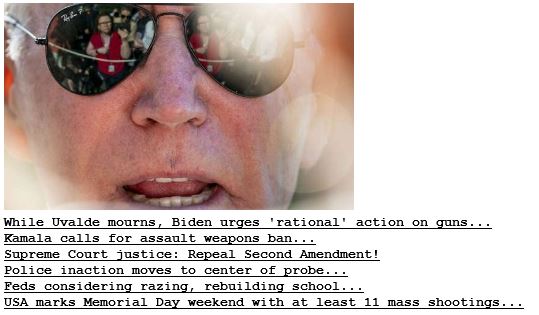
As expected, liberals are using the incident to further their political agenda, which has always included the separation of you from your guns, as seen today on Drudge.
They want you subjugated to an all-powerful centralized government, the antithesis of the American founding. And they’re willing to destroy the economy and your standard of living to achieve it.
If you won’t go along with their plan they’ll call you a racist, homophobe, misogynist or other pejorative. That’s how they get their commie-pinko-fag candidates into office.
You fall for the ploy because you do not know Truth.
Pay no attention to their propaganda and never give up your guns.
Normally the process is reserved for the deceased but in darting circles their accomplishments are unprecedented.
Each has delivered over one thousand doses of PZP to mustangs on the Virginia Range, according to the author of “Wild Horse Tales” in the May edition of Horse Tales.
As a result, injuries are easier to find than youngsters.
RELATED: Montana Solution Harmless Because Advocates Said So.

The mask is off. The article titled “Wild Horse Tales” in the May edition of Horse Tales reveals their glorious plan, starting on page six.
No sensible person can look at what they’re doing to the horses and call it protection.
If you think these people are protecting wild horses then you probably think the Uvalde shooter was protecting kids.
Don’t forget your “Stay Wild” cap.
RELATED: Older Horses Should Be Allowed to Die Where Born.
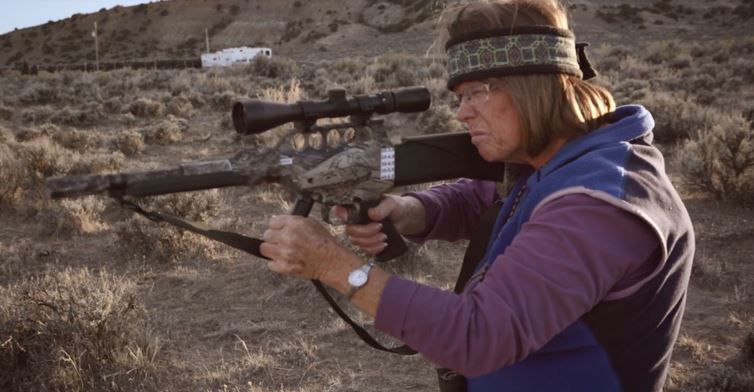
As for the youngsters, they shouldn’t be allowed at all.
The real estate agent and PZP darter in Minden/Gardnerville area is back with another column about the Montana Solution in this month’s edition of Horse Tales.
A perfect topic for Foal-Free Friday, starting on page six.
This charlatan praises the work of the Campaign Against America’s Wild Horses and Wild Horse Eradication, who spend your hard-earned donations on useless endeavors.
She points to the 60,000 animals in off-range holding, and the associated costs, but does not say a word about the cattle and sheep occupying their home range.
A few miles to the north, the advocate identifies four others who have fired over one thousand doses each of PZP into the Virginia Range herd.
She’s proud of their accomplishments.
The article concludes with some remarks about roundups—that don’t work according to the monster-in-charge at CAAWH.
They are very effective, you idiot, at shifting resources from wild horses to privately owned livestock, the same thing you and your foot soldiers are trying to achieve with the Montana Solution.
The herds will never bounce back if they have their way, assuring ranching superiority in areas set aside for the horses.
These people are lowbrows, stooges for the public-lands ranchers.

Q. Why are you always cracking on the advocates?
A. Because they’re wrong.
Q. Isn’t that a bit divisive?
A. I don’t care what they think, I am a voice for the horses.
Q. What don’t they like about Western Horse Watchers?
A. The numbers—the truth is in the numbers and they are innumerate.
Q. What’s missing from the wild horse world?
A. The technical side—the data, the calculations, the comparisons.
Q. Why is that important?
A. The American people don’t realize how far we’ve strayed from the original statute.
Q. Why aren’t you on socialist media?
A. You can say whatever you want as long as it conforms to leftist ideology.
Q. What’s wrong with that?
A. Seriously?

Refer to the commentary dated May 24 in the Reno Gazette Journal, written by a volunteer who filmed the colt with the broken leg on Day 1 of the roundup.
The incident prompted the introduction of HR 6635, the helicopter ban, that would not affect the driver of wild horse removals, only the way they are carried out.
The road to improvement starts with Herd Management Area Plans, according to the writer.
“The effect of not having these plans is these outrageous and large helicopter roundups.”
Wrong.
The Draft EA for resource enforcement actions in the Bible Springs Complex indicates in Section 1.1 that HMAPs are not prerequisites to the BLM taking horses off the range.
On-site observation of wild horse roundups, discussed in the column, documents the problem but does not point to solutions.
Injuries, deaths and subsequent mistreatment of these animals, including the incident at Cañon City and the fallout from the adoption incentive program, are too late, too far downstream in the management process, yet they receive most of the attention.
Areas identified for wild horses are managed primarily—if not principally—for privately owned cattle and sheep.
The off-the-range philosophy of the wild horse and burro program follows naturally.
This explains why roundups, fertility control, sterilization, sex-ratio skewing, adoptions, training and warehousing of captured animals devour most of its budget.
It’s a pest control program, designed to minimize its impact on the grazing program.
Would HMAPs change any of that?
Of course not.
The EA suggests that HMAPs establish AMLs and objectives for managing the HMAs, consistent with pre-existing management plans and other decision documents, monitor conditions and evaluate whether management objectives are being met, and provide corrective actions if the goals are not being achieved.
Put simply, they ratify and reinforce the status quo!
What are the results where they’ve been applied?
Livestock receive 88% of the authorized forage at the North Lander Complex, to be affirmed by an HMAP.
Livestock receive 89% of the authorized forage at the Warm Springs HMA in Oregon, to be locked in by an HMAP.
At Little Colorado HMA in Wyoming, livestock receive 97% of the authorized forage, awaiting ratification by an HMAP.
The writer’s thesis is off the mark. The folks at Wild Horse Education, widely regarded as experts in the field, should know that.
RELATED: HMAPs Are Not the Answer.
Those who are so concerned about saving wild horses from slaughter would be first in line to get rid of them with the Montana Solution.
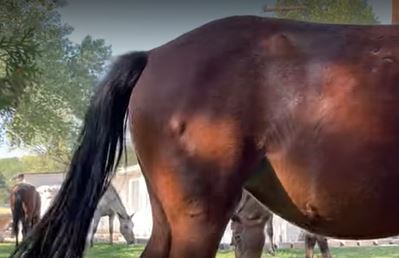
Ever notice that?
Don’t forget your “Stay Wild” cap.
RELATED: International Fertility Control Conference Next Week.
If every mare in a herd produced a foal, you’d see birth rates approaching, possibly exceeding, 50% per year.
Mares tend to outnumber stallions on the range, indicated by data from roundups.
A 45/55 split between males and females would not be unusual.
The Montana Solution magnifies the disparity, even taking it outside the range of expected variation from a random process.

Foals typically represent fifteen to twenty percent of the horses captured in a roundup.
Not all mares want to be bred, at least in your host’s experience.
They resist the stallion’s advances.
You may have heard about horses taking their riders under trees to knock them off.
Same thing happens at the ranch. The mare, untreated, goes straight for the barn when the colt, uncut, tries to mount her, knocking him off. This has been going on for several weeks, complete with dust and flying gravel.
This suggests that there may be other ways of letting the horses manage themselves on the range, without the interference of humans. They may know more about appropriate herd sizes, genetic diversity and the risks of inbreeding than we think.
“Dart them anyway, it’s good for business.”

The duly elected sodomite and enemy of marriage, family and traditional values—but praised by the advocates because he’ll push for infertility of wild horses—told the Acting Director of the BLM in the state that the roundup should be delayed until any influx of new horses will not face the same kind of outbreak that occurred at Cañon City, as explained in a story posted yesterday by Fox21 News of Colorado Springs.
The roundup is set for late August according to the latest schedule.
The Campaign Against America’s Wild Horses, platinum sponsor of the International Conference on Fertility Control, knows how to stop it.

They are a voice for the public-lands ranchers. Why are you still giving them money?
No more roundups, the group said today in a news release, until the BLM can ensure the animals’ health and safety off the range.
Then it’s okay to let the helicopters fly?
Western Horse Watchers says no more roundups until lands designated in 1971 are managed principally for wild horses and burros, as specified in the original statute, and the True AMLs have been exceeded.
The inquiry would likely focus on vaccines that prevent illness, not on vaccines that prevent life.
The announcement refers to First Gentleman Marlon Reis, who is the sodomite partner of the Governor of Colorado.
The event is set for May 23 – 25 in Colorado Springs, CO.
The conference committee includes members from RTF and HSUS, signatories to the rancher-friendly “Path Forward.”
Look at the sponsors: BLM, HSUS, CAAWH, AWI, SCC, ASPCA, RTF.
The opening plenary features remarks about wild equid fertility control and stakeholder engagement by the Assistant Director of Resources and Planning at the BLM.
The agenda includes a session on Day 2 regarding the treatment of burros with PZP, probably on the Black Mountain HMA (now subject to a roundup).
The conference promises to create an environment that is inclusive, welcoming, supportive, collaborative and productive for all participants, and will cater to a community known for its moral depravity.
The Governor of Colorado, a filthy sodomite, will speak to the group on May 23.
RELATED: Science-Based Management (of Wild Horses) Explained.
You should always follow the science.
Science tells us that the “clump of cells” inside a woman when she’s pregnant is a human but that means abortion is murder.
You should follow the science most of the time.
Science also tells us that water runs downhill but almost anything is possible when you’re a liberal, including a man being a woman.
You should only follow the science that fits your narrative.
Science tells us that livestock receive 89% of the authorized forage in the Warm Springs HMA, the True AML is off the chart and the herd is not overpopulated.
You should never follow the science, only your kook narrative.
Left-wing ideology, not science, tells us that the climate is changing, mostly because of our modern lifestyle.
Left-wing ideology, not science, tells us that elections, Congress and the Constitution are impediments to progress.
Left-wing ideology, not science, tells us that the nation is rigged against minorities and that capitalism and free markets only help the rich.
Left-wing ideology, not science, tells us that big, bloated, overreaching, iron-fisted, authoritarian government is the key to our happiness.
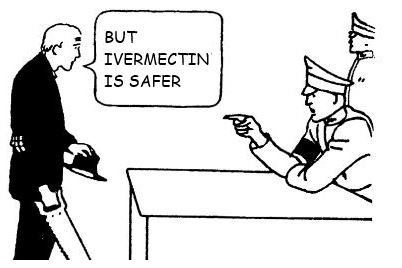
Left-wing ideology, not science, tells us that procreation and population growth are bad while abortion, contraception and sterilization are good, and that brings us to where we are today, even in the wild horse world.
RELATED: Are We Paying for Eradication of Virginia Range Mustangs?
He was euthanized by order of the Salt River Wild Horse Darting Group, a surrogate of the Campaign Against America’s Wild Horses.
“He was literally starving and dehydrating,” their ringleader told KPNX News of Mesa, AZ in a story published yesterday. “He was trying to drink and eat and it was the saddest thing we’ve ever seen.”
Watching her destroy the herd with the Montana Solution—and get away with it—is one of the saddest things we’ve ever seen.
Do you see any foals in the video posted with the report?
The advocates have ten years to take the herd from its current size of 400 down to 250, according to an unidentified voice in the April 1 episode of Foal-Free Friday.
The incident puts them one step closer to their goal.
Do not be misled by the coverage, the advocates are the greatest threat to these horses, not the kayakers, paddleboarders and plastic bags.
UPDATE: Added video.
Earlier this year, film of a colt running on a broken leg during the Pancake roundup sparked outrage and condemnation of helicopter roundups.
Now, the advocates are willing to overlook the collateral damage because they see greater opportunities for the Montana Solution.
In the old days, when faced with hopeless situations leading to the removal of wild horses, the advocates would walk away.

Today, they are willing participants.
RELATED: CAAWH Applauds Fertility Control Solicitation!
A representative told KNPR Radio yesterday that the project would mark a significant shift towards humane on-range management of wild horses and away from cruel, costly helicopter roundups.
Three paragraphs above the writer notes that contractors would “gather the animals,” a reference to helicopter roundups.
A few months ago the advocates were “all in” for the “Save a Horse, Hire a Cowboy” helicopter ban.
Watching them flip-flop so quickly is truly astonishing.
RELATED: It’s Happening: RTF Endorses Fertility Control Solicitation!
The advocates will throw in with the government contractors, and drop their opposition to helicopter roundups, including the injuries, deaths and mistreatment associated therewith, if it means greater use of the Montana Solution in America’s wild herds.
This will show that their criticism of the gathers, removals and stockpiling of horses in off-range corrals was simply a ploy to sell more PZP.
Not only will the herds have to suffer the long-term effects of the Montana Solution, evident at Assateague Island but concealed by the Park Service, they’ll also have to endure the trauma of roundups to receive it.
Doesn’t get any better than that for America’s wild horses.
It’s supposed to prevent them according to the advocates.
But Section 3, Part 1, Paragraph c in yesterday’s solicitation for fertility control services says the method of capture will be with the use of [helicopter] drive and/or bait trapping in accordance with the standards of the Comprehensive Animal Welfare Program.
The advocates oppose the use of helicopters, but perhaps they can be accommodated in the early stages of the project until the herds are small enough to stalk the remaining animals on the range and shoot them with darts as taught in Billings.
The advocates refer to sterilized mares as “self-boosting.”
The CAWP and other supporting documents can be found at the solicitation page.
RELATED: Proposals Sought to Catch, Treat, Release Wild Horses and Burros.

