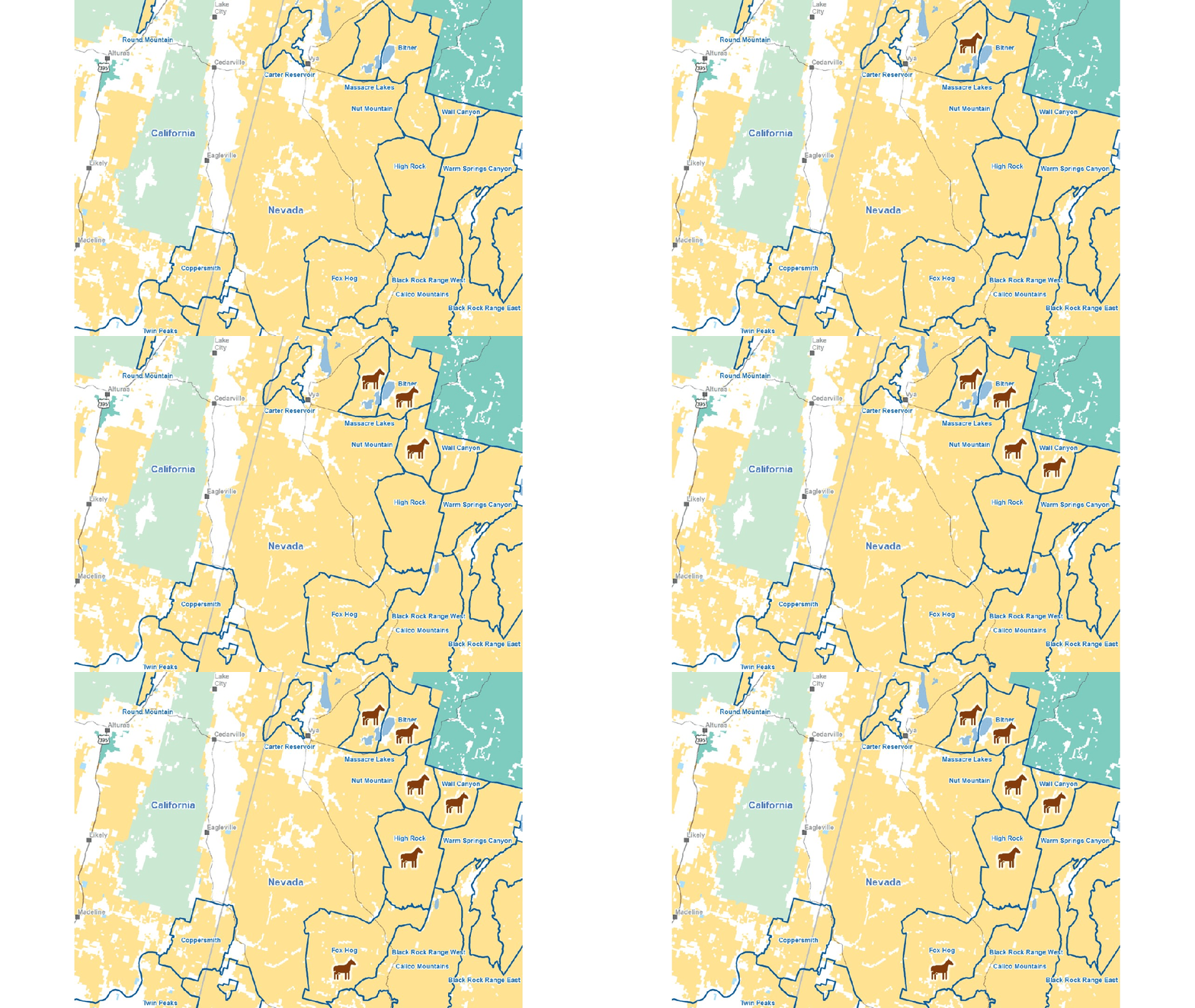
Barren Valley Roundup Day 15

The incident began on September 8.  Gather stats through September 22:

  • Type: Emergency
  • Method: Helicopter
  • Horses captured: 886, up from 721 on Day 12
  • Average daily take: 59.1
  • Capture goal: 1,900
  • Removal goal: 1,900
  • Returned: 0
  • Deaths: 11, up from 7 on Day 12
  • Shipped: 735, up from 659 on Day 12

The cumulative total at the gather page is 844.

A colt and and two studs were put down on Day 13, and a filly on Day 14, due to pre-existing conditions.  The death rate is now 1.2%.

Foals represented 20.8% of the horses gathered.  Of the adults, 44.4% were male and 55.6% were female.

Body condition scores ranged from 2.5 to 4.

The location of gather activity was not reported.  Three HMAs are involved in the roundup.

Day 15 ended with 140 unaccounted-for animals.

Other statistics:

  • AML: 892 (total for three HMAs)
  • Forage assigned to horses: 10,704 AUMs per year
  • Pre-gather population: 2,500
  • Forage liberated to date: 10,632 AUMs per year
  • Water liberated to date: 8,860 gallons per day
  • Forage assigned to livestock: 27,011 AUMs per year (estimated)
  • Horses displaced from Complex by livestock: 2,258 (4.5% of off-range holding)
  • True AML: 3,150

RELATED: Barren Valley Roundup Day 12.

Unabashed and Unapologetic, DeMayo Pushes ‘Path Forward’

The driver of the plan was a threat by Congress in 2017 to allow the BLM to euthanize tens of thousands of wild horses in off-range holding, according to an opinion piece in today’s edition of The Colorado Sun.

The incident brought animal welfare groups to the table with other stakeholders, including public-lands ranchers, in an effort to find common ground.

That those animals—every one of them—had been denied a spot on their home range by privately owned livestock apparently wasn’t part of the dialogue.

The issue is so pervasive that all of the off-range corrals and long-term pastures could be emptied at least three times over if permitted grazing was banned in HMAs and WHTs.

It’s not about saving money, it’s about coddling the ranchers.

Today, the goals remain the same—achieve and maintain AMLs—so they can be the primary, if not principal, consumer of resources in areas set aside for wild horses.

Most of the advocacy groups accept this idea.  Only they want to get rid of the horses with PZP, not helicopters.

The ranchers want their lopsided share of the resources now and are unwilling to wait for the herds to die off as the advocates drive birth rates to zero.

So most the horses will be forced off the range by helicopters, giving the advocates a better chance of preventing their comeback, as seen recently at Sand Wash Basin.

Jackson Mountains Roundup Day 7

The incident began on September 15.  Gather stats through September 21:

  • Type: Emergency
  • Method: Helicopter
  • Horses captured: 252, up from 126 on Day 5
  • Average daily take: 36.0
  • Capture goal: 600
  • Removal goal: 600
  • Returned: 0
  • Deaths: 6, up from 4 on Day 5
  • Shipped: 142, up from 88 on Day 5

A mare was put down on Day 6 because of starvation, followed by another on Day 7 for the same reason.  The death rate is now 2.4%.

Could those mares be nursed back to health at a rescue?  The rationale for both deaths was given by IM 2021-007, Euthanasia of Wild Horses and Burros Related to Acts of Mercy, Health or Safety.

Foals represented 23.0% of the horses gathered.  Of the adults, 35.6% were male and 64.4% were female.

Body condition scores were not provided.

Day 7 ended with 104 unaccounted-for animals.

Other statistics:

  • AML: 217
  • Forage assigned to horses: 2,604 AUMs per year
  • Pre-gather population: 1,018
  • Forage liberated to date: 3,024 AUMs per year
  • Water liberated to date: 2,520 gallons per day
  • Forage assigned to livestock: 7,394 AUMs per year (estimated)
  • Horses displaced from HMA by livestock: 616 (1.2% of off-range holding)
  • True AML: 833

RELATED: Jackson Mountains Roundup Day 5.

Devil’s Garden Roundup Day 6

The incident began on September 16.  Reports covering activity through September 21 have been posted to the Modoc news page:

  • Type: Planned
  • Method: Helicopter
  • Horses captured: 100
  • Average daily take: 16.7
  • Capture goal: 600
  • Removal goal: 600
  • Returned: Unknown
  • Deaths: Unknown
  • Shipped: Unknown

The progress report for Days 3 and 4 was a bit confusing.  The correct interpretation is that helicopters were grounded on Day 4 and no horses were gathered.  The cumulative total through Day 4 was 49, not 98.

Foals represented 14.0% of the horses captured.  Of the adults, 51.2% were male and 48.8% were female.

Body condition scores were not provided.

The number of unaccounted-for animals is not known.

Other statistics:

  • AML: 402
  • Forage assigned to horses: 4,824 AUMs per year
  • Pre-gather population: 1,926
  • Forage liberated to date: 1,200 AUMs per year
  • Water liberated to date: 1,000 gallons per day
  • Forage assigned to livestock: 15,711 AUMs per year (estimated)
  • Horses displaced from WHT by livestock: 1,309 (2.6% of off-range holding)
  • True AML: 1,711

RELATED: Devil’s Garden Roundup Day 4.

Livestock Impede Sage-Grouse Recovery on Public Lands?

Wild horses were blamed for most of the problems in a USGS study published earlier this year, while the effects of public-lands ranching were overlooked, according to a news release by the Public Employees for Environmental Responsibility.

The announcement said the study is being used as part of the rationale for removing thousands of free-ranging horses from their habitat.

RELATED: Keep Wild Horses in Check to Save Greater Sage-Grouse?

Roundup Starts Next Week at Surprise Complex

Resource enforcement actions will begin on September 27, according to yesterday’s news release.  The driver is overpopulation, not inadequate food or water.

Helicopters will push the animals into the traps and the operation will be open to public observation.

The capture goal is 1,220 and the removal goal is 1,050.  Mares returned to the area will be treated with contraceptives.  All burros will be removed.

The six HMAs in the Complex cover 396,674 acres.  The stocking rate for the 496 horses allowed by plan is 1.3 animals per thousand acres.

The pre-gather population is thought to be around 1,300.

Surprise Complex Map

The six grazing allotments that overlap the Complex are listed in Table 3-2 and shown in Appendix G of the Final EA.  The amount of forage shifted to livestock inside the HMAs is not known.

Captured animals will be taken to the off-range corrals at Litchfield, east of Susanville, CA, and potentially other holding facilities.

A link to the gather stats and daily reports was not provided, but will likely be found on this page.

RELATED: Decision Reached in Surprise Complex Gather Plan.

Ranchers and Advocates Snub McCullough Peaks Wild Horses

A rancher interviewed for a story by the Cody Enterprise grazes six allotments in the area, with authorization numbers 4901330 and 4901633, according to the Operator Information and Allotment Information reports at RAS.

Four overlap the HMA, two do not.

The Allotment Master report shows four of them in the Improve category, with two in the Maintain category.  As for the public acres, 94.4% are in the Improve category, with 5.6% in Maintain.

Should this guy be lecturing us on wild horses and rangeland degradation?
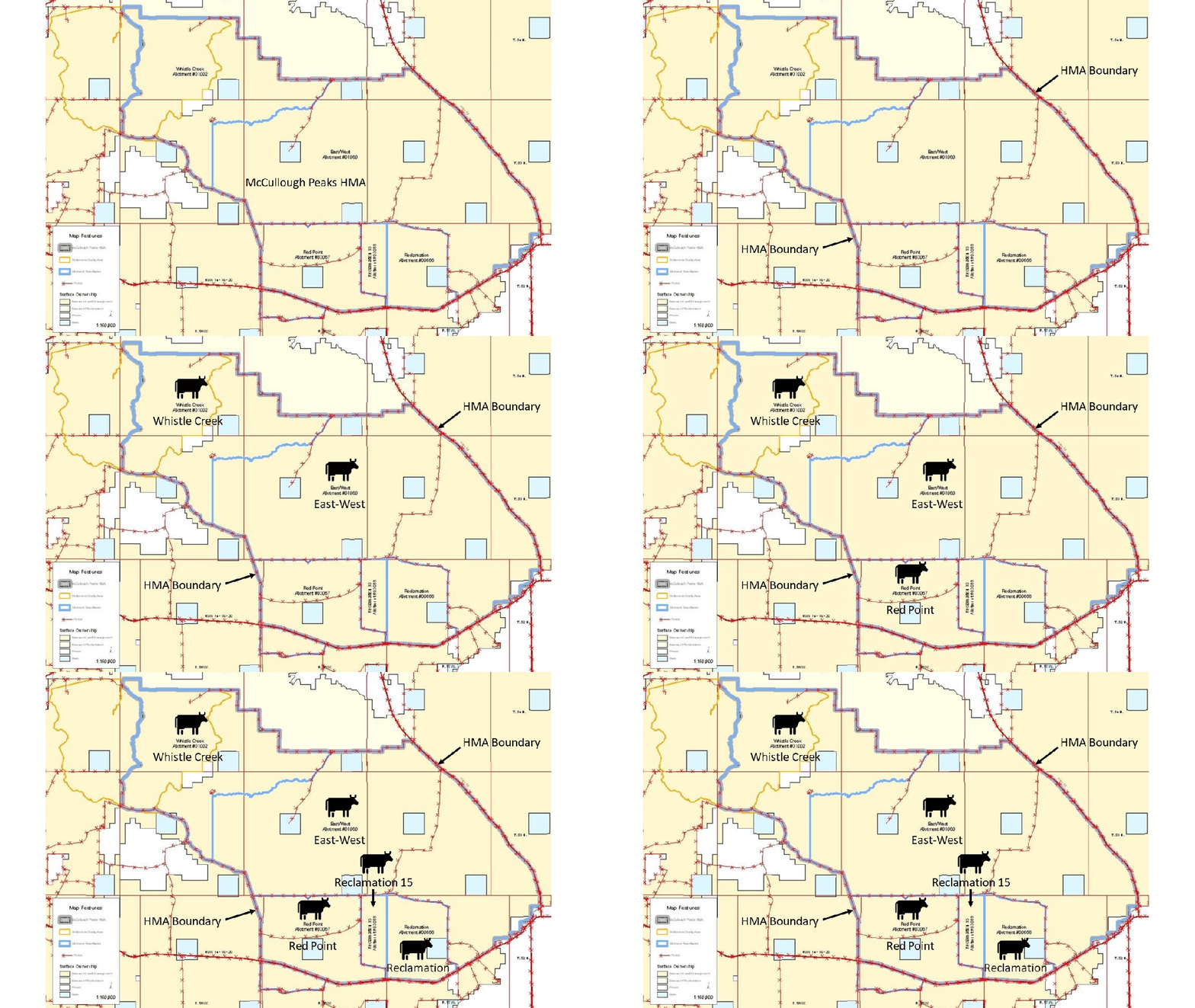
McCullough Peaks Allotment Map 06-18-21

He receives a total of 5,709 AUMs per year across the six allotments.

One of the advocates, speaking to the Park County Commissioners about the horses, said “I am constantly out there telling tourists and tour people we can’t have that many more babies.”

Another advocate, who darted the McCullough Peaks horses for several years, wants the BLM to use PZP on every wild horse herd in America.

If things get out of control, the government will send in the helicopters to get rid of excess horses and restore the lopsided resource allocations of the land-use plans, or, if you prefer, the thriving ecological imbalance.

The advocates can then resume their efforts to make sure the herd never comes back, leaving the ranchers as the primary, if not principal, consumer of resources in the HMA.

RELATED: Park County Commissioners to Approve New Resource Plan?

McGregor Auction Results

Ranchers bid $565,203 for 21,590 AUMs, according to a BLM news release, yielding an average price of $26.18 per AUM, 19.4 times higher than the fee for livestock grazing in areas set aside for wild horses.

You could argue that Congress has been shielding those ranchers from the realities of a free market for over 40 years, while denying the United States a fair price for their use of public lands.

RELATED: McGregor Grazing Land Up for Bids Again.

Barren Valley Roundup Day 12

The incident began on September 8.  Gather stats through September 19:

  • Type: Emergency
  • Method: Helicopter
  • Horses captured: 721, up from 491 on Day 7
  • Average daily take: 60.1
  • Capture goal: 1,900
  • Removal goal: 1,900
  • Returned: 0
  • Deaths: 7, up from 6 on Day 7
  • Shipped: 659, up from 379 on Day 7

Reports for Days 9 – 12 were posted today.

Helicopters were grounded on Day 11 due to high winds and gather ops were cut short on Day 12 for the same reason.

The cumulative total at the gather page is 712.  There is a discrepancy in the figures for Day 10.

A mare was put down on Day 9 due to blindness.  The death rate is now 1.0%.

Foals represented 20.7% of the horses gathered.  Of the adults, 44.6% were male and 55.4% were female.

Body condition scores ranged from 2.5 to 4.

Three HMAs are involved in the roundup.

Day 12 ended with 55 unaccounted-for animals.

Other statistics:

  • AML: 892 (total for three HMAs)
  • Forage assigned to horses: 10,704 AUMs per year
  • Pre-gather population: 2,500
  • Forage liberated to date: 8,652 AUMs per year
  • Water liberated to date: 7,210 gallons per day
  • Forage assigned to livestock: 27,011 AUMs per year (estimated)
  • Horses displaced from Complex by livestock: 2,258 (4.5% of off-range holding)
  • True AML: 3,150

RELATED: Barren Valley Roundup Day 7.

Devil’s Garden Roundup Day 4

The incident began on September 16.  Reports covering activity through September 19 have been posted to the Modoc news page:

  • Type: Planned
  • Method: Helicopter
  • Horses captured: 98
  • Average daily take: 24.5
  • Capture goal: 600
  • Removal goal: 600
  • Returned: Unknown
  • Deaths: Unknown
  • Shipped: Unknown

Gather operations were cut short yesterday by weather.

The death rate is unknown.

The breakdown between stallions, mares and foals was given for Day 4 only.

Body condition scores were not provided.

The number of unaccounted-for animals is not known.

Losses to the economy of Modoc County, mentioned in the Day 1 report, means the horses have been trying to reclaim some of their food from the public-lands ranchers.

Other statistics:

  • AML: 402
  • Forage assigned to horses: 4,824 AUMs per year
  • Pre-gather population: 1,926
  • Forage liberated to date: 1,176 AUMs per year
  • Water liberated to date: 980 gallons per day
  • Forage assigned to livestock: 15,711 AUMs per year (estimated)
  • Horses displaced from WHT by livestock: 1,309 (2.6% of off-range holding)
  • True AML: 1,711

RELATED: Devil’s Garden Roundup Begins.

Jackson Mountains Roundup Day 5

The incident began on September 15.  Gather stats through September 19:

  • Type: Emergency
  • Method: Helicopter
  • Horses captured: 126, up from 98 on Day 3
  • Average daily take: 25.2
  • Capture goal: 600
  • Removal goal: 600
  • Returned: 0
  • Deaths: 4, up from 1 on Day 3
  • Shipped: 88, up from 42 on Day 3

Two mares were put down on Day 4 because of hernias and a foal was euthanized because it was orphaned, boosting the death rate to 3.2%.

No effort was made to place the foal with a rescue, such as the nearby Chilly Pepper Miracle Mustang?  All three deaths were justified by IM 2021-007, Euthanasia of Wild Horses and Burros Related to Acts of Mercy, Health or Safety.

Foals represented 22.2% of the horses gathered.  Of the adults, 29.6% were male and 70.4% were female.

Body condition scores were not provided.

Day 5 ended with 34 unaccounted-for animals.

Other statistics:

  • AML: 217
  • Forage assigned to horses: 2,604 AUMs per year
  • Pre-gather population: 1,018
  • Forage liberated to date: 1,512 AUMs per year
  • Water liberated to date: 1,260 gallons per day
  • Forage assigned to livestock: 7,394 AUMs per year (estimated)
  • Horses displaced from HMA by livestock: 616 (1.2% of off-range holding)
  • True AML: 833

RELATED: Jackson Mountains Roundup Day 3.

Stone Cabin Roundup Day 18

The incident began on September 1.  Gather stats through September 18:

  • Type: Emergency
  • Method: Bait
  • Horses captured: 261, up from 207 on Day 12
  • Average daily take: 14.5
  • Capture goal: 450
  • Removal goal: 450
  • Returned: 0
  • Deaths: 8, up from 7 on Day 12
  • Shipped: 231, up from 193 on Day 12

No horses were caught on Days 13, 14, 16 and 17.  Previously, no gather activity was reported on Day 12 but now the page shows 24 horses captured.  The cumulative total of 256 does not agree with the sum of the daily numbers.

One horse was put down on Day 15 because of fractured neck, taking the death rate to 3.1%.

The rate at Stone Cabin, where horses are baited into the traps, is ten times higher than that for the cruel and inhumane helicopter roundup at Sand Wash Basin, so described by the advocates.

Foals represented 14.6% of the horses gathered.  Of the adults, 46.6% were male and 53.4% were female.

Body condition scores were not reported.

Day 18 ended with 22 unaccounted-for animals.

Other statistics:

  • AML: 364
  • Forage assigned to horses: 4,368 AUMs per year
  • Pre-gather population: 1,037
  • Forage liberated to date: 3,132 AUMs per year
  • Water liberated to date: 2,610 gallons per day
  • Forage assigned to livestock: Unknown
  • Horses displaced from HMA by livestock: Unknown
  • True AML: Unknown

RELATED: Stone Cabin Roundup Day 12.

Jackson Mountains Roundup Day 3

The incident began on September 15.  Gather stats through September 17:

  • Type: Emergency
  • Method: Helicopter
  • Horses captured: 98
  • Average daily take: 32.7
  • Capture goal: 600
  • Removal goal: 600
  • Returned: 0
  • Deaths: 1
  • Shipped: 42

One horse was put down on Day 2 due to an abscess, typically not a life-threatening condition, lifting the death rate to 1.0%.

Foals represented 23.5% of the horses gathered.  Of the adults, 26.7% were male and 73.3% were female.

Body condition scores were not provided.

Day 3 ended with 55 unaccounted-for animals.

Other statistics:

  • AML: 217
  • Forage assigned to horses: 2,604 AUMs per year
  • Pre-gather population: 1,018
  • Forage liberated to date: 1,176 AUMs per year
  • Water liberated to date: 980 gallons per day
  • Forage assigned to livestock: 7,394 AUMs per year (estimated)
  • Horses displaced from HMA by livestock: 616 (1.2% of off-range holding)
  • True AML: 833

RELATED: Jackson Mountains Emergency Roundup in Progress.