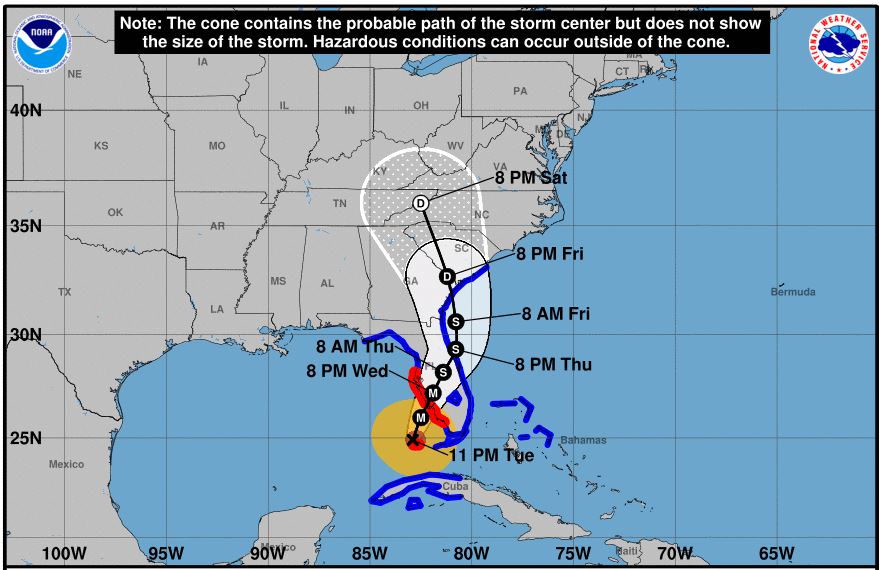
The latest track takes the center of the storm near Gainesville and Paynes Prairie Reserve State Park on Thursday afternoon, then up the coast near Cumberland Island on Friday afternoon, both areas known for their wild horses.

Exposing the Hypocrisy, Lies and Incompetence of the Wild Horse Advocates
The latest track takes the center of the storm near Gainesville and Paynes Prairie Reserve State Park on Thursday afternoon, then up the coast near Cumberland Island on Friday afternoon, both areas known for their wild horses.
Refer to the bullet list at the WHBAB home page.
Overpopulation means more horses than allowed by plan, not necessarily more horses than the land can support.
The total AML of 27,000 is small relative to the available resources because most of them have been assigned to privately owned livestock.
You don’t have a wild horse problem on America’s public lands, you have a resource management problem.
RELATED: WHBAB Meeting Announced.

Eberle Winery will present a special screening of The Mustangs: America’s Wild Horses, a feature documentary produced by Robert Redford, Patti Scialfa Springsteen and Jessica Springsteen, according to an announcement by the Paso Robles Daily News.
Producer and Co-Director Steven Latham will join Neda Demayo, signatory to the “Path Forward” and founder of Return to Normal (Before WHB Act), to discuss the film.
The dialogue, like the film, will probably avoid resource management and permitted grazing in areas set aside for wild horses.
Western Horse Watchers was informed that the theme was overpopulation, ranchers are not the problem and PZP is the answer, with Demayo receiving excessive “air time.”
As for the Path Forward, support is much greater than you think. Today, most of the advocacy groups are signatories in principle.
This search result from Google tells you everything you need to know. The advocates are always looking for opportunities to implement their ruinous darting programs, with benefits accruing to the public-lands ranchers.

The link pointed to a story originally produced by KUNR Radio in Reno.
RELATED: New Wild Horse Documentary Avoids Public-Lands Ranching?

The incident began on September 10. Gather stats through September 26:
The figures above are based on the daily reports, not the totals posted by the BLM.
Helicopters did not fly on Day 16. The trap may have been moved to a new location.
A stallion was was put down on Day 17 due to a missing eye. He survived the chase and would be alive today if there was no roundup.
The death rate is 3.0%.
The capture total includes 269 stallions, 346 mares and 120 foals.
Youngsters represented 16.3% of the animals gathered.
Of the adults, 43.7% were male and 56.3% were female.
The herd can’t be growing at a rate of 20% per year with a birth rate of 16% per year.
The observed percentages of males and females are outside the range of variation attributable to a simple random process centered at 50% males / 50% females.
Body condition scores were not provided.
The location of the trap was not disclosed.
The HMAs and surrounding lands are subject to permitted grazing.

Day 17 ended with 25 unaccounted-for animals.
Mares treated with fertility control may be returned to the area at a later date.
The capture and removal goals at the gather page have not changed despite new targets in the latest schedule.
Other statistics:
The pre-gather population exceeded the AML but not necessarily the number of horses the land can support.
RELATED: Calico Roundup, Day 15.
The incident started on September 12. Results through September 26:
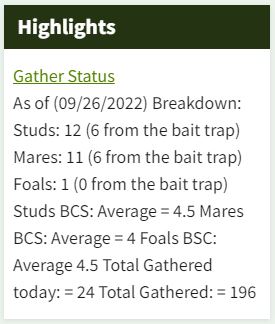
Body condition scores indicate more horses than allowed by plan, not more horses than the land can support. If the horses were starving the scores would be lower.
More information may be available on socialist media but Western Horse Watchers won’t read it or link to it.
The government collects $21,210 per year in grazing fees from ranching activity inside the WHT while it spends $2,388,925 per year to care for the horses displaced thereby.
Would you say that permitted grazing is a wise use of the public lands?
RELATED: Devil’s Garden Roundup, Day 10, Transparency Not a Law Edition.
The incident began on September 17. Gather stats through September 25:
The figures above are based on the daily reports, not the totals posted by the BLM.
A stallion was put down on Day 8 due to a broken leg, followed by four more stallions on Day 9 due to blindness and other deformities.
The death rate is 1.0%.
The capture total includes 243 stallions, 250 mares and 127 foals.
Youngsters represented 20.5% of the animals gathered.
Of the adults, 49.3% were male and 50.7% were female.
The observed percentage of foals suggests the herd growth rate may be closer to 16% per year, given a death rate of 5% per year.
Body condition scores were not provided.
The location of the trap site was not disclosed.
The HMA and surrounding lands are subject to permitted grazing.

Day 9 ended with 170 unaccounted-for animals.
Mares treated with fertility control may be returned to the area at a later date.
The capture goal is 88% complete. Operations will likely conclude this week.
Other statistics:
How can the HMA be overpopulated with 920 wild horses when the BLM authorizes privately owned livestock equivalent to 1,422 wild horses in the same area, on top of the 390 horses allowed by plan?
RELATED: Cedar Mountain Roundup, Day 7.
The project will develop a management plan for an area of critical environmental concern in northwestern Nevada, according to the description in ePlanning.
The project map puts the location at the northeastern corner of the Bitner HMA, part of the Surprise Complex, and inside the Bitner Allotment.

The allotment may stay in the Improve category permanently because of the ACEC.
The scoping letter is actually a handout that explains the project.
Comments will be accepted through September 30.
The allotment offers 69.1 AUMs per year per thousand acres to livestock, while the HMA offers a paltry 5.6 AUMs per year per thousand acres to wild horses. Why is that?
The incident began on September 10. Gather stats through September 24:
The figures above are based on the daily reports, not the totals posted by the BLM.
One horse was put down on Day 14 due to pre-existing conditions, followed by three more on Day 15. They survived the chase and would probably be alive today if there was no roundup.
The death rate jumped from 2.7% to 3.0%.
The capture total includes 263 stallions, 331 mares and 116 foals.
Youngsters represented 16.3% of the animals gathered.
Of the adults, 44.3% were male and 55.7% were female.
The herd can’t be growing at a rate of 20% per year with a birth rate of 16% per year.
Body condition scores were not provided.
The location of the trap site was not disclosed.
The HMAs and surrounding lands are subject to permitted grazing.
Day 15 ended with 35 unaccounted-for animals.
Mares treated with fertility control may be returned to the area at a later date.
The capture and removal goals at the gather page have not changed despite new targets in the latest schedule.
Other statistics:
RELATED: Calico Roundup, Day 13.
They’d have to drop their support for the Montana Solution.
The numbers show the horses are being screwed by the bureaucrats in favor of the public-lands ranchers.
The advocates are trying to build a rapport with the bureaucrats and ranchers.
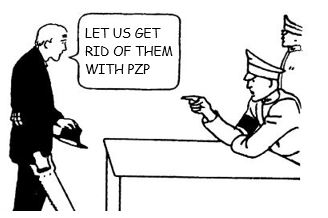
Do you think they’re going to admit they’ve been wrong all these years?
The problem is resource management, not wild horses.
Interest in the bill, which died in committee last week according to a story posted yesterday by CBS News of Colorado, may have received a boost due to a report by the Campaign Against America’s Wild Horses about the adoption incentive program and the number of horses sent to kill pens.
The solution? Replacing cash incentives with vouchers for veterinary care or training to gentle the animals.
Better yet, stop reproduction with the Montana Solution and let the herds die off.
The writer—not CAAWH—suggests the problem lies elsewhere.
“The Bureau of Land Management has said wild horse roundups are necessary because there aren’t enough resources for the horses, but as CBS4 Investigates reported in May, those lands are also shared by private ranchers who are allowed to graze their cattle and sheep there.”
You won’t hear that from CAAWH and their surrogates.
They intend to be leaders in the wild horse removal business, aiding and abetting the ranchers, as announced on September 15.
Next to the federal government, nobody’s getting rid of more wild horses than CAAWH and its army of nitwits.
RELATED: Wild Horse Freedom Rallies Return in September.
Operations concluded on or about September 21, according to information at the gather page, with 243 burros captured, 242 shipped and one dead.
The gather page indicated capture and removal goals of 275 each but the latest schedule puts the targets at 225 each. The incident did not appear in the previous version.
The death on September 17 was attributed to the roundup. No details were given.
The death rate was 0.4%.
The capture total included 106 jacks, 93 jennies and 43 foals.
Youngsters represented 17.7% of the animals gathered.
Of the adults, 53.3% were male and 46.7% were female.
The daily reports did not provide breakdowns of jacks, jennies and foals.
The sum of those figures falls short of the total by one.
The incident was not announced at the BLM news site.
A report produced by the Campaign Against America’s Wild Horses shows changes to the Adoption Incentive Program have not reduced the flow of wild horses into kill pens, according to a story posted yesterday by the Las Vegas Review-Journal.
The findings include 1,020 animals over three years that were sold to kill buyers and presumably shipped to slaughter in Canada and Mexico.
Western Horse Watchers estimates that the group and its affiliates got rid of 2,000 to 3,000 wild horses during the same period.
Don’t be fooled by the advocates! Their downstream focus guarantees that more and more horses will be coming off the range, to the delight of the public-lands ranchers.
RELATED: Investigation Finds More Slaughter Cases in AIP.

The incident began on September 17. Gather stats through September 23:
The figures above are based on the daily reports, not the totals posted by the BLM.
A stallion was put down on Day 6 due to blindness in one eye. He’d be alive today if there was no roundup.
The capture total includes 172 stallions, 195 mares and 95 foals.
Youngsters represented 20.6% of the animals gathered.
Of the adults, 46.9% were male and 53.1% were female.
The percentage of foals has decreased since Day 5, suggesting the herd growth rate may be closer to 16% per year, given a death rate of 5% per year.
Body condition scores were not provided.
The location of the trap site was not disclosed.
The HMA and surrounding lands are subject to permitted grazing.
Day 7 ended with 145 unaccounted-for animals.
Mares treated with fertility control may be returned to the area at a later date.
Other statistics:
The government collects $23,042 per year in grazing fees from ranching activity inside the HMA while it spends $2,595,150 per year to care for the horses displaced thereby.
Would you say that permitted grazing is a wise use of the public lands?
RELATED: Cedar Mountain Roundup, Day 5.
The latest schedule, dated September 19, puts the capture goal at 1,556 and the removal goal at 1,445.
The targets at the gather page are still 1,076 and 1,036.
A schedule for FY 2023, which begins on October 1, has not been posted.
RELATED: Calico Roundup, Day 13.
She had severe damage to her lower right leg and was put down by the advocates, according to a story by The News & Observer of Raleigh, NC.
Of eight foals born this year, two have died.
A herd of 101 would normally produce around twenty foals per year.
The loss takes some pressure off the darting program.
RELATED: Currituck Herd Adds New Colt
The incident began on September 10. Gather stats through September 22:
The figures above are based on the daily reports, not the totals posted by the BLM.
Two stallions were put down on Day 13. The death rate is 2.7%.
The capture total includes 230 stallions, 302 mares and 107 foals.
Youngsters represented 16.7% of the animals gathered.
Of the adults, 43.2% were male and 56.8% were female.
The herd can’t be growing at a rate of 20% per year with a birth rate of 17% per year.
Body condition scores were not provided.
The location of the trap site was not disclosed.
The HMAs and surrounding lands are subject to permitted grazing.
Day 13 ended with 71 unaccounted-for animals.
Mares treated with fertility control may be returned to the area at a later date.
Other statistics:
RELATED: Calico Roundup, Day 11.
A story by KLAS News about the Calico roundup concludes with this remark:
The BLM says the ranges can’t support the animals, citing deteriorating health conditions in the herds. Wild horse advocates counter that the horses are removed to make room for commercial livestock that grazes on the same land.
This is not correct. The advocates want the horses removed to make room for commercial livestock and they have a better way of doing it.
Consider these two scenarios for wild horse removal:
Method A
Method B
Which one corresponds to a cruel and costly helicopter roundup and which one was carried out with proven fertility control?
Method A, the Montana Solution, is the best choice because the horses were protected from removal.
Method B, a deadly helicopter roundup, is unacceptable because the horses were taken off the range by force.
This is what the advocates are selling! They have nothing to offer America’s wild horses except continuation of their misery.
What’s their top priority? To be loved and respected by the bureaucrats and ranchers.
As for you, they care mostly about your money.
As for the horses, they couldn’t care less.
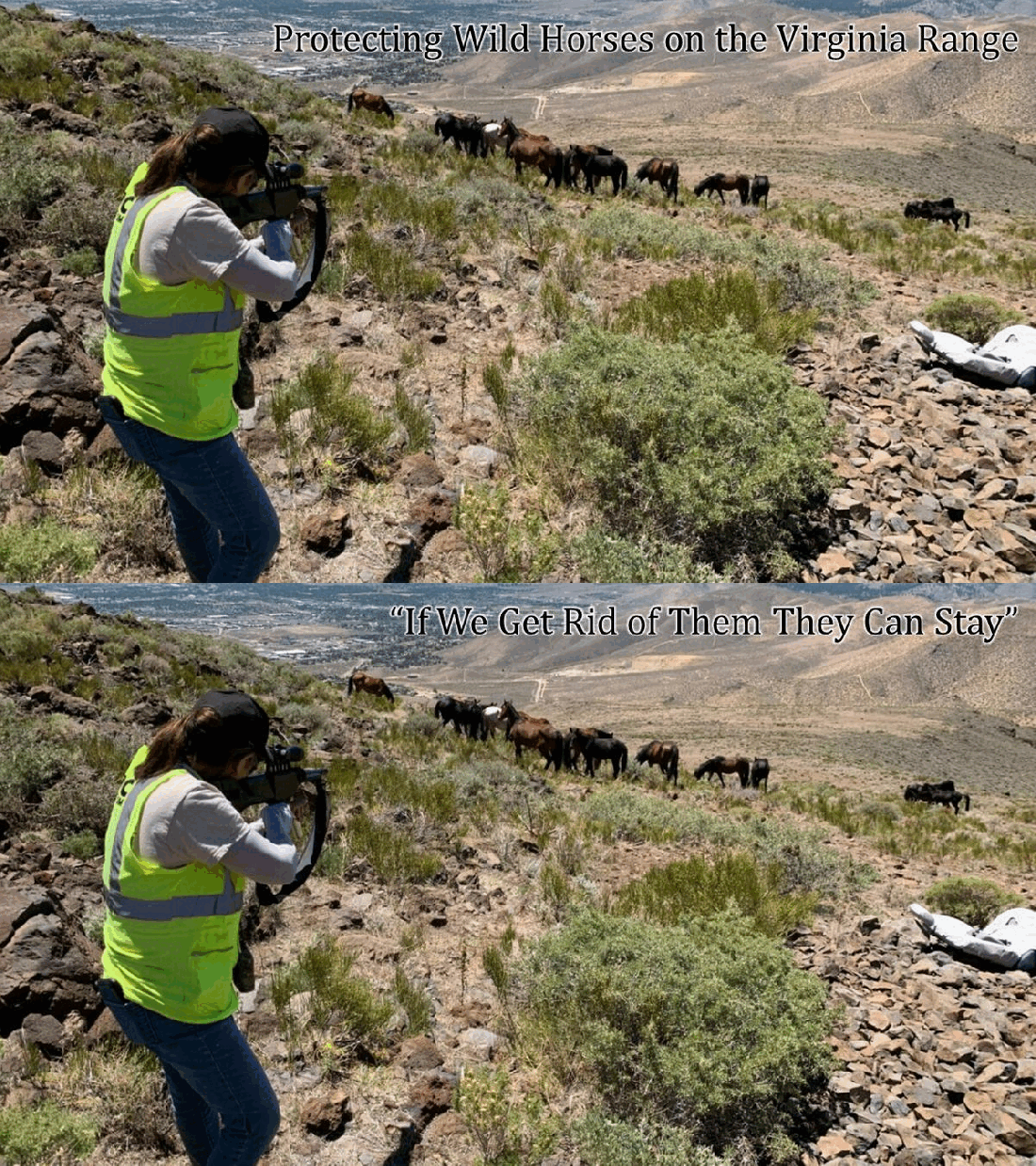
RELATED: Foal-Free Friday, Fighting Crime on the Virginia Range.
The incident began on September 17. Gather stats through September 21:
The figures above are based on the daily reports, not the totals posted by the BLM.
The capture total includes 100 stallions, 100 mares and 58 foals.
Youngsters represented 22.5% of the animals gathered.
Of the adults, 50% were male and 50% were female.
The herd growth rate may be close to 20% per year, a figure used by land managers to predict herd sizes and justify management actions, given a birth rate of 23% per year.
Body condition scores were not provided.
The location of the trap site was not disclosed.
The HMA and surrounding lands are subject to permitted grazing.
Day 5 ended with 41 unaccounted-for animals.
Mares treated with fertility control may be returned to the area at a later date.
Other statistics:
RELATED: Cedar Mountain Roundup, Day 3.
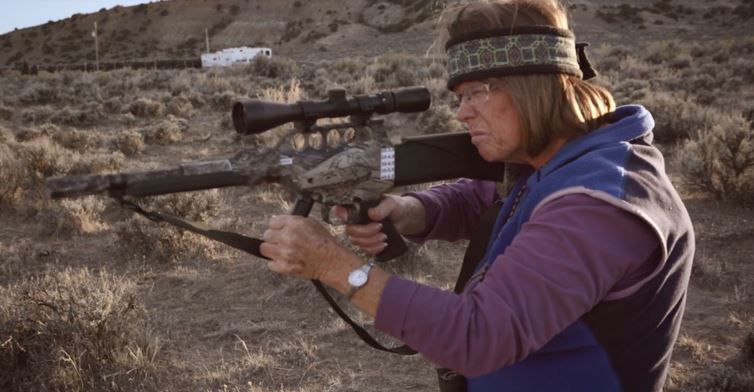
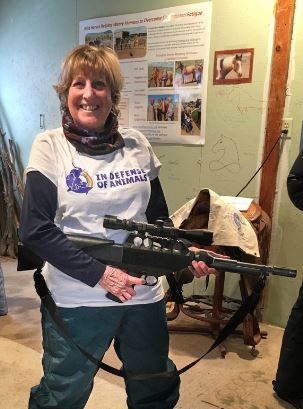
Readers of Western Horse Watchers will not be suprised by anything in this article, writted by a trained PZP darter and appearing today in CounterPunch.
Is she trying to atone for her sins? The logo on her T-shirt should say In Defense of Livestock.
The column may have been written over the summer, around the time of the Piceance roundup. It is not a plug for the Montana Solution.
The management plans assign most of the resources to privately owned livestock in areas set aside for wild horses.
Once you understand that, all of the downstream events, referred to on these pages as resource enforcement actions, which include roundups, darting programs, sex ratio skewing, adoption, training and sale with or without limitations, make perfect sense.

