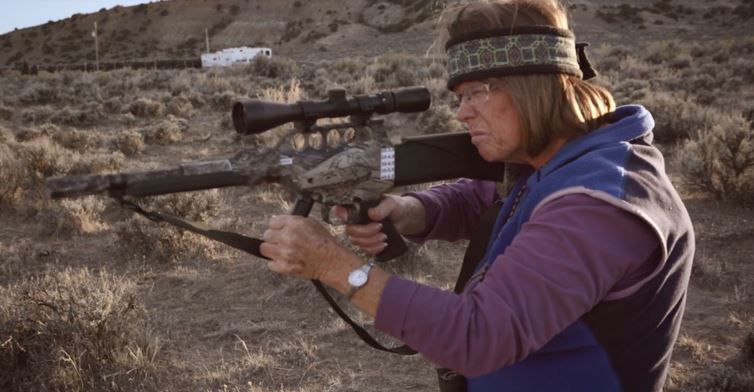
Refer to this audio segment from KDNK Radio of Carbondale, CO.
Category: Range
On the range
If You Want to Help Wild Horses, Visit Them
Seeing them is saving them, according to an article posted today by Friends of Animals.
Where to look? The story identifies HMAs in Nevada, Oregon, Wyoming and Montana.
Comments Invited on Stewart Creek Pest Control Plan
A preliminary environmental assessment for remote darting in the HMA has been posted for public review.
The plan would be effective for ten years, according to the news release.
The Proposed Action, discussed in Section 2.1 of the EA, calls for the use of PZP, GonaCon and PZP-22.
The goal is to reduce growth rates to five percent per year or less.
Treatment would be withdrawn after five years, until the mares produce foals—which they won’t, because they’re sterile. The ten-year timeframe is not necessary.
The HMA is subject to permitted grazing and the management plan assigns four times more forage to livestock than the horses.
The darting program will keep the resource scales tipped in favor of the public-lands ranchers for longer periods or time, perhaps indefinitely, which is what the advocates are trying to accomplish in other areas.
Comments will be accepted until January 17.
The news release said that they can be submitted electronically at the NEPA page for the project, but Western Horse Watchers was unable to find the link. E-mail addresses for BLM staff were provided.
Fox-Lake Range Roundup Day 3
The incident started on December 11. Helicopters did not fly on Days 2 and 3 due to inclement weather, according to the gather page.
To date, 36 horses have been captured, with none shipped and one dead.
The pre-gather population was approximately 0.8X AML.
Given that most of the returned horses will be treated with GonaCon, the operation could be classified as pest control.
RELATED: Fox-Lake Range Roundup Begins.
Horse Disagrees with Kalimian’s Rewilding Plan?
The animal cut loose on a Fox News host at the end of an interview with the president of the CANA Foundation, according to a report by Page Six, a service of the New York Post.
RELATED: CANA Foundation Throws in with Public-Lands Ranchers.
Advocates to Interior: Let Us Get Rid of Rock Springs Horses
The roundup will leave leave 3.4 million acres—the vast majority of which is public land owned by all Americans—virtually devoid of wild horses, according to a news release issued today by the Animal Welfare Institute.
Their answer? Decimate the herd with PZP instead.
Mustang Monday
At White Mountain HMA with Daniel Tetzlaff.
Fox-Lake Range Roundup Begins
The incident started on December 11, according to the gather page, with 36 horses captured, none shipped and one dead.
How Many Wild Horses Can the Fox-Lake Range HMA Support?
The 204 horses allowed by plan require 2,448 AUMs per year.
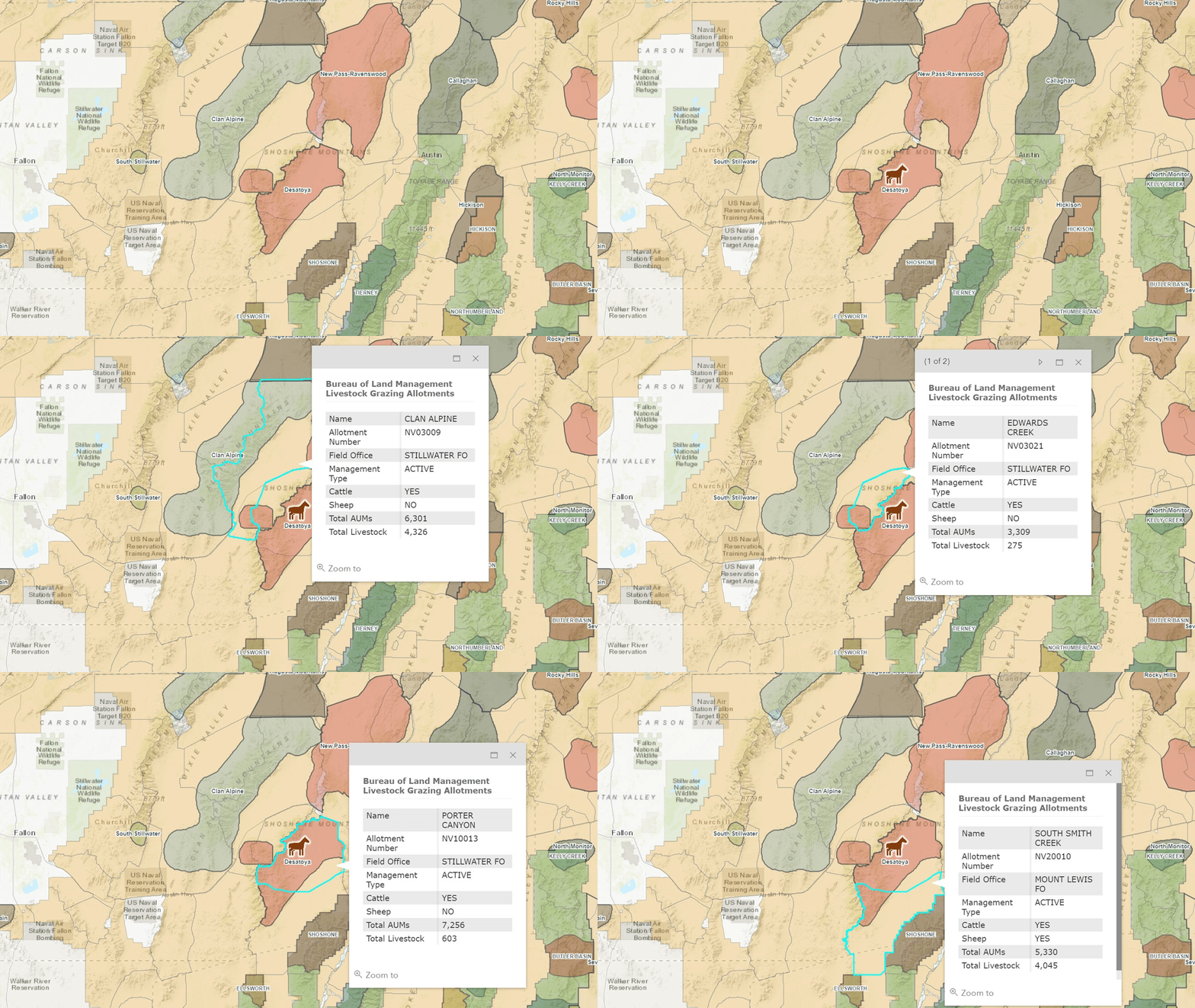
Table 7 in the Final EA for resource enforcement actions in the Smoke Creek Complex identifies two allotments that intersect the HMA. Pole Canyon is 100% inside, along with 90.3% of Rodeo Creek. Click on image to open in new tab.
The Allotment Master report shows 540 AUMs per year available to livestock in Pole Canyon and 5,542 AUMs per year at Rodeo Creek.
The total estimated forage inside the HMA, assuming the resource is evenly distributed across the allotments, is 2,448 + 540 + .903 × 5,542 = 7,992 AUMs per year. The actual amount may be a little higher due to an allowance for wildlife.
The number of wild horses the HMA can support, if it was managed principally for those animals as specified in the original statute, is 7,992 ÷ 12 = 666. This is the True AML.
The number of wild horses displaced from the HMA by privately owned livestock is (540 + .903 × 5,542) ÷ 12 = 462, about 0.9% of those in off-range holding.
True AML = AML + Horses displaced
The advocates will tell you that the question is almost impossible to answer, but it’s not that difficult if you’re willing to dig through ePlanning and RAS for the relevant data.
RELATED: Fox-Lake Range Allotment Status.
Fox-Lake Range Allotment Status
Section 3.9 in the 2017 Final EA for resource enforcement actions in the Smoke Creek Complex identifies two allotments that overlap the HMA.
The Western Watersheds map shows the arrangement.
The Allotment Master report supplies acreage, management status and active AUMs.

Pole Canyon is in the Custodial category, which hides its condition. All of the acreage and AUMs come from public lands, so it should be classified as Improve or Maintain.
Rodeo Creek is in the Improve category, representing 93% of the grazing land associated with the HMA.
About 90% of Rodeo Creek is inside the HMA, according to Table 7 of the EA.
If forage is evenly distributed across the allotment, .9 × 5,542 = 4,988 AUMs per year have been taken from the horses and given to the permittee.
Pole Canyon is 100% inside the HMA, with all of the forage assigned to livestock.
The total forage available for grazing inside the HMA would be 540 + 4,988 = 5,528 AUMs per year, about 2.3 times higher than the 2,448 AUMs per year assigned to the horses, reinforcing yesterday’s assertion that the aim of the wild horse and burro program is to minimize its impact on the grazing program.
Remove Advocates from Virginia Range Now!
The Animal Industry Update for the December 8 Board of Agriculture Meeting indicates that the Campaign Against America’s Wild Horses fired 350 doses (of PZP) into the herd in one month, equivalent to 4,200 doses per year!
This one-sided war on the mustangs rivals the largest of the helicopter roundups and is a throwback to the ‘fast-disappearing’ days.
Contact information for the Nevada Board of Agriculture can be found here.
Responsibility for the situation lies with the Nevada Department of Agriculture.
RELATED: Virginia Range Advocates Report to Nevada Board of Agriculture.
Virginia Range Advocates Report to Nevada Board of Agriculture
The Animal Industry update was item 11 on the agenda. A summary of their work appears under Partnership Activities at the bottom of page 1 in the Division Overview.
Stop the Roundups (But Not the Removals)!
The Campaign Against America’s Wild Horses demonstrates once again in this opinion piece that it is an enemy of free-roaming horses and burros.
Sadly, many well-meaning individuals have been duped by its efforts, as it tries to win the support of the bureaucrats and ranchers.
On the bright side, one follower realized his errors and withdrew his support, as noted by the writer of a column in today’s edition of the Pagosa Daily Post.
Western Horse Watchers disagrees with his proposal to move wild horses from areas where they’re not wanted (by public-lands ranchers) to remote wilderness areas not particularly suited to livestock grazing.
The goal is to move livestock from areas where they’re not wanted (by most of the American people) to deeded acres or rented pastures, where their owners can pay market rates to feed them. What do you think happens during the off season?
As for the “highly compromised and shrinking home range of the wild horses on the Virginia Range,” consider the photos in this post.
RELATED: End Wild Horse Reproduction, Not Permitted Grazing?
Rock Springs Roundup Day 61
The incident began on October 7. Gather stats through December 6:
- Type: Planned
- Method: Helicopter
- Horses captured: 3,121, up from 2,940 on Day 58
- Average daily take: 51.2
- Capture goal: 4,400
- Removal goal: 3,500
- Returned: 181, up from 46 on Day 58
- Deaths: 16, up from 15 on Day 58
- Shipped: 2,838, up from 2,708 on Day 58
Helicopters did not fly on Day 60.
A stallion was put down on Day 61 due to arthritis. The death rate is 0.5%.
The cumulative total includes 1,228 stallions, 1,258 mares and 635 foals. The gather page shows 1,398 stallions.
1,398 + 1,258 + 635 ≠ 3,121
Foals represented 20.3% of the horses captured. Of the adults, 49.4% were male and 50.6% were female.
Body condition scores were not reported.
Gather activity has concluded at Salt Wells Creek and Adobe Town.
On Day 60, 97 stallions were returned to Adobe Town and 38 mares, treated with an unspecified type of fertility control, were returned to Salt Wells Creek.
Five HMAs are involved in the roundup. Operations will resume in January at White Mountain and Little Colorado.
Day 61 ended with 86 unaccounted-for animals. The total number of horses removed is 3,121 – 181 = 2,940, which includes these animals.
Other statistics:
- AML: 2,165 (across five HMAs)
- Forage assigned to horses: 25,980 AUMs per year
- Pre-gather population: 5,105
- Forage liberated to date: 35,280 AUMs per year
- Water liberated to date: 29,400 gallons per day
- Forage assigned to livestock: 191,791 AUMs per year (estimated)
- Horses displaced from HMAs by livestock: 15,982 (32% of off-range holding)
- True AML: 18,147
RELATED: Rock Springs Roundup Day 58.
Nuisance Roundup Announced for Carter Reservoir HMA
Approximately 25 wild horses will be removed from the area due to safety concerns along Highway 299, according to yesterday’s news release. A start date was not given.
The horses will be drawn into the traps with bait and the incident will likely not be open to public observation.
The trap site appears on maps in the Categorical Exclusion, which was posted with other NEPA documents. The Decision Record was signed on November 15.
The HMA covers 23,468 acres on the California-Nevada border and has an AML of 35.
The stocking rate allowed by plan is 1.5 wild horses per thousand acres.
The Western Watersheds map shows grazing allotments on the north, west and south sides of the HMA, which lies mostly within the Sand Creek Allotment.
Captured animals will be taken to an unspecified location.
A link to the gather stats and daily reports was not provided.
End Wild Horse Reproduction, Not Permitted Grazing?
The Campaign Against America’s Wild Horses continues to peddle its fertility control programs as the solution to wild horse mismanagement by the federal government, as noted in this report by The National Desk, a news service of Sinclair Broadcast Group.
The story has already been picked up by other news outlets.
RELATED: AWHC Compromised?
Mustang Monday
On the Salt River with Drew Hastings.
Fox-Lake Range Wild Horse Roundup Announced
The incident will begin on or about December 10, according to a news release dated December 3.
Helicopters will push the horses into the traps and the operation will be open to public observation.
The capture goal is 88 and the removal goal is 20. Mares returned to the range will be treated GonaCon, a contraceptive that may actually function as a sterilant.
The current population is thought to be around 154.
The HMA, part of the Smoke Creek Complex, covers 177,724 public and private acres in northwestern Nevada and has an AML of 204, as shown in Table 1 of the 2017 Final EA for resource enforcement actions therein.
The stocking rate allowed by plan is 1.1 wild horses per thousand acres, in line with the target rate of one wild horse per thousand acres across all HMAs.
Like Challis, the herd has not reached AML, yet a roundup is needed to prevent “undue or unnecessary degradation of the public lands.” Removing wild horses, not privately owned livestock, will help achieve standards for rangeland health.
The HMA lies within the Rodeo Creek and Pole Canyon allotments, according to the Western Watersheds map. The allotment map furnished with other NEPA documents shows the Complex boundary but not the HMA boundaries.
Refer to Section 3.9 in the EA for a discussion of livestock grazing in the Complex.
The land-use plan assigned zero AUMs per year to wild horses and 540 AUMs per year to livestock in Pole Canyon, with 2,448 AUMs per year assigned to wild horses and 5,540 AUMs per year to livestock in Rodeo Creek.
The AUMs available for grazing may have changed since the EA was published but the current values can be accessed at RAS. Roughly 10% of the Rodeo Creek AUMs are outside the HMA.
Captured animals will be taken to the off-range corrals at Palomino Valley.
Gather stats and daily reports will be posted to this page.
Tammy Pearson Said We Have a Problem
Learn all about it in this lecture by Eric Thacker of Utah State University.
RELATED: AWHC Seeks Reversal of WHBAB Appointment.
Rock Springs Roundup Day 58
The incident began on October 7. Gather stats through December 3:
- Type: Planned
- Method: Helicopter
- Horses captured: 2,940, up from 2,727 on Day 56
- Average daily take: 50.7
- Capture goal: 4,400
- Removal goal: 3,500
- Returned: 46, no change from Day 56
- Deaths: 15, no change from Day 56
- Shipped: 2,708, up from 2,495 on Day 56
The death rate is 0.5%.
The cumulative total includes 1,149 stallions, 1,193 mares and 598 foals. The gather page shows 1,319 stallions.
1,319 + 1,193 + 598 = 3,110
Foals represented 20.3% of the horses captured. Of the adults, 49.1% were male and 50.9% were female.
Body condition scores were not reported.
Gather activity continued at Salt Wells Creek and Adobe Town. Five HMAs are involved in the roundup.
Day 58 ended with 171 unaccounted-for animals. The total number of horses removed is 2,940 – 46 = 2,894, which includes these animals.
Other statistics:
- AML: 2,165 (across five HMAs)
- Forage assigned to horses: 25,980 AUMs per year
- Pre-gather population: 5,105
- Forage liberated to date: 34,728 AUMs per year
- Water liberated to date: 28,940 gallons per day
- Forage assigned to livestock: 191,791 AUMs per year (estimated)
- Horses displaced from HMAs by livestock: 15,982 (32% of off-range holding)
- True AML: 18,147
RELATED: Rock Springs Roundup Day 56.