At Theodore Roosevelt National Park with Wild Lands Wild Horses.
Category: Range
On the range
Can Darting Programs Compete with Helicopter Roundups?
The fastest way to remove excess horses and shift resources back to the public-lands ranchers is by helicopter.
Darting programs can achieve the same results but over much longer periods of time.
The debate rests on the faulty notion that areas set aside for wild horses and burros should be managed primarily, if not principally, for cattle and sheep.
Helicopters can reduce wild horse populations by two thirds in just a few weeks, as seen over the summer at Onaqui Mountain and Sand Wash Basin.
A reduction of that size by PZP darting would require over 20 years, assuming a zero percent birth rate and five percent death rate.
Injuries and deaths are not uncommon in helicopter roundups but the horses usually bounce back, perhaps at a slower rate if mares returned to the range were treated with fertility control and/or the sex ratio of the herd was tilted in favor of the stallions.
There is no bouncing back with darting programs. Injuries do occur and after five years many of the mares are sterile. They still eat, exactly what the ranchers don’t want.

This year on Assateague Island, a paragon of wild horse management according to the advocates, the herd was only able to produce a 7.8% growth rate—five years after the darting program was shut off. In previous years, the population declined.
So how can the advocates make their darting programs more appealing to the ranchers and bureaucrats, whose approval they seek at the expense of our wild horses?
To put their programs on par with the roundups, something must be done about the death rate.
One possibility is to couple the darting programs with the introduction of predators, which the ranchers will oppose straight away.
Another possibility is to spike their darting formulations with something that hastens illness and death, inconspicuously, of course.
Too far-fetched? They’re ruthless.

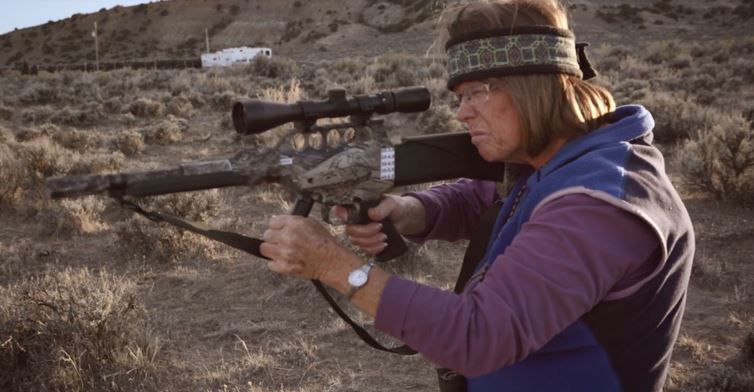
The Pine Nut advocates recently acquired a Jeep to chase the mares as far as necessary to make sure they don’t reproduce.
The Virginia Range advocates are pumping PZP into a herd of approximately 3,200 males and females at a rate of 4,200 doses per year.
Good luck finding a youngster if you visit the Salt River.
As the advocates mull their options against a backdrop of growing support from a misinformed public, and continued skepticism of the bureaucrats and ranchers, is it reasonable to assume a constant death rate over the life of their darting programs?
A graphical model, known as the Bathtub Curve, shows failure rates of manufactured products as a function of their age. The message of the Bathtub Curve is that, after a certain period, failure rates go up as things get older.
If everyone in the country was in their twenties, you wouldn’t find many obituaries in the newspaper. If everyone was at least 60, that section might be a bit more active.
When a darting program is fully implemented, the average age of the herd increases, because no new foals are hitting the ground.
If the bathtub model prevails, at some point the death rate will begin to increase as more horses reach the “wear out” period.
This might help the advocates sell their programs to the bureaucrats without the need for controversial enhancements.
If you start with 1,000 horses and stop all reproduction, 950 would remain at the end of Year 1 with a 5% death rate. In Year 2, 48 horses would die, leaving 902. In Year 3, 45 would die and so forth. This is the blue line in the following chart.
With no new foals, the average age of the herd will go up, so the death rate will likely increase as the program takes hold.
If you start with 1,000 horses and a 5% death rate, but the death rate increases one half percentage point every year thereafter (.005), 50 horses would die in the first year, 52 would die in the second year, 54 would die in the third year, etc. This is the orange line in the chart.

A 50% reduction in herd size, from 1,000 to 500, instead of taking 13 years in the constant-rate scenario, only requires nine years in the rising-rate scenario.
Although darting programs may increase wild horse death rates without any added effort, they will never match the efficiency and effectiveness of helicopter roundups in shifting resources back to the public-lands ranchers.
The advocates will likely be consigned to a mopping-up role in the management process, protecting the ranchers after the fact by making sure the horses don’t bounce back.
RELATED: Darting Programs and Helicopter Roundups on Same Side of Coin.
Debunking Sage-Grouse Myth
If there’s an agenda, problems will be invented that steer public opinion toward its acceptance.
That’s the story behind man-made climate change. Pure fiction.
The goal is not environmental protection, but massive government involvement in your life, sometimes referred to as socialism. You need to give them more power.
So it is on western rangelands, as discussed in a column posted yesterday by the Casper Star-Tribune.
Supporters of public-lands ranching use habitat degradation to bludgeon wild horses, deflect attention from grazing and conceal the effects attributable thereto.
The goal is not to protect the birds but to secure more resources for the ranchers.
Curiously, the BLM recently announced virtual scoping sessions as it considers changes to the management plans for sage-grouse habitats. More information can be found at the ePlanning site for the project.
A keyword search of the Rangewide Monitoring Report, posted with other project documents, yielded these results:
- Horse – No occurrences
- Horses – 1
- Livestock – 24
- Permittee – 5
- Grazing – 57
- Allotment – 13
- Allotments – 89
- Drilling – 0
- Mining – 136
- Logging – 0
- Recreation – 4
RELATED: Livestock Impede Sage-Grouse Recovery on Public Lands?
‘Montana Solution’ Protects Livestock Not Horses
The executive director of the Campaign Against America’s Wild Horses teams up with the founder of an equine-assisted empowerment program for a column in the Daily Montanan that targets wild horses while giving cover to the public-lands ranchers.
You’ll never guess where the therapy sessions occur.
RELATED: AWHC Compromised?
Darting Programs and Helicopter Roundups on Same Side of Coin
They do not allocate resources. They do not change resource allocations. They enforce resource allocations already on the books.
The problem is upstream in the management process.
The ‘Path Forward,’ and its army of supporters, ignore this reality.

ISPMB Issues Bizarre Statement About Heber Wild Horses
Per news release dated December 22:
The agreement between the ISPMB and the Forest Service also declared the burros should be horses as free-roaming and wild on the Apache-Sitgreaves National Forest’s 616,000 acres. As a result, ISPMB believes these horses cannot be removed from this area.
Wild Horse Darting Programs Grow 40% in Two Months
You thought inflation was a problem.
The price of hay has been climbing steadily since the summer.
Now, the number of HMAs with fertility control programs has increased to 14, per the roundup schedule dated October 21, compared to 10 in the August 30 schedule.

The number of animals targeted grew by 4.6%. Overall, 24.2% of the horses allowed by plan will be treated, probably with PZP, keeping the resource scales in most of the areas tipped in favor of the public-lands ranchers for longer periods of time.
Nevada WHR Roundup Day 3
The incident began on December 20. Gather stats through December 22:
- Type: Planned
- Method: Helicopter
- Animals captured: 101 horses, 91 burros
- Average daily take: 33.7 horses, 30.3 burros
- Capture goal: 648 horses, 100 burros
- Removal goal: 438 horses, 100 burros
- Returned: None
- Deaths: None
- Shipped: 79 horses, 91 burros
The cumulative totals include 34 stallions, 40 mares and 27 foals. On the burro side, 47 jacks, 30 jennies and 14 foals.
Youngsters represented 26.7% of the horses captured and 15.4% of the burros.
Of the adults, 45.9% were stallions and 54.1% were mares. For the burros, 61.0% were jacks and 39.0% were jennies.
Body condition scores were not reported.
The location of gather activity within the WHR is not known.
Day 3 ended with 22 unaccounted-for horses and no unaccounted-for burros.
The number of animals removed to date is 192. Mares returned to the area will be treated with GonaCon.
Operations are not open to public observation.
Other statistics:
- AML: 500 horses, zero burros
- Forage assigned to horses: 6,000 AUMs per year
- Pre-gather population: 736 horses, 95 burros and an unspecified number of foals
- Forage liberated to date: N/A
- Water liberated to date: N/A
- Forage assigned to livestock: None
- Animals displaced from WHR by livestock: None
- True AML: 500
RELATED: Roundup Begins at Nevada WHR.
Salt River Horses Eluded Settlers But Can’t Hide from Advocates
Some of them were able to escape the mass extermination that started 200 years ago, according to a story by KGUN News of Tucson, AZ, and they started coming back into population.
Notably absent from the photos are the youngsters, thanks to the Salt River Wild Horse Darting Group, an affiliate of the Campaign Against America’s Wild Horses.
Roundup Begins at Nevada WHR
The incident started today, according to the gather page, with 79 horses captured, none shipped and no deaths.
RELATED: Wild Horses and Burros to Be Removed from Nevada WHR.
Cumberland Island Horses to Share Land with Spaceport?
The FAA has granted a license for launching commercial rockets from coastal Georgia, according to a story by AP News. The island is known for its mansions and wild horses.
How Many Wild Horses Can the Pine Nut HA Support?
For a quick estimate, convert the AUMs in the Buckeye and Pine Nut allotments to wild horses. The Allotment Master report has the data.
Add the active AUMs and divide by 12:
Horses displaced from HA = (481 + 1,471 + 1,150) ÷ 12 = 258
Given that a small part of Buckeye overlaps the HMA, the number of horses displaced from the HA by privately owned livestock is probably around 250, maybe a bit less.
The AML in this area is zero and the advocates have supplanted the government as resource enforcers, at least for now.
They recently acquired a Jeep to make sure that none of the mares can escape their darting rifles and the fundraising effort has been dropped from their web site.
You might be able to read about it on socialist media.
RELATED: How Pine Nut Advocates Help Government Protect Ranchers.
Mustang Monday
At the Pryor Mountains WHR with Lori’s Travels.
Battle with the Cattle
Here is the Fox5 interview with Manda Kalimian. Peeing incident not included.
Sounds like Pila is a Nokota.
RELATED: Horse Disagrees with Kalimian’s Rewilding Plan?
TCF Issues Media Challenge in Wild Horse Reporting
The original alert, sent to over 900 news outlets, included a fact sheet that was not attached to Friday’s news release on EIN.
Big Summit Roundup Attracts Legal Action
The Central Oregon Wild Horse Coalition said the remaining herd won’t have enough genetic diversity and the population will drift lower due to predation by cougars and wolves, according to a story posted today by The Bulletin of Bend, OR.
RELATED: Big Summit Roundup Delayed.
Fox-Lake Range Roundup Over
The incident ended today, according to a BLM news release. Here are the final results from the gather page:
- Horses captured: 82
- Horses shipped: 19
- Horses returned: 23
- Horses to be returned: 37
- Horses deceased: 4
The numbers don’t balance.
19 + 23 + 37 + 4 ≠ 82
More horses were processed than captured.
No foals were taken. Of the adults, 46% were male and 54% were female.
The death rate was 4.9%.
If the herd was growing at a rate fifteen to twenty percent per year, 16 to 20 foals should have been pushed into the traps. But none were. Why?
Wild Horse and Burro Act at 50: Time for Reflection
The legislation became law 50 years ago today.
In his remarks dated December 17, 1971, President Nixon noted that the animals were 99% extinct, with approximately 9,500 unbranded and unclaimed horses and 11,000 free-roaming burros remaining on the public lands.
Today, the number of horses and burros allowed by plan is not much higher, around 27,000. The land can support many more, but those resources have been assigned to privately owned livestock.
The advocates know a lot about adjuvant but not much about AUMs. Consumed by the overpopulation narrative, they protect the ranchers, not the horses and burros.
Why are you still giving them money?
Fox-Lake Range Roundup Day 5
The incident started on December 11.
A mare was put down on Day 4 due to pre-existing conditions.
The gather page says no foals have been captured but the Day 1 report shows six.
The number of horses gathered to date is not known.
The number of horses shipped is 12.
The death rate and number of unaccounted-for horses cannot be determined.
RELATED: Fox-Lake Range Roundup Day 3.
Wild Horses and Burros to Be Removed from Nevada WHR
The incident will begin on or about December 18, according to the news release, and will not be open to public observation.
Helicopters will push the animals into the traps.
The capture goal is 648 horses and 100 burros, and the removal goal is 438 horses and 100 burros.
Mares returned to the range will be treated with GonaCon, a fertility control drug that may act as a sterilant.
The WHR was established in 1962 on 1.3 million acres of withdrawn lands southeast of Tonopah, NV. Photographs and visitor access are prohibited for security reasons.
The 500 horses allowed by plan require 6,000 AUMs per year. The AML for burros is zero.
The aimed-at stocking rate is 0.4 wild horses per thousand acres. The target rate across all HMAs is one wild horse per thousand acres.
The WHR is not subject to permitted grazing but is bordered by allotments on the east, north and west sides. Refer to the Western Watersheds map for details.
Captured horses will be taken to the off-range corrals at Palomino Valley, north of Reno, NV. Captured burros will be taken to the off-range corrals in Axtell, UT.
Gather stats and daily reports will be posted to this page.
An emergency roundup occurred in the area last year.