It’s when the communists tell you that democracy has been saved by voting for them.

In case you did not know, the United States is a republic, not a democracy.
RELATED: What Is a Positive Correlation?

Western Horse Watchers Association
Exposing the Hypocrisy, Lies and Incompetence of the Wild Horse Advocates
Opinion
It’s when the communists tell you that democracy has been saved by voting for them.
In case you did not know, the United States is a republic, not a democracy.
RELATED: What Is a Positive Correlation?
It’s a relationship between two variables where one tends to increase as the other increases, and one tends to decrease as the other decreases.

Let’s cut the crap. Most Americans are looking at the results from the November 8 elections and thinking “What the hell?”
RELATED: How to Push Taxes, Spending and Inflation Even Higher.
The group convenes on a quarterly basis, at least in theory, but the meetings for August and November were cancelled.
Minutes from the May meeting include a report by Meg Puckett of the Corolla Wild Horse Fund, starting on page six of the pdf.
The on-range population was 106 as of March, with 19 animals in off-range holding.
Six foals were born in 2022, for a birth rate 5.7%.
The Equus Survival Trust classified the herd as Critical/Nearly Extinct in their 2022 Equine Conservation List, yet the advocates have been pummeling the mares with their favorite pesticide for years.
Curiously, only two have been darted this year.
“Due to significant loss over the last several years, an aging population, and questions about the long-term effects of PZP on the mares’ reproductive systems, healthy mares are not being darted in 2022.”
Moreover, “The small roster of mares consistently producing foals has not changed significantly in six years.”
The Assateague herd shows no growth six years after the safe, proven and reversible darting program was shut off.
Will history repeat in Currituck County?
The Currituck advocates have been invited to present research at a conference hosted by the Science and Conservation Center in 2023 (the Billings School of PZP Darting), according to the report.
Truth will likely be in short supply.
The minutes also include a marked-up version of the Wild Horse Management Agreement, starting on page 11, which protects and maintains a thriving ecological balance, and preserves the free-roaming nature and habits of the horses!
RELATED: Advocates, Not Climate Change, to Destroy Currituck Herd.

The term is used in this video from the Piceance adoption at the Mesa County Fairgrounds in Grand Junction.
It’s similar to “If we get rid of them they can stay,” a favorite of the advocates.
If an area set aside for wild horses can support 1,500 animals, and the current population is 800, with an AML of 300, wouldn’t you expect to find healthy horses?
Of course you would. So what’s the problem?
Eighty percent of the forage, corresponding to 1,200 animals, has been assigned to privately owned livestock.
At least 500 horses have to go. Some may end up in pens like these.
You can have your wild horse and burro program as long as it doesn’t interfere with the grazing program.
RELATED: BLM Admits Piceance HMA Not Managed Primarily for Horses!
Vote against your own interests.
Show the world how much you care about big, bloated, overreaching, iron-fisted, centralized government, and the massive unelected bureaucracy sustained thereby.
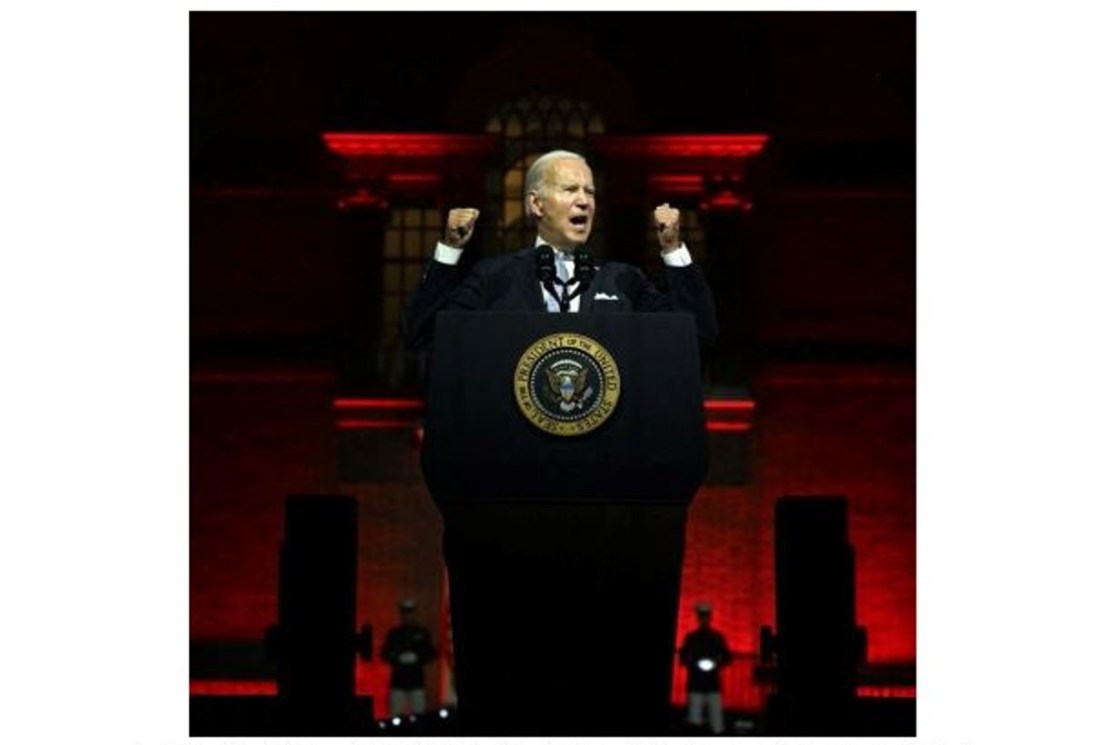
You don’t ask a poor man how to get rich or the advocates how to save wild horses, and you don’t ask liberals how to protect your God-given rights, including your right to life.
In lockstep with the advocates, she puts the drillers and miners in the same camp as the public-lands ranchers, in terms of their impact on wild horses, yet the former affects anywhere from a few acres to a few thousand acres, while the latter devours entire HMAs and beyond.
Western Horse Watchers invites you to find one such company that has as official policy the removal of wild horses and burros from public lands, and then name a farm bureau, stockgrowers association or cattlemen’s group that doesn’t.
RELATED: Wild Horse Documentary Takes Award, for What?
Recommendations from the October meeting have been posted. The Board could have included this idea in response to a plan promoted by left-wing news outlets such as NPR but didn’t:
Move intact families of wild horses from areas of contention with livestock and other land uses to remote wilderness areas. Assign their food and water to privately owned cattle and sheep. Manage their land principally for livestock, with a small allowance for wildlife. Increase permitted grazing as horses vacate the overlapping allotments.
Taking wild horses and burros off the range already has the support of the bureaucrats and ranchers, but the advocates would rather get rid of them with the Montana Solution instead of shipping them to other areas, including government feedlots.
RELATED: WHBAB Recommendations We’d Like to See.

The list from the October meeting has been posted. The Board, composed of ranchers and ranching sympathizers, overlooked this idea:
Confine the permittees to their base properties in a year-round off-season and let them pay the going rate to feed their animals. Assign most of the resources to wild horses and burros, with a small amount reserved for wildlife. Manage the land principally for wild horses and burros as specified in the original statute. Return captured animals to their lawful homes as cattle and sheep vacate the overlapping allotments.
Acting in the best interests of wild horses and burros, not livestock operators, seems to have been dropped from the WHBAB charter.
Don’t expect any support from the advocates. Like the bureaucrats, they want the ranchers to succeed, not the horses.
RELATED: WHBAB Meeting Almost Over.

The advocates are warning of more vehicle collisions with wild horses between now and the end of the year, according to a report dated October 26 by Reno News and Review.
Last year, 17 animals were lost in south Reno, where development encroaches on their habitat. Four such incidents have occurred in 2022.
Tracy “You need to manage the numbers to fit what’s available for the horses” Wilson, defeatist and Nevada state director for the Campaign Against America’s Wild Horses, said the arrival of winter will see more crashes and horse deaths as the rangeland dries up and the bands forage over a wider area.
Not mentioned in the story:
The safe, proven and reversible darting program, now in its fourth year, has put many of the mares at risk of sterility, which means the herd may be lost forever.
As for the “high strike period,” it actually runs twelve months per year, allowing four of the advocates to achieve over 1,000 hits apiece.
You know them by their deeds, not by their words.
They’re purveyors of the Montana Solution.
They intend to be leaders in the wild horse removal industry.
They think livestock should be the primary consumers of resources in areas set aside for wild horses.
They’re getting rid of 400 to 600 wild horses every year on the Virginia Range, site of their flagship darting program, with many of the mares now at risk of sterility.
They wear “Stay Wild” caps.
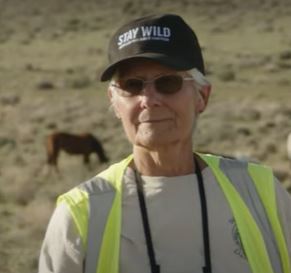
They couldn’t convert an AML to AUMs if their lives depended on it, much less compute a forage allocation for livestock in the lawful home of wild horses, but they can tell you exactly how much adjuvant to add to the PZP and how long to mix them.
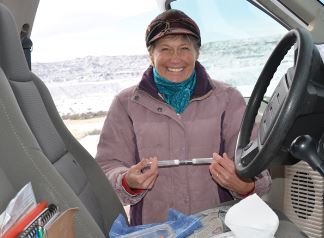
They’re fighting crime on America’s public lands.

Their standard-bearer knew what was in the bill and wrote about it in the October edition of Horse Tales, before the text was published (page 7).
They are allies of the bureaucrats and ranchers.
The last thing they want you to know about wild horses is the truth.
They’re not who they say they are.
Most are female, liberal, innumerate and aborting/contracepting/sterilizing in their own lives.
Who are they?
The advocates, a miserable lot, led by the Campaign Against America’s Wild Horses, experts at separating you from your money under the guise of saving wild horses.
RELATED: HR 9154 Prohibits Surgical, Not Chemical Sterilization.

The October edition of Horse Tales has been published. After taking a month off, the real estate agent and PZP darter in the Minden/Gardnerville area, an acolyte of the Campaign Against America’s Wild Horses, is back with a column about the challenges of identifying wild horses for safe, proven and reversible birth control, starting on page 4.
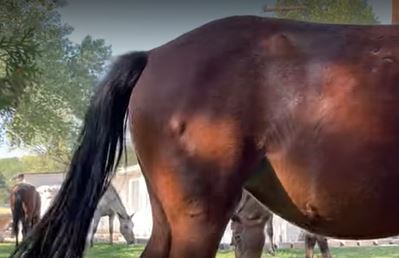
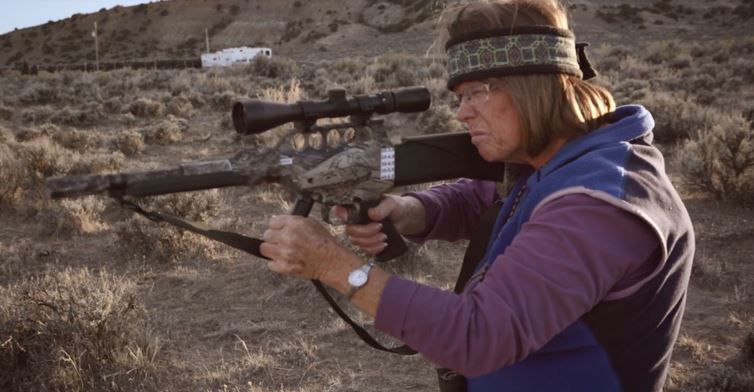
The article applauds the amazing support group in northern Nevada consisting of hard-working volunteers donating their time and energy, passionate people who donate the funds for the fertility control and equipment like gas-charged rifles, the vaccine and so many other supplies that help the advocates keep wild horses wild.
Makes you want to puke, doesn’t it?
What do they mean by keeping wild horses wild?
Who would want this for America’s wild horses?
Their allies, the bureaucrats and ranchers, whose approval they seek at all costs.
Livestock on the McCullough Peaks HMA, an area set aside for wild horses, receive 3.6 times more forage than the horses, at least in theory.
As the herd grows, the horses reclaim more and more of their food from the ranchers, upsetting the thriving ecological imbalance established by the bureaucrats.
Advocates with Friends of a Legacy, eager to please the bureaucrats and ranchers, have the answer: Get rid of excess horses with the Montana Solution, so cattle can access 78% of the authorized forage in the lawful home of wild horses.
Their partnership with the BLM works through honesty and communication, according to a BLM news release, except the horses have been cheated by the bureaucrats, donors have been duped by the advocates and the ranchers are laughing all the way to the bank.
RELATED: McCullough Fundraiser Benefits Ranchers Not Horses.

Organizers pulled a disparate group together, including private landowners, animal welfare advocates, federal land managers, political leaders, cattle ranchers, wildlife managers, sport hunting and wildlife conservation organization and representatives from Native American tribes, to sit face-to-face and confront the hard realities of wild horse management, according to a story by Utah State University, sponsor of the event.
A goal of the summit was to create a safe space for conversations, where wild horse advocates and other frauds could come out of the closet in support of the public-lands ranchers.
The new modeling tool unveiled at the conference didn’t show the audience, much less U.S. taxpayers, how much they’re being fleeced by their precious government to prop up a failed industry on America’s public lands.
Call it Amtrak on the range.
It’s not a passenger train, it’s a gravy train.
RELATED: SHOCKER: FREES Network Supports Helicopter Roundups!
UPDATE: Refer to this commentary in CounterPunch by Eric Molvar of the Western Watersheds Project. The McCullough Peaks herd is now a curated horse exhibit, ruined by the advocates in favor of the ranchers.
If they are concerned about the sustainability of their herd, and the long-term effects of the Montana Solution, they should study the results on the Maryland side of Assateague Island, where the pesticide was applied for over twenty years.
Six years after the safe, proven and reversible darting program was shut off, the herd should have doubled in size, at least, but it has not grown according to data provided by the Assateague Island Alliance.
For years the advocates pointed to the island as a model of wild horse management, knowing exactly what would happen.
Now, they’re trying to ruin the herds on the Virginia Range and Salt River.
RELATED: Sustainability of Currituck Wild Horses Questioned.

Advocates with the Salt River Wild Horse Darting Group, an afffiliate of the Campaign Against America’s Wild Horses, laid out a plan on April 5. Here’s what they need:
The fifth step, of course, is pumping the poison into the mares for four of five years until they become sterile.
“We’re protecting them from removal by getting rid of them with PZP.”
A snippet from their page on socialist media (sidebar on the right) indicates the number of dead horses has increased to 20, with more than 30 missing.
Sounds like they’ve already accomplished steps 2 and 3.
RELATED: Alpine Shooters Taking Business from Wild Horse Advocates?
But you can probably discard them on the basis of their titles.
Consider this search result on Bing regarding the shooting of wild horses in the Apache-Sitgreaves National Forest near Alpine, AZ. The link pointed to a report in The News & Observer of Raleigh, NC.

Take a guess: Were any advocates interviewed for the story? Will it give you an accurate picture of what’s happening on America’s public lands?
RELATED: Alpine Shooters Taking Business from Wild Horse Advocates?

Earlier this year, advocates with the Salt River Wild Horse Darting Group, an affiliate of the Campaign Against America’s Wild Horses, offered to facilitate the removal of the Jumping Mouse horses near Alpine, while reducing the size of remaining herd with the Montana Solution.
They were rebuffed by the Forest Service.
Now, others are getting rid of the horses, not with darting rifles, but with real rifles, and they don’t like it.
Getting rid of wild horses is their job.
They have a better way. They intend to be leaders in the wild horse removal business and they don’t want any competition.
RELATED: Advocates Offer $25,000 Reward in Alpine Wild Horse Shootings.
The Salt River Wild Horse Darting Group and the Campaign Against America’s Wild Horses have pledged $20,000 for the arrest and conviction of the persons responsible, with an additional $5,000 contributed by Animal Wellness Action, according to a report by The Arizona Republic.
All three groups are PZP fanatics, eager to get rid of wild horses with the Montana Solution.
They did not say what law or laws have been violated.
The number of deceased horses has risen to 15, with 20 still missing and presumed dead, according to volunteers with SRWHDG.
RELATED: Searching for Motives in Alpine Wild Horse Shootings.
If the advocates endorse it, it’s bad.
For example, the Animal Welfare Institute, in cooperation with the Campaign Against America’s Wild Horses, claims that HR 9154, which would amend the WHB Act, represents a long overdue upgrade to the law so that wild equines can be managed humanely in their natural habitats for Americans to enjoy.
This, of course, means “get rid of them with the Montana Solution” so ranchers can be the primary consumers of resources in their lawful homes.
The advocates were defeated a long time ago.
Today, they carry water for the bureaucrats and ranchers.
They treat their cherished horses and burros—sorry, they may be switching to beloved, as seen in the article by the Las Vegas Review-Journal—the way you treat your beloved ants and roaches.
RELATED: Lawmakers Draft Another Stupid Bill for Wild Horses.
This article by the Las Vegas Review-Journal does not provide a link to the measure but Western Horse Watchers suspects it’s HR 9154, introduced yesterday in the House and referred to the Committee on Natural Resources.
The text is not available as of today.
The bill would provide more federal funds and resources to protect wild horses and burros from slaughter, or killed for management goals, implement fertility control and eliminate cash for adoptions that have led to slaughter in Mexico and other countries, according to the report.
To most people, protection means stop the losses, prevent extinction and change whatever needs to be changed to help the species recover.
Not so in the wild horse world. Protection means get rid of them with the Montana Solution, with benefits accruing to the public-lands ranchers.
Earlier this year, lawmakers proposed the ridiculous helicopter ban nicknamed “Save a Horse, Hire a Cowboy.” Wild horses would be removed from their lawful home by wranglers, not helicopters, in favor of the ranchers.
Prompted by video from the Pancake roundup showing a foal running on a broken leg, a subsequent video from the Buffalo Hills roundup showed how it would work. “Abuse a foal, pardon a cowboy.”
A few months later, lawmakers came up with another brilliant idea: Train combat veterans to dart wild horses with PZP, the “Veterans Against Mustangs Act.”
These bills do not address the problems of resource management and multiple use and are therefore of no benefit to America’s wild horses.