The incident started on January 16, according to the gather page, with 24 horses captured, none shipped and no deaths.
RELATED: Desatoya Roundup Announced.

Western Horse Watchers Association
Exposing the Hypocrisy, Lies and Incompetence of the Wild Horse Advocates
The incident started on January 16, according to the gather page, with 24 horses captured, none shipped and no deaths.
RELATED: Desatoya Roundup Announced.
Near the Salt River with John Fliss StellarChi.
Operations resumed on January 6. Gather stats through January 16:
One horse died on Day 101 of unspecified causes and three others were put down due to club feet. The death rate is 0.9%.
The total includes 1,555 stallions, 1,653 mares and 837 foals. The gather page shows 1,554 stallions and 1,640 mares.
Foals represented 20.7% of the horses captured. Of the adults, 48.5% were male and 51.5% were female.
The percentage of foals is consistent with a herd growth rate of 16% per year, assuming a 5% death rate.
Body condition scores were not reported.
Gather activity has moved to White Mountain and Little Colorado but the location of the trap site was not specified.

The number of horses shipped has not been included in the cumulative totals and the figure above is based on the daily reports.
If 4,032 horses have been captured as stated at the gather page, 3,476 have been shipped and 37 have died, the maximum number of horses that could be returned to the area is 519, not 580 as stated in the cumulative totals. The numbers don’t balance.
The number of horses removed to date, based on the cumulative totals, is 3,452, about 99% of the project goal.
Other statistics:
RELATED: Rock Springs Roundup Day 99.
Western Horse Watchers was unable to determine but a photo on their darting page shows the powder charge going off as a dart strikes a horse.

If the advocates will do this, what else will they do to our wild horses?
RELATED: Upgrading Your Gen 1 Projector.
A 2019 news release by IDA titled “These Guns Can Save Wild Horses and Burros” features a graduate from the SCC School of PZP Darting holding a Gen 1 gauged projector with scope and black satin finish. She joins ranks with other foot soldiers advancing the Montana Solution across western rangelands.
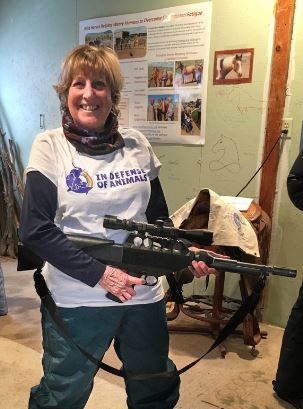
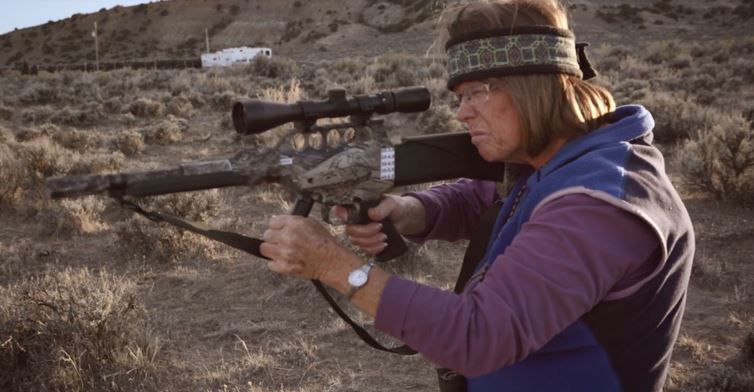
Although propelled by a compressed gas, a powder charge goes off when the dart, formally known as an RDD, strikes the target, driving the payload into the animal.

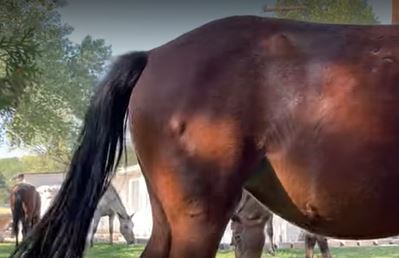
Injuries are not uncommon, but where the technique is practiced, natural behaviors and youngsters are. Livestock flourish as the herds are decimated.
You have to give them credit: The advocates speak with one voice, although it’s the wrong voice.
Ending permitted grazing, confining the ranchers to their base properties, and letting them pay market rates to feed their animals—like the rest of us—apparently has never crossed their minds.
RELATED: Can Darting Programs Compete with Helicopter Roundups?
A few weeks ago, the Campaign Against America’s Wild Horses joined forces with the Animal Welfare Institute to sponsor a petition asking the BLM to cancel the roundup and get rid of the horses with PZP, described euphemistically as “managing these historic wild horses humanely in the wild with proven fertility control.”
Who benefits as wild horses are removed from the range? The public-lands ranchers, of course, but that was omitted from the petition.
Now, in a new commentary published today by the Casper Star-Tribune, Roy appears to side with groups that seek the removal of livestock from areas identified for wild horses, even though her organization refused to sign a letter last year requesting the Secretary of the Interior to do exactly that.
RELATED: Signatories of Rock Springs Petition Duped by Advocates?
The AML is 638, so that’s it, right?
The Complex can only support 638 wild horses if you assign 85% of the authorized forage to privately owned cattle and sheep.
Tables 3 – 6 in the Final EA for resource enforcement actions provide data for livestock AUMs inside the Complex, which were summarized in this post. The numbers in the Preliminary EA carried over to the Final EA with no changes.
Livestock receive 43,344 AUMs per year inside the Complex, assuming the resource is evenly distributed across the allotments.
That forage would support an additional 43,344 ÷ 12 = 3,612 wild horses.
The True AML, the number of horses the Complex could support it it was managed principally for wild horses, as specified in the original statute, is 638 + 3,612 = 4,250.
The pre-gather population of 3,244 is well within this range.
The number of horses displaced by permitted grazing represents about 7% of those in off-range holding.
If public-lands ranching was ended in this and fifteen other such areas, all of those horses could be returned to the range.
The ranchers, bureaucrats and advocates don’t want you knowing any of this because it torpedoes the justification for their roundups and fertility control programs.
RELATED: Pancake Roundup Announced.

The incident began on January 11. Gather stats through January 14:
A stallion died unexpectedly on Day 2 and a mare was put down. Three horses were euthanized on Day 3 followed by two on Day 4. The death rate is now 1.8%.
The cumulative totals include 213 stallions, 233 mares and 68 foals.
Youngsters represented 13.2% of the horses captured, consistent with a herd growth rate of 8% per year, assuming a 5% death rate.
Of the adults, 47.8% were stallions and 52.2% were mares.
Body condition scores were not reported.
The location of the trap site within the Complex was not provided.

Day 4 ended with 196 unaccounted-for animals.
The number of horses removed to date is 514. Mares returned to the Complex will be treated with population suppression of unspecified type.
Other statistics:
RELATED: Pancake Roundup in Progress.
Comments will be accepted until February 11, according to Thursday’s news release, and can be submitted by email, as explained in the project description.
Table B2 in the EA indicates that the Proposed Action, discussed in Section 2.2, would affect 4.8 acres of the Diamond Hills North HMA and 0.3 acres of the Diamonds Hills South HMA, displacing 1/200th of a wild horse at typical stocking rates.
The total surface disturbance is 26.9 acres, as detailed in Table 2-1.
Losses attributable to permitted grazing, which affects entire HMAs and beyond, are far greater.
The Proposed Action includes 4.3 acres of the Red Rock Allotment, per Table B2.
Film from the Pancake roundup, which the advocates will use to justify their ruinous darting programs, is the centerpiece of this story by KLAS News of Las Vegas.
Of greater concern is the deceit of those who claim to represent America’s wild horses but are actually voices for the public-lands ranchers.
Operations resumed on January 6. Gather stats through January 13:
A mare was put down on Day 97 due to bad knees. Three horses were euthanized on Day 98 due to broken legs and emaciation. Five more were eliminated on Day 99 due to bad knees and club feet.
All survived the chase and would be alive today if the roundup had been called to off.
The death rate has climbed from 0.7% on Day 96 to 0.9% on Day 99. The death rate since the incident resumed is 3.0%.
The total includes 1,432 stallions, 1,502 mares and 752 foals. The gather page shows 1,429 stallions and 1,489 mares.
Foals represented 20.4% of the horses captured. Of the adults, 48.8% were male and 51.2% were female.
The percentage of foals is consistent with a herd growth rate of 15% per year, assuming a 5% death rate.
Body condition scores were not reported.
Gather activity has moved to White Mountain and Little Colorado but the location of the trap site was not specified.
The number of horses shipped has not been included in the cumulative totals and the figure above is based on the daily reports.
If 3,671 horses have been captured as stated at the gather page, 3,222 have been shipped and 33 have died, the maximum number of horses that could be returned to the area is 416, not 580 as stated in the cumulative totals. The numbers don’t balance.
The number of horses returned to the range has grown by 20 since Day 96 but the jump was not explained in the daily reports.
The number of horses removed to date, based on the cumulative totals, is 3,163, about 90% of the project goal.
Other statistics:
RELATED: Rock Springs Roundup Day 96.
The same thing as in other western states: Most of the resources have been fenced off and sold to public-lands ranchers, so, of course, they’re going to venture out of their habitats and into roads and private properties in search of food and water.
It’s not overpopulation, as the writer of this story for KTVX News of Salt Lake City would have you believe.
For a quick estimate, convert the livestock AUMs inside the HMA to wild horses and add the result to the AML.
Livestock receive 3,646 AUMs per year inside the allotment and the allotment is about three times larger than the HMA, so the forage assigned to livestock inside the HMA should be about 3,646 ÷ 3 = 1,215 AUMs per year, assuming the resource is evenly distributed across the parcel.
That forage would support an additional 1,215 ÷ 12 = 101 wild horses, for a True AML of 35 + 101 = 136.
The stocking rate at the new AML would be 5.8 wild horses per thousand acres, or 172 acres per horse.
The target rate across all HMAs is one wild horse per thousand acres, because they are managed primarily for livestock.
RELATED: Spanish Ancestry Found in Carter Reservoir Mustangs.
Tests indicate the herd may have the highest percentage of individuals with ancient Spanish-Iberian DNA of any herd in the western U.S. investigated to date, according to an EIN news release dated January 13.
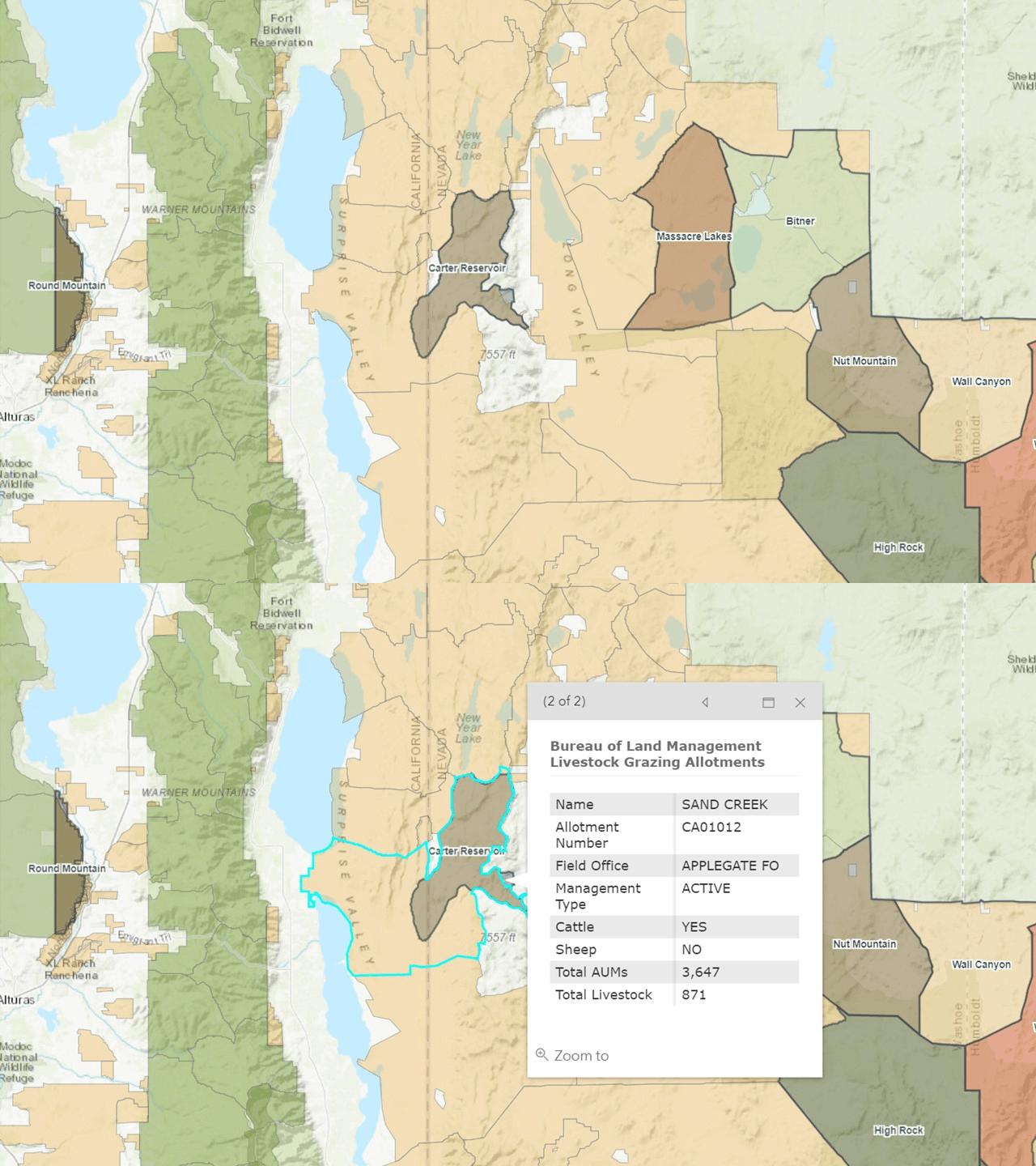
The HMA straddles the CA-NV state line and lies mostly within the Sand Creek grazing allotment, as shown in the Western Watersheds map.
The 35 horses allowed by plan in the HMA receive 420 AUMs per year, while livestock in the allotment, which is about three times larger than the HMA, receive 3,646 AUMs per year, according to the Allotment Master report.
RELATED: Nuisance Roundup Announced for Carter Reservoir HMA.
The incident started on January 11, according to the gather page, with 157 horses captured, none shipped and two dead.
RELATED: Pancake Roundup Announced.
Three are in the Stillwater Field Office and one is in the Mount Lewis Field Office.
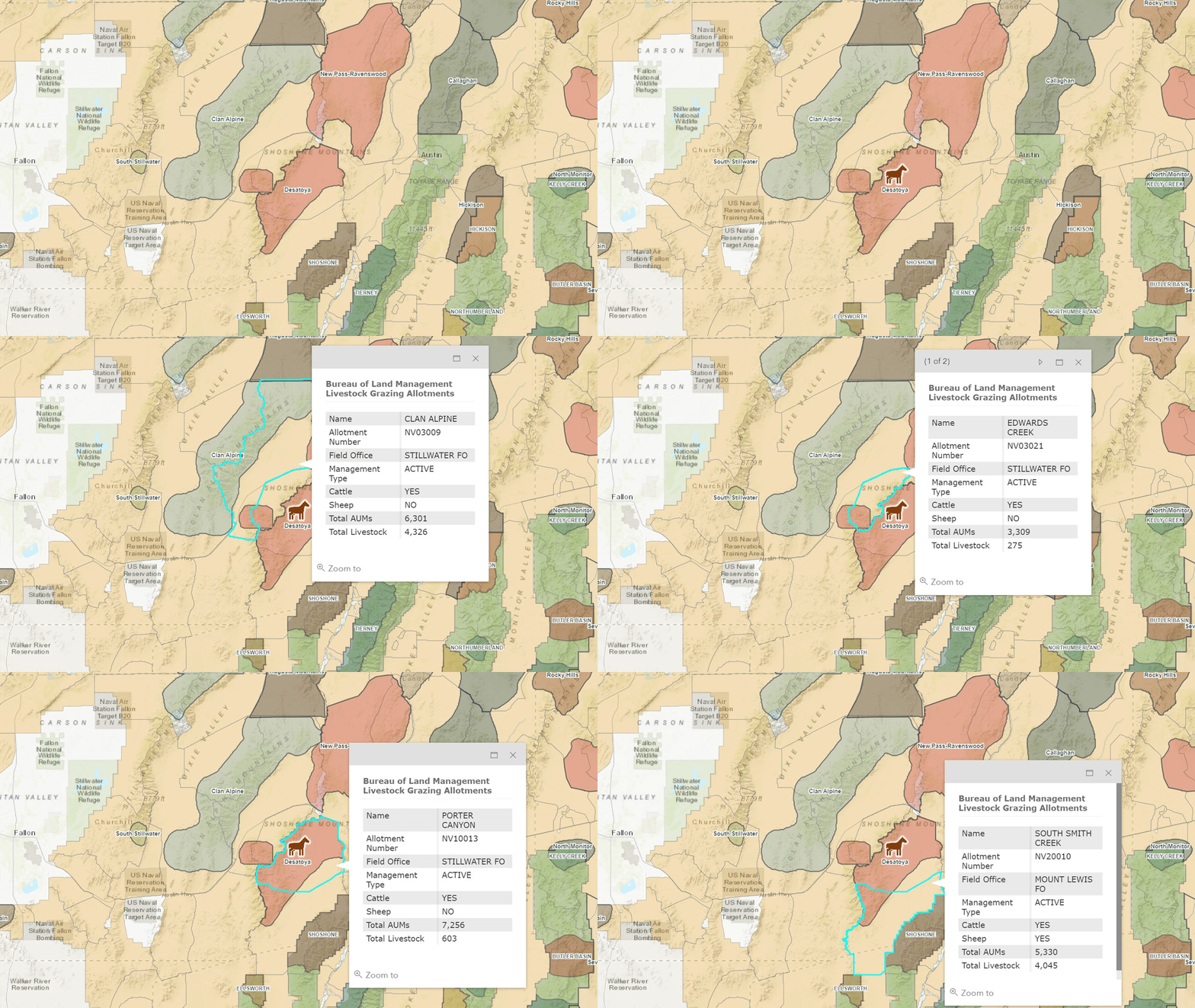
Three of the allotments offer year-round cattle grazing, according to Table 3-2 of the Final EA, and all four are in the Improve category, according to the Allotment Master Reports [Stillwater | Mount Lewis].
The HMA, at 161,678 total acres (public and private), represents 23% of the 704,688 total acres in the allotments.
RELATED: Desatoya Roundup Announced.
The Desatoya removal goal is 150 wild horses, as discussed this morning.
To achieve zero population growth in the Virginia Range, the advocates would have to eliminate 450 to 600 foals every year, as discussed on November 26.
To achieve a zero percent birth rate, which is probably their goal, the advocates would have to eliminate 600 to 750 foals every year.
At the high end, that’s equivalent to five Desatoya roundups, every year.
The Virginia Range is just a demonstration project. The advocates are trying to win the approval of the bureaucrats and ranchers, to spread their enmity elsewhere, by getting rid of as many VR mustangs as possible.

The event appears at the bottom of the first page in the latest schedule and represents less than 1% of the FY 2022 resource enforcement goals announced last week.
Operations will begin on or about January 16, according to yesterday’s news release.
The capture goal is 233 and the removal goal is 150. Mares returned to the HMA will be treated with GonaCon Equine, a contraceptive that may function as a sterilant.
Helicopters will push the horses into the traps and the incident will be open to public observation.
The HMA covers 161,678 acres and the 180 horses allowed by plan require 2,160 AUMs per year.
The stocking rate allowed by plan is 1.1 wild horses per thousand acres, in line with the target rate of one wild horse per thousand acres across all HMAs.
The current population is thought to be 277.
The Western Watersheds map shows four grazing allotments that intersect the HMA.
Livestock receive 9,133 AUMs per year inside the HMA, per Table 3-2 of the Final EA for resource enforcement actions therein.
The forage assigned to livestock would support an additional 761 wild horses, about 1.5% of those in off-range holding, for a True AML of 941.
The current population is well within this range.
There is no need for a roundup or fertility control program, despite the drivel from the bureaucrats and advocates. The problem is public-lands ranching.
Captured animals will be taken to the off-range corrals at Palomino Valley.
Gather stats and daily reports will be posted to this page.
Over 400 wild horses were removed from the area two years ago.
Operations resumed on January 6. Gather stats through January 10:
Four horses were put down on Day 96, lifting the death rate to 0.7%.
The total includes 1,386 stallions, 1,440 mares and 726 foals. The gather page shows 1,383 stallions and 1,428 mares.
Foals represented 20.4% of the horses captured. Of the adults, 49.0% were male and 51.0% were female.
A birth rate of 20% implies a growth rate of 15% per year, assuming a 5% death rate.
Body condition scores were not reported.
Gather activity has shifted to White Mountain and Little Colorado.
If 3,549 have been captured, as stated at the gather page, 3,152 have been shipped and 24 have died, the maximum number of horses that could be returned to the five HMAs is 3,549 – 3,152 – 24 = 373, not 488 as stated in the cumulative totals.
The numbers don’t balance.
Other statistics:
RELATED: Rock Springs Roundup Day 93.
A second dose of GonaCon Equine will be given to 37 mares, followed by their return to the HMA on January 15, according to today’s news release.
No foals were captured in the December roundup.
 Western Horse Watchers Association