Black Mountain Wild Burro Removal Continues

Operations resumed on February 12, according to the gather page.  No activity has been reported since February 16.

Fifty five animals have been trapped to date, with none shipped and no deaths.

The capture and removal goals are identical, 80 each.

The cumulative total includes 38 jacks, 14 jennies and three foals.

Youngsters represented 5.5% of the burros captured.

Of the adults, 73.1% were male and 26.9% were female.

Body condition scores were not provided.

The location of the trap site was not specified.

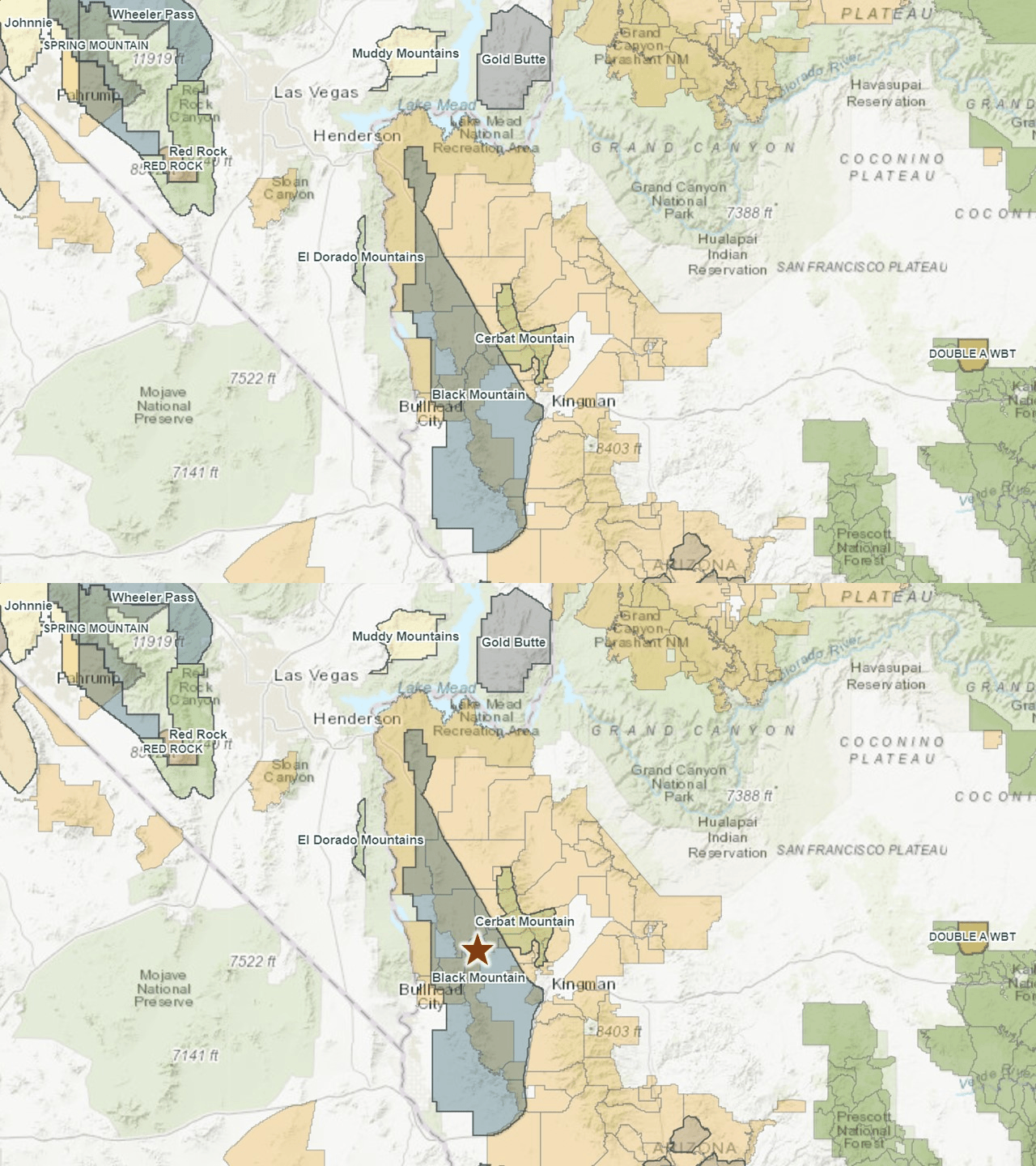
Black Mountain HMA Map 02-25-22

Roughly half of the HMA is subject to permitted grazing, as shown on the Western Watersheds map, and the AML corresponds to about 28% of the authorized forage.

The incident was not announced at the BLM news site but it does appear on the FY 2022 roundup schedule.

Animals outside the HMA on private lands are targeted.

Last year, 481 animals were removed from the area, according to figures at the gather page.  The event has not been marked complete and no such announcement has been posted by the BLM.

New Resource Enforcement Plan for Bible Springs Complex?

The project appeared today at ePlanning.  No documents have been posted and there are no opportunities for public comments at this time.

An announcement soliciting public input for the scoping phase of the project may or may not be posted to the BLM news site.

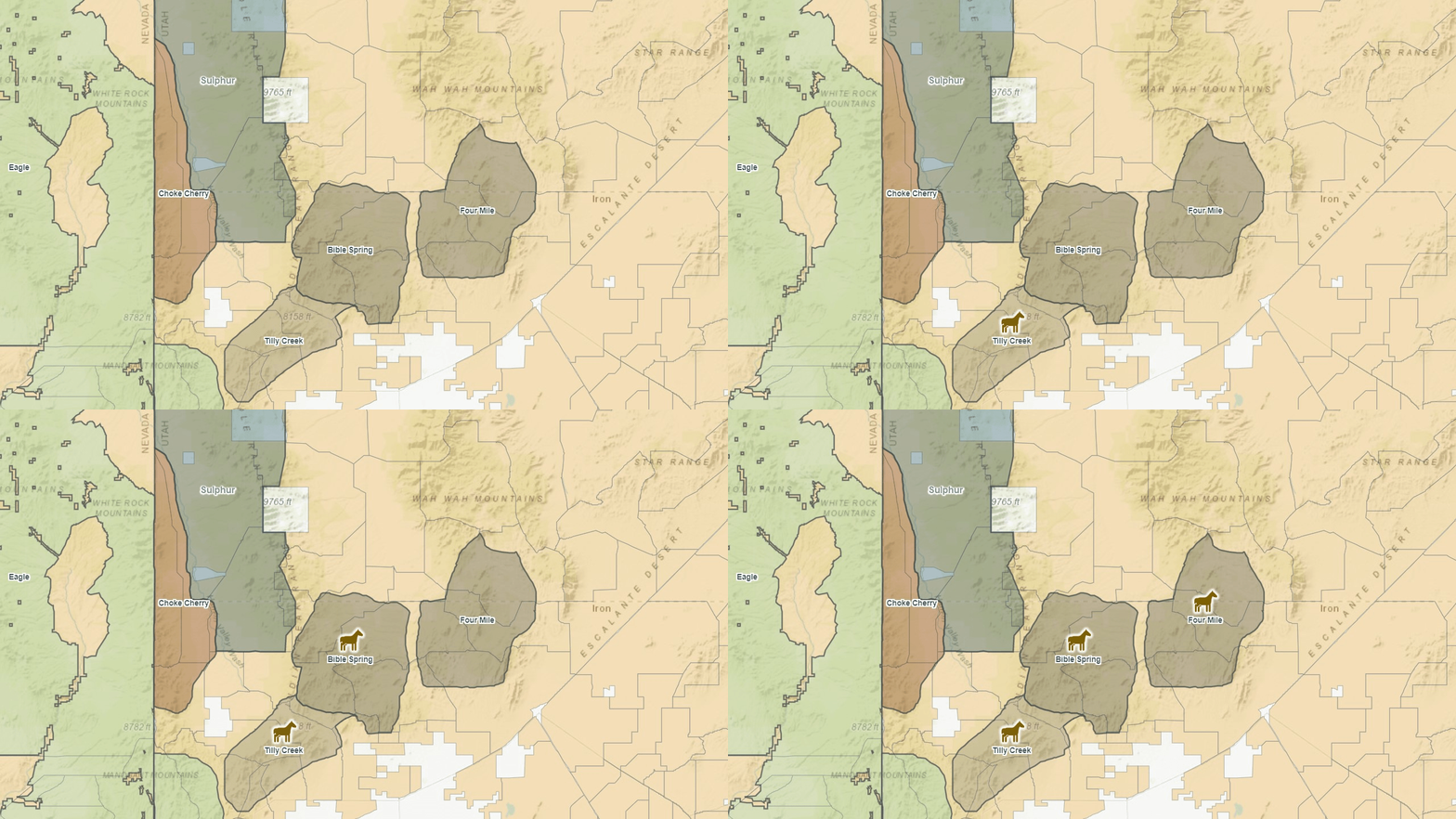
The Complex includes three HMAs in western Utah.

Bible Springs Complex Map 02-24-22

The HMAs are subject to permitted grazing, as shown on the Western Watersheds map.

The Proposed Action would remove excess horses until the herds are at the low end of their AMLs and apply fertility control to reduce growth rates thereafter, according to the project description.

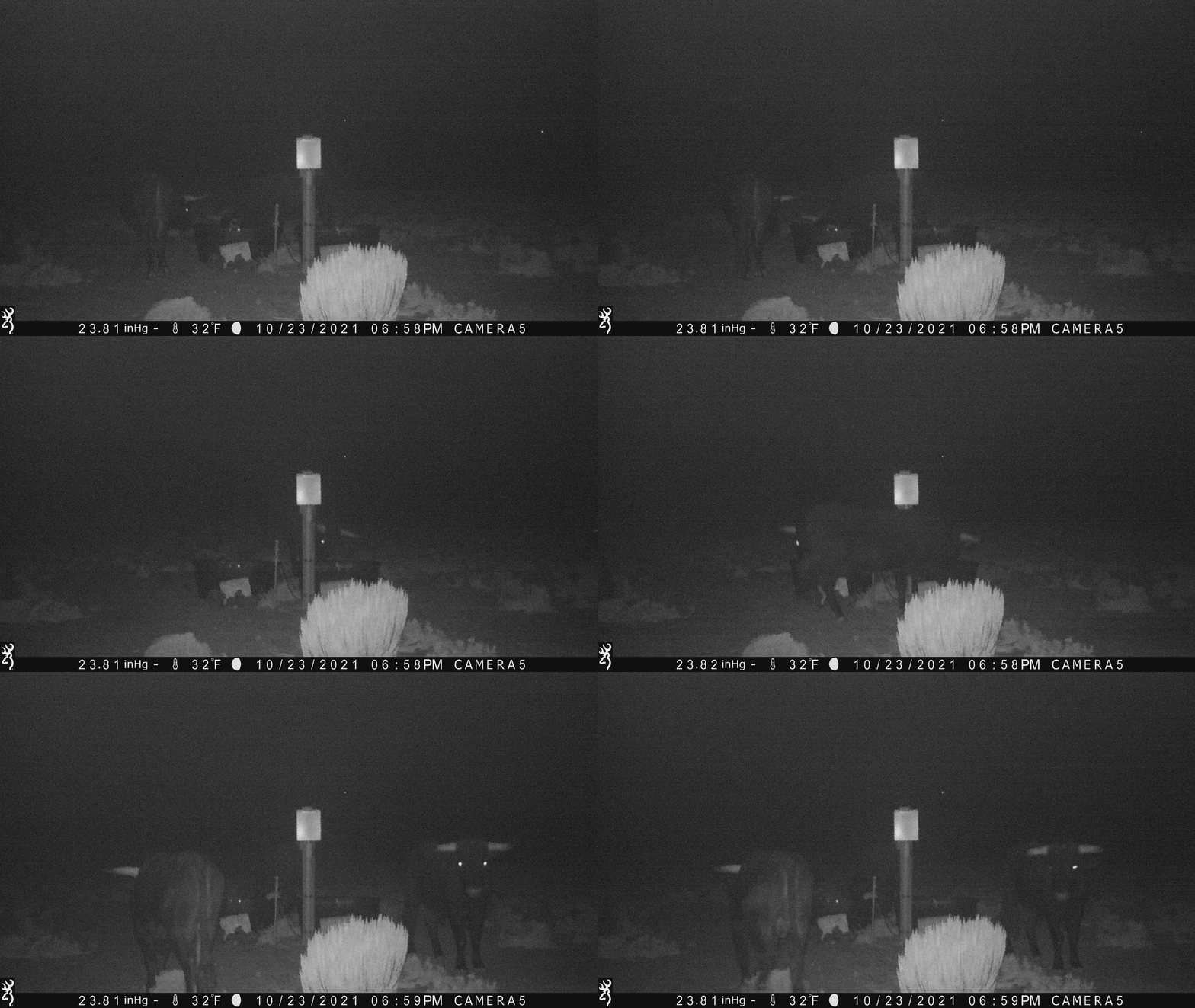
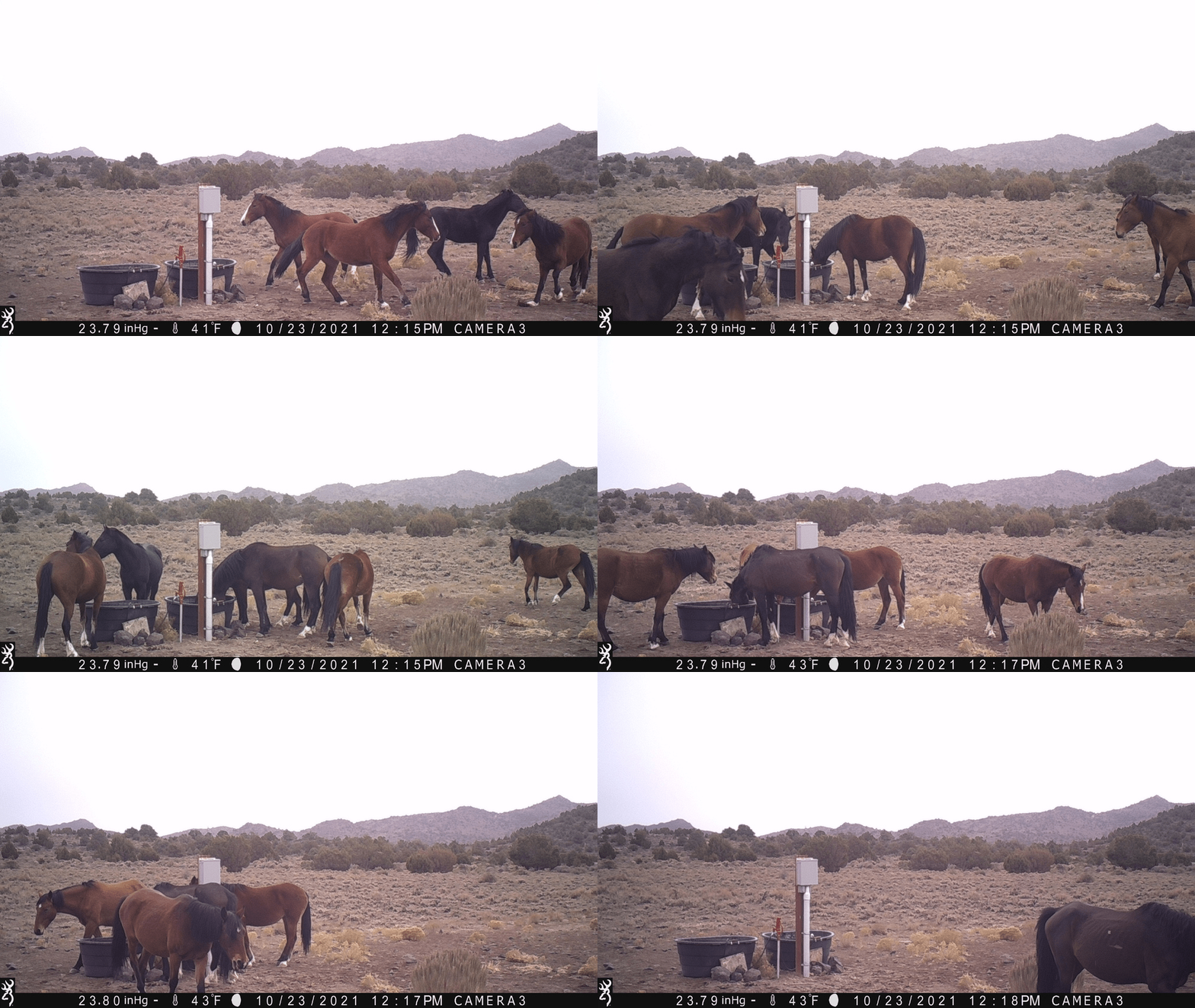
Challis Roundup Day 4

The incident began on February 20.  Gather stats through February 23:

  • Target: Horses
  • Type: Planned
  • Method: Bait
  • Captured: 15
  • Average daily take: 3.8
  • Capture goal: 70
  • Removal goal: 39
  • Returned: None
  • Deaths: None
  • Shipped: 13

The cumulative total includes 5 stallions, 8 mares and 2 foals.

Youngsters represented 13.3% of the horses captured, consistent with a growth rate of 8% per year.  Land managers often use a rate of 20% per year to predict herd sizes.

Of the adults, 38.5% were stallions and 61.5% were mares.

Body condition scores ranged from three to five.

The location of the trap site within the HMA was not provided.

Challis HMA Map 11-11-21

Day 4 ended with two unaccounted-for animals.

The number of horses removed to date is 15.

Mares returned to the HMA will be treated with fertility control of unspecified type.

Other statistics:

  • AML: 253
  • Forage assigned to horses: 3,036 AUMs per year
  • Pre-gather population: 224
  • Forage liberated to date: 180 AUMs per year
  • Water liberated to date: 150 gallons per day
  • Forage assigned to livestock: 9,756 AUMs per year (estimated)
  • Horses displaced from HMA by permitted grazing: 813
  • True AML: 1,066
  • Stocking rate at new AML: 6.9 wild horses per thousand public acres
  • Horses displaced from HMA by drilling and mining: Ask the advocates

RELATED: Challis Roundup in Progress.

Shackleford Herd Grows Slightly in Latest Census

The Park Service said in a news release yesterday that 121 horses were living on the barrier island at the end of 2021, up from 117 at the end of 2020.

The growth rate was 3.4%.

Eleven foals were counted and seven deaths were reported.

The average lifespan was eleven years and no mares were treated with contraceptives in 2021, according to the annual report.  Fertility control was introduced in 2000.

The herd was 39% male and 61% female, a characteristic observed in other areas where the Montana Solution has been applied for an extended period.

RELATED: Shackleford Herd Grows In Latest Census.

Stop the Roundups, Get Rid of the Horses with PZP

The BLM says roundups are necessary and humane, but more and more members of Congress aren’t buying it, according to the communications director of the Campaign Against America’s Wild Horses in a column posted this evening by the Las Vegas Review-Journal.

Western Horse Watchers hopes that more and more Americans aren’t buying their anti-horse agenda, aimed at replacing helicopter roundups with fertility control programs.

They don’t oppose the removals, only the way they are carried out.  They, and their army of volunteers, are stooges for the public-lands ranchers.

RELATED: Group Uses Pancake Deaths to Sell Montana Solution.

How Many Wild Horses Can the Cedar Mountain HMA Support?

The forage assigned to livestock inside the allotments is known but the forage assigned to livestock inside the HMA is not known.

The preliminary EA is still months away, as noted yesterday, so how do you answer the question?

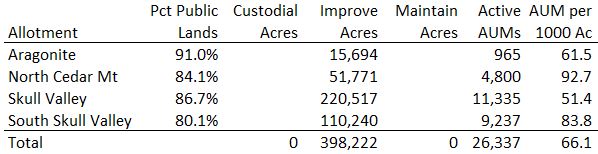
The management plan assigns 26,337 AUMs per year to livestock across four allotments covering 398,222 public acres, as computed in the post, or 66.1 AUMs per thousand acres per year.

That resource would support 66.1 ÷ 12 = 5.5 wild horses per thousand acres, on top of the 0.9 wild horses per thousand acres allowed by plan.

The total authorized forage inside the HMA, neglecting wildlife, should be able to support 0.9 + 5.5 = 6.4 wild horses per thousand acres, assuming the resource is evenly distributed across the parcels.

The HMA covers 411,636 acres, which may include some non-BLM lands, but a quick estimate of the True AML, the number of animals the HMA could support if it was managed principally for wild horses, is 6.4 × 411,636 ÷ 1,000 = 2,634.

The number horses displaced from the HMA by privately owned livestock is 5.5 × 411,636 ÷ 1,000 = 2,264, about 4.5% of those in off-range holding.

The difference between the two figures, 2,634 – 2,264 = 370 is slightly less than the current AML of 390 due to rounding errors.

In general,

True AML = Current AML + Horses displaced by permitted grazing

RELATED: Cedar Mountain Allotments.

Cedar Mountain Allotments

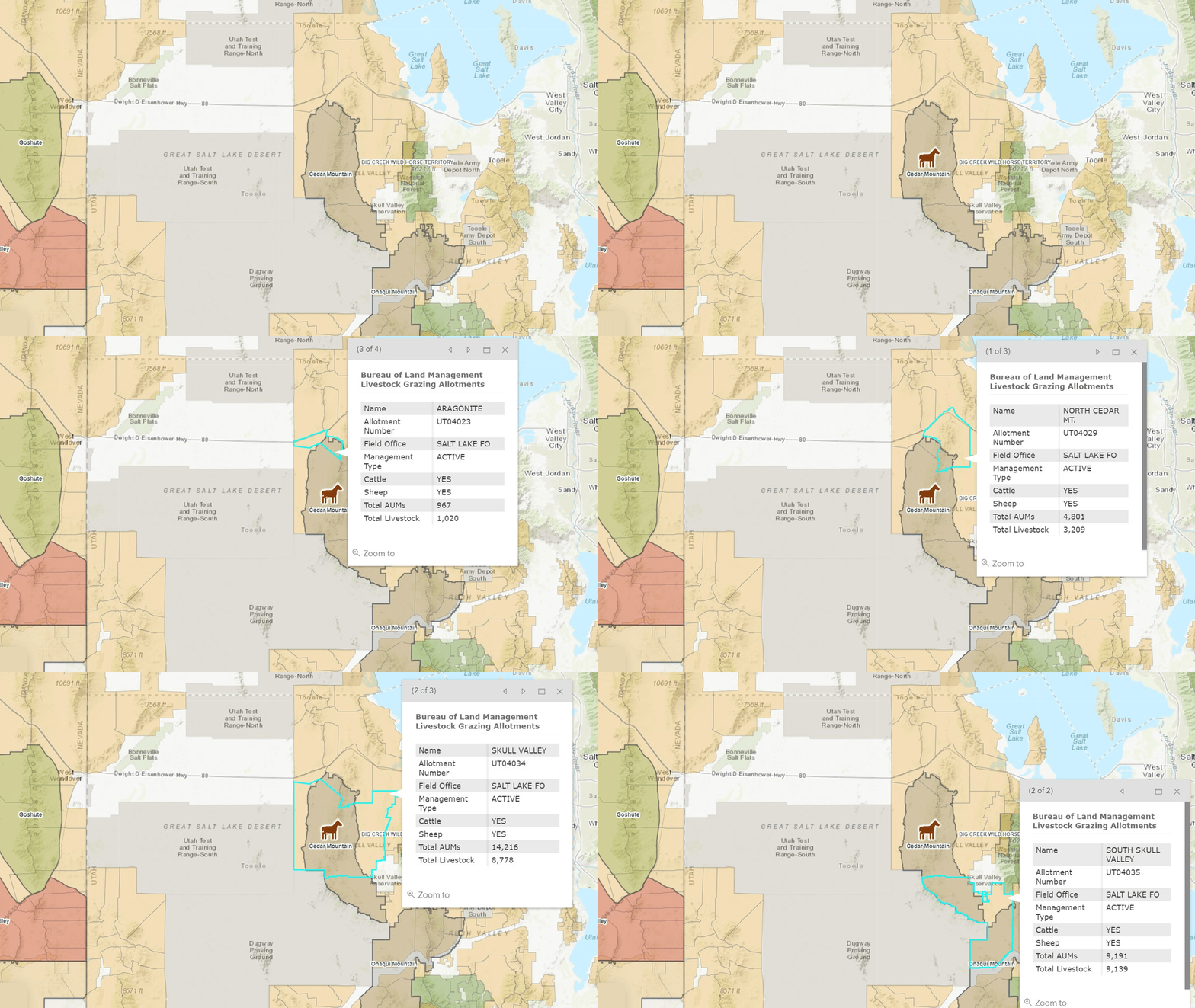
The new pest control plan is still in the scoping phase and a preliminary EA is still months away, but the Western Watersheds map indicates the HMA intersects four grazing allotments.  Click on image to open in new tab.

Cedar Mountain Allotments 02-18-22

The Allotment Master report puts all of the BLM/public acres in the Improve category.

Cedar Mountain Allotment Calcs 02-18-22

The forage densities (AUMs per thousand acres) provide a basis for estimating the carrying capacities of the allotments.

For example, Aragonite should be able to support 61.5 ÷ 12 = 5.1 wild horses per thousand acres.  North Cedar Mountain should be able to support 7.7 wild horses per thousand acres.

This would be in addition to the horses already allowed by plan.

The aimed-at stocking rate for Cedar Mountain is 0.9 wild horses per thousand acres, in line with the target rate across all HMAs of one wild horse per thousand acres.

Why are those numbers so low?  Because most of the resources have been assigned to privately owned livestock.

RELATED: Scoping Begins for Cedar Mountain Pest Control Plan.

Sulphur Roundup Over

The incident concluded yesterday, according to a statement at the gather page, with 383 horses captured, 352 shipped, 11 dead and 20 returned.

There were no unaccounted-for animals.

The death rate was 2.9%.

The number of horses removed from the HMA was 363.

The capture goal was 376 and the removal goal was 326.

The cumulative total includes 184 stallions, 199 mares and no foals.

Of the adults, 48% were stallions and 52% were mares.

With no youngsters, the herd will shrink without the aid of helicopters.

Body condition scores were not reported.

The BLM claimed the HMA was overpopulated with 600 wild horses, when it authorizes privately owned livestock equivalent to 854 horses in the same area, on top of the 250 horses allowed by plan.

The advocates will likely point to the HMA as a model of wild horse management.

  • No youngsters
  • Ongoing fertility control program
  • Shrinking herd size
  • Over 850 horses displaced by permitted grazing
  • AML corresponds to 23% of authorized forage
  • Has herd management area plan (HMAP)

It might even replace Assateague Island as their favorite.

RELATED: Sulphur Roundup Announced.

PBS to Look at American Horses

Unlike cattle and sheep, horses do appear in the North American fossil record and their story will be told in the next episode of the long-running ‘Nature’ series, set to air on February 23, according to an announcement posted earlier this week by Arizona PBS.

The extent to which the wild vs. feral debate will be considered is not known.

The remark about horses racing across the Pony Express trail may be a reference to the Onaqui Mountain herd, most of them removed from their Congressionally designated habitat last summer, in favor of privately owned livestock.

Refer to local listings for dates and times in your area.