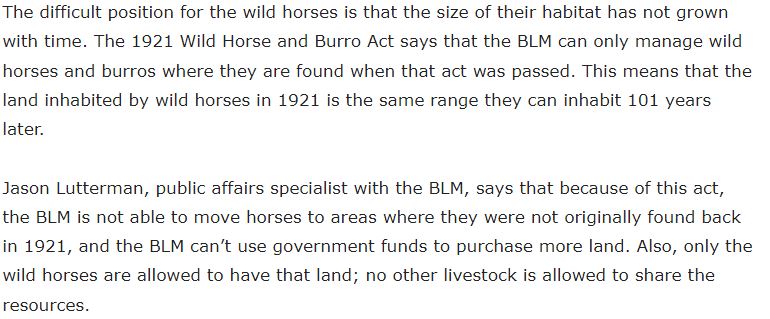
A Day on the Range with the Piceance Advocates

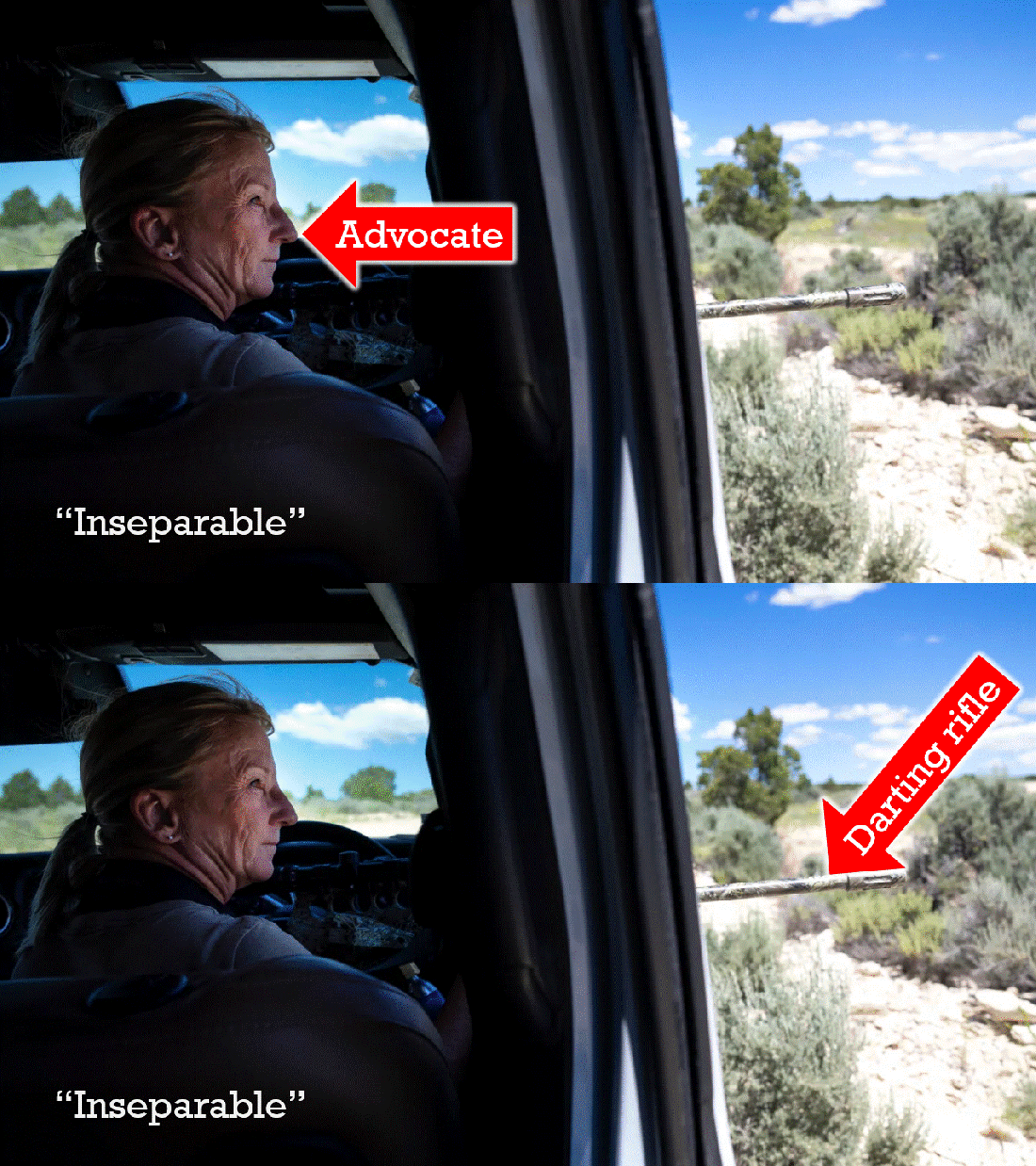
An article posted yesterday by The Colorado Sun tells the story of two volunteers with Piceance Mustangs, a group known for its pro-ranching/anti-horse sentiment.

How much of this is covered on their web site?  None.

They’ve accidentally darted stallions, who become infertile, lose their mares and end up living alone.

They receive their supplies from the BLM, including the projector, RDDs, rangefinder and pesticide of choice, GonaCon Equine.

The agency will pay them 14 cents per mile if they file travel reports.

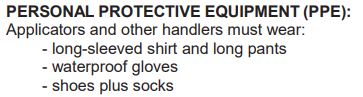
The report provides evidence of unlawful use, such as handling the product without the required PPE.

GonaCon PPE Requirements 07-09-23

Advocate Handles Gonacon without Proper PPE 07-09-23

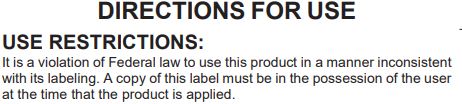
GonaCon Warning Label 07-09-23

On the bright side, it’s no longer classified as a restricted-use pesticide, so it can be used to control pests that interfere with animal agriculture, even in their lawful homes.

Curiously, the women describe themselves as horse lovers, typical of the advocates.

And, like most advocates, their words never match their deeds.

RELATED: How the Advocates Violate Federal Law.

Calling it a Vaccine 05-01-23

Western Horse Watchers Banned from Socialist Media?

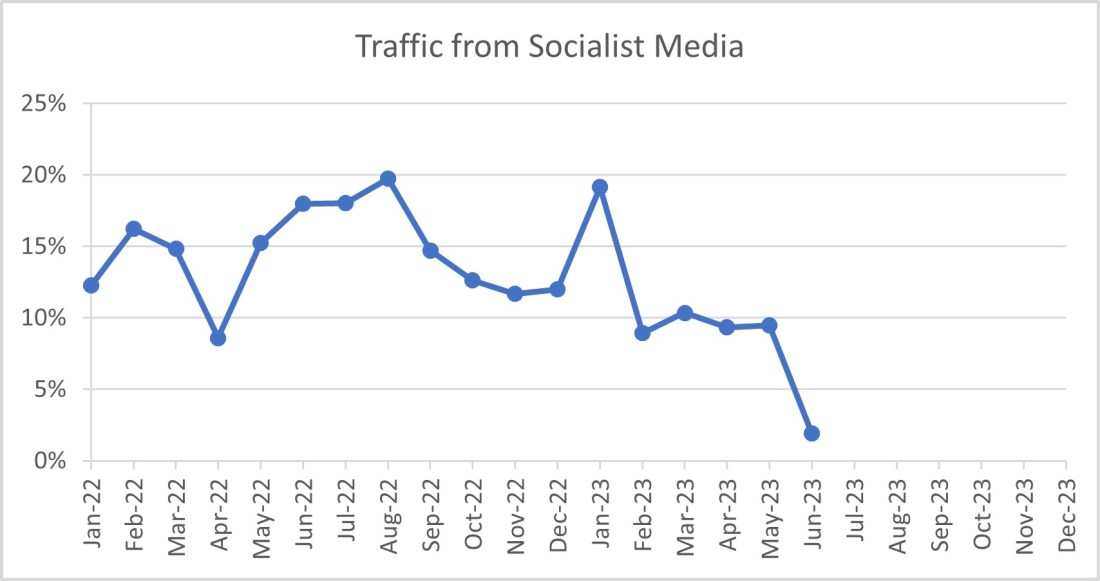
One data point does not establish a trend but it can certainly indicate an unusual event in the process.

Traffic from Facebook and Twitter averaged 13.6% of the total during the 18-month period from Jan-22 through Jun-23, but dropped sharply last month, accounting for just 1.9% of the total.

A basic statistical calculation of the following form put the June data point outside the limits of random variation.

How to Compute p-chart Limits 02-10-22

As of today, traffic in July amounts to 1.4% of the total.

The fact-checkers in socialist media, sometimes referred to as censors, know a lot about climate change, sodomy, abortion, pedophilia and transvestism, but not much about wild horses, so who put them up to it?

Maybe some of the butthurt advocates who don’t like being called pesticide pushers and don’t want you knowing the truth about their ruinous darting programs?

Perhaps their financial support is drying up as it should.

Or maybe the bureaucrats don’t want their followers learning about mismanagement of resources in the lawful homes of wild horses or the unlawful use of pesticides therein.

Time will tell if the pattern continues.  But this is the type of affirmation you want when you’re going up against the old guard, who in the case of wild horses are mostly frauds.

Traffic from Solialist Media 07-09-23

EPA Updating Certification Standards for RUP Applicators

According to the FAQs at the standards update page, the EPA classifies the most acutely toxic pesticides or those needing to be applied with special care as RUPs, which means they may be bought and applied only by a certified applicator or someone working under his or her direct supervision.

RUPs are not available for purchase or use by the general public.

Zonastat-H, also known as PZP and the Montana Solution, is a restricted-use pesticide, on the same EPA list as toxic chemicals.

It’s much better than cruel and costly helicopter roundups according to the Campaign Against America’s Wild Horses.

Let Us Fix Your Wild Horse Problem 02-18-23

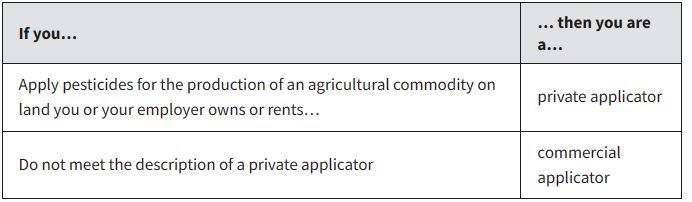
Although the advocates apply pesticides for the production of agricultural commodities, they’re not working on land they own or rent.  Therefore, they’re considered to be commercial applicators.

RUP Applicator Types 07-04-23

Will a diploma from the Billings School of PZP Darting and Public Deception meet the new standards?

There are ten federal categories of certification.

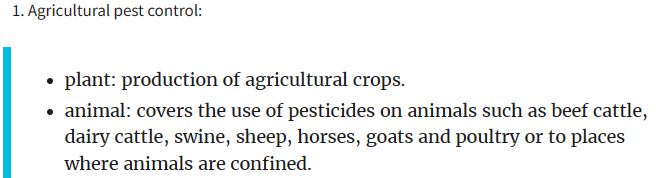
The advocates probably fall under agricultural pest control with one distinction: Horses are the pests!

Agricultural Certification Category 07-04-23

We’re not talking about the use of fly spray or dewormers to help the horses, we’re talking about reproductive barriers that help the ranchers.

Unfortunately, Zonastat-H was not approved for such purposes, making the glorious darting programs illegal.

RELATED: Multiple Use Applies to Public Lands, Not Registered Pesticides.

Fish Springs Advocates Double Down on Pest Control Program

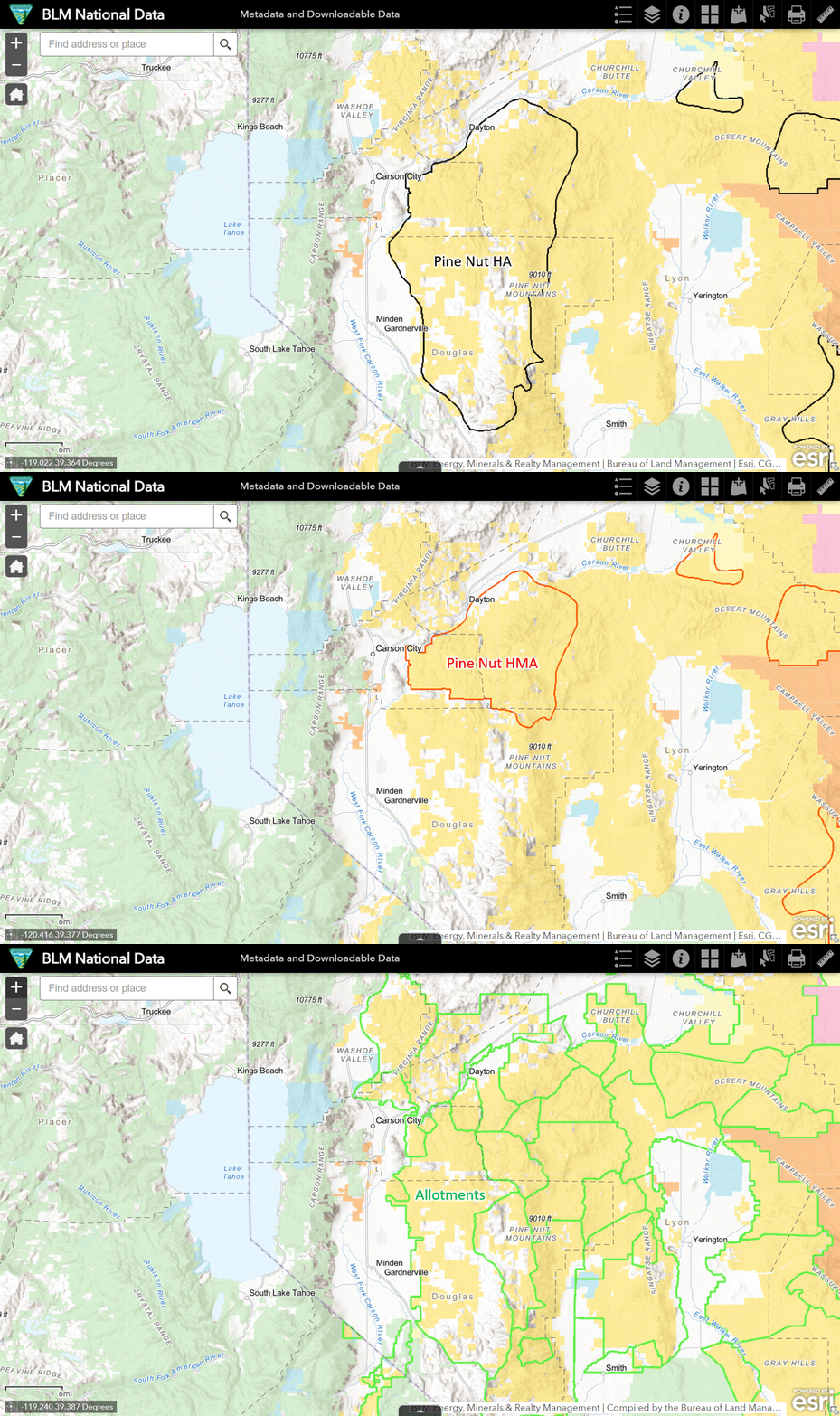
In an attempt to prove they can be as ruthless as the helicopter pilots and wranglers, mares in the Pine Nut HA have been reprimed “to be sure they don’t get in foal,” according to the real estate agent and PZP darter in the Minden/Gardnerville area.

Go to the column titled “Wild Horse Tales” in the June edition of Horse Tales.

Protect Wild Horses from Advocates 08-29-21

Instead of pushing back against ranching overreach and the continual loss of resources, the advocates solve the problem by pounding the mares with ovary-killing pesticides.

As explained last year by Tracy Wilson, defeatist for the Campaign Against America’s Wild Horses, “As you start reducing the amount of available space and forage, then you need to manage the numbers to fit what’s available for the horses.”

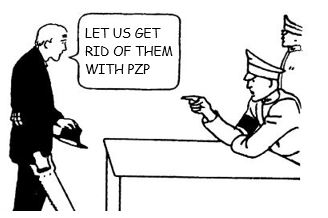
RELATED: Protecting Them from Removal by Getting Rid of Them with PZP.

Pine Nut HMA with Allotments 07-03-23

WHBAB Meeting Ends with Strange Remarks about Fertility Control and Forage

In yesterday’s public comments, Ginger Fedak, certified applicator for In Defense of Animals, said PZP was not a pesticide as some claim, refusing to look at the EPA fact sheet, apparently, and the restricted-use product report, which puts it on the same list as toxic chemicals.

She pointed to Spring Creek Basin as a shining example of wild horse management but ignored the disaster on the Maryland side of Assateague Island, with similar evidence now leaking out from the Currituck herd.

To her credit, she identified misuse of GonaCon Equine by the BLM, where mares receive a second dose of the pesticide thirty days after the first, not ninety days as specified in the directions.

Gonacon 90-Day Requirement 07-01-23

This is not a problem to be resolved by a new project in ePlanning.  It is a matter for law enforcement.

As stated on the label, “It is a violation of Federal law to use this product in a manner inconsistent with its labeling.  A copy of this label must be in the possession of the user
at the time that the product is applied.”

The agency intends to use the product on the Reveille mares after a roundup that’s scheduled to begin today.

Hayden Ballard, a rancher and attorney specializing in natural resources, spoke about the economics of livestock grazing, noting that ranchers pay $300 to $650 per AUM, a price heretofore not seen or heard.

If that’s true, it’s easy to see what they want the horses off the range, where livestock operators pay $1.35 per AUM.

He did not say where those prices prevail.

Last year, the McGregor auction yielded an average of $31.36 per AUM.

Your host currently pays around $180 per AUM for hay, compared to $95 per AUM two years ago, a fine example of Bidenomics, where the one-horse pony and his illicit administration are hollowing out the middle class, not protecting it.

RELATED: WHBAB Meeting Grinds On.

What’s the Minimum Herd Size for Genetic Viability?

An article by INFORUM about the wild horses of Theodore Roosevelt National Park says the herd should not be smaller than 150 and may require up to 278 horses to reach 100 breeding animals.

Section 4.4.6.3 of the WHB Handbook puts the minimum herd size at 150 to 200 to achieve 50 breeding animals.

This does not mean that larger herds have lower risks of inbreeding.

The breeding population on the Maryland side of Assateague Island appears to be less than twenty.

On the Virginia Range, where the herd numbers into the thousands, the breeding population may only be a few dozen, because most of the mares have been poisoned by Zonastat-H.

Same for the Salt River, where the breeding population is probably in the single digits, or anywhere else the advocates are pounding the mares with pesticide-laced darts.

Deniz Bolbol TCF Darter 03-11-23

Under normal circumstances, breeding populations should correlate with herd sizes, and the risk of inbreeding should go down as the number of horses goes up, but if the advocates are involved, that model falls to the ground.

Help Wanted: CAAWH Seeks Development Director

The successful candidate will plan and implement a comprehensive major giving program to steward and cultivate current supporters and expand the donor base, according to the solicitation on Idealist.

The Campaign Against America’s Wild Horses is a leader in non-motorized removal of wild horse herds in the American West, which they accomplish by poisoning the mares with Zonastat-H, an ovary-killing pesticide.

If you are honest about the methods in your new role, you will fail.

Who’s Behind the Marietta Grazing Project?

The affected program is livestock grazing and the applicant is the BLM with interested stakeholder requests, according to the project description.

The identity of the interested stakeholders was not disclosed.

Given that the scope involves health assessments of four idle allotments, the unnamed parties must be drillers or miners, if you believe the advocates.

Only renegades and mavericks would point a finger at their cherished friends and allies, the public-lands ranchers.

RELATED: Marietta Wild Burro Range to Become HMA?

NNCC Auction Yields $108,200

Bidders paid an average of $5,150 for 21 saddle-started horses trained by inmates at the Northern Nevada Correctional Center, according to a June 5 news release by the BLM.

The highest bid was $11,900.  The lowest was $1,100.

The outplacement program moves wild horses from areas where they’re not wanted to other areas where they’re not wanted if they don’t bring enough prizes and prestige to their new owners.

In this environment, they can look forward to being locked in stalls, smothered with blankets, bathed with carpet cleaner and coerced with bits, spurs, crops and tiedowns, mostly by women.

Curiously, it’s mostly women who are trying to stomp them out in their lawful homes with ovary-killing pesticides.

Wild Horse FAQs

Q. What do you call a stock grower’s association dressed up as an advocacy group?

A. The Campaign Against America’s Wild Horses.

Q. What do you call an ovary-killing pesticide that sterilizes mares in five years?

A. The Montana Solution.

Q. What do you call the application of said pesticide by said group in areas designated for animal agriculture?

A. Unlawful.

RELATED: Multiple Use Applies to Public Lands, Not Registered Pesticides.

WHB Act Over 100 Years Old?

This recycled article about population control by Horse Illustrated is so far off the mark it’s hard to imagine how it was approved for publication.

The author is learning to balance motherhood with horses, dogs and writing, but not accuracy, apparently.

The story received a sudden facelift this morning, but here’s a snippet from the original version dated June 1:

Snippet from HI Article on Population Control 06-02-23

Please mark these statements True or False:

  • The acreage available to wild horses isn’t shrinking
  • More than 65 percent of wild mares are typically pregnant on any given day and in some herds the rate is over 90 percent
  • Fertility control treatments have not shown to have any effect on the natural state of the herd or in the livelihood of the treated mare

The remark about a study that was done on a very small population on an island is almost certainly a reference to Assateague, where the herd has been ruined by the Montana Solution.

If treated mares have less fidelity to their bands and they leave to join other bands, is it because of the vaccine or the absence of a foal?  They don’t have foals because of the vaccine, so it’s because of the vaccine, you idiot!

The article employs the customary euphemisms, such as long-term infertility instead of sterility, and increased longevity of mares instead of abnormal sex ratios.

An inset about the poisoning of mares on the Virginia Range by the Campaign Against America’s Wild Horses concludes with this remark by monster-in-charge Suzanne Roy: “Our program is an aggressive fertility control program to reduce the population size in that area humanely without moving the horses.”

Growth in the Reno area, cited by Roy, affects the western flank of the Virginia Range, a small percentage of the total area, not enough to justify the 80% reduction in herd size she’s trying to accomplish through her volunteers and your charitable contributions.

Moreover, the pesticide she’s using was not approved for use on horses that pose safety hazards or are deemed to be overpopulated.

RELATED: What’s So Important about the Virginia Range?

CAAWH Demonizes Hunters and Ranchers, Canonizes Self

In a news flash carried by Lucky Three Ranch, the Campaign Against America’s Wild Horses blamed hunters, trappers and ranchers for the demise of SB90, while it fought hard to advance the legislation.

Problem is, with the exception of the occasional rogue act, hunters, trappers and ranchers aren’t getting rid of any wild horses.

But CAAWH is, by the hundreds, every year, with its favorite pesticide.

They call it “a better way.”

If you add the efforts of its affiliates and offshoots, the total could go into the thousands, rivaling the largest of roundups.

Who’s the greater threat to wild horses?

RELATED: SB90 Postmortem.

Standing Up for Wild Horses on Virginia Range 06-18-22

Comments Invited on Owyhee Resource Enforcement EA?

Like the advocates, the bureaucrats have their own vocabulary to conceal the long-term goals of their land-use plans.

For example, consider this article in the Idaho Press about the Owyhee pest control project, written by a public affairs specialist with the BLM.

Healthy horses on healthy rangelands, or any variant thereof, means most of their food has been assigned to privately owned livestock and ranchers have unfettered access thereto.

The purpose of the project is to achieve and maintain AMLs, which are small, in most cases, relative to the available resources.

Helicopters are the preferred method for “Achieve.”  They are the fastest and most efficient way of shifting resources from the pests to their rightful owners.

Fertility control pesticides such as GonaCon Equine and Zonastat-H, which appear on the same EPA list as toxic chemicals, are often used for “Maintain.”

When commenting, remember that projects like this do not allocate resources.

They cannot change resource allocations.

They enforce resource allocations already on the books, so don’t ask the BLM to end permitted grazing and reassign the AUMs to the horses.  It’s a valid concern but outside the scope of the project.

On the other hand, application of restricted-use pesticides to suppress populations that interfere with animal agriculture is outside the scope of their registrations.

That’s not just a comment, but an allegation of wrongdoing by those involved.

There is considerable dietary overlap between wild horses and livestock, as noted in Section 1.1 of the Draft EA, and if you don’t beat down the horse populations after the helicopters cram them into their little boxes, the poor ranchers will gradually lose access to their birthright.

RELATED: Owyhee Resource Enforcement Plan Out for Review.
Unauthorized Use of Pesticides 05-24-23

Avis Talks about Wild Horses, Skirts Issue of Fertility Control

In the following interview with Ed Bernstein of Las Vegas, Avis points out correctly at 12:50 that AMLs are small, deliberately set so the herds are genetically unsustainable.

While that may be true in some cases, AMLs are small relative to the available resources, with few exceptions, so ranchers can access most of the food in the lawful homes of wild horses.  That is the first major issue.

She mentions fertility control at 17:08 but qualifies it with “irreversible,” giving wide berth to products the advocates deem “reversible,” such as Zonastat-H.

Unfortunately, reversible fertility control “vaccines” don’t exist.  Damage begins with the first injection, and the cumulative effect after a few years is sterility.

The advocates know that, and have always known that, yet they lie about it so you’ll continue your financial support.  That is the second major issue.

They are frauds, stalking their cherished herds with clipboards, tablets and darting rifles, while you pay for their groundbreaking work.

RELATED: Avis Points to “Massive Priority” Affecting America’s Wild Horses.

Salt River Herd in Jeopardy Before CBD Legal Action

The Salt River Wild Horse Darting Group said in a news release dated May 25 that the herd is not ruining the environment, yet they are trying to get rid of them by poisoning the mares with a restricted-use pesticide.

This has been going on for several years, long before a coalition including the Center for Biological Diversity filed suit calling for their removal.

The advocates believe it’s one of the best managed herds in the United States, with a rescue program, a fencing program and a fertility control program that’s reduced the birth rate of their beloved herd from 100 foals a year to just one or two per year.

They are proud of this.

Instead of raising the bridge, they’re lowering the water, and you’re supposed to be angry with a coalition seeking a reduction in herd size, not a group that’s actually reducing the herd size.

RELATED: Coalition Sues Forest Service Over Salt River Horses.

For Your Beloved Ants and Roaches 10-08-22

Foal-Free Friday, Reinforcing the Status Quo Edition

The Colorado Wild Horse Project, now state law, codifies wild horse eradication with restricted-use pesticides.

How many RMPs will change as a result of the new statute?

How many AMLs will increase?

How much land will be returned to the horses?

None.

The new program will help the BLM achieve and maintain AMLs, without the use of helicopters, at least in theory, giving ranchers unfettered access to cheap feed in the lawful homes of wild horses.

RELATED: Foal-Free Friday, Discussing the Undiscussables Edition.

Cattle and Horses

Salt River Advocates Accuse Forest Service of Harming Foals!

A news release dated May 25 by the Salt River Wild Horse Darting Group claims the agency has set up traps in the Apache Sitgreaves National Forest to capture wild horses at the height of foaling season.

Volunteers with Alpine Wild Horse Advocates, an offshoot of SRWHDG, documented the effort, complete with salt blocks and alfalfa pellets.

Last year the Forest Service rejected their offer to poison the mares with their favorite pesticide, and now they’re seeing a growing population, according to the advocates.

Do not be deceived as they feign concern for the horses.

Like their sponsors at the Campaign Against America’s Wild Horses, they hate them.

They hate foals.

They hate families.

They hate reproduction.

They think they have a better way and they want you to pay for it.

RELATED: Salt River Advocates Mobilize in Favor of Alpine Ranchers.

Students Learn About Darting 10-26-22

WHBAB Meeting Returning to Traditional Format

The preliminary agenda appearing in today’s announcement indicates that Day 1 will be devoted to an educational tour of an unnamed HMA in Nevada.

The event will be open to the public.

A good candidate would be the Pine Nut Mountains southeast of Carson City, an hour to the south, where advocates affiliated with the Campaign Against America’s Wild Horses are poisoning the mares with a restricted-use pesticide.

The Virginia Range, where CAAWH operates its flagship darting program, is closer to Reno but most of the land is privately owned and the Nevada Department of Agriculture is responsible for the horses.

On the bright side, the Pine Nut Mountains may offer an opportunity for Board members to observe local volunteers applying an EPA-registered pesticide

Curiously, Day 2 begins with a closed session on ethics, which should include conflicts of interest.

A notable case is that of Tammy Pearson, a Board member and public-lands rancher whose personal fortunes are tied, inversely, to the presence of wild horses in Utah.

RELATED: WHBAB Meeting Next Month.