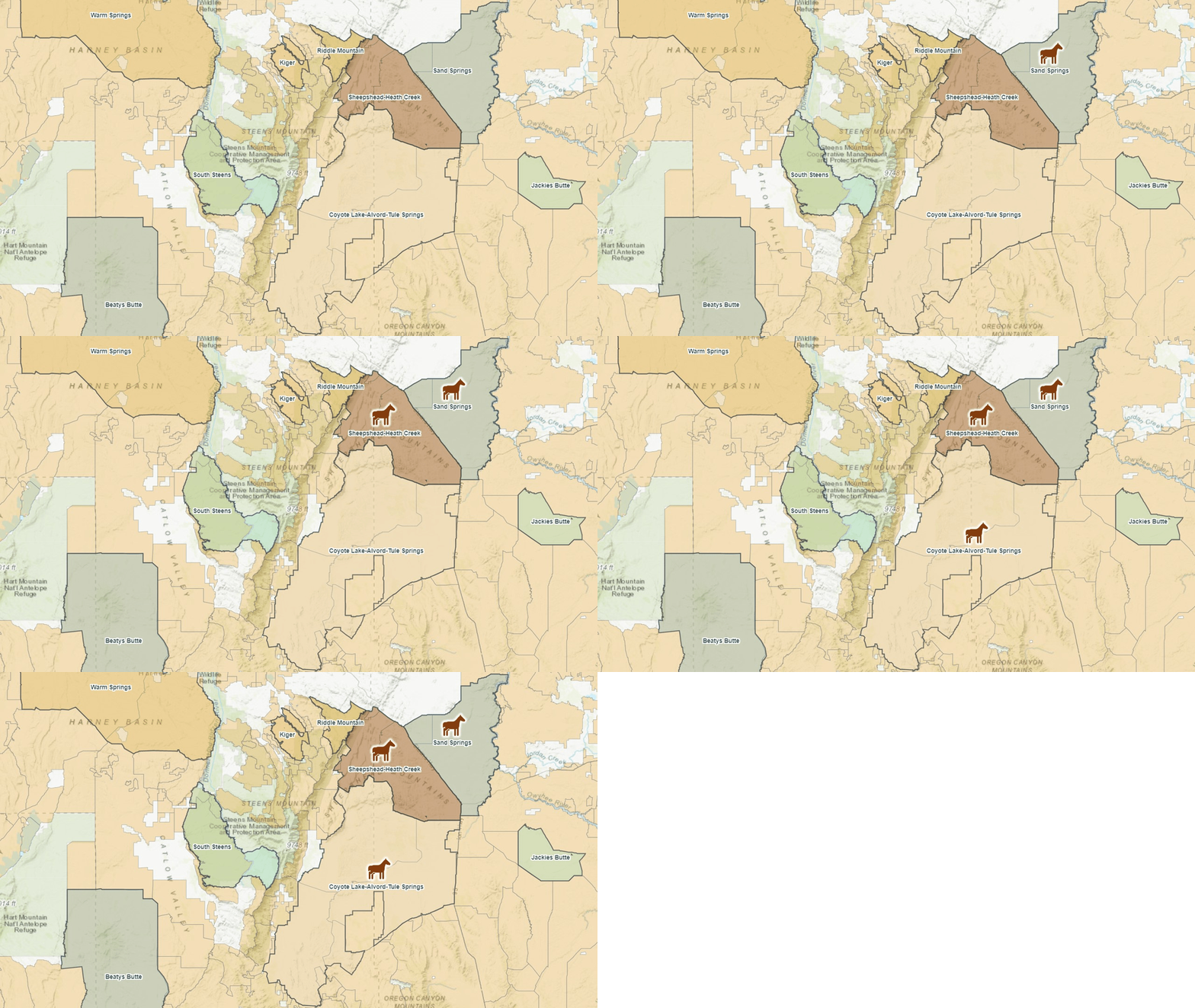
Owyhee Roundup Day 19

The incident began on October 11.  Gather stats through October 29:

  • Type: Planned
  • Method: Helicopter
  • Horses captured: 552, up from 531 on Day 16
  • Average daily take: 29.1
  • Capture goal: 947
  • Removal goal: 615
  • Returned: 166, up from 55 on Day 16
  • Deaths: 12, up from 8 on Day 16
  • Shipped: 371, up from 331 on Day 16

Helicopters did not fly on Days 18 and 19.

Four animals were put down on Day 17 due to pre-existing conditions, including a 3MO foal, lifting the death rate to 2.2%.

Foals represented 17.8% of the horses captured.  Of the adults, 51.8% were male and 48.2% were female.

Body condition scores were not reported.

The number of horses removed to date is 383.

Of the horses returned on Days 17 and 18, approximately 56% were stallions and all of the mares were treated with PZP.  These pest control actions reduce growth rates and keep the resource scales tipped in favor of the public-lands ranchers for longer periods of time, which is what the advocates are trying to accomplish.

The location of gather activity was not given.  Five HMAs are involved in the roundup.

Owyhee Complex Map 10-04-21

Day 19 ended with three unaccounted-for animals.

Other statistics:

  • AML: 999 (across five HMAs)
  • Forage assigned to horses: 11,988 AUMs per year
  • Pre-gather population: 1,188
  • Forage liberated to date: 4,632 AUMs per year
  • Water liberated to date: 3,860 gallons per day
  • Forage assigned to livestock: Unknown
  • Horses displaced from Complex by livestock: Unknown
  • True AML: Unknown

RELATED: Owyhee Roundup Day 16, Status of Owyhee Allotments.

Origin of AMLs?

The term does not appear in the original statute.

It can be found in the current statute, 16 USC 30, not in the definitions, but beginning in §1333(b)(1).

Footnotes to that section refer to amendments by Public Law 95–514, the Public Rangelands Improvement Act of 1978, a product of the 95th Congress.

The alteration, found in Section 14 of the original Act, authorized the government to get rid of excess animals on an arbitrary and capricious basis.

Appropriate Management Levels, the number of horses or burros allowed by plan, would be achieved by removing or destroying excess animals (bottom of page 6 in the pdf), not by allowing them to fill their niche.  They were to be small, relative to the available resources.

Who benefits from that?

Thriving Ecological Balance-3

Barren Valley Roundup Day 50

The incident began on September 8.  Gather stats through October 27:

  • Type: Emergency
  • Method: Helicopter
  • Horses captured: 1,538, up from 1,496 on Day 47
  • Average daily take: 30.8
  • Capture goal: 1,900
  • Removal goal: 1,900
  • Returned: 0
  • Deaths: 22, no change from Day 47
  • Shipped: 1,461, up from 1,392 on Day 47

The cumulative total at the gather page is 1,525, with 1,493 shipped.  The figures above are based on the daily reports.

The death rate declined slightly to 1.4%.

Foals represented 21.1% of the horses gathered.  Of the adults, 45.3% were male and 54.7% were female.

The observed percentage of foals is consistent with a herd growth rate of 20% per year.

Body condition scores on Days 48 to 50 ranged from 2 to 4.

The location of gather ops is not known.  Three HMAs are involved in the roundup.

Barren Valley Map 10-28-21

Day 50 ended with 55 unaccounted-for animals.

Other statistics:

  • AML: 892 (total for three HMAs)
  • Forage assigned to horses: 10,704 AUMs per year
  • Pre-gather population: 2,500
  • Forage liberated to date: 18,456 AUMs per year
  • Water liberated to date: 15,380 gallons per day
  • Forage assigned to livestock: 27,011 AUMs per year (estimated)
  • Horses displaced from Complex by livestock: 2,258 (4.5% of off-range holding)
  • True AML: 3,150

RELATED: Barren Valley Roundup Day 47.

RMPs Put Ranching Interests Far Above Those of Wild Horses

You can’t criticize public-lands ranchers about livestock grazing while you’re trying to get rid of wild horses with PZP—the latter helps the former—but the writer of a guest column in today’s online edition of the Wyoming Tribune Eagle does exactly that.

Miniscule AMLs, large amounts of forage assigned to livestock and enforcement actions such as helicopter roundups, fertility control, sex ratio skewing and sterilization have a common origin: Resource Management Plans, sometimes referred to as land-use plans.

If you want to help America’s wild horses, put your darting rifles down and change the plans so HMAs are managed principally for wild horses, not privately owned livestock.

RELATED: Rock Springs Roundup Just Getting Started.

Owyhee Roundup Day 16

The incident began on October 11.  Gather stats through October 26:

  • Type: Planned
  • Method: Helicopter
  • Horses captured: 531, up from 488 on Day 13
  • Average daily take: 33.2
  • Capture goal: 947
  • Removal goal: 615
  • Returned: 55, no change from Day 13
  • Deaths: 8, up from 7 on Day 13
  • Shipped: 331, up from 294 on Day 13

Helicopters were grounded on Days 14 and 15 due to rain and low visibility.

A stallion was put down on Day 16 due to pre-existing conditions, bringing the death rate to 1.5%.

Foals represented 17.9% of the horses captured.  Of the adults, 51.1% were male and 48.9% were female.

Body condition scores were not reported.

The location of gather ops was not given.  Five HMAs are involved in the roundup.

Owyhee Complex Map 10-04-21

Day 16 ended with 137 unaccounted-for animals.

Other statistics:

  • AML: 999 (across five HMAs)
  • Forage assigned to horses: 11,988 AUMs per year
  • Pre-gather population: 1,188
  • Forage liberated to date: 5,712 AUMs per year
  • Water liberated to date: 4,760 gallons per day
  • Forage assigned to livestock: Unknown
  • Horses displaced from Complex by livestock: Unknown
  • True AML: Unknown

RELATED: Owyhee Roundup Day 13, Status of Owyhee Allotments.

Stone Cabin Roundup Ends

The incident concluded on October 26, according to a statement at the gather page, with 322 horses captured, 314 shipped and eight dead.

The removal goal was 450.

The daily reports show 296 horses shipped, with 18 unaccounted-for animals.

The death rate was 2.5%.

Foals represented 14.6% of the horses captured.  Of the adults, 47.6% were male and 52.4% were female.

The low percentage of foals suggests the population is not growing at a rate of 20% per year, a benchmark used by land managers to predict herd sizes.

The roundup, which began on September 1, was billed as an emergency.

RELATED: Stone Cabin Emergency Roundup Starts This Week.

UPDATE: BLM news release issued today.

Rock Springs Roundup Just Getting Started

A keyword search of a story posted today by Cowboy State Daily yielded these results:

  • Forage – 0
  • Allocation – 0
  • Livestock – 0
  • AUM – 0
  • Allotment – 0
  • Grazing – 0
  • Permit – 0
  • Consent decree – 0
  • Horses – 23
  • PZP – 7
  • Darting – 2
  • Overpopulation – 2
  • Fertility control – 2

The author didn’t mention the forage assigned to livestock and the number of wild horses displaced thereby.

Are you sure you still want to read it?

RELATED: Rock Springs Roundup Day 19.

BLM Limiting Observation of Rock Springs Roundup?

The Campaign Against America’s Wild Horses alleged on Monday that the agency moved the observation area to a location that blocks the view of the trap, which violates the public’s First Amendment right to observe the federal operation, according to a report posted yesterday by ABC4 News of Salt Lake City.

The group also wants cameras installed on the helicopters to create public transparency and independent oversight for operations that occur out of public view.

The organization and its supporters oppose wild horse roundups but not removals, arguing that the government should be getting rid of them with PZP not helicopters.

The lopsided resource allocations that put the interests of public-lands ranchers far above those of the horses, sometimes referred to as thriving ecological balances, are not on their radar screen.

PZP achieves the same results as the helicopters, in terms of herd sizes, but over a much longer timeframe.  The long-term effects may be worse than the roundups.  But that’s what the advocates bring to the table.

Pancake Gather Plan

Barren Valley Roundup Day 47

The incident began on September 8.  Gather stats through October 24:

  • Type: Emergency
  • Method: Helicopter
  • Horses captured: 1,496, up from 1,288 on Day 41
  • Average daily take: 31.8
  • Capture goal: 1,900
  • Removal goal: 1,900
  • Returned: 0
  • Deaths: 22, up from 17 on Day 41
  • Shipped: 1,392, up from 1,178 on Day 41

Helicopters were grounded on Day 47 due to high winds and rain.

The cumulative total at the gather page is 1,483, with 1,424 shipped.

Five horses were euthanized on Day 43 due to pre-existing conditions.  The death rate increased slightly to 1.5%.

Foals represented 20.9% of the horses gathered.  Of the adults, 45.5% were male and 54.5% were female.

Body condition scores on Days 42 to 47 ranged from 1 to 5.

The location of gather ops is not known.  Three HMAs are involved in the roundup.

Day 47 ended with 82 unaccounted-for animals.

Other statistics:

  • AML: 892 (total for three HMAs)
  • Forage assigned to horses: 10,704 AUMs per year
  • Pre-gather population: 2,500
  • Forage liberated to date: 17,952 AUMs per year
  • Water liberated to date: 14,960 gallons per day
  • Forage assigned to livestock: 27,011 AUMs per year (estimated)
  • Horses displaced from Complex by livestock: 2,258 (4.5% of off-range holding)
  • True AML: 3,150

RELATED: Barren Valley Roundup Day 41.

Rock Springs Roundup Day 19

The incident began on October 7.  Gather stats through October 25:

  • Type: Planned
  • Method: Helicopter
  • Horses captured: 743, up from 538 on Day 16
  • Average daily take: 39.1
  • Capture goal: 4,400
  • Removal goal: 3,500
  • Returned: 1, no change from Day 16
  • Deaths: 6, up from 4 on Day 16
  • Shipped: 690, up from 472 on Day 16

The cumulative total at the gather page is 745.  The breakdown between stallions, mares and foals doesn’t match the figures in the daily reports.

Two horses died of injuries sustained in the roundup on Day 17.  No details were given.

The death rate increased slightly to 0.8%.

Foals represented 21.8% of the horses captured.  Of the adults, 52.7% were male and 47.3% were female.

Body condition scores were not reported.

The location of gather ops is not known.  Five HMAs are involved in the roundup.

Rock Springs HMAs 10-13-21

Day 19 ended with 46 unaccounted-for animals.

Other statistics:

  • AML: 2,165 (across five HMAs)
  • Forage assigned to horses: 25,980 AUMs per year
  • Pre-gather population: 5,105
  • Forage liberated to date: 8,904 AUMs per year
  • Water liberated to date: 7,420 gallons per day
  • Forage assigned to livestock: 191,791 AUMs per year (estimated)
  • Horses displaced from HMAs by livestock: 15,982 (32% of off-range holding)
  • True AML: 18,147

RELATED: Rock Springs Roundup Day 16.

Owyhee Roundup Day 13

The incident began on October 11.  Gather stats through October 23:

  • Type: Planned
  • Method: Helicopter
  • Horses captured: 488, up from 449 on Day 11
  • Average daily take: 37.5
  • Capture goal: 947
  • Removal goal: 615
  • Returned: 55, no change from Day 11
  • Deaths: 7, no change from Day 11
  • Shipped: 294, up from 242 on Day 11

Helicopters were grounded on Day 12 due to high winds.

The death rate through Day 13 declined slightly to 1.4%.

Foals represented 18.4% of the horses captured.  Of the adults, 52.3% were male and 47.7% were female.

Body condition scores were not reported.

The location of gather ops was not given.  Five HMAs are involved in the roundup.

Owyhee Complex Map 10-04-21

Day 13 ended with 132 unaccounted-for animals.

Other statistics:

  • AML: 999 (across five HMAs)
  • Forage assigned to horses: 11,988 AUMs per year
  • Pre-gather population: 1,188
  • Forage liberated to date: 5,196 AUMs per year
  • Water liberated to date: 4,330 gallons per day
  • Forage assigned to livestock: Unknown
  • Horses displaced from Complex by livestock: Unknown
  • True AML: Unknown

RELATED: Owyhee Roundup Day 11, Status of Owyhee Allotments.

Price of Hay Still Climbing

On July 3, a bale of alfalfa-grass sold for $19.  Yesterday, the price was $23, a 21% increase.  That’s with the quantity discount.  The single-bale price is now $24.

If this pattern is true in other areas, what will be the effect on horse owners and adopters who were struggling to get by in the summer?

A horse would need at least five of these bales each month, given their smaller size and weight.  That works out to $115 per AUM or more.

The government pays around $60 per AUM for horses in long-term holding.

Ranchers pay $1.35 per AUM to graze their livestock on your public lands, including those set aside for wild horses.

RELATED: Cost of Hay Rising.

State Intervenes in Challenge of Utah Gather Plans

The state recently filed a motion to intervene in a case brought by Friend of Animals against the BLM disputing four of the agency’s management plans that affect wild horses in six HMAs, including Muddy Creek and Onaqui Mountain.

The plans authorize fertility control and roundups over ten-year periods, eliminating public input and oversight, according to a column in The Salt Lake Tribune.

Western Horse Watchers believes the focus is wrong and rejects the statement about oil, gas and mineral extraction projects damaging the environment and contributing to climate change.  While those activities may have an effect on wild horses, it is small compared to the impact of public-lands ranching.

Gather plans don’t change the land-use plans, they enforce them.  By minimizing AMLs and shifting most of the resources to livestock operators, they drive the roundups and other resource enforcement actions, including

  • Fertility control
  • Sex ratio skewing
  • Sterilization
  • Euthanasia

Why not target the land-use plans and the policies and regulations that support them?

Some have been around for over 20 years.  Why don’t they come up for public review on a regular basis or have sunset provisions that necessitate their reauthorizations?

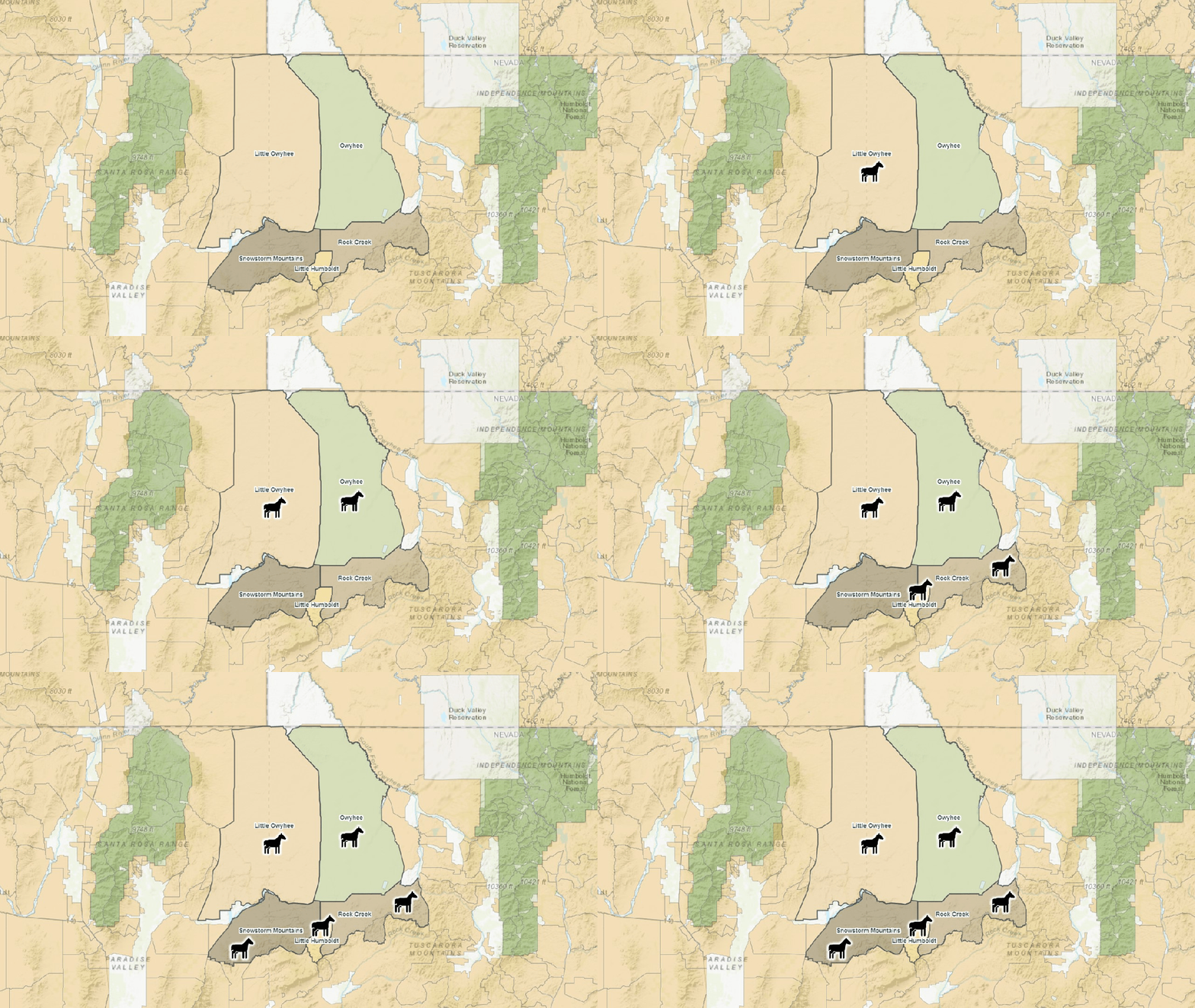
Rock Springs Roundup Day 16

The incident began on October 7.  Gather stats through October 22:

  • Type: Planned
  • Method: Helicopter
  • Horses captured: 538, up from 408 on Day 14
  • Average daily take: 33.6
  • Capture goal: 4,400
  • Removal goal: 3,500
  • Returned: 1, no change from Day 14
  • Deaths: 4, no change from Day 14
  • Shipped: 472, up from 269 on Day 14

The death rate declined to 0.7%.

Foals represented 21.0% of the horses captured.  Of the adults, 57.6% were male and 42.4% were female.

Body condition scores were not reported.

The location of gather ops was not given.  Five HMAs are involved in the roundup.

Rock Springs HMAs 10-13-21

Day 16 ended with 61 unaccounted-for animals.

Other statistics:

  • AML: 2,165 (across five HMAs)
  • Forage assigned to horses: 25,980 AUMs per year
  • Pre-gather population: 5,105
  • Forage liberated to date: 6,444 AUMs per year
  • Water liberated to date: 5,370 gallons per day
  • Forage assigned to livestock: 191,791 AUMs per year (estimated)
  • Horses displaced from HMAs by livestock: 15,982 (32% of off-range holding)
  • True AML: 18,147

RELATED: Rock Springs Roundup Day 14.