Owyhee Roundup Day 26

The incident began on October 11.  Gather stats through November 5:

  • Type: Planned
  • Method: Helicopter
  • Horses captured: 891, up from 742 on Day 24
  • Average daily take: 34.3
  • Capture goal: 947
  • Removal goal: 615
  • Returned: 260, no change from Day 24
  • Deaths: 23, up from 19 on Day 24
  • Shipped: 446, up from 403 on Day 24

Four horses were put down on Day 26 due to pre-existing conditions, although the report lists one as related to the roundup.  The actions were justified by IM 2021-007, Euthanasia of Wild Horses and Burros Related to Acts of Mercy, Health or Safety.

The death rate is 2.6%.

Foals represented 17.8% of the horses captured.  Of the adults, 51.4% were male and 48.6% were female.

Body condition scores were not given.

The observed percentage of foals suggests the herd is not growing at a rate of 20% per year, a benchmark used by land managers to predict population sizes.

Gather ops moved to Rock Creek on Day 22.  Five HMAs are involved in the roundup.

Owyhee Complex Map 10-04-21

Day 26 ended with 162 unaccounted-for animals.

Other statistics:

  • AML: 999 (across five HMAs)
  • Forage assigned to horses: 11,988 AUMs per year
  • Pre-gather population: 1,188
  • Forage liberated to date: 7,572 AUMs per year
  • Water liberated to date: 6,310 gallons per day
  • Forage assigned to livestock: Unknown
  • Horses displaced from Complex by livestock: Unknown
  • True AML: Unknown

RELATED: Owyhee Roundup Day 24, Status of Owyhee Allotments.

Washington Launches Another Attack on Working People

As if rising prices and supply chain disruptions weren’t enough, the one-horse pony and his illicit administration announced on Thursday new rules designed to persuade more Americans to take the clotshots, as described in a story by AP News.

Vaccine Mandate 11-04-21

It’s a fine example of the unelected bureaucracy trying to push us around.  How much longer are we going to put up with this?

The report said the pandemic has killed more than 750,000 Americans, but during the same period approximately two million pre-born kids were slaughtered in their mother’s wombs and he has done nothing about that except challenge those who would try to protect them.

These people are evil and and don’t care about you or your health.  They only want you subjugated to their totalitarian regime.

Rock Springs Roundup Day 30, Need-to-Know Edition

The incident began on October 7.  Gather stats through November 5:

  • Type: Planned
  • Method: Helicopter
  • Horses captured: 1,072 per cumulative totals, can’t be compared to Day 28 report
  • Average daily take: 35.7, based on cumulative totals
  • Capture goal: 4,400
  • Removal goal: 3,500
  • Returned: 1, no change from Day 28
  • Deaths: 6, no change from Day 28
  • Shipped: Not in cumulative totals, 1,066 based on daily reports

The daily breakdowns of stallions, mares and foals have not been provided since Day 26.  The cumulative totals are 389 stallions, 463 mares and 220 foals.  Western Horse Watchers prefers to use the daily reports.

The number of horses dispatched (shipped + dead + returned) exceeds the number of horses captured.

Foals represented 20.5% of the horses gathered.  Of the adults, 45.7% were male and 54.3% were female.

The death rate is 0.6%.

Body condition scores were not reported.

Gather activity at Divide Basin ended on Day 30, one of five HMAs are involved in the roundup.  The HMA covers 22.6% of the total acreage per Table 1 of the Final EA.

Rock Springs HMAs 10-13-21

The number of unaccounted-for animals on Day 30 is zero as noted above.  The number of horses to be returned is unknown.

Other statistics:

  • AML: 2,165 (across five HMAs)
  • Forage assigned to horses: 25,980 AUMs per year
  • Pre-gather population: 5,105
  • Forage liberated to date: 12,852 AUMs per year
  • Water liberated to date: 10,710 gallons per day
  • Forage assigned to livestock: 191,791 AUMs per year (estimated)
  • Horses displaced from HMAs by livestock: 15,982 (32% of off-range holding)
  • True AML: 18,147

RELATED: Rock Springs Roundup Day 28.

Wild Horse Management: Protection or Persecution?

A guest column in yesterday’s edition of The Durango Herald has some answers.

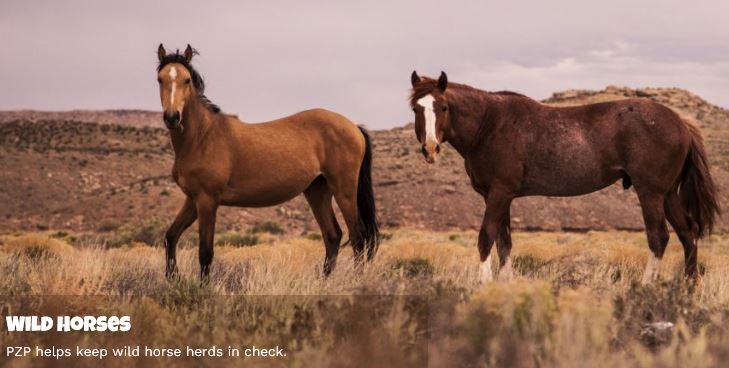
Not mentioned in the article is the important work of the advocates, who are trying to get rid of as many wild horses as possible with PZP, helping the government shift more resources to privately owned livestock.

They truly deserve more of your hard-earned money.

RELATED: No Shedding of Tears for the Public-Lands Ranchers!

Love Triangle on Americas Public Lands 08-19-21

Barren Valley Roundup Day 57

The incident began on September 8.  Gather stats through November 3:

  • Type: Emergency
  • Method: Helicopter
  • Horses captured: 1,660, up from 1,593 on Day 54
  • Average daily take: 29.1
  • Capture goal: 1,900
  • Removal goal: 1,900
  • Returned: 0
  • Deaths: 27, up from 23 on Day 54
  • Shipped: 1,570, up from 1,498 on Day 54

The totals at the gather page are 1,671 horses captured, 1,602 shipped, 27 dead and none returned.  The figures above are based on the daily reports.

Three horses were put down on Day 55 due to pre-existing conditions.

The summary of deaths shows a horse put down on October 28, a day for which there is no report.  The death rate is now 1.6%.

Foals represented 21.0% of the horses gathered.  Of the adults, 45.4% were male and 54.6% were female.

The percentage of foals is consistent with a herd growth rate of 20% per year.

Body condition scores on Days 55 to 57 ranged from 1.5 to 4.

Gather ops may be occurring at Coyote Lake.  Three HMAs are involved in the roundup.

Barren Valley Map 10-28-21

Day 57 ended with 63 unaccounted-for animals.

Other statistics:

  • AML: 892 (total for three HMAs)
  • Forage assigned to horses: 10,704 AUMs per year
  • Pre-gather population: 2,500
  • Forage liberated to date: 19,920 AUMs per year
  • Water liberated to date: 16,600 gallons per day
  • Forage assigned to livestock: 27,011 AUMs per year (estimated)
  • Horses displaced from Complex by livestock: 2,258 (4.5% of off-range holding)
  • True AML: 3,150

RELATED: Barren Valley Roundup Day 54.

Owyhee Roundup Day 24

The incident began on October 11.  Gather stats through November 3:

  • Type: Planned
  • Method: Helicopter
  • Horses captured: 742, up from 682 on Day 21
  • Average daily take: 30.9
  • Capture goal: 947
  • Removal goal: 615
  • Returned: 260, no change from Day 21
  • Deaths: 19, no change from Day 21
  • Shipped: 403, up from 371 on Day 21

No horses were caught on Day 22, as the trap was moved to a new location.

The death rate declined slightly to 2.6%.

Foals represented 18.3% of the horses captured.  Of the adults, 52.5% were male and 47.5% were female.

Body condition scores were not reported.

The observed percentage of foals suggests the herd is not growing at a rate of 20% per year, a benchmark used by land managers to predict population sizes.

Gather activity has moved to Rock Creek.  Five HMAs are involved in the roundup.

Owyhee Complex Map 10-04-21

Day 24 ended with 60 unaccounted-for animals.

Other statistics:

  • AML: 999 (across five HMAs)
  • Forage assigned to horses: 11,988 AUMs per year
  • Pre-gather population: 1,188
  • Forage liberated to date: 5,784 AUMs per year
  • Water liberated to date: 4,820 gallons per day
  • Forage assigned to livestock: Unknown
  • Horses displaced from Complex by livestock: Unknown
  • True AML: Unknown

RELATED: Owyhee Roundup Day 21, Status of Owyhee Allotments.

Bias in Sand Wash Reporting?

The advocate interviewed for a report earlier this week by the CBS affiliate in Denver said the government should be getting rid of the horses with fertility control instead of helicopters.  Not a surprise but they chose to include it.

Inmates interviewed for a subsequent story, filmed at the off-range corrals in Cañon City, said the horses were better off there.  They may not understand all the issues, but by presenting their opinion, the producers sent the same message: Off the range.

A follow-up report, filmed at the HMA after the roundup, to document the animals that filled the void, hasn’t materialized.

Why was public-lands ranching omitted from the analysis?  Why not discuss the management priorities and resource allocations that put the interests of livestock operators far above those of the horses?

With a little more research, they could tell their viewers that the HMA can support many more wild horses, and that the roundup and darting program would be unnecessary if the ranchers were confined to their base properties and expected to pay market rates to feed their animals.

RELATED: Special Report on Roundup Alternatives Not So Special.

Rock Springs Roundup Day 28

The incident began on October 7.  Gather stats through November 3:

  • Type: Planned
  • Method: Helicopter
  • Horses captured: 983, up from 880 on Day 25
  • Average daily take: 35.1
  • Capture goal: 4,400
  • Removal goal: 3,500
  • Returned: 1, no change from Day 25
  • Deaths: 6, no change from Day 25
  • Shipped: 883, up from 810 on Day 25

The total at the gather page is 985.  The figures above are based on the daily reports.

Helicopters did not fly on Day 27 due to rain.

The numbers of mares, stallions and foals on Day 28 were not provided.

Foals represented 20.6% of the horses captured through Day 27.  Of the adults, 45.1% were male and 54.9% were female.

The death rate declined to 0.6%.

Body condition scores were not reported.

Gather activity may still be occurring at Divide Basin.  Five HMAs are involved in the roundup.

Rock Springs HMAs 10-13-21

Day 28 ended with 93 unaccounted-for animals.

Other statistics:

  • AML: 2,165 (across five HMAs)
  • Forage assigned to horses: 25,980 AUMs per year
  • Pre-gather population: 5,105
  • Forage liberated to date: 11,784 AUMs per year
  • Water liberated to date: 9,820 gallons per day
  • Forage assigned to livestock: 191,791 AUMs per year (estimated)
  • Horses displaced from HMAs by livestock: 15,982 (32% of off-range holding)
  • True AML: 18,147

RELATED: Rock Springs Roundup Day 25.

Beatys Butte Roundup Ends

The operation has concluded, according to a statement at the gather page, with 46 horses captured, 45 shipped and one dead.  No horses were returned.  The totals at the gather page are 37, 36 and 1.

The capture goal was 100 and the removal goal was 50.

There were no unaccounted-for animals.

The death rate was 2.2%.

The percentages of stallions, mares and foals is unknown.

The HMA lies within the Beaty Butte Allotment.

RELATED: Beatys Butte Roundup Starts This Week?

Barren Valley Roundup Day 54

The incident began on September 8.  Gather stats through October 31:

  • Type: Emergency
  • Method: Helicopter
  • Horses captured: 1,593, up from 1,538 on Day 50
  • Average daily take: 29.5
  • Capture goal: 1,900
  • Removal goal: 1,900
  • Returned: 0
  • Deaths: 23, up from 22 on Day 50
  • Shipped: 1,498, up from 1,461 on Day 50

The cumulative totals at the gather page are 1,604 horses captured, 1,530 shipped and 22 dead.  The figures above are based on the daily reports.

A mare ran into a panel and broke her neck on Day 52.  The death rate is 1.4%.

Foals represented 20.7% of the horses gathered.  Of the adults, 45.8% were male and 54.2% were female.

The percentage of foals is consistent with a herd growth rate of 20% per year.

Body condition scores on Days 51 to 54 ranged from 2.5 to 4.

Gather ops may be occurring at Coyote Lake.  Three HMAs are involved in the roundup.

Barren Valley Map 10-28-21

Day 54 ended with 72 unaccounted-for animals.

Other statistics:

  • AML: 892 (total for three HMAs)
  • Forage assigned to horses: 10,704 AUMs per year
  • Pre-gather population: 2,500
  • Forage liberated to date: 19,116 AUMs per year
  • Water liberated to date: 15,930 gallons per day
  • Forage assigned to livestock: 27,011 AUMs per year (estimated)
  • Horses displaced from Complex by livestock: 2,258 (4.5% of off-range holding)
  • True AML: 3,150

RELATED: Barren Valley Roundup Day 50.

Owyhee Roundup Day 21

The incident began on October 11.  Gather stats through October 31:

  • Type: Planned
  • Method: Helicopter
  • Horses captured: 682, up from 552 on Day 19
  • Average daily take: 32.5
  • Capture goal: 947
  • Removal goal: 615
  • Returned: 260, up from 166 on Day 19
  • Deaths: 19, up from 12 on Day 19
  • Shipped: 371, no change from Day 19

One horse was put down on Day 20, followed by four more on Day 21, all due to pre-existing conditions.  The Day 18 report now shows two deaths, not included in the last update.  The death rate is 2.8%.

Foals represented 17.6% of the horses captured.  Of the adults, 53.2% were male and 46.8% were female.

Body condition scores were not reported.

Of the horses returned on Day 19, approximately 55% were stallions and all of the mares were treated with PZP.  These pest control actions reduce growth rates and keep the resource scales tipped in favor of the public-lands ranchers for longer periods of time, which is what the advocates are trying to accomplish.

The location of gather activity was not given.  Five HMAs are involved in the roundup.

Owyhee Complex Map 10-04-21

Day 21 ended with 32 unaccounted-for animals.

Other statistics:

  • AML: 999 (across five HMAs)
  • Forage assigned to horses: 11,988 AUMs per year
  • Pre-gather population: 1,188
  • Forage liberated to date: 5,064 AUMs per year
  • Water liberated to date: 4,220 gallons per day
  • Forage assigned to livestock: Unknown
  • Horses displaced from Complex by livestock: Unknown
  • True AML: Unknown

RELATED: Owyhee Roundup Day 19, Status of Owyhee Allotments.

Rock Springs Roundup Day 25

The incident began on October 7.  Gather stats through October 31:

  • Type: Planned
  • Method: Helicopter
  • Horses captured: 880, up from 743 on Day 19
  • Average daily take: 35.2
  • Capture goal: 4,400
  • Removal goal: 3,500
  • Returned: 1, no change from Day 19
  • Deaths: 6, no change from Day 19
  • Shipped: 810, up from 690 on Day 19

The cumulative total at the gather page is 882.  The figures above are based on the daily reports.

The breakdowns for Days 1 to 16 were reported as mares/stallions/foals instead of the usual stallions/mares/foals and this was not picked up by Western Horse Watchers until today.  The percentages of males and females in previous reports are backwards.

Helicopters did not fly on Days 20, 21 and 22 due to poor weather.

The death rate declined to 0.7%.

Foals represented 20.7% of the horses captured.  Of the adults, 45.3% were male and 54.7% were female.

Body condition scores were not reported.

Gather activity may still be occurring at Divide Basin.  Five HMAs are involved in the roundup.

Rock Springs HMAs 10-13-21

Day 25 ended with 63 unaccounted-for animals.

Other statistics:

  • AML: 2,165 (across five HMAs)
  • Forage assigned to horses: 25,980 AUMs per year
  • Pre-gather population: 5,105
  • Forage liberated to date: 10,548 AUMs per year
  • Water liberated to date: 8,790 gallons per day
  • Forage assigned to livestock: 191,791 AUMs per year (estimated)
  • Horses displaced from HMAs by livestock: 15,982 (32% of off-range holding)
  • True AML: 18,147

RELATED: Rock Springs Roundup Day 19.

The Myth of Multiple Use

The original WHB Act refers to the term in the definitions:

(c) “range” means the amount of land necessary to sustain an existing herd or herds of wild free-roaming horses and burros, which does not exceed their known territorial limits, and which is devoted principally but not necessarily exclusively to their welfare in keeping with the multiple-use management concept for the public lands;

It’s not the multiple use you know today.  The term was defined in the Multiple-Use Sustained-Yield Act of 1960.

(a) “Multiple use” means: The management of all the various renewable surface resources of the national forests so that they are utilized in the combination that will best meet the needs of the American people; making the most judicious use of the land for some or all of these resources or related services over areas large enough to provide sufficient latitude for periodic adjustments in use to conform to changing needs and conditions; that some land will be used for less than all of the resources; and harmonious and coordinated management of the various resources, each with the other, without impairment of the productivity of the land, with consideration being given to the relative values of the various resources, and not necessarily the combination of uses that will give the greatest dollar return or the greatest unit output.

The MUSY Act is now 16 USC 528-531.  The definitions are in 16 USC 531.  The terms ‘livestock’ and ‘grazing’ do not appear in any of the sections.

The multiple use you know today was defined in the Federal Land Policy and Management Act, 43 USC 35, five years after the WHB Act was signed into law.

The definition, which may have been lifted from MUSY, is in §1702 of Subchapter 1.

(c) The term “multiple use” means the management of the public lands and their various resource values so that they are utilized in the combination that will best meet the present and future needs of the American people; making the most judicious use of the land for some or all of these resources or related services over areas large enough to provide sufficient latitude for periodic adjustments in use to conform to changing needs and conditions; the use of some land for less than all of the resources; a combination of balanced and diverse resource uses that takes into account the long-term needs of future generations for renewable and nonrenewable resources, including, but not limited to, recreation, range, timber, minerals, watershed, wildlife and fish, and natural scenic, scientific and historical values; and harmonious and coordinated management of the various resources without permanent impairment of the productivity of the land and the quality of the environment with consideration being given to the relative values of the resources and not necessarily to the combination of uses that will give the greatest economic return or the greatest unit output.

Wild horses and burros fall into the ‘historical values’ category.  They are not wildlife.

Unlike MUSY, FLPMA went on to define the principal uses of public lands managed by the BLM, putting livestock grazing at the top of the list.

(l) The term “principal or major uses” includes, and is limited to, domestic livestock grazing, fish and wildlife development and utilization, mineral exploration and production, rights-of-way, outdoor recreation, and timber production

Further, public involvement was associated with affected citizens.

(d) The term “public involvement” means the opportunity for participation by affected citizens in rulemaking, decisionmaking, and planning with respect to the public lands, including public meetings or hearings held at locations near the affected lands, or advisory mechanisms, or such other procedures as may be necessary to provide public comment in a particular instance.

That term wasn’t defined.

RELATED: Origin of AMLs?

Tale of Two Interests-1