Here is the Fox5 interview with Manda Kalimian. Peeing incident not included.
Sounds like Pila is a Nokota.
RELATED: Horse Disagrees with Kalimian’s Rewilding Plan?

Western Horse Watchers Association
Exposing the Hypocrisy, Lies and Incompetence of the Wild Horse Advocates
Here is the Fox5 interview with Manda Kalimian. Peeing incident not included.
Sounds like Pila is a Nokota.
RELATED: Horse Disagrees with Kalimian’s Rewilding Plan?
The original alert, sent to over 900 news outlets, included a fact sheet that was not attached to Friday’s news release on EIN.
This column in yesterday’s edition of The Salt Lake Tribune was written by the director of communications for the Campaign Against America’s Wild Horses.
Whenever they get involved, there is no more wildness, no natural selection, no legacy.
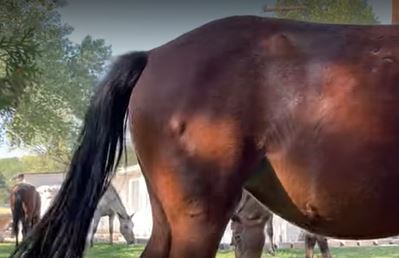
When are you leaving, dear?
The December edition of Horse Tales is out, along with another article by the real estate agent and PZP darter in the Minden-Gardnerville area.
The listings are on page 24 and the article begins at the bottom of page 5.
The action takes place on the Pine Nut Mountains HA, which includes the HMA but extends well to the south, coinciding roughly with the Buckeye and Pine Nut allotments.
The land was identified for wild horses in 1971 but has since been taken away and is now managed principally for livestock.
Horses still inhabit the area, which is unfit for them, supposedly. The AML is zero.

Instead of demanding that the HA be managed principally for wild horses—as specified in the statute—the advocates are getting rid of them with PZP.
There is little if any turning over of the genetic soil and the herd may be dying off, depending on how severely they’ve reduced the birth rate.
If things get out of hand, the government will remove them, ensuring that all of their food, except for a small amount reserved for wildlife, goes to public-lands ranchers.
Good job, guys.
Like the Virginia Range a few miles to the north, the Campaign Against America’s Wild Horses has its tentacles in this program.
The Allotment Master report puts Buckeye and Pine Nut in the Improve category.
The Central Oregon Wild Horse Coalition said the remaining herd won’t have enough genetic diversity and the population will drift lower due to predation by cougars and wolves, according to a story posted today by The Bulletin of Bend, OR.
RELATED: Big Summit Roundup Delayed.
The incident ended today, according to a BLM news release. Here are the final results from the gather page:
The numbers don’t balance.
19 + 23 + 37 + 4 ≠ 82
More horses were processed than captured.
No foals were taken. Of the adults, 46% were male and 54% were female.
The death rate was 4.9%.
If the herd was growing at a rate fifteen to twenty percent per year, 16 to 20 foals should have been pushed into the traps. But none were. Why?
The legislation became law 50 years ago today.
In his remarks dated December 17, 1971, President Nixon noted that the animals were 99% extinct, with approximately 9,500 unbranded and unclaimed horses and 11,000 free-roaming burros remaining on the public lands.
Today, the number of horses and burros allowed by plan is not much higher, around 27,000. The land can support many more, but those resources have been assigned to privately owned livestock.
The advocates know a lot about adjuvant but not much about AUMs. Consumed by the overpopulation narrative, they protect the ranchers, not the horses and burros.
Why are you still giving them money?
The incident started on December 11.
A mare was put down on Day 4 due to pre-existing conditions.
The gather page says no foals have been captured but the Day 1 report shows six.
The number of horses gathered to date is not known.
The number of horses shipped is 12.
The death rate and number of unaccounted-for horses cannot be determined.
RELATED: Fox-Lake Range Roundup Day 3.
The incident will begin on or about December 18, according to the news release, and will not be open to public observation.
Helicopters will push the animals into the traps.
The capture goal is 648 horses and 100 burros, and the removal goal is 438 horses and 100 burros.
Mares returned to the range will be treated with GonaCon, a fertility control drug that may act as a sterilant.
The WHR was established in 1962 on 1.3 million acres of withdrawn lands southeast of Tonopah, NV. Photographs and visitor access are prohibited for security reasons.
The 500 horses allowed by plan require 6,000 AUMs per year. The AML for burros is zero.
The aimed-at stocking rate is 0.4 wild horses per thousand acres. The target rate across all HMAs is one wild horse per thousand acres.

The WHR is not subject to permitted grazing but is bordered by allotments on the east, north and west sides. Refer to the Western Watersheds map for details.
Captured horses will be taken to the off-range corrals at Palomino Valley, north of Reno, NV. Captured burros will be taken to the off-range corrals in Axtell, UT.
Gather stats and daily reports will be posted to this page.
An emergency roundup occurred in the area last year.
Refer to this audio segment from KDNK Radio of Carbondale, CO.
An article by Cowboy State Daily said it was delivered to U.S. Department of the Interior Secretary Deb Haaland on Monday.
Not mentioned in the narrative:
If the sponsoring organizations were honest about the circumstances affecting these horses, nobody would have signed their petition.
RELATED: Advocates to Interior: Let Us Get Rid of Rock Springs Horses.
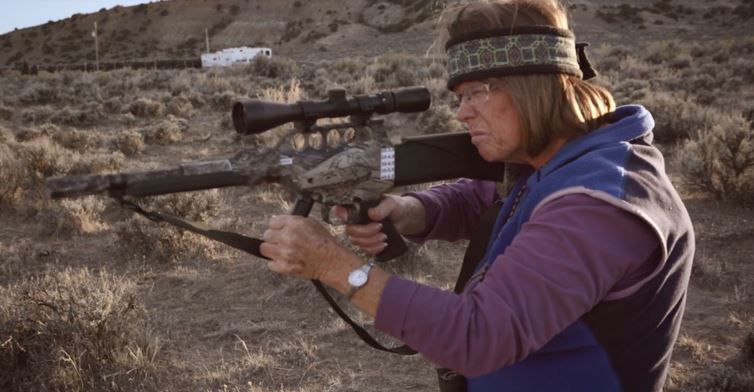
Manage HMAs and WHTs primarily for livestock.
Make AMLs small relative to the available resources.
Assign most of the forage to privately owned cattle and sheep.
Remove excess horses and burros to achieve these objectives.
But do it with PZP, not helicopters.
That’s what needs to change.
RELATED: Irby Transforming AWA Into Ranching Advocacy Group?
Seeing them is saving them, according to an article posted today by Friends of Animals.
Where to look? The story identifies HMAs in Nevada, Oregon, Wyoming and Montana.
A preliminary environmental assessment for remote darting in the HMA has been posted for public review.
The plan would be effective for ten years, according to the news release.
The Proposed Action, discussed in Section 2.1 of the EA, calls for the use of PZP, GonaCon and PZP-22.
The goal is to reduce growth rates to five percent per year or less.
Treatment would be withdrawn after five years, until the mares produce foals—which they won’t, because they’re sterile. The ten-year timeframe is not necessary.

The HMA is subject to permitted grazing and the management plan assigns four times more forage to livestock than the horses.
The darting program will keep the resource scales tipped in favor of the public-lands ranchers for longer periods or time, perhaps indefinitely, which is what the advocates are trying to accomplish in other areas.
Comments will be accepted until January 17.
The news release said that they can be submitted electronically at the NEPA page for the project, but Western Horse Watchers was unable to find the link. E-mail addresses for BLM staff were provided.
The current statute bears little resemblance to the original and no longer affords the protections sought by Velma.
The task ahead is rebuilding and restoration.
RELATED: Countdown to 50 | 1 Day to Go.

The incident started on December 11. Helicopters did not fly on Days 2 and 3 due to inclement weather, according to the gather page.
To date, 36 horses have been captured, with none shipped and one dead.
The pre-gather population was approximately 0.8X AML.
Given that most of the returned horses will be treated with GonaCon, the operation could be classified as pest control.
RELATED: Fox-Lake Range Roundup Begins.
Refer to this opinion piece in today’s online edition of The Oregonian.
What about the Forest Service and the advocacy groups?
The animal cut loose on a Fox News host at the end of an interview with the president of the CANA Foundation, according to a report by Page Six, a service of the New York Post.
RELATED: CANA Foundation Throws in with Public-Lands Ranchers.
Today we celebrate the work of Velma Johnston, whose steely determination earned her the nickname “Wild Horse Annie.”
The origin of the Wild Horse and Burro Act is the Virginia Range, where the horses she first encountered were captured in 1950.
RELATED: Countdown to 50 | 2 Days to Go.
The roundup will leave leave 3.4 million acres—the vast majority of which is public land owned by all Americans—virtually devoid of wild horses, according to a news release issued today by the Animal Welfare Institute.
Their answer? Decimate the herd with PZP instead.

