Crocodile Tears at Currituck Outer Banks?

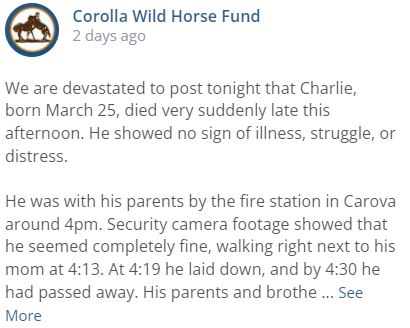
The advocates are devastated, or so they say, according to a post on socialist media.
Advocates Devastated 04-16-22

If you’re a purveyor of the Montana Solution, are you really annoyed by the loss of a wild horse?

The death of Charlie, first foal of 2022, is the latest in a string of incidents in the area.

These are the headlines from the past year!

All of this while the advocates bill themselves as “The Official & Only Non-Profit Protectors of the Wild Horses.”

RELATED: What Will Happen to Mom of New Currituck Foal?

What Will Happen to Mom of New Currituck Foal?

She’s reached her quota.  The herd is too important to leave its genetics to nature.

Will the advocates put her back on PZP for the rest of her life or at least until she’s sterile so another mare can have her turn?

From this viewpoint, horses lost to contaminated water, collisions with vehicles, damaged fences, or otherwise removed from the area, are a good thing, they take some pressure off the darting budget.

RELATED: Fourth Foal of Year Appears on Currituck Outer Banks.

Move Over Cattoor, Advocates Want Larger Share of Market

The wild horse removal business is getting crowded.

The Campaign Against America’s Wild Horses is hiring, more volunteers are making the pilgrimage to Billings and every mare has a target on her.

Wild Horses Through the Eyes of the Advocates 01-19-22

The new pest control program for the Three Fingers and Jackies Butte HMAs, with its mandate for intensive fertility control, will be cheered by the advocates, who will not only embrace it but offer to apply it, assuring that most of the resources in the area go to the public-lands ranchers.

RELATED: Draft EA for Three Fingers and Jackies Butte Out for Review.

Bold Prediction for Motorized Equipment Hearing

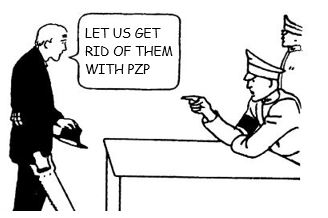
The advocates will argue that helicopters are cruel and inhumane and that the herds should be managed with PZP.

The cattlemen will claim that the HMAs are overpopulated and that the government should get rid of them with helicopters.

Protect Wild Horses from Advocates 08-29-21

There will be no voices for the horses and nothing good will come out of it because it’s focused on the wrong things.

The meeting, set for April 26, will be livestreamed.

RELATED: Public Hearing Next Month Regarding WHB Management.

Additional Comments Sought for Pryor Management Plan Update

Comments submitted during the scoping period in 2020 need not be resubmitted, according to today’s news release, but an additional document regarding genetic diversity has been posted to the project folder for public review.

The goal is to improve herd genetics, but not at the expense of ecosystem sustainability and the available resources.

The Western Watersheds map shows the WHR is surrounded on three sides by grazing allotments, both Forest Service and BLM.  Grazing does not occur inside the WHR.

Pryor Mountains WHR Map 03-30-22

The map does not show the portion of the WHR managed by the Forest Service.

Bringing in horses from other areas dilutes herd identity.

It’s a management trick that boosts genetic diversity while keeping herd sizes small, a nod to the public-lands ranchers.

In the future, you won’t be able to adopt a Pryor Mountains horse, only a horse captured in the Pryor Mountains WHR.

RELATED: Comments Invited on Pryor Management Plan Update.

Rising Price of Hay Explained

The following video, produced for the Nevada Rangeland Resources Commission, offers two possibilities (4:42 to 6:39).

  • There are too many horses on the range – Ranchers are removing livestock from their allotments and feeding them on their own property, increasing demand
  • There are too many horses off the range – The government is removing them from the same allotments and feeding them in holding facilities, driving up demand

Can both be true?

The sad part is that the ranchers must operate their businesses on their own land and pay the going rate to feed their animals.  Nobody in this country is expected to do that.

The price of hay in this area is now around $125 per AUM.  This comes as a shock to the ranchers, who have been insulated from the realities of a free market, at least on the cost side, for decades.

World events and the ill-advised policies of the current administration have no effect.

Although probably not intended by its producers, the film shows how to fix the Wild Horse and Burro Program: Confine the ranchers to their base properties and let them pay market rates to feed their animals.  No more gravy train, no more sucking on the government teat.

UPDATE: Video replaced by newer version.

Motorized Equipment Hearing in the News

This story by KLAS News of Las Vegas notes that the online meeting will consider the use of helicopters in the management of wild horses and burros, which Dina Titus and her supporters want to ban.

Roundups will still occur and resource allocations that strongly favor the public-lands ranchers will not be changed.

It’s a stupid idea which explains why the advocates like it.

H.R. 6635, the ‘Save a Horse, Hire a Cowboy’ Act, was introduced in Congress on February 7 and referred to the House Natural Resources Committee.

RELATED: Public Hearing Next Month Regarding WHB Management.

How to Estimate the Carrying Capacity of HMAs

The method has been demonstrated numerous times on these pages:

  • Identify the allotments that intersect the HMA
  • Determine the forage assigned to livestock inside the HMA
  • Convert that amount to wild horses
  • Add the result to the current AML

The third step yields the number of animals displaced from the HMA by permitted grazing—adopted, sold or shipped to long-term holding.

The final value is the True AML, the number of animals the area could support if it was managed principally for wild horses, as specified in the original statute.

Today’s news release by the BLM regarding the FY 2023 budget suggested that AMLs represent carrying capacities, which they do not, except for four HMAs where permitted grazing does not occur.

The advocates don’t want you looking at the numbers because the rationale for their darting programs would fall to the ground.

You don’t ask a poor man how to get rich and you don’t ask the advocates how to save wild horses.

RELATED: White House Seeks $153 Million for WHB Program in FY 2023.

Land Can Only Support 04-21-21

White House Seeks $153 Million for WHB Program in FY 2023

The expenditure would be part of a $1.6 billion budget for the BLM according to today’s news release.

The amount requested for the program next year exceeds the amount authorized this year by 11.7%.

The fiscal year begins on October 1.

The announcement said the current population of 86,000 animals is more than three times greater than the carrying capacity of BLM-managed lands, which is false.

The current population is three times more than allowed by plan.

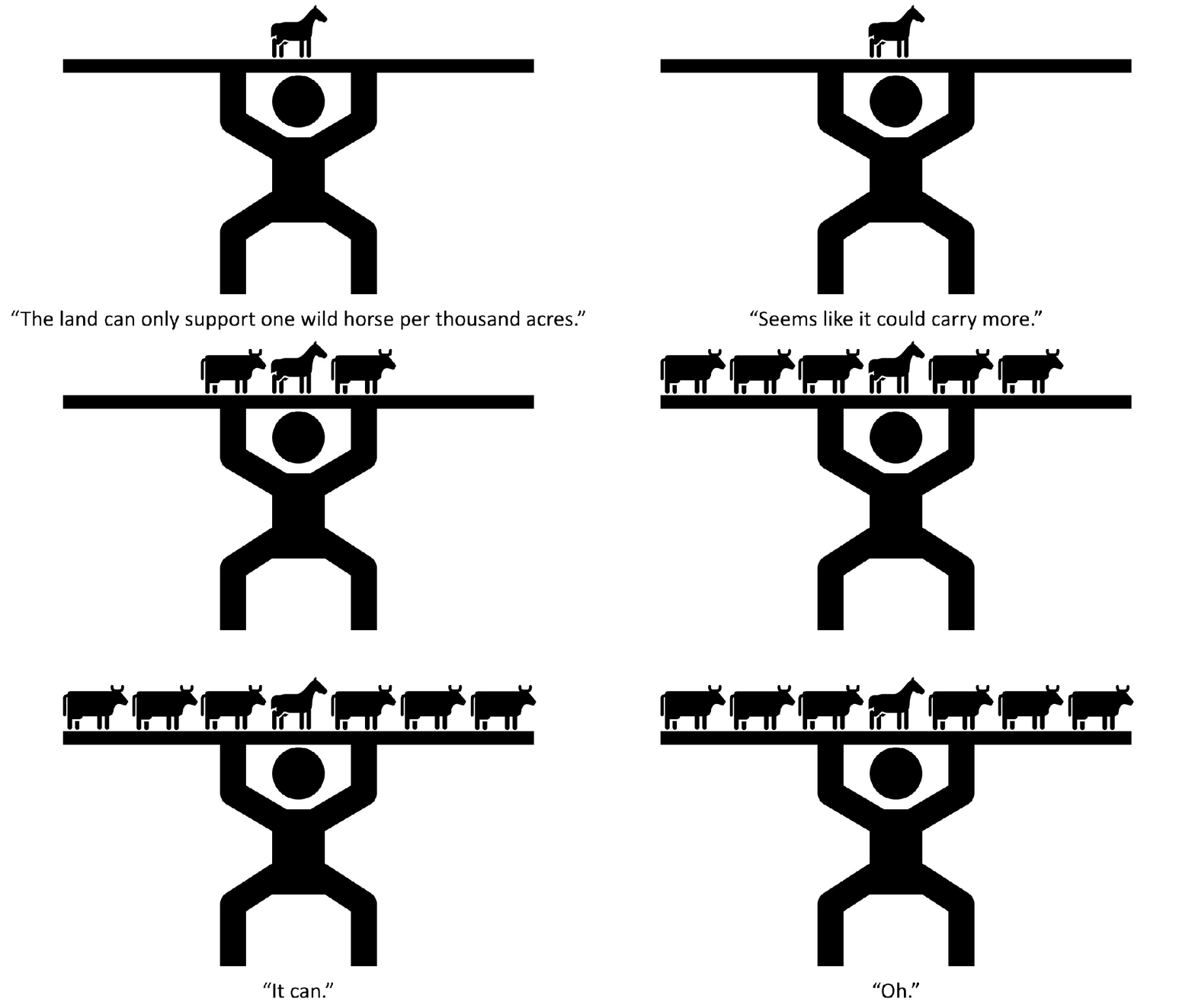
Consider this metaphor: Wild horses can use one bedroom but they’re currently using three.  It’s a six bedroom home but they didn’t tell you that part.

The other five bedrooms are reserved for privately owned livestock, the illegal aliens of America’s public lands.

RELATED: BLM to Receive $137.1 Million in FY 2022 for WHB Program.

Any Accountability to Public in ASNF Wild Horse Roundup?

A public affairs officer for the Forest Service described it as a law enforcement action, but will the agency release any information from the crime scene as the suspects are apprehended?

The capture and removal goals, for the initial phase of the project, are 20 and 20, and the pre-gather population is thought to be around 400.

Unknown at this time:

  • Number of animals captured
  • Breakdown by age and sex
  • Number of deaths
  • Number of animals shipped
  • Number of animals returned to forest
  • Forage assigned to livestock in the protected area

A closure notice still appears on the ASNF alerts page but Western Horse Watchers was unable to find any progress reports for the roundup.

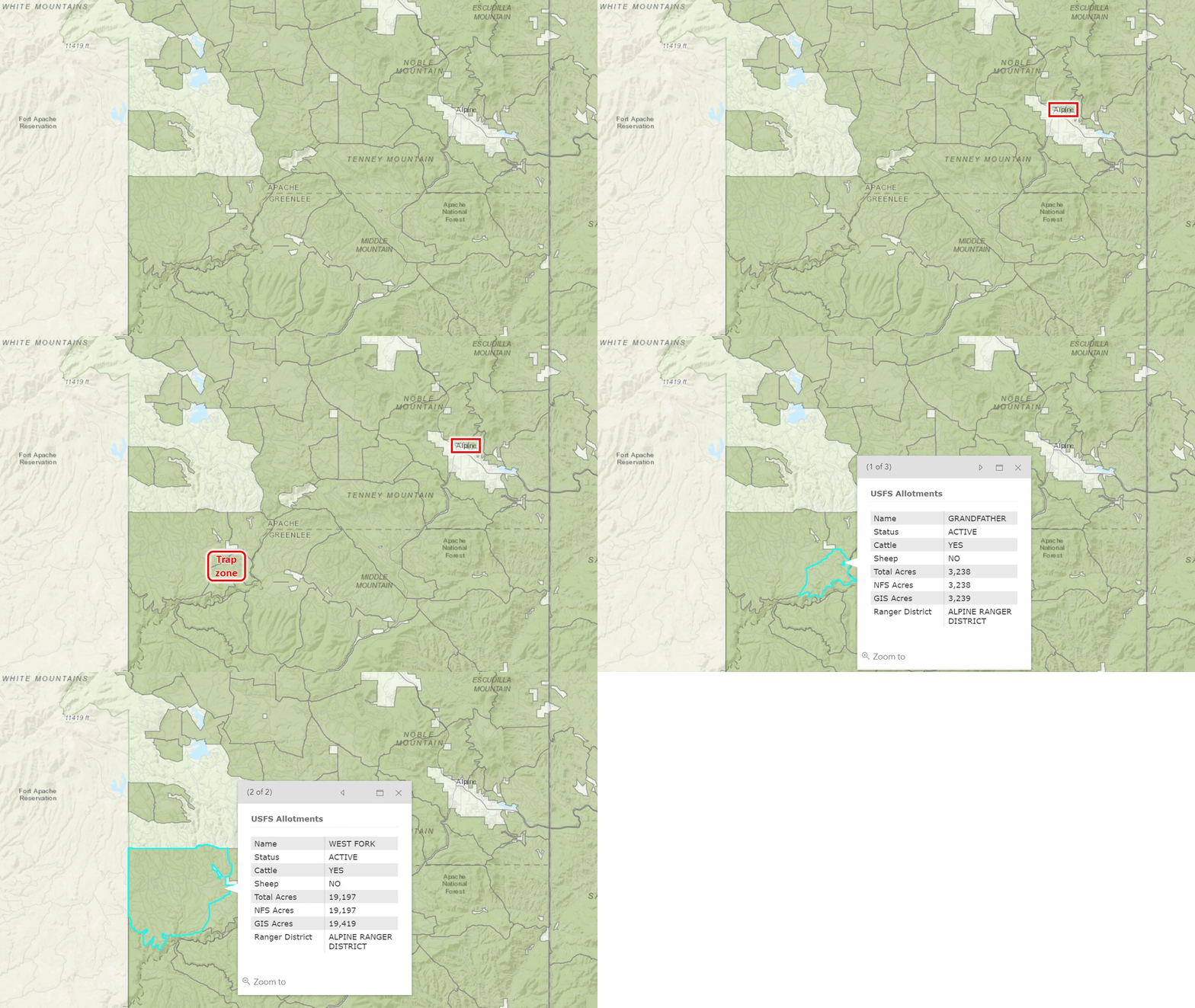
Curiously, the Restricted Area (trap zone) does not appear on the ASNF closure map.

RELATED: Jumping Mouse Habitat Subsumed by Permitted Grazing.

ASNF Jumping Mouse Allotments 03-24-22

New Public Lands Foundation Actually ‘BLM Foundation’

The news release dated January 19 referred to the nonprofit as the Foundation for America’s Public Lands but the formal name is the Bureau of Land Management Foundation, according to §1748c of FLPMA.

Apparently, the idea did not win enough support in Congress to pass as a standalone bill, so it was attached to the Consolidated Appropriations Act of 2017, the same way the Wild Horse and Burro Task Force was established earlier this month.

Language in the 2017 spending bill was dropped into FLPMA as an amendment.

The Foundation was authorized to

  • Borrow money and issue bonds, debentures, or other debt instruments
  • Enter into contracts with public agencies, private organizations and persons
  • Carry out any activity necessary and proper to advance its purposes

As for conflicts of interest, members of the Board or officers or employees of the Foundation shall not participate in the consideration or determination of any question before the Foundation that affects the financial interests of the member, officer or employee, or the interests of any corporation, partnership, entity or organization in which the member, officer or employee is an officer, director or trustee, or has any direct or indirect financial interest.

RELATED: New Public Lands Foundation to Tackle ‘Challenge’ of Wild Horses.

Jumping Mouse Habitat Subsumed by Permitted Grazing

The animal was listed as an endangered species by the U.S. Fish and Wildlife Service in 2014, according to information provided by the Forest Service, due to habitat loss and fragmentation.

In 2016, the agency designated critical habitat, which includes streams and wetlands in parts of New Mexico, eastern Arizona and southern Colorado.

Approximately 7,713 acres of the Apache-Sitgreaves, Santa Fe and Lincoln National Forests are within the critical habitat, which is overlapped by 14 allotments.

Management actions are designed to ensure that public-lands ranching can continue in close proximity to the protected areas.

However, data for two of forests show that grazing occurs in the protected areas!

In Lincoln, three allotments covering 140,588 acres include 986 acres of critical habitat, but only 209 acres (21%) are off limits to livestock.

In Santa Fe, six allotments covering 180,212 acres contain 2,056 acres of critical habitat, with 615 acres (30%) inaccessible to livestock, at least in theory.

Figures for Apache-Sitgreaves were not provided.

The complaint brought by the Center for Biological Diversity may have been prompted in part by failures of livestock exclosures, barriers that keep large animals out.

If the fences were in good condition, horses would not be able to enter the protected areas either.  But only a fraction of the protected areas are actually protected.

The fences can be repaired but the horses have to go, not to save an endangered species, but to protect big game and the most noble and deserving non-native species on America’s public lands, privately owned livestock.

And, as usual, the advocates, in offering to help the government get rid of the horses, come down on the wrong side of the issue.

RELATED: Jumping on the Jumping Mouse Bandwagon.

Poster Suggestions for Wild Horse Rallies

Artwork supplied by participants.

1. Public-lands ranching

LIVESTOCK BELONG IN FEEDLOTS

NOT WILD HORSES

CONFINE THE RANCHERS

TO THEIR BASE PROPERTIES

2. Land-use plans

THE PROBLEM IS

RESOURCE MANAGEMENT

NOT WILD HORSES

3. The Montana Solution

DARTING PROGRAMS ARE

HELICOPTER ROUNDUPS

IN SLOW MOTION

4. The advocates

NEXT TO THE FEDERAL GOVERNMENT

NOBODY’S GETTING RID OF MORE WILD HORSES

THAN THE ADVOCATES

5. News and information

BIG TECH AND MEDIA

DON’T BRING YOU THE TRUTH

ABOUT WILD HORSES

THEY BURY IT

RELATED: Carson City Wild Horse Rally Part of Nationwide Protest.

Aim of Wild Horse Rallies?

Roundups are not the problem, they are a symptom of the problem.

If you want to help the horses, don’t focus on the horses.

The advocates focus on the horses.

Instead, look upstream in the management process: Land-use plans that put ranching interests far above those of the horses.

Roundups don’t allocate resources.  They can’t change resource allocations.  They enforce resource allocations already on the books.

Demand that the government manage their congressionally designated habitats principally for them, not privately owned livestock, as specified in the original statute.

RELATED: Carson City Wild Horse Rally Part of Nationwide Protest.

Isolating Horses from Water?

The March edition of Horse Tales is out and the column on page 4 by the real estate agent and PZP darter in the Minden/Gardnerville area has a few suggestions for land owners that can help wild horses.

If you’re going to place a deed restriction on your property to protect springs and creeks, why not add a prohibition for the Montana Solution?

The advocates are a much greater threat to the horses than droughts, motorists and developers.

PZP-Free Zone 03-19-22

How Did CPW Acquire Axtell Wild Burros?

Were they sale eligible?  Their ages ranged from five to eleven years.

Have they already been offered unsuccessfully for adoption at least three times?

Adopters are usually limited to four animals per year but six were supplied.

Was title transferred from BLM?  Who is the official owner?

Are they still federally protected?

The donation, as it was billed in the story by The Grand Junction Daily Sentinel, has become a pilot program to see if wild burros can prevent wolf attacks on privately owned livestock.

Or maybe they’re just decoys, a new method for disposing excess animals?

RELATED: Axtell Burros Shipped to Cattle Ranch Came from Nevada WHR?

Best Way to Control Wild Horses

Yesterday’s column by the Campaign Against America’s Wild Horses in The Salt Lake Tribune referred to helicopter roundups as “pointless,” as if the government routinely engages in the capture, branding, harassment and death of the animals without regard to the statute.

Section 1331 notwithstanding, removal of wild horses from their congressionally designated habitats, by any method, including helicopters, wranglers and PZP, shifts resources back to the public-lands ranchers, as specified in management plans that put ranching interests far above those of the horses.

Did the writer explain that?

Of course not.

She starts with the premise that the horses have to go, then tries to convince her readers that the Montana Solution is best suited to the task, forgetting that darted mares still eat, exactly what the bureaucrats and ranchers don’t want.

As noted previously, the technique will likely find favor in a mopping-up role, protecting the ranchers after the fact by making sure the herds don’t bounce back.

RELATED: Advocates to America: Let Us Get Rid of Your Wild Horses.