Assateague Census, January 2023

The Assateague Island Alliance reported 78 horses on the Maryland side of the island as of January 4, no change from December.

The current roster shows band affiliation but does not indicate sex.

New foals probably won’t be hitting the ground for another six to eight weeks.

The herd shows little if any growth since 2016, when the safe, proven and reversible fertility control program was shut off, a result that will please most of the advocates.

Others will realize that the herd has been ruined by the Montana Solution and the nitwits who promote it.

RELATED: Assateague Census for December.

What the McCullough Advocates Are Trying to Protect

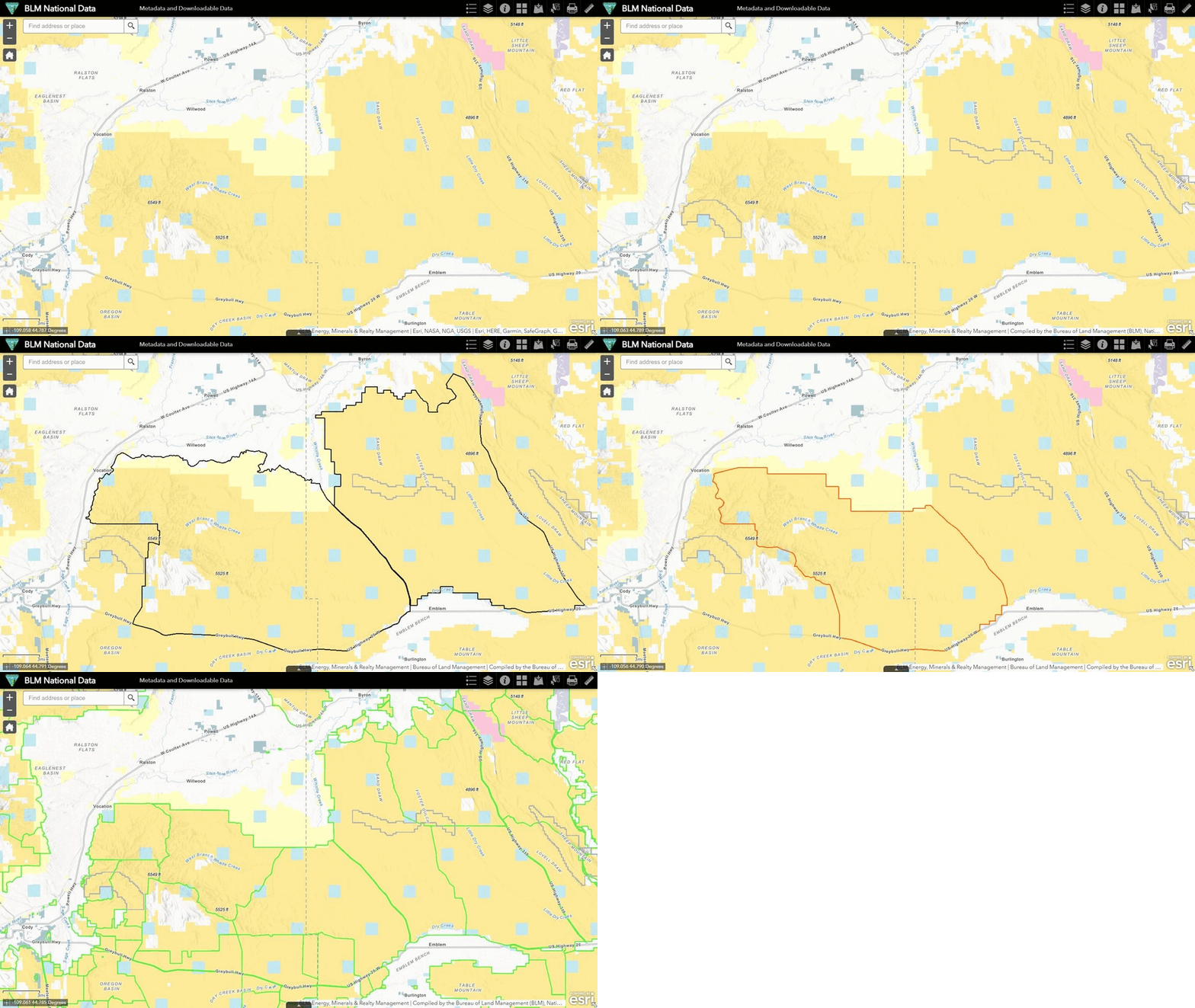
In this map from the National Data Viewer, areas of critical environmental concern are shown in gray, herd areas are black, the HMA is orange and the allotments are green.

The presence of livestock in the lawful home of wild horses tells you that the land can support many more animals than the government admits.

Instead of working in support of the horses, the advocates work in favor of the ranchers by destroying the ovaries of the mares with their favorite pesticide.

The practice is not unique to McCullough Peaks.

It’s accepted and promoted everywhere in the wild horse world by frauds who claim to have a better way to manage wild horses.

RELATED: Scoping Begins for McCullough Peaks Livestock Protection Plan.

What the McCullough Advocates Are Trying to Protect 01-11-23

American Prairie Using Leverage to Achieve Conservation Goals

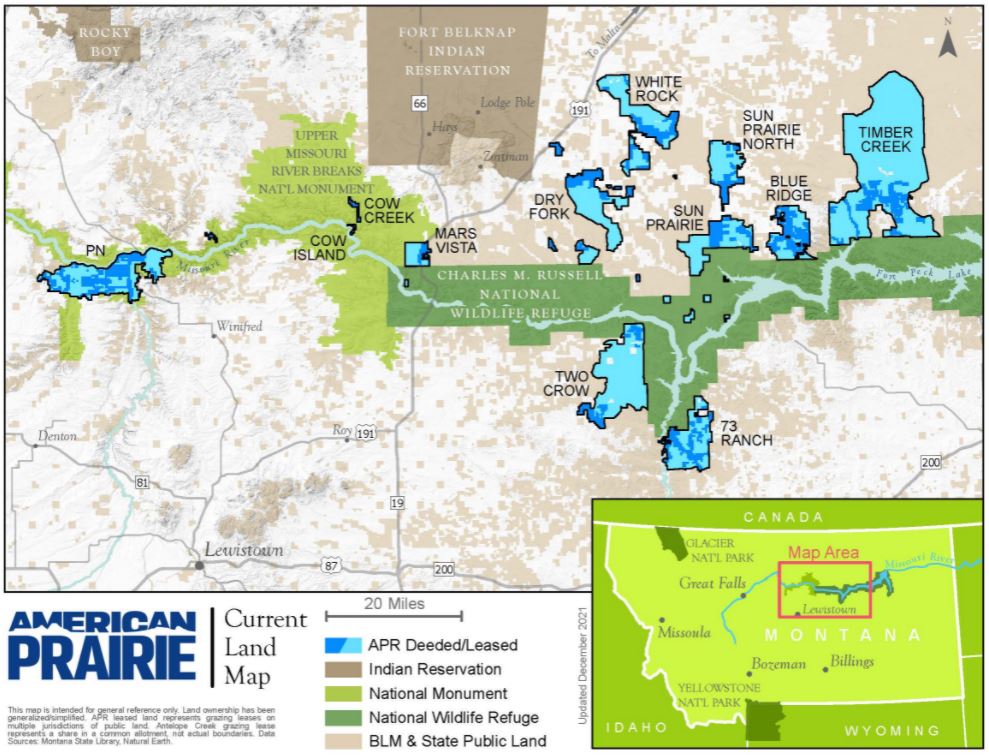
Put simply, they buy small amounts of land to achieve landscape-scale results.

They can assemble three million acres of public lands by acquiring and managing 500,000 acres of private lands, creating a fully functioning ecosystem complete with migration corridors and all native wildlife.

This is how you turn 5,000 deeded acres into a 40,000-acre ranch.

Madeleine Pickens purchased base properties in Nevada fifteen years ago with the goal of returning wild horses to the range, but the plan was thwarted by the BLM at the behest of ranching interests.

Will the same thing happen to American Prairie?

The wild horse advocates use the Montana Solution to achieve their land-use goals, which align with those of the bureaucrats and ranchers.

Curiously, the Billings School of PZP Darting and Public Deception is only about 150 miles from the American Prairie project area.

RELATED: State Tries to Block American Prairie Grazing Decision.

Speaker of House Elected, New Congress Seated

McCarthy succeeded on the 15th ballot and House lawmakers took their oaths of office shortly thereafter, according to a story dated January 7 by The Hill.

The one-horse pony acknowledged the result.

The advocates can now mobilize their lobbyists to resurrect the stupid ideas from 2022, including the helicopter ban (removal of wild horses by wranglers), the veterans for livestock act (get rid of them with the Montana Solution) and the surgical sterilization is bad act (but not chemical sterilization if achieved with their favorite pesticide).

RELATED: What the House Conservatives Are Trying to Prevent.

State Tries to Block American Prairie Grazing Decision

Montana Governor Greg Gianforte has joined forces with the Montana Department of Agriculture, Montana Department of Livestock, Montana Department of Natural Resources and Conservation and the Montana Department of Fish, Wildlife and Parks in opposition to a change in livestock type on seven allotments requested by American Prairie and granted by the BLM in 2022.

Not mentioned in the article by Western Livestock Journal is that American Prairie obtained preference by acquiring base properties tied to the allotments, a customary, legitimate and necessary step in applying for grazing permits on public lands.

Almost certainly the governor acted in response to butthurt ranchers, their overlords, cheerleaders and political allies who see the decision as threat to their domination and control of government agencies and the lands they manage.

The planning area included lands near the Charles M. Russell National Wildlife Refuge in northern Montana.

RELATED: American Prairie Grazing Decision Finalized.

American Prairie Land Map 04-03-22

Advocates Need New Touchstone for Wild Horse Management?

With the Assateague herd ruined by the Montana Solution and the Park Service mum, the advocates need a rising star they can point to as an example of the safety of their darting programs, before the American people realize they’re liars and frauds.

The Virginia Range is one contender.  It’s the largest program of its kind and, although the effects are not yet obvious, the long-term goal may be to take a herd of 3,000 wild horses down to 600 or less as suggested by the Nevada Department of Agriculture.

Massive sterilization will be required to hit the target in a reasonable timeframe.

But the Campaign Against America’s Wild Horses is up to the challenge, aided by four nitwits who have delivered over 1,000 doses each of the pesticide.

The Salt River was also a candidate, but the program lost some of its luster recently when the ringleader admitted she’s trying to get rid of the horses.

As always, the truth will be their undoing.

But now, an article written by a PZP darter about another PZP darter offers new hope.

The Spring Creek Basin HMA in Colorado has been roundup free since 2011, thanks to the efforts of a volunteer and her safe, proven and reversible darting program, the same type that ruined the Assateague herd.

The AML increase was underwritten by changes to forage allocations in a management plan update.

Also included were population growth suppression, introduction of horses from other areas and forced age distribution.

As for the dearth of roundups, you can find any number of HMAs that haven’t been gathered in the last ten years by looking at the March 1 HA/HMA Report.  The last gather date is given in the second column from the right in the tables for each state.

RELATED: Spring Creek Herd to Die Off in Ten Years?

Advocates Ideally Positioned to Help Park Service at TRNP

Under Alternative C, the Proposed Action, NPS would get rid of wild horses they put there after the original herd, thought to be descended from Sitting Bull’s horses, was eradicated.

Waaaaaah!

Those upset by the plan are a day late and a dollar short.

If approved, a reduced herd of fully contracepted horses would be established and allowed to remain in the park to live out their lives.

Fully contracepted means sterile, nonreproducing, let the herd die off.

What’s the least controversial way to achieve the goal?  The Montana Solution.

Who’s best equipped to get the job done?  The network consisting of the Campaign Against America’s Wild Horses, its affiliates, offshoots and supporters.

RELATED: Online Scoping Meeting Next Week for TRNP Livestock Plan.

Advocates are the Predators 11-30-21

Words Have Different Meanings in the Wild Horse World

Here’s a quick update on current usage:

Protect Wild Horses – Get rid of them with the Montana Solution

Keep Them Wild and Free – Ditto

Cruel and Costly Roundups – The advocates have a better way (to get rid of them)

On-Range Management – Take them off the range with the Montana Solution

Humane Management – Ditto

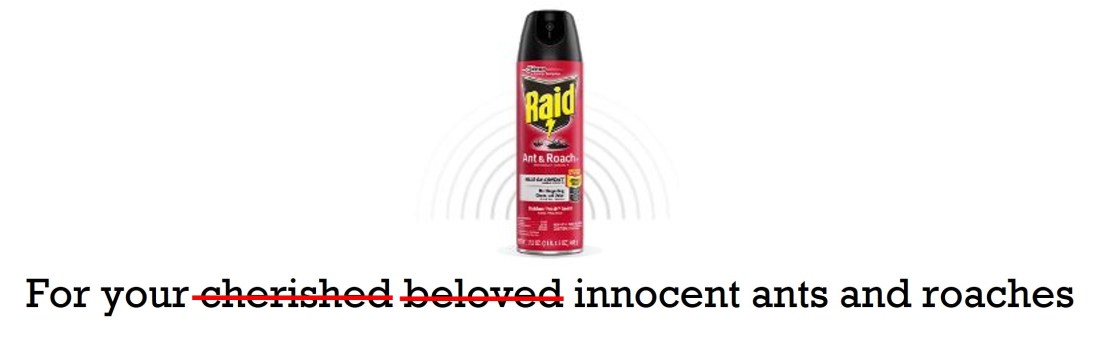
Cherished/Beloved/Innocent Wild Horses – Pests

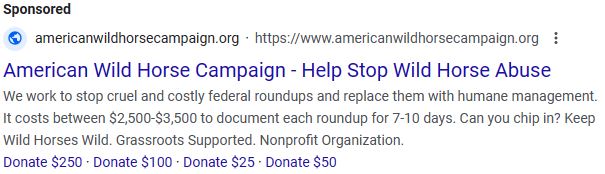
In this example, the Campaign Against America’s Wild Horses wants to replace removal by helicopter with removal by pesticide.

CAAWH Paid Ad on Google 12-29-22

As announced by one of their field marshals in September, you need to manage the numbers to fit what’s available for the horses.

What a loser.

Documenting roundups does not stop roundups and it damn sure doesn’t tell you what to do instead.

You’ll have to look elsewhere for that knowledge.

RELATED: Two Doses of PZP for the Price of One?

For Your Innocent Ants and Roaches 10-23-22

Two Doses of PZP for the Price of One?

The Billings School of PZP Darting is not having an after-Christmas sale.

Rather, the Campaign Against America’s Wild Horses has a one-for-one matching gift program through the end of the year.

If you donate, say, $35, the cost of one dose of their favorite pesticide, an unnamed donor will also contribute $35, allowing them to inhibit two wild mares for a year, not just one, or push two older mares into sterility.

The downside is that darted mares still eat but in the long run, ranchers will be able to access more and more of their food as the herds die off.

CAAWH Matching Gift 12-28-22

Would you be surprised if the unnamed donor was a ranching advocacy group, farm bureau or stockgrower’s association?

Their legislative agenda consists of persuading the politicians to allocate more and more money for on-range management, code words for getting rid of them with the Montana Solution, and to influence new bills such as the self-serving HR 9154.

As for the legal agenda, they may try to block a roundup every now and then or thwart the construction of a new off-range holding facility, but they won’t say a word about the management plans that assign most of the resources to privately owned livestock.

From time to time they criticize the public-lands ranchers, but no offense is taken.

It’s all part of the charade that keeps the donations rolling in while maintaining the status quo.

More Angst at TRNP

Good grief.  The original wild horse herd has been gone for over twenty years.

The horses you see today were put there by the Park Service, as an exhibit.

With the Park Service threatening to remove them, the advocates are fighting back.

When their comrades try to eradicate other herds with the Montana Solution, there’s not even a whimper.

Have you seen a film by Deb Carson and Jamie Baldanza calling attention to the Virginia Range mustangs?

RELATED: Wailing and Gnashing of Teeth at TRNP?

FY 2023 Omnibus Clears House and Senate

The news release includes links to the full bill, division summaries and explanatory statements.

Despite last-minute amendments, the FY 2023 budget for the wild horse and burro program remains at $147,888,000.

The measure will likely be signed today by the one-horse pony, avoiding a government shutdown.  A White House statement confirms that.

RELATED: Committee Releases Overview of FY 2023 Omnibus.

Wild Horse Fire Brigade Serves Ranchers, Not Wild Horses

Imagine completing 198 laps in a 200-lap race and running out of gas.

This news release about the Wild Horse Fire Brigade, written by its creator and leading proponent, plays the course well but chokes on the back nine in the final round.

Roundups and stockpiling of captured animals are costly, as the author notes, and they represent irresponsible use of the taxpayer’s money and the public lands.

The 768,000 AUMs per year needed to support the 64,000 animals in off-range holding are readily available in their lawful homes, at a loss of $1 million per year in grazing fees but with savings of $70 million per year in holding costs.

Who wouldn’t jump on that?  The bureaucrats, ranchers and their political allies.

These figures were not mentioned in the announcement.

Fertility control and on-range management are euphemisms for chemical sterilization of mares with vaccines that cause illness instead of preventing it.  Spot on.

Wild horses and burros were to be protected from capture, branding, harassment and death, and their land was to be managed principally for them, yet we see everything that was prohibited in the 1971 Act.  Correct, the Act no longer affords the protections sought by Velma!

In case you haven’t been keeping score, we’re ahead 3-2 in the top of the eighth.

Keeping wild horses in areas where they are in conflict with commercial interests guarantees they will remain targets of those interests, resulting in the highly flawed and costly management concepts previously cited.

Oh crap, bases loaded.

Is there a solution to the problem?

Yes, the Natural Wildfire Abatement and Forest Protection Plan, also known as the Wild Horse Fire Brigade.

Move the horses to remote wilderness areas not particularly suited for livestock grazing, or anything else.

Using just 20 million acres of these vast water and forage-rich areas, up to 100,000 wild horses could be relocated as family bands, at the rate of one horse per 200 acres (five horses per thousand acres), ending the conflicts with commercial interests.

Dang, the other team just drove in two runs.

Where would the family bands come from?  Not from the off-range corrals and long-term pastures.

Why resolve the conflicts by getting rid of the horses?  That’s what the advocates do.

The same result could be achieved by confining the ranchers to their base properties in a year-round off season, while expecting them to pay the going rate to feed their animals.

This would be in line with the original statute.

Game saved with one out remaining.

RELATED: ‘Wild Horse Fire Brigade’ Means Victory for Permittees.

RTF Applauds FY 2023 Budget Increase for WHB Program

Contrary to the Division G summary issued by the Senate, the organization’s president claims in today’s news release that the higher level of funding marks a new direction for wild horse and burro management.

Like most advocacy groups, Return to Freedom is known for its unwavering support of safe, proven and reversible fertility control—which doesn’t exist—as an alternative to capture and removal.

Resource allocations and management priorities are never questioned.

RELATED: BLM Shuns Montana Solution?

Thriving Ecological Balance-3

Impact of FY 2023 Omnibus on Wild Horses and Burros?

Like the House news release, the December 20 announcement by the Senate appropriations committee included links to the full bill, division summaries and explanatory statements.

However, the Division G summary puts a different spin on the authorization for the wild horse and burro program.

“The wild horse and burro program is provided $148 million to accelerate removals from degraded and drought-plagued areas, to house horses off-range, and to jumpstart a fertility control program to reduce the future horse population.”

The emphasis is on removals, off-range holding and on-range management (as the advocates like to describe it).

Research was not mentioned.

The new roundup schedule does not reflect these priorities.

Not yet, anyway.

RELATED: Committee Releases Overview of FY 2023 Omnibus.

BLM Shuns Montana Solution?

The Division G summary for the 2023 spending bill says it provides $148 million for the Wild Horse and Burro Program, including $11 million for research on reversible immunocontraceptive fertility control.

Not long ago, the advocates secured $11 million for use of their favorite pesticide in PZP Amendments.

What changed?

The truth is coming out.

For years the advocates have been lying about the safety of the Montana Solution.

The vaccine causes illness instead of preventing it.

Mares whose ovaries have been destroyed are referred to as self-boosting, not sterile.

If PZP is banished, they have no reason to exist.  They are one-trick ponies.

It’s time to move on and tackle the real problem: Resource management in areas set aside for wild horses and burros.

RELATED: Committee Releases Overview of FY 2023 Omnibus.

PZP Dangers 10-21-22

Horses and Cattle to Be Removed from TRNP?

The Park Service is working on a new livestock management plan that will protect native species and the natural prairie ecosystem at the expense of nonnative horses and cattle, according to a story posted this evening by The Bismarck Tribune.

Not mentioned in the report:

An advocate interviewed for the story said all the horses can’t stay but maybe the Park Service can keep some of them.

You have to give them credit: They think alike.

“If we get rid of them, they can stay.”

RELATED: Advocates Criticize Treatment of Horses at TRNP.