TOLDYA: Advocates Consigned to Mopping-Up Role

Per today’s news release:

The BLM continues to implement a multi-year plan to achieve and maintain the appropriate management level of wild horses and burros on public lands using a variety of management tools, including gathers to reduce overpopulation, fertility control to slow future growth, and adoptions to place excess animals into good homes.

Helicopters will make the big reductions in herd sizes while the advocates protect the ranchers after the fact by making sure the herds don’t bounce back.

RELATED: Can Darting Programs Compete with Helicopter Roundups?

Pneu-Dart Impact 01-03-22

FY 2022 Resource Enforcement Targets Don’t Balance

The BLM said today that at least 22,000 wild horses and burros would be captured on public lands this year, with at least 19,000 removed.

That leaves 3,000 unaccounted-for animals.

The announcement also stated that at least 2,300 animals would be treated with various forms of fertility control and returned to their home range.

That leaves 700 unaccounted-for animals.

Does that mean 700 untreated animals will be returned to the range or are they budgeting for 700 deaths?

Helicopter roundups and fertility control programs do not allocate resources and cannot change resource allocations.  They enforce resource allocations already on the books.

With the exception of a few areas, wild horses and burros receive five to twenty percent of the authorized forage, with the balance going to privately owned livestock.

As the bureaucrats and advocates get rid of excess animals (those above AML), the ranchers can enjoy more of what their allotments have to offer.

RELATED: FY 2022 Resource Enforcement Actions Announced.

Love Triangle on Americas Public Lands 08-19-21

FY 2022 Resource Enforcement Actions Announced

The BLM plans to capture at least 22,000 wild horses and burros from overpopulated herds this year, according to today’s news release, remove at least 19,000 excess animals, and treat at least 2,300 animals with fertility control.

When appropriate management levels are exceeded, roundups and darting programs shift resources in areas set aside for these animals back to the public-lands ranchers.

The latest schedule still shows 14 HMAs subject to the Montana Solution.

RELATED: Darting Programs and Helicopter Roundups on Same Side of Coin.

Nevada WHR Roundup Over

The figures for Days 8, 10, 11 and 13 have been revised.

The incident concluded on January 3, according to a statement at the gather page, with 638 horses captured, 432 shipped, 11 dead and 62 returned to their home range.

Also captured were 91 burros.  No deaths were reported and none were returned.

Foals represented 23.2% of the horses captured.  Of the burros, 15.4% were foals.

Mares outnumbered stallions by a ratio of approximately 1.3:1.  Jacks outnumbered jennies by a ratio of roughly 1.6:1.

The capture goal was 648 horses and 100 burros.

The removal goal was 438 horses and 100 burros.

The number of horses removed was 576.  If the 133 mares treated with GonaCon are returned to the WHR, that figure will drop to 443.  The number of unaccounted-for horses, currently at 133, will drop to zero.

There were no unaccounted-for burros.

RELATED: Wild Horses and Burros to Be Removed from Nevada WHR.

Nevada WHR Roundup Day 14

The incident began on December 20.  Gather stats through January 2:

  • Type: Planned
  • Method: Helicopter
  • Animals captured: 640 horses, 91 burros
  • Average daily take: 45.7 horses, 6.5 burros
  • Capture goal: 648 horses, 100 burros
  • Removal goal: 438 horses, 100 burros
  • Returned: 65 horses, no burros
  • Deaths: 11 horses, no burros
  • Shipped: 401 horses, 91 burros

One death was reported on Day 13 and two on Day 14.  The death rate is 1.7%.

The cumulative totals include 215 stallions, 276 mares and 149 foals.  On the burro side, 47 jacks, 30 jennies and 14 foals.

Youngsters represented 23.3% of the horses captured and 15.4% of the burros.

Of the adults, 43.8% were stallions and 56.2% were mares.  For the burros, 61.0% were jacks and 39.0% were jennies.

Body condition scores were not reported.

Five horses were returned to the WHR on Day 13, followed by 60 on Day 14.

The status of the 74 mares treated with GonaCon is not known.

Nevada WHR Map 12-16-21

Day 14 ended with 163 unaccounted-for horses and no unaccounted-for burros.

The number of horses removed to date is 575.  The number of burros removed is 91.

The Day 14 report said that trapping operations have concluded.

Other statistics:

  • AML: 500 horses, zero burros
  • Forage assigned to horses: 6,000 AUMs per year
  • Pre-gather population: 736 horses, 95 burros and an unspecified number of foals
  • Forage liberated to date: N/A
  • Water liberated to date: N/A
  • Forage assigned to livestock: None
  • Animals displaced from WHR by livestock: None
  • True AML: 500

RELATED: Nevada WHR Roundup Day 12.

Upgrading Your Gen 1 Projector

The list price of a new Gen 2 X-Caliber gauged projector with a 39″ barrel and satin black finish ranges from $1967.75 to $1,975.00.

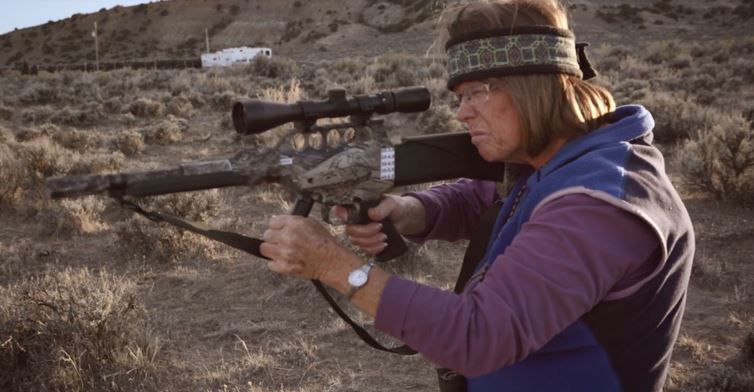
What if you have a Gen 1 projector with a 29″ barrel, as demonstrated by this advocate, but want the added range and accuracy of the longer barrel?

Advocates are the Predators 11-30-21

An upgrade is available, as explained in this how-to video by Pneu-Dart.  The list price is $448.50 and only takes ten minutes to install.  There are no flats on the barrel sleeve and it is secured with Loctite so removal may be difficult without damage.  The upgrade kit includes a new sleeve and carrying case.

Be sure to check out the masthead at the Pneu-Dart Vimeo channel, which shows the powder charges going off as the RDDs hit the mark.  Note the deflection of the target upon impact.

Pneu-Dart Impact 01-03-22

This is what the advocates are doing to our horses.

RELATED: Putting the Montana Solution Into Practice: RDDs.

More Fencing Needed for Virginia Range Mustangs?

Only in selected areas, perhaps where the writer of this opinion piece lives.

In the fourth quarter of 2021, there were 13 collisions involving horses, resulting in the deaths of nine.  Locations of the accidents were not provided.

Additional fencing would stop horses from entering roadways and drivers won’t be at risk to hit them.  The horses will stay safe in the hills.

If the goal is to keep them safe in the hills, the stakeholders should be asking why they are leaving that area, not why they are being hit by cars.

This time of year, they may try to avoid the colder temperatures and lack of forage in the mountains, with elevations exceeding 6,000 feet.

The writer suggested that, among other things, the fertility control program could be part of the solution, not part of the problem.

What if the horses have fled the hills in fear of the advocates?

The stallions can’t understand why their mares aren’t bearing any fruit and the death rate of the herd is probably going up.

Perhaps their instincts have kicked in and they’re now scattering to survive.

That would explain why the Pine Nut advocates, a few miles to the south, needed a Jeep to pursue their targets.

By confining the horses to certain areas, additional fencing might make life a little easier for the Virginia Range advocates and improve the hit rate of their RDDs.

Looking ahead, collisions with foals should be minimal in 2022.  The advocates have already fixed that problem.

RELATED: Remove Advocates from Virginia Range Now!

Nevada WHR Roundup Day 12

The incident began on December 20.  Gather stats through December 31:

  • Type: Planned
  • Method: Helicopter
  • Animals captured: 483 horses, 91 burros
  • Average daily take: 40.3 horses, 7.6 burros
  • Capture goal: 648 horses, 100 burros
  • Removal goal: 438 horses, 100 burros
  • Returned: No horses, no burros
  • Deaths: 8 horses, no burros
  • Shipped: 355 horses, 91 burros

Helicopters did not fly on Day 11.

No deaths were reported on Days 11 and 12.  The death rate is 1.7%.

The cumulative totals include 142 stallions, 221 mares and 120 foals.  On the burro side, 47 jacks, 30 jennies and 14 foals.

Youngsters represented 24.8% of the horses captured and 15.4% of the burros.

Of the adults, 39.1% were stallions and 60.9% were mares.  For the burros, 61.0% were jacks and 39.0% were jennies.

Body condition scores were not reported.

The location of gather activity within the WHR is not known.

Nevada WHR Map 12-16-21

Day 12 ended with 120 unaccounted-for horses and no unaccounted-for burros.

The number of horses removed to date is 483, which exceeds the goal, but the number to be returned has not been announced.

Horses removed = Horses capturedHorses returned

Mares returned to the area will be treated with GonaCon, a pesticide that may function as a sterilant.  The Day 11 report indicated that 74 mares have received the jab.

The number of burros removed is 91.

Operations are not open to public observation.

Other statistics:

  • AML: 500 horses, zero burros
  • Forage assigned to horses: 6,000 AUMs per year
  • Pre-gather population: 736 horses, 95 burros and an unspecified number of foals
  • Forage liberated to date: N/A
  • Water liberated to date: N/A
  • Forage assigned to livestock: None
  • Animals displaced from WHR by livestock: None
  • True AML: 500

RELATED: Nevada WHR Roundup Day 10.

Putting the Montana Solution Into Practice: RDDs

A remote delivery device, sometimes referred to as a dart, is pushed out of a projector with compressed gas.

According to the PZP spec sheet from the Science and Conservation Center, Pneu-Darts are not pressurized and cannot discharge spontaneously or through incidental contact.

For the dart to discharge, a small weight at the rear of the device must be launched forward (through impact with a target) to fire a small gunpowder cap, which in turn sets off a larger charge, pushing the plunger forward and emptying the dart into the animal.

Thus, the RDD is similar to a rifle cartridge, where a primer ignites the propellant after it is struck by the firing pin, sending the bullet down the barrel.

VR Darting Injury 09-15-21

Don’t worry, it’s safe, humane and relieves the mares of “the burden of pregnancy and raising young,” with benefits accruing to the public-lands ranchers.

RELATED: Putting the Montana Solution Into Practice: Projectors.