Rock Springs Aftermath

The roundup was an overwhelming success, according to a BLM spokesman interviewed for a story published today by Cowboy State Daily.

Predictably, Suzanne Roy of the Campaign Against America’s Wild Horses said it was a waste of taxpayer money and that the government should be getting rid of the horses with “humane, scientific management,” which she referred to a few weeks ago as the Montana Solution.

The death rate was 0.9%, not 0.009% as stated in the article.

RELATED: Rock Springs Roundup Over?

New Public Lands Foundation to Tackle ‘Challenge’ of Wild Horses

The Foundation for America’s Public Lands, a congressionally-chartered, non-profit institution authorized by Congress in 2017, launched yesterday, according to a BLM news release.

The Foundation will leverage public and private dollars to conserve, protect and restore lands managed by the federal agency.

How long before it’s co-opted by ranching interests?

Maybe that’s already baked into the charter.

Rock Springs Roundup Over?

The gather page says operations concluded on January 17, with 4,161 horses captured, 580 returned and 37 dead.  No activity has been reported since.

An announcement has not appeared at the BLM news site.

The number of animals shipped was not provided.  The total, based on the daily reports, was 3,605.

The number of animals returned cannot be correlated with figures in the daily reports.

The results don’t balance:

4,161 – 580 – 37 – 3,605 = –61

More horses were processed than captured.

The number of horses removed was

4,161 – 580 = 3,581

The capture goal was 4,400 and the removal goal was 3,500.

The pre-gather population was thought to be 5,105, compared to a combined AML of 2,145 for the five HMAs involved—which are managed primarily for livestock.

Rock Springs HMAs 10-13-21

The advocates wanted the government to cancel the roundup and get rid of the horses with PZP, oblivious to the lopsided resource allocations that put ranching interests far above those of the horses.

The incident was a likely precursor to the Rock Springs RMP Amendments, which will close three of the HMAs and downsize a fourth.

Little Colorado, the fifth HMA subject to the roundup, was not included in the proposed amendments, as it has already been, in effect, zeroed out.

RELATED: Rock Springs Roundup Starts in Two Weeks.

Desatoya Roundup Day 3

The incident began on January 16.  Gather stats through January 18:

  • Target: Horses
  • Type: Planned
  • Method: Helicopter
  • Captured: 93, up from 24 on Day 1
  • Average daily take: 31.0
  • Capture goal: 233
  • Removal goal: 150
  • Returned: None
  • Deaths: 1, none reported on Day 1
  • Shipped: 9, none reported on Day 1

A mare was euthanized on Day 3.  The death rate is 1.1%.

The cumulative total includes 42 stallions, 38 mares and 13 foals.

Youngsters represented 14.0% of the horses captured, consistent with a herd growth rate of 9% per year, assuming a 5% death rate.

Of the adults, 52.5% were stallions and 47.5% were mares.

Body condition scores were not reported.

The location of the trap site within the HMA was not provided.

Desatoya HMA Map 01-19-22

Day 3 ended with 83 unaccounted-for animals.

The nine privately owned horses returned to their owner on Day 3 were placed into the Shipped category.

Other statistics:

  • AML: 180
  • Forage assigned to horses: 2,160 AUMs per year
  • Pre-gather population: 277
  • Forage liberated to date: 1,116 AUMs per year
  • Water liberated to date: 930 gallons per day
  • Forage assigned to livestock: 9,608 AUMs per year (estimated)
  • Horses displaced from HMA by permitted grazing: 801
  • True AML: 981
  • Stocking rate at new AML: 6.1 wild horses per thousand acres
  • Horses displaced from HMA by drilling and mining: Ask the advocates

RELATED: Desatoya Roundup in Progress.

Independence Valley Farm and Ranch Sells for $30 Million

The Pequop Conservancy sold the property, which straddles I-80 about 60 miles east of Elko, NV, to Ruby IVFR Holdings in the fall of 2021, according to a report posted yesterday by the Elko Daily Free Press.

The deeded acres may consist of checkerboard lands in the highway corridor, similar to the Rock Springs HMAs in Wyoming.  Refer to the image at 1:30 in the following video.

The ranch is north of the Spruce-Pequop HMA, site of the wild horse shootings in 2018 and part of Madeleine Pickens’ Mustang Monument.  Click on map to open in new tab.

The story did not indicate if free-roaming horses are found in and around the ranch.

Independence Valley Farm and Ranch Map 01-19-22

The privately held acres may qualify as a base property that secures grazing preference to the West Big Springs Allotment.  The permittee is 333 Ranch, which may be a third-party producer of hay and range-fed beef.

Although much of this post is speculation, the price tag tells you that the entrance fee to the world of public-lands ranching is not cheap.

NOTE: The markings on the door and tailgate of the truck at 3:19 indicate 333 Ranch.

Pancake Roundup Day 7

The incident began on January 11.  Gather stats through January 17:

  • Target: Horses
  • Type: Planned
  • Method: Helicopter
  • Animals captured: 713, up from 514 on Day 4
  • Average daily take: 101.9
  • Capture goal: 2,060
  • Removal goal: 2,030
  • Returned: 4, up from zero on Day 4
  • Deaths: 9, no change from Day 4
  • Shipped: 588, up from 309 on Day 4

No animals were captured on Day 5.

The death rate is 1.3%.

The cumulative total includes 296 stallions, 320 mares and 97 foals.

Youngsters represented 13.6% of the horses captured, consistent with a herd growth rate of 8% per year, assuming a 5% death rate.

Of the adults, 48.1% were stallions and 51.9% were mares.

Body condition scores were not reported.

The location of the trap site within the Complex was not provided.

Pancake Complex Map 01-07-22

Day 7 ended with 112 unaccounted-for animals.

The number of horses removed to date is 709.  Mares returned to the Complex will be treated with population suppression of unspecified type.

Other statistics:

  • AML: 638 (across two HMAs, one WHT and one HA)
  • Forage assigned to horses: 7,656 AUMs per year
  • Pre-gather population: 3,244
  • Forage liberated to date: 8,508 AUMs per year
  • Water liberated to date: 7,090 gallons per day
  • Forage assigned to livestock: 43,344 AUMs per year (estimated)
  • Horses displaced from Complex by permitted grazing: 3,612
  • True AML: 4,250
  • Stocking rate at new AML: 3.5 wild horses per thousand acres
  • Horses displaced from Complex by drilling and mining: Ask the advocates

RELATED: Pancake Roundup Day 4.

Youngsters Hard to Find at FOAL

This group applies the Montana Solution to the McCullough Peaks herd.

They may not be able to convert an AML to AUMs or tell you the percentage of forage assigned to livestock in the HMA, but they know exactly how much adjuvant to add to the PZP and how long to mix them.

FOAL Mixing PZP 01-18-22

They say they’re protecting the horses but they’re actually protecting the public-lands ranchers.

Maybe they are public-lands ranchers.

RELATED: Ranchers and Advocates Snub McCullough Peaks Wild Horses.

Pipelines Threaten Wild Horses?

They are usually buried six to eight feet deep and unless you were there during construction, the only indication you have of their existence is the occasional surface marker or casing vents at road crossings.  A clear-cut strip through a wooded area may be another indication.

The two markers on the right in this image are casing vents.  Third from right is a marker for aerial patrols.  The other four provide a general location of the pipeline and usually include warnings to “Call before you dig.”

Pipeline Markers 11-17-21

The advocates are always looking for new ways to divert your attention from the two greatest threats to our wild horses: Themselves and the public-lands ranchers.

RELATED: Advocate Blames Roundups on Pipelines, Mines!

How Pipelines Affect Wild Horses 11-17-22

Sand Wash Advocates Assume Mopping-Up Role

Their home page suggests that they exist mostly to get rid of wild horses, although their workload was lightened by last year’s roundup.  Note the Gen 1 gauged projectors.

They must have carte blanche from the BLM, as they are providing a valuable service for the public-lands ranchers.

All they ask in return is a small donation to help them continue their important work.

RELATED: TOLDYA: Advocates Consigned to Mopping-Up Role.

Sand Wash Advocates 01-17-22

Rock Springs Roundup Day 102

Operations resumed on January 6.  Gather stats through January 16:

  • Target: Horses
  • Type: Planned
  • Method: Helicopter
  • Captured: 4,045, up from 3,686 on Day 99
  • Average daily take: 39.7
  • Capture goal: 4,400
  • Removal goal: 3,500
  • Returned: 580, no change from Day 99
  • Deaths: 37, up from 33 on Day 99
  • Shipped: 3,476, up from 3,222 on Day 99

One horse died on Day 101 of unspecified causes and three others were put down due to club feet.  The death rate is 0.9%.

The total includes 1,555 stallions, 1,653 mares and 837 foals.  The gather page shows 1,554 stallions and 1,640 mares.

Foals represented 20.7% of the horses captured.  Of the adults, 48.5% were male and 51.5% were female.

The percentage of foals is consistent with a herd growth rate of 16% per year, assuming a 5% death rate.

Body condition scores were not reported.

Gather activity has moved to White Mountain and Little Colorado but the location of the trap site was not specified.

Rock Springs HMAs 10-13-21

The number of horses shipped has not been included in the cumulative totals and the figure above is based on the daily reports.

If 4,032 horses have been captured as stated at the gather page, 3,476 have been shipped and 37 have died, the maximum number of horses that could be returned to the area is 519, not 580 as stated in the cumulative totals.  The numbers don’t balance.

The number of horses removed to date, based on the cumulative totals, is 3,452, about 99% of the project goal.

Other statistics:

  • AML: 2,165 (across five HMAs)
  • Forage assigned to horses: 25,980 AUMs per year
  • Pre-gather population: 5,105
  • Forage liberated to date: 42,444 AUMs per year, adjusted for horses returned
  • Water liberated to date: 35,370 gallons per day, adjusted for horses returned
  • Forage assigned to livestock: 191,791 AUMs per year (estimated)
  • Horses displaced from HMAs by livestock: 15,982 (32% of off-range holding)
  • True AML: 18,147

RELATED: Rock Springs Roundup Day 99.

Humane Alternative to Roundups and Off-Range Holding?

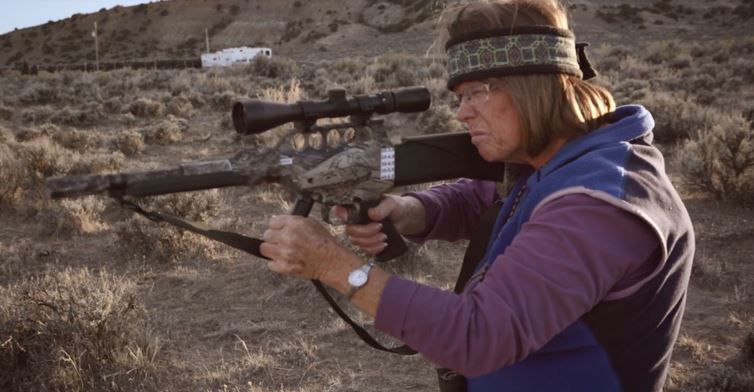
A 2019 news release by IDA titled “These Guns Can Save Wild Horses and Burros” features a graduate from the SCC School of PZP Darting holding a Gen 1 gauged projector with scope and black satin finish.  She joins ranks with other foot soldiers advancing the Montana Solution across western rangelands.

IDA Darter 01-16-22

Although propelled by a compressed gas, a powder charge goes off when the dart, formally known as an RDD, strikes the target, driving the payload into the animal.

Pneu-Dart Impact 01-03-22

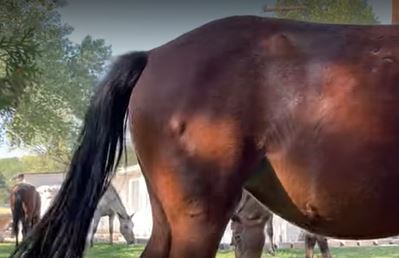
Injuries are not uncommon, but where the technique is practiced, natural behaviors and youngsters are.  Livestock flourish as the herds are decimated.

VR Darting Injury 09-15-21

You have to give them credit: The advocates speak with one voice, although it’s the wrong voice.

Ending permitted grazing, confining the ranchers to their base properties, and letting them pay market rates to feed their animals—like the rest of us—apparently has never crossed their minds.

RELATED: Can Darting Programs Compete with Helicopter Roundups?

Roy Flip-Flopping on Rock Springs Roundup?

A few weeks ago, the Campaign Against America’s Wild Horses joined forces with the Animal Welfare Institute to sponsor a petition asking the BLM to cancel the roundup and get rid of the horses with PZP, described euphemistically as “managing these historic wild horses humanely in the wild with proven fertility control.”

Who benefits as wild horses are removed from the range?  The public-lands ranchers, of course, but that was omitted from the petition.

Advocates are the Predators 11-30-21

Now, in a new commentary published today by the Casper Star-Tribune, Roy appears to side with groups that seek the removal of livestock from areas identified for wild horses, even though her organization refused to sign a letter last year requesting the Secretary of the Interior to do exactly that.

RELATED: Signatories of Rock Springs Petition Duped by Advocates?