What Will Happen to Mom of New Currituck Foal?

She’s reached her quota.  The herd is too important to leave its genetics to nature.

Will the advocates put her back on PZP for the rest of her life or at least until she’s sterile so another mare can have her turn?

From this viewpoint, horses lost to contaminated water, collisions with vehicles, damaged fences, or otherwise removed from the area, are a good thing, they take some pressure off the darting budget.

RELATED: Fourth Foal of Year Appears on Currituck Outer Banks.

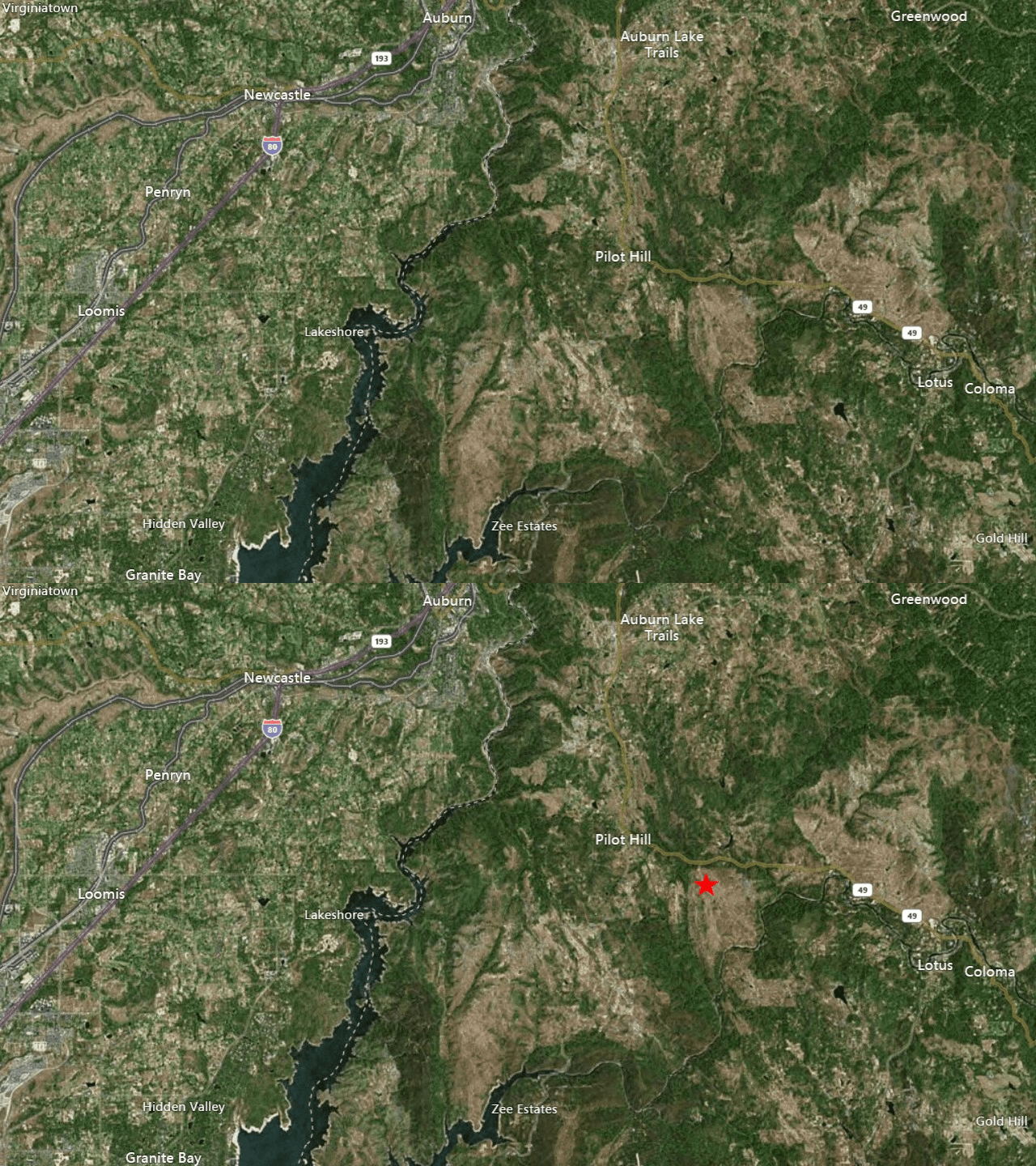
Sheep Return to Cronan Ranch

Approximately 900 animals will graze on 1,000 acres until late August, according to yesterday’s news release.

That’s equivalent to 180 wild horses.

The grazing season is 4.5 months so the total forage demand is 810 AUMs.

The equivalent stocking rate is 180 wild horses per thousand acres, compared to an average rate of one wild horse per thousand acres across all HMAs, many of which are on the lee (dry) side of the Sierra.

The ranch is on the windward (wet) side.

The announcement did not indicate if the sheepherder pays the BLM for the privilege or the BLM pays the sheepherder for the service.

The cost of the forage is about $1,100 at current grazing fees but the market value may be closer to $20,000.

RELATED: Targeted Grazing Begins Next Week at Cronan Ranch.

Cronan Ranch Grazing Map 05-07-21

Wild Horse and Burro Population Declined Slightly Over Past Year

The number of animals on lands managed by the BLM was estimated to be 82,384 as of March 1, compared to 86,189 a year earlier, according to today’s blog post.

Still, that’s three times more horses and burros than allowed by plan.

Imagine receiving a six bedroom home and finding out you can only use one bedroom.

You’ve been using three but you must vacate two.

The remaining five, representing 83% of the available space, have been reserved for the most noble and deserving non-native species on America’s public lands.

Don’t worry, the advocates will help you reach the goal.

Thriving Ecological Balance-1

Wine Enthusiast Looks at Horse Heaven Hills

Would you buy range-fed beef it you knew it was produced on public lands at the expense of our wild horses?

How about wine produced in an area where they once flourished?

What would you say if someone was trying to bury the truth about those horses?

This article by Wine Enthusiast, a trade publication, is silent about their history and isn’t even curious how the area got its name, but does identify some brands to avoid.

Status of Three Fingers and Jackies Butte Allotments

Section 3.2.2 in the Draft EA for resource enforcement actions provides information on the grazing allotments that intersect the HMAs.

The Three Fingers HMA lies within the Wildhorse Basin pasture of the Board Corrals Allotment and the Riverside pasture of the Three Fingers Allotment.

The Western Watersheds map shows the arrangement.

Three Fingers Allotments 04-10-22

The Allotment Master Report from RAS puts Board Corrals in the Maintain category and Three Fingers in the Improve category.

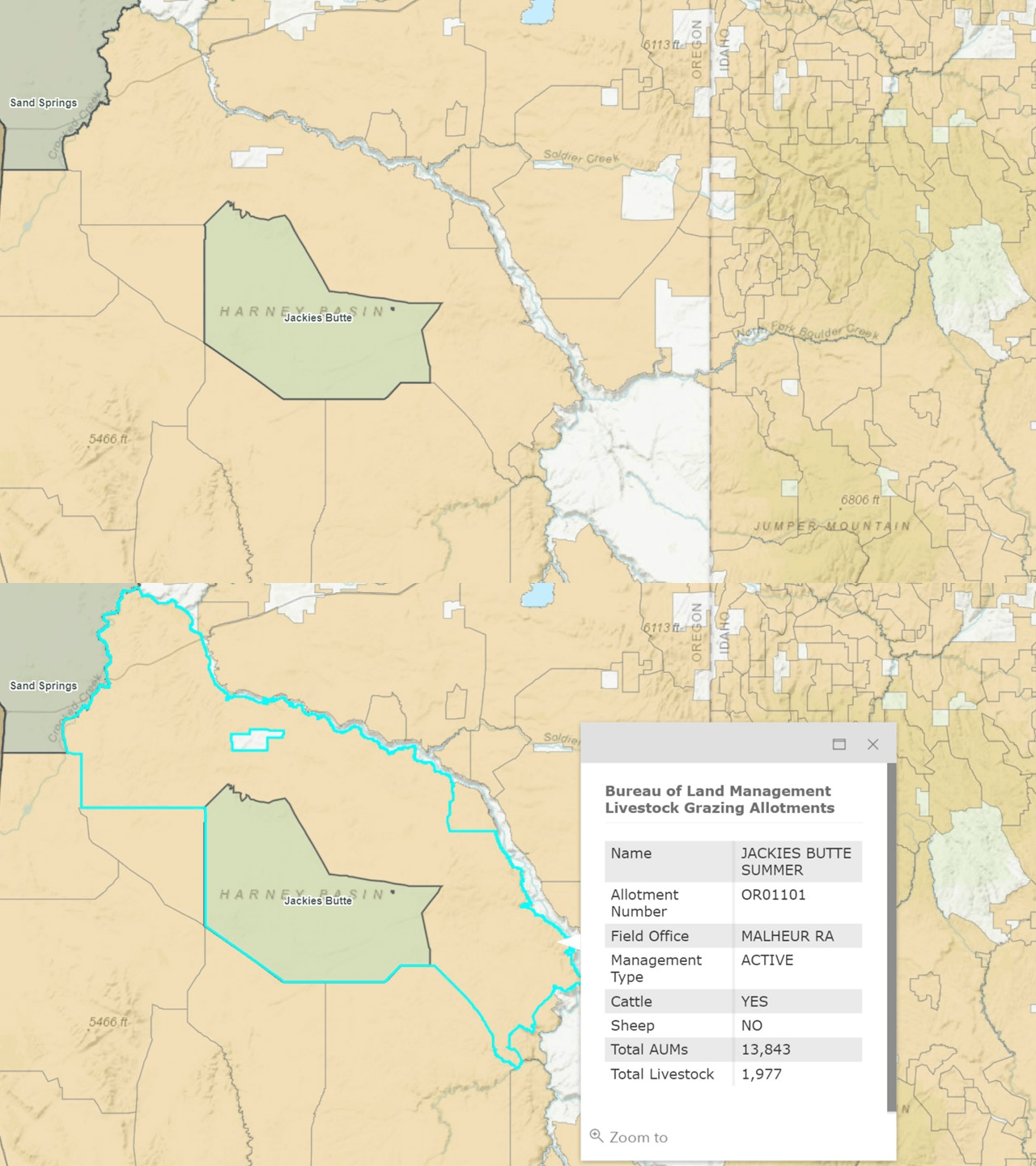
The Jackies Butte HMA lies within the Dry Creek Native pasture of the Jackies Butte Summer Allotment.

Jackies Butte Allotments 04-10-22

The Allotment Master Report puts Jackies Butte Summer in the Maintain category.

Two of the allotments are in the Maintain category along with 68% of the public acres.

Three Fingers and Jackies Butte Allotment Calcs 04-10-22

The average forage density in the allotments is 72.4 AUMs per year per thousand acres, enough to support six wild horses per thousand acres, on top of the 2.4 wild horses per thousand acres allowed by plan.

The government has stated repeatedly that public lands in the Western U.S. can only carry one wild horse per thousand acres (27,000 animals on 27 million acres), so that brings up the question “How many wild horses can these HMAs really support?”

Don’t look to the advocates for an answer.

RELATED: Draft EA for Three Fingers and Jackies Butte Out for Review.

Advocates Criticize Treatment of Horses at TRNP

A 15-page letter was sent to park officials, presumably by an attorney representing the group, according to a story posted this morning by INFORUM of Fargo, ND.

The article, which can be viewed by subscribers only, was posted to their blog.

A link to the complaint was not provided.

The herd now at TRNP was put there by the Park Service as an exhibit.

The original wild horses, thought to be descendants of Sitting Bull’s herd, were removed but some were rescued by Frank and Leo Kuntz.  They called them Nokotas.

RELATED: Scoping Begins for Livestock Management Plan at TRNP.

Virginia Range Real Estate Prices Still Going Bonkers

Here are two listings that recently appeared on Zillow:

  • Castle Peak Rd, 3,296 sq ft, 16.7 ac, grid connected, has horse setup, $1.25 million
  • Goldfield Rd, 4,363 sq ft, 16.4 ac, grid connected, no horse setup, $1.65 million

There is no Prop 13 in Nevada and assessed values can climb rapidly in seller’s markets.

On the bright side, as a land owner, you can tell the advocates that your property is off limits to their darting efforts.

Even if you don’t have property on the Virginia Range, you can still help the horses by not giving money to the advocates.

Listings for the area on Redfin, filtered for 10 acre lots minimum, can viewed here.

Move Over Cattoor, Advocates Want Larger Share of Market

The wild horse removal business is getting crowded.

The Campaign Against America’s Wild Horses is hiring, more volunteers are making the pilgrimage to Billings and every mare has a target on her.

Wild Horses Through the Eyes of the Advocates 01-19-22

The new pest control program for the Three Fingers and Jackies Butte HMAs, with its mandate for intensive fertility control, will be cheered by the advocates, who will not only embrace it but offer to apply it, assuring that most of the resources in the area go to the public-lands ranchers.

RELATED: Draft EA for Three Fingers and Jackies Butte Out for Review.

Status of American Prairie Grazing Decision

A BLM public affairs officer told Western Horse Watchers yesterday that a proposed grazing decision is subject to a 15-day protest period, which, for American Prairie, is now in progress.

A 30-day appeal period begins when/if a final grazing decision is issued.

All protest letters received must be reviewed to determine if they meet the standards of federal grazing regulations.

The PAO did not indicate if any such letters had been received.

The protest period for a proposed grazing decision is not an open comment period for the general public.  Certified letters are sent to qualified parties, as defined by federal grazing regulations.  The BLM can accept protest documents for consideration and any protest filed should document the reason(s) why the proposed decision is in error.

The PAO said the final grazing decision would be posted to the project website and would be accompanied by another news release.

RELATED: Any Challenges to American Prairie Grazing Decision?

Draft EA for Three Fingers and Jackies Butte Out for Review

The announcement appeared in the classifieds of the Argus Observer, not the BLM news site.

The project folder contains the EA only.  No maps, notices or appendices were posted.

The Proposed Action, discussed in Section 2.2.1 of the EA, includes wild horse removals and intensive fertility control over a ten-year period.  Treatment options include PZP, PZP-22 and GonaCon Equine.

The Three Fingers HMA covers 62,508 public acres in Malheur County, OR and the 150 horses allowed by plan require 1,800 AUMs per year.  The target stocking rate is 2.4 wild horses per thousand acres.

The Jackies Butte HMA covers 65,211 public acres in Malheur County with the same AML and stocking rate.  (Click on image to open in new tab.)
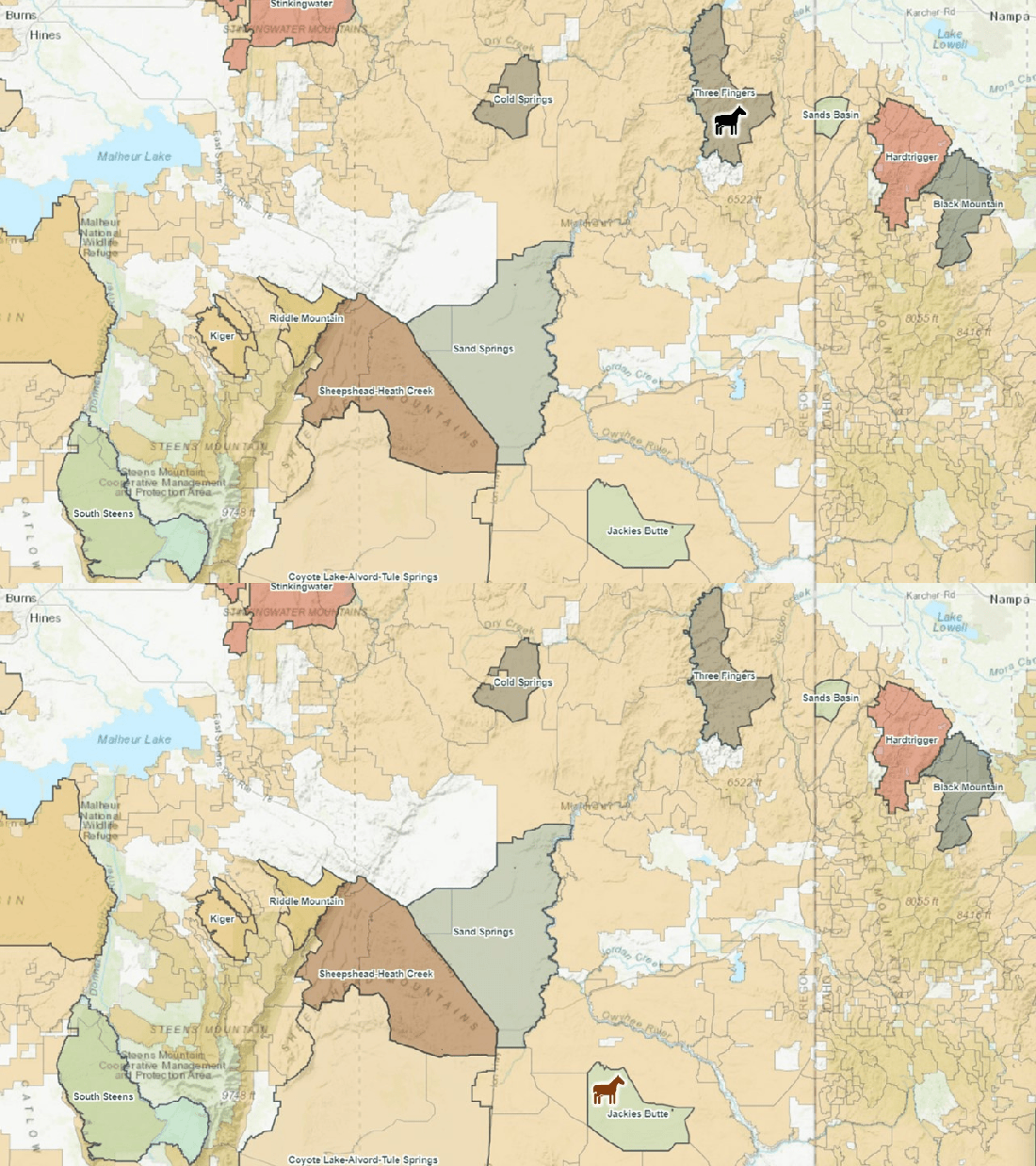
Three Fingers and Jackies Butte Map 04-08-22

Both HMAs are subject to permitted grazing according to Section 3.2.2 of the EA.

Three Fingers lies within the Riverside pasture of the Three Fingers Allotment and the Wildhorse Basin pasture of the Board Corrals Allotment.  Livestock inside the HMA receive about 5,000 AUMs per year based on data in Table 5.

Jackies Butte coincides with the Dry Creek Native pasture of the Jackies Butte Summer Allotment.  Livestock inside the HMA receive around 4,000 AUMs per year using figures in Table 6.

The population management plan would enforce these forage allocations, ensuring that livestock are the primary consumers of resources in both HMAs.

Comments can be submitted by email until May 9.

Bold Prediction for Motorized Equipment Hearing

The advocates will argue that helicopters are cruel and inhumane and that the herds should be managed with PZP.

The cattlemen will claim that the HMAs are overpopulated and that the government should get rid of them with helicopters.

Protect Wild Horses from Advocates 08-29-21

There will be no voices for the horses and nothing good will come out of it because it’s focused on the wrong things.

The meeting, set for April 26, will be livestreamed.

RELATED: Public Hearing Next Month Regarding WHB Management.

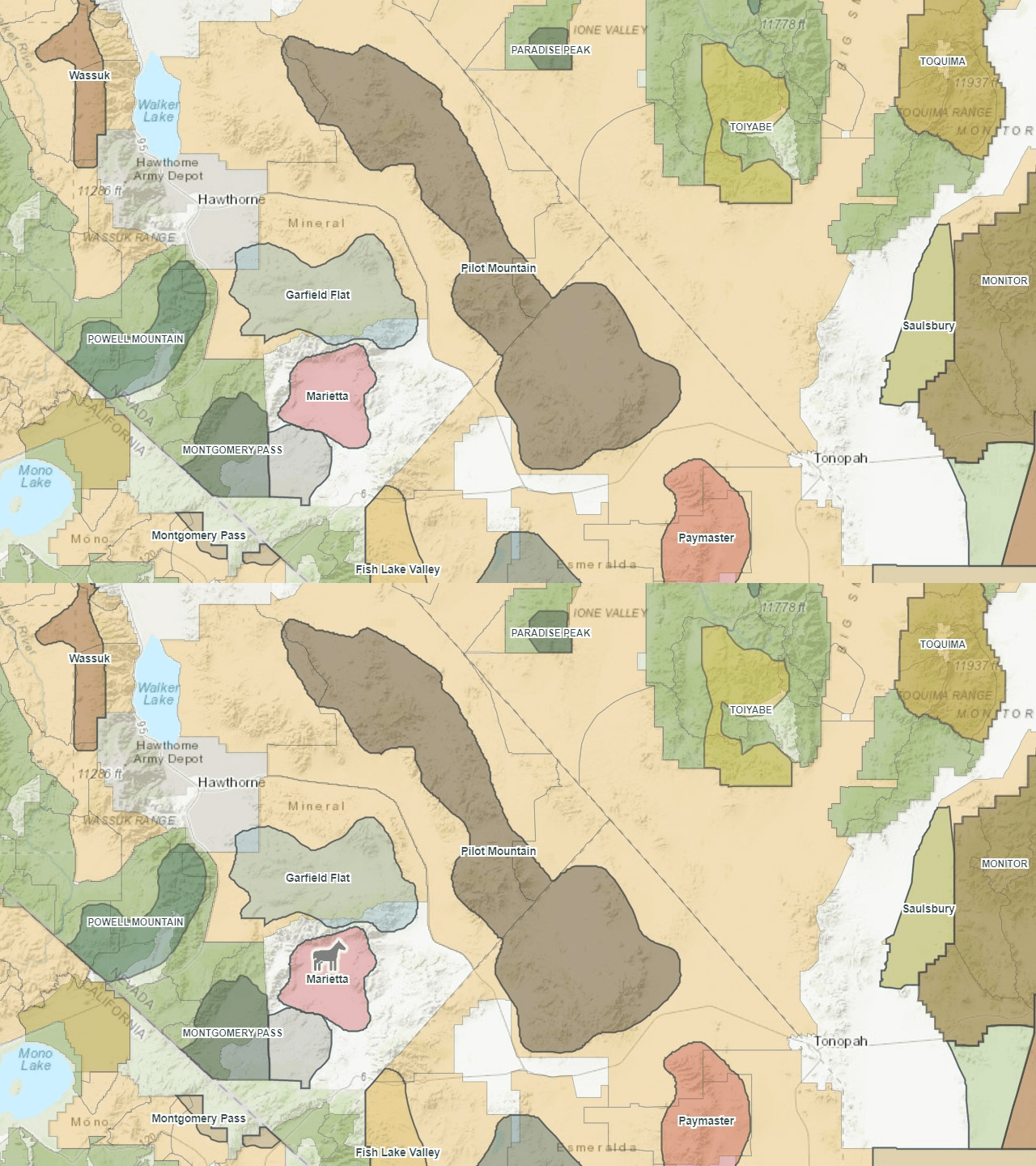
Marietta Wild Burro Roundup in the Works?

A new project was created in ePlanning yesterday but no documents were posted and there are no opportunities for public comment at this time.

The WBR covers 66,045 acres and the 104 burros allowed by plan require 624 AUMs per year.

The equivalent stocking rate is 0.8 wild horses per thousand acres.

Marietta WBR Map 04-07-22The area is managed principally for burros and is not subject to permitted grazing.

The first opportunity for public involvement will likely be in the scoping phase, which may or may not be announced at the BLM news site.

Drought and Wildfires Forcing Ranchers to Be Self-Sufficient?

They’re cutting herd sizes and looking for other pastures according to a story posted yesterday by Capital Press of Salem, OR.

Operating their businesses on their own land, while paying the going rate to feed their animals, apparently is not an option.

Congress directed the BLM and Forest Service to offer vacant allotments to permittees affected by drought or wildfire in the FY 2022 omnibus spending bill.

RELATED: Rising Price of Hay Explained.

Scoping Begins for Expansion of Yuma Proving Ground

The BLM seeks public input on the withdrawal of 22,000 acres in southwestern Arizona for a precision parachute buffer area, according to a yesterday’s news release.

The action would preclude the customary uses of public lands, including mining, mineral and geothermal leasing, subject to existing rights.  Other uses, such as recreation and hunting, would be subject to rules specified by Congress, which will make the final decision.

A project has been opened in ePlanning but no documents have been posted.

A request for a map to the BLM PAO was not immediately answered.

The Cibola-Trigo HMA overlaps the western portion of the facility.  The project map indicates the parcel is on the west side of Highway 95, adjacent to the HMA.

Yuma Proving Grounds Map 04-05-22

The impact on wild horses and burros is not known.

The news release said that two online meetings would be hosted jointly by the Army and BLM but dates were not provided.

Comments can be submitted by email until July 5.