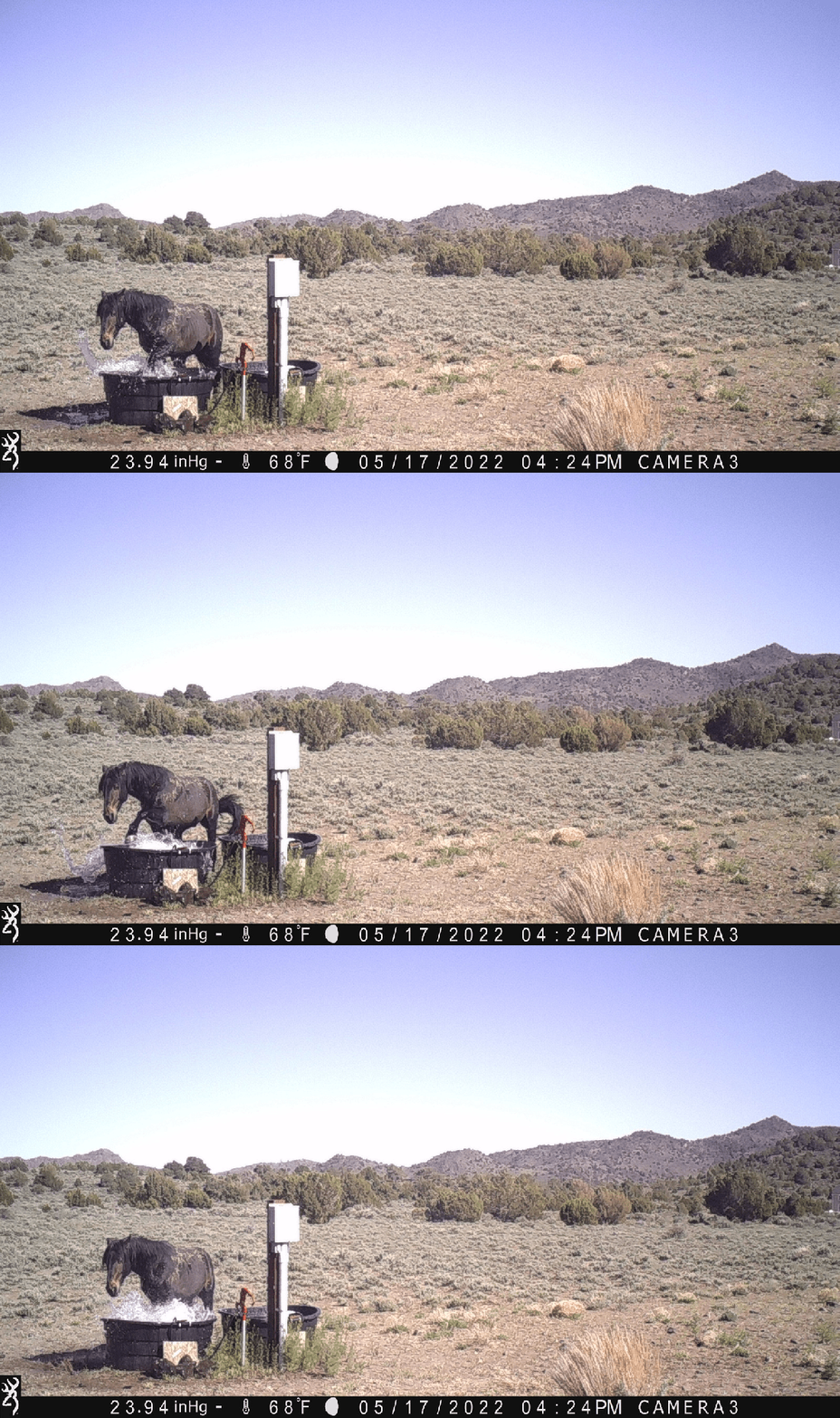
Virginia Range mustangs chill in the midday sun, wary of the advocates.
Normally they’d be standing watch over their young.


Western Horse Watchers Association
Exposing the Hypocrisy, Lies and Incompetence of the Wild Horse Advocates
Virginia Range mustangs chill in the midday sun, wary of the advocates.
Normally they’d be standing watch over their young.
Several new cases of respiratory illness have been observed across the facility in the past three days, according to the June 9 sitrep.
Most have been identified as equine strangles although one appeared to be similar to the pneumonia seen in the West Douglas horses.
A horse in the general population died today with nonspecific signs and a post-mortem exam was inconclusive. Samples have been taken and submitted for laboratory testing.
The mortality table still shows 145 deaths.
Last week a horse was lost to colic. Another died this week. How many actually survive these death camps, which are operated for the benefit of the public-lands ranchers?
Updates are posted to the Colorado HMA page.
RELATED: Cañon City Incident, Day 42.
The BLM Colorado State Office will hold a one-hour informational meeting about wild horse management in the state on June 15 from 5 to 6 PM MDT, according to a news release dated June 9.
Questions can be submitted during the meeting, at registration or online prior to the meeting.
Public comments will not be taken.
Topics such as permitted grazing, resource allocations and current management practices are probably off limits.
A roundup is planned for the Piceance-East Douglas HMA in latest August, with a capture goal of 1,050 and removal goal of 750.
Those criticizing the BLM for the Rock Springs RMP Amendments, which will slash the number of wild horses in the project area by sixty to seventy percent, would be first in line to get rid of them with the Montana Solution.
Ever notice that?
RELATED: Coalition Goes Public with Rock Springs RMP Protest.
One day an early settler and would-be entrepreneur noticed how water became fizzy after his horses played in it.
The race was on to duplicate the process artificially.
Today, roughly half of the population won’t consume carbonated products because they emit greenhouse gasses. No wonder they’re miserable!
Emissions of carbon dioxide are tolerated, however, if they propel PZP-laced darts into wild mares.
RELATED: How Washing Machines Worked in the Old Days.
The leader in the wild horse removal business—next to the federal contractors—has joined forces with the Animal Welfare Institute and two other advocates in opposing the Rock Springs RMP Amendments announced on May 6, according to their news release.
The complaint, submitted on June 6, the final day of the protest period, criticizes the plan which will reduce the wild horse population by sixty to seventy percent, exactly what Plaintiff #1 is doing on the Virginia Range!
A keyword search of the document yielded 58 instances of “PZP.”
As predicted, these steadfast opponents of helicopter roundups now support them because they are part of the catch-treat-release protocols solicited by the BLM last month for delivery of the pesticide! Refer to paragraph VI.A.1.b.
They have no convictions.
Nothing gets better for the horses until these frauds are out of the picture.
The headline could read Advocates Shocked by Loss of 145 Wild Horses at Canon City?
No difference.
The commie-pinko-fags in the Democrat Party, who are now trying to diminish your ability to keep and bear arms, and defend yourself from tyrants like them, don’t give a crap about children any more than the wild horse advocates give a crap about foals.
Both groups are frauds, with many members in common.
Don’t worry though, if you like your darting rifle you can keep your darting rifle.
RELATED: Uvalde Aftermath: Abortion Still #1 Killer of Children.
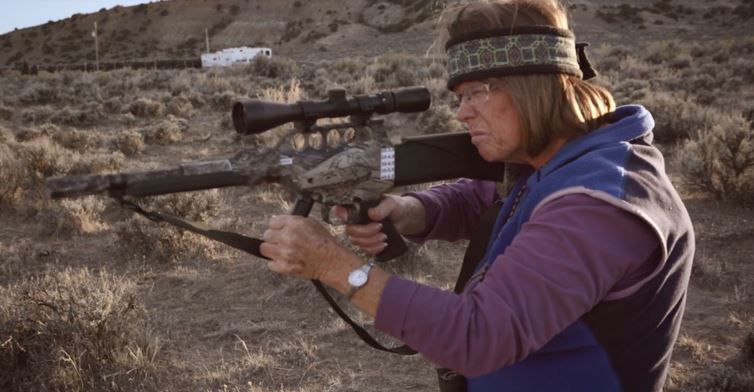
Note the excitement of these hikers as they come across a foal on the Appalachian Trail.
A window into the dark and wicked souls of the wild horse advocates.
RELATED: Will Virginia Range Volunteers Be Elevated to Sainthood?
Misleading reports about the loss of 145 wild horses are still rolling out, including this one by KVVU News in Las Vegas.
Why weren’t the horses on their home range?
Off-range corrals are not the problem, they are a symptom of the problem.
Curiously, the charlatans interviewed for these stories use the case to advance their own anti-horse agenda.
RELATED: Advocates Seek End of Roundups in Wake of Cañon City Incident.

Is that why livestock receive 3.5 times more forage than the horses?
An HMAP could only ratify and reinforce current management practices.
The AML, which is small relative to the available forage, would carry over into the new plan, the HMAs would be managed primarily for livestock, as they are now, and the enforcement actions of Section 2.2.1 in the Draft EA would be implemented to ensure the herds can’t consume more than their fair share of the food and water.
The opportunity for public participation in the process, limited to comments on an EA for a new pest control program, can never lead to meaningful changes for the horses.
The planning and decision documents that put ranching interests far above those of the horses, along with the statutes and regulations the precede them, need to be dragged into the open for scrutiny by the American people.
RELATED: Draft EA for Bible Springs Complex Out for Review.

The rancher lost three more calves this spring, the latest on Memorial Day, according to a report posted this morning by The Colorado Sun.
Wild burros, forced off their home range to accommodate privately owned livestock, are now expected to protect them.
The story did not indicate if any of the burros had been attacked by wolves.
RELATED: Axtell Burros Guarding Cattle for Public-Lands Rancher!
At or near the Little Book Cliffs WHR with Kathy Gardner.
A 1980 study showed that 8,165 cattle AUMs, 2,353 sheep AUMs, 322 wildlife AUMs and 3,116 horse AUMs were available for use in the HMAs of the Bible Springs Complex, according to Section 3.3.2 of the Draft EA for resource enforcement actions therein.
What can you conclude from these data if (a) you’re a sensible person and (b) you’re a wild horse advocate?
(a) Let’s simplify the dataset:
1. The AML was 260. It was small relative to the available forage. Today it is 170.
2. Livestock received 3.4 times more forage than the horses.
3. The HMA was managed primarily for livestock.
4. Horses received 23% of the authorized forage, neglecting wildlife.
5. The number of horses displaced from the HMAs by livestock was 876.
6. The True AML was 1,136.
7. If the herd was at 4X AML, the number of excess horses was zero.
8. The HMA was not overpopulated.
9. There was no justification for a roundup or fertility control program.
10. There is considerable dietary overlap among horses, cattle and sheep.
(b) The BLM should be managing the herd with safe and reversible birth control, not cruel and inhumane helicopter roundups.
RELATED: Fun with Resource Allocations.
Section 3.3.2 in the Draft EA for resource enforcement actions in the Complex indicates 16 allotments with acreage inside the HMAs, although Table 3.1 shows 17.
The Allotment Master Report provides size, management status and active AUMs.

Approximately 69% of the public acres are in the Improve category.
Of the six allotments in the Maintain category, only Pine Valley has most its acreage outside the HMAs, according to the Western Watersheds map. If wild horses are damaging public lands, all of those allotments should be outside the HMAs.
Forage production averages 46 AUMs per thousand acres, enough to support 3.8 wild horses per thousand acres.
The 170 horses allowed by plan roam on approximately 215,000 acres, so the land should be able to support 170 + 215 × 3.8 = 987 wild horses.
The current population is thought to be 831 per Section 1.1 of the EA.
If there was no dietary overlap between horses and livestock, there’d be no grazing inside the Complex and the horses probably wouldn’t survive beyond it.
The price of alfalfa-grass mix was $30 today, twenty bales minimum. The single-bale price was $31. No shortages or waiting lines observed.
The price last July was $19 per bale, twenty bales minimum, putting the increase at 58% in eleven months.
The average horse would need five bales per month, which works out to $150 per AUM.
The price of forage to the public-lands ranchers over the same period was unchanged, $1.35 per AUM.
The grazing program insulates them from the realities of the market, at least on the cost side, another reason to take more wild horses off the range.
Here are the headlines on Drudge. He’s not managing problems, he’s causing them.
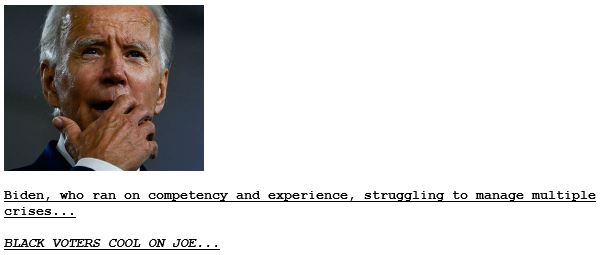
His voters deserve to be rooked but not the rest of us.
A search of the IRS records for tax-exempt organizations yielded two results.
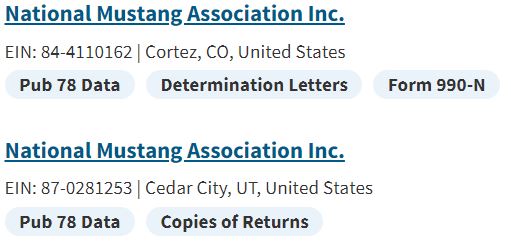
The first group is helping the Park Service take wild horses off Mesa Verde National Park.
Their mission is to preserve and protect horses in the wild and to promote conscious and humane herd management.
One of their board members is a trained PZP darter.
The other group, whose mission is to protect wild mustangs, according to their 2019 Form 990, the most recent available, has a permit to graze cattle on the Sheep Spring Allotment in southwestern Utah.
The address on the 990 matches the address in the Operator Information Report at RAS, PO Box 1367, Cedar City, Utah.

Western Horse Watchers is unable to determine if the groups are related.
The Allotment Master Report shows 86 active AUMs on 15,373 public acres.
The Authorization Use Report indicates 19 head on a 4.5 month grazing season.
Curiously, the allotment is in the Improve category.
It overlaps the Tilly Creek and Bible Spring HMAs, which means seven wild horses have been displaced from their home range by a group claiming to protect them.
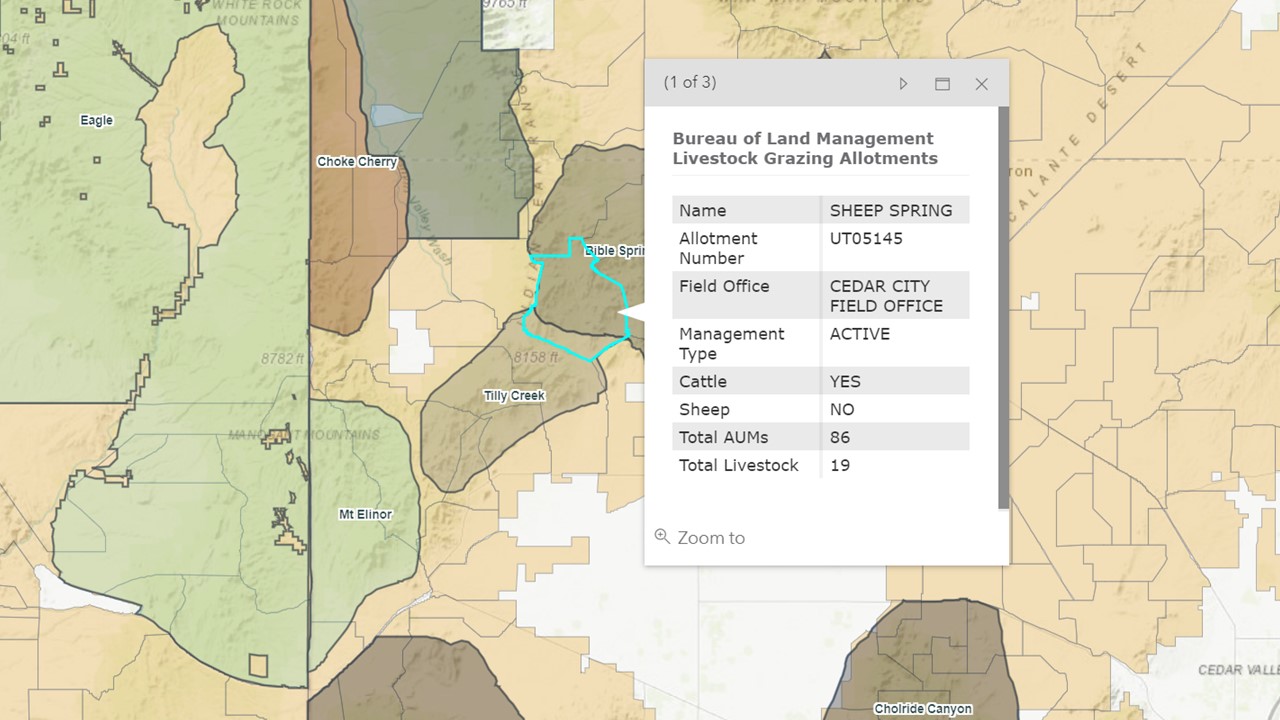
The two HMAs belong to the Bible Springs Complex, target of a new pest control plan, so the group would benefit from roundups and fertility control programs.
Maybe the allotment has been repurposed for adopted or rescued horses and the BLM records haven’t been updated. The tiny forage allocation would make sense if true.
Or maybe they’re just frauds like most advocacy groups. Who knows.
Western Horse Watchers was unable to find a web site for the group but they may have a presence on socialist media.
RELATED: Mesa Verde Roundup Continues, Private Placement Begins.
Refer to this report by Cowboy State Daily.
Two sentences from a story by the Las Vegas Review-Journal will suffice.
“An advocacy group for wild horses is seeking an emergency halt of roundups on public lands following recent assessments of understaffing and animal welfare risks at federal corrals and holding centers in Nevada and other Western states.”
“The American Wild Horse Campaign, as well as lawmakers led by Titus and Cohen, want federal agencies to implement birth control measures to reduce the need for the helicopter roundups.”
There’s nothing to see here, folks.
The Campaign Against America’s Wild Horses wants roundups replaced with darting programs. They want the horses off the range as much as the bureaucrats and ranchers.
They’d be agitating for that even if there were no deaths at the off-range corrals.
Their long-term goal is to be the leader in the wild horse removal business.
So long, Cattoor and Sun J.
No horses were lost to the virus this week according to the sitrep.
A West Douglas mare was found dead on May 30 but the loss was attributed to colic.
The total number dead remains at 145.
All fatalities have occurred in pens occupied by the West Douglas horses, displaced from their home range by privately owned livestock.
Approximately 17% were foals.
Updates are now provided on a weekly basis. Previous reports can be found at the Colorado HMA page.
RELATED: Cañon City Incident, Day 35.

