Contrary to what you read in this column by Tracy “You need to manage the numbers to fit what’s available for the horses” Wilson, field marshal for the Campaign Against America’s Wild Horses, the people of Nevada should tell their state representatives not to pass SB90 until the following language is removed:
No glorifying, legitimizing or ratifying the darting program and those involved, an affront to Velma’s legacy.
It defies the overpopulation and carrying capacity narratives.
You can’t be telling the American people that public lands in the western U.S. can only support one wild horse per thousand acres (27,000 animals on 27 million acres) while the Virginia Range is carrying ten (3,000 animals on 300,000 acres).
It must be erased, and the advocates are eager to help.
The population target of 600 animals, mentioned at the March 7 hearing for SB90, means an 80% reduction in herd size, at least, exactly what Velma was trying to stop.
As for the advocates, they are fools. Don’t give them a penny.
The allotment offers 3,325 AUMs per year on 186,083 public acres, as noted last week.
Is that good or bad?
Forage availability works out to 17.9 AUMs per year per thousand public acres, enough to support 1.5 cow/calf pairs, or 1.5 wild horses, per thousand public acres.
That’s not very much, when you realize the Virginia Range is carrying ten, or at least it did before the advocates got involved.
For comparison, the allotments in Sand Wash Basin HMA offer a weighted average 117.6 AUMs per year per thousand public acres, enough to support an additional 9.8 wild horses per thousand public acres, on top of the 2.4 wild horses allowed by plan.
This is what sinks the overpopulation narrative, repeated constantly by the advocates, not by what they say but by what they do.
The limited amount of forage on Majuba explains why the Antelope Range HA was zeroed out and why the doctrine of multiple use goes out the window in such cases.
The advocates are working with BLM staff at Palomino Valley to purchase 18 animals trapped last month in a nuisance roundup, according to a story on page 11 of the March edition of Horse Tales.
The studs will be cut and the mares may be sterile, thanks to the darting program.
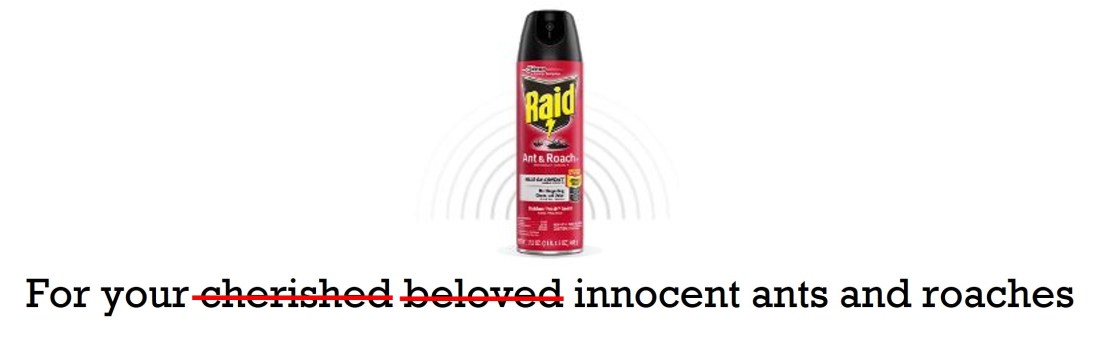
What would you say about an exterminator that urges you to write your elected officials demanding more and more funding for pest control, which he markets as protection?
Moreover, eradication of the pests from their lawful homes leaves more food and water for their enemies.
That’s the Campaign Against America’s Wild Horses, evident in this call to action on the propaganda page managed by Lucky Three Ranch.
Totally self-serving!
Nobody trumpets the overpopulation narrative like CAAWH.
Advocates with the Salt River Wild Horse Darting Group, an affiliate of the Campaign Against America’s Wild Horses, said on March 14 that “It’s never nice to disturb any wild animals, but to come in with gloves and lasso and pursue Salt River wild horses will get you in deep trouble here, because the Salt River wild horses are protected from harassment and interfering by State law.” Click on image to read the story.
There are no foals in the photos, because the advocates have poisoned the mares with a restricted-use pesticide.
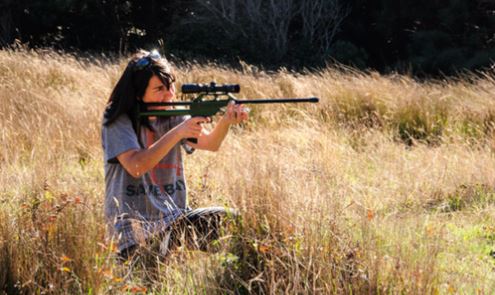
Apparently, riding your horse on public lands is harassment, but stalking wild horses with phones, tablets and darting rifles, with the intent of destroying their ovaries, is not.
If PZP was taken off the market, the advocates would have nothing, no reason to exist.
Adoptions will be suspended for thirty days according to a BLM news release.
The announcement said the infection presents as nasal discharge, fever and swollen lymph nodes around the throat, and runs its course in two to four weeks, but did not indicate that 19 horses died from it last year at Wheatland.
The property covers 640 acres (one square mile) near Imlay, with spectacular views of Imlay Summit, Rye Patch Reservoir and sometimes wild horses and antelope, according to the listing on Redfin.
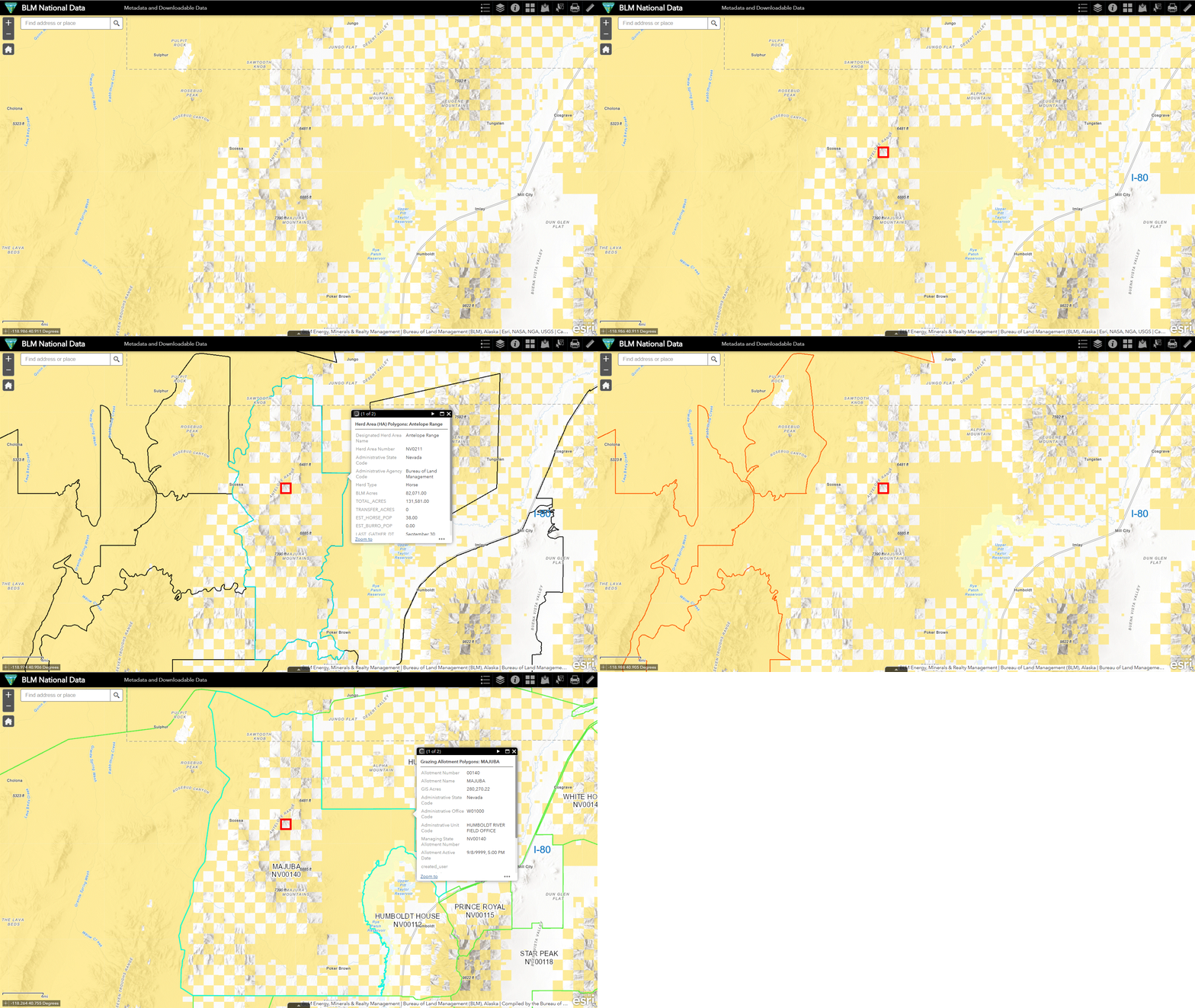
The National Data Viewer puts it inside the Antelope Range HA, the lawful home of wild horses, which lies within the Majuba Allotment.
To the west are the Kamma Mountains, Lava Beds and Seven Troughs HMAs, shown with orange borders in the following map. Click on image to open in new tab.
There were 172 horses in the HA last year, according to the HA/HMA Report.
The Allotment Master Report puts Majuba in the Improve category, with 3,325 active AUMs on 186,083 public acres. The subject parcel was likely counted among the 90,434 private acres contained in the allotment.
The preliminary EA and supporting documents were copied to the project folder today.
Comments will be accepted through April 14, according to the BLM news release.
Alternative 2, the Proposed Action, would try to achieve these goals:
Manage wild horses and resources to maintain a thriving natural ecological balance and multiple use relationship
Manage for healthy wild horses, maintain a level of genetic diversity that avoids inbreeding and maintain characteristics that are typical of Pryor Mountain horses of mixed ancestry including Colonial Spanish
Manage population growth using including gathers, fertility control, natural means, or a combination of these techniques
The AML would increase slightly, from the current 90-120 to 108-121.
The current population is thought to be around 200 wild horses.
The WHR is not subject to permitted grazing but is subject to the Montana Solution according to the February 7 resource enforcement schedule.
Because it recognizes the Virginia Range as one of the largest humane management programs for wild mustangs, not the origin of Velma’s efforts to protect wild horses.
SB90 is the Campaign Against America’s Wild Horses trying to draw attention to itself, to legitimize its anti-horse agenda, a disgrace to Velma’s legacy.
The darting program and those involved are to be eschewed, not glorified.
Athens attorney Hal Wright may sue the Secretary of Interior, the regional National Park Service office in Atlanta and the state of Georgia, according to a story by The Brunswick News, claiming the horses are not equipped to live on a barrier island.
They compete with native species for a limited amount of food, including sea oats that help anchor sand dunes, and grasses in saltwater marshes, trampling the wetlands and turning the areas into mud pits.
Sound familiar?
Wright wants the Park Service to provide food, water and medical care for the horses.
He suggests darting the mares with a contraceptive and to round up the healthy younger animals and remove them from the island for adoption.
“Let the horses die out naturally and be gone,” he told the reporter, an approach favored by most wild horse advocates, including the Campaign Against America’s Wild Horses, its affiliates, offshoots and followers.
The action begins at 13:29 in the following video when Tracy “You need to manage the numbers to fit what’s available for the horses” Wilson, field marshal with the Campaign Against America’s Wild Horses, describes the poisoning of the Virginia Range mares as the world’s largest wild horse conservation program, humanely reducing the population without the need for removals.
Wilson notes that the measure is a designation, it does not seek protections, which is what the horses need—from her and her army of volunteers.
Why did they leave CAAWH? Or were they pushed out? Not radical enough?
At 27:35, Senator Hansen confronts Hendricks about the Virginia Range darting program. The question should have been put to Wilson.
“It’s been a miserable failure.”
“You obviously want to see the horse numbers reduced, have you guys got a number in your head as to what the proper herd management level should be in Storey County?”
Wilson takes up the response at 28:37, explaining that between the pesticide applications and foal predations, the population has declined by almost 20%, meaning the herd is now dying off, exactly what the bureaucrats and ranchers want.
This is what the advocates mean by “a better way.” Drive the birth rate to zero for maximum effect.
As for the big picture, Wilson is not just answering the Senator’s questions but signaling an interest in more such business from the bureaucrats and ranchers.
Hansen, a ranching sympathizer, was likely coached before the hearing and his target of 600 wild horses was probably suggested by bureaucrats at NDOW, NDA and/or the BLM, to bring the Virginia Range in line with targets on public lands that shift most of the resources to privately owned cattle and sheep.
As of today, it’s still an outlier that contradicts their narrative and they want it erased.
His claim at 30:25 that wild horses destroy the habitat of indigenous species conveniently ignores the presence and impact of non-native livestock across Nevada and the American west. This is why bighorn sheep, a native species, are on the decline.
Wilson doesn’t push back because CAAWH, like most advocacy groups, is their ally.
Senator Goicoechea, who runs cattle on the Mitchell Creek Allotment and pleaded for more control of wild horses at 41:04, should have recused himself, as his personal fortunes might be affected by the outcome of the debate.
Public comments in favor of the bill begin at 45:20.
Comments in opposition begin at 1:02:59.
Neutral testimony begins at 1:46:32.
Closing remarks begin at 1:51:00.
The hearing concludes with public comments not related to SB90, at least in theory.







 Western Horse Watchers Association