Rio Ro Mo Ranch to Become Wild Horse Sanctuary

The Wild Animal Sanctuary, a Colorado non-profit corporation, acquired the property for a wild horse refuge, according to a news release on PRN.

The refuge will house up to 500 wild horses taken from HMAs in Colorado.

The announcement did not indicate of the horses would be darted, sterilized and/or kept in segregated pastures.

The transaction represents a victory for the bureaucrats and ranchers.  Get the horses off the public lands and into private care, giving livestock unfettered access to their food.

The facility covers 18,650 deeded acres west of Craig, with an additional 3,500 acres in BLM leases and one 300-acre private lease, according to the agent’s listing.

The operator information report in RAS links the ranch to grazing authorizations 0504787 and 0504788.

The allotment information report ties the authorizations to three allotments.

The allotment master report provides management status, acreage and active AUMs.

The authorization use report shows livestock types and grazing seasons.

The news release did not say if the new owners would petition the BLM for changes in livestock types and seasons of use, as American Prairie did in Montana.  Such changes would likely have the ranching community crying foul, as it did with American Prairie.

Foal-Free Friday, Embracing New Technologies Edition

With catch-treat-release promising to alleviate the feud between the advocates and roundup contractors, new adjuvants working their way through the research pipeline, and IUDs gaining traction among the uninformed and misinformed, the future looks bright for the public-lands ranchers.

The concept of a self-assembling IUD was discussed at the same conference attended by your chair of the WHBAB, but the video doesn’t show the actual device.

That gap has been closed with the demonstration below.  More information at iUPOD.

Although helicopter roundups are the fastest and most efficient way of shifting food and water to livestock operators in areas identified for wild horses, population growth suppression ensures the herds don’t bounce back, keeping the resource scales tipped in favor of the ranchers for many years to come.

RELATED: Foal-Free Friday, Coddling the Ranchers Edition.

Advocates Push McCullough Comments Past One Thousand

What do they think they’re going to accomplish?

McCullough Comments Exceed 1000 01-26-23

The project will protect ranching interests and enforce the specifications of the land-use plan over a ten-year period by gathering and removing excess animals to the low end of the AML while thwarting population growth with pesticides, including alternate treatments for mares not responding to the Montana Solution.

Is that what they don’t like?

They’re all in if the government ruins the mares with PZP but not with Gonacon or other technologies such as IUDs?

RELATED: McCullough Peaks Tops ePlanning Most Active List.

McCullough Peaks Forage Allocations 01-14-23

Judge Hears Arguments in Big Summit Legal Challenge

Attorneys for the Central Oregon Wild Horse Coalition and the federal government appeared today before a federal judge regarding a plan by the Forest Service to reduce the AML and bring the current population in line therewith, according to a story posted today by Courthouse News.

The judge adjourned the hearing after two hours, stating he would take the matter under advisement and issue an opinion at a later date.

Removal of wild horses from the WHT has been delayed by equipment problems and the lack of an adequate off-range holding facility.

A government attorney said that horses not sold or adopted would be euthanized.

RELATED: Big Summit Roundup Attracts Legal Action.

Dickinson Press Calls for Longer Comment Period at TRNP

The Editorial Board announced their position in an op-ed posted this morning.

Western Horse Watchers would like to see the Park Service come clean on the history of wild horses at the park, going back to Fort Buford, and to consider the reintroduction of the old bloodlines now preserved by The Nokota Horse Conservancy.

RELATED: Acknowledging the History of Wild Horses at TRNP.

Wailing and Gnashing of Teeth at Pine Nut Mountains?

The January edition of Horse Tales has been published, along with another column about wild horses by the real estate agent, PZP darter and pleader for the public-lands ranchers in the Minden/Gardnerville area.

As you read the article, which begins on page four, how many of these underlying beliefs can you identify?

  • If we get rid of them, they can stay
  • We’re protecting them from removal by getting rid of them with PZP
  • If we don’t get rid of them, the BLM will
  • We’re changing the way wild horse herds are managed, not their land
  • You have to manage the numbers to fit what’s available for the horses

The writer says the reproduction rate has been reduced by over 90% and there are very few livestock competing for the range.

The majority of the acreage is in pretty good shape.  The areas in poor condition are either privately owned or on BIA land.

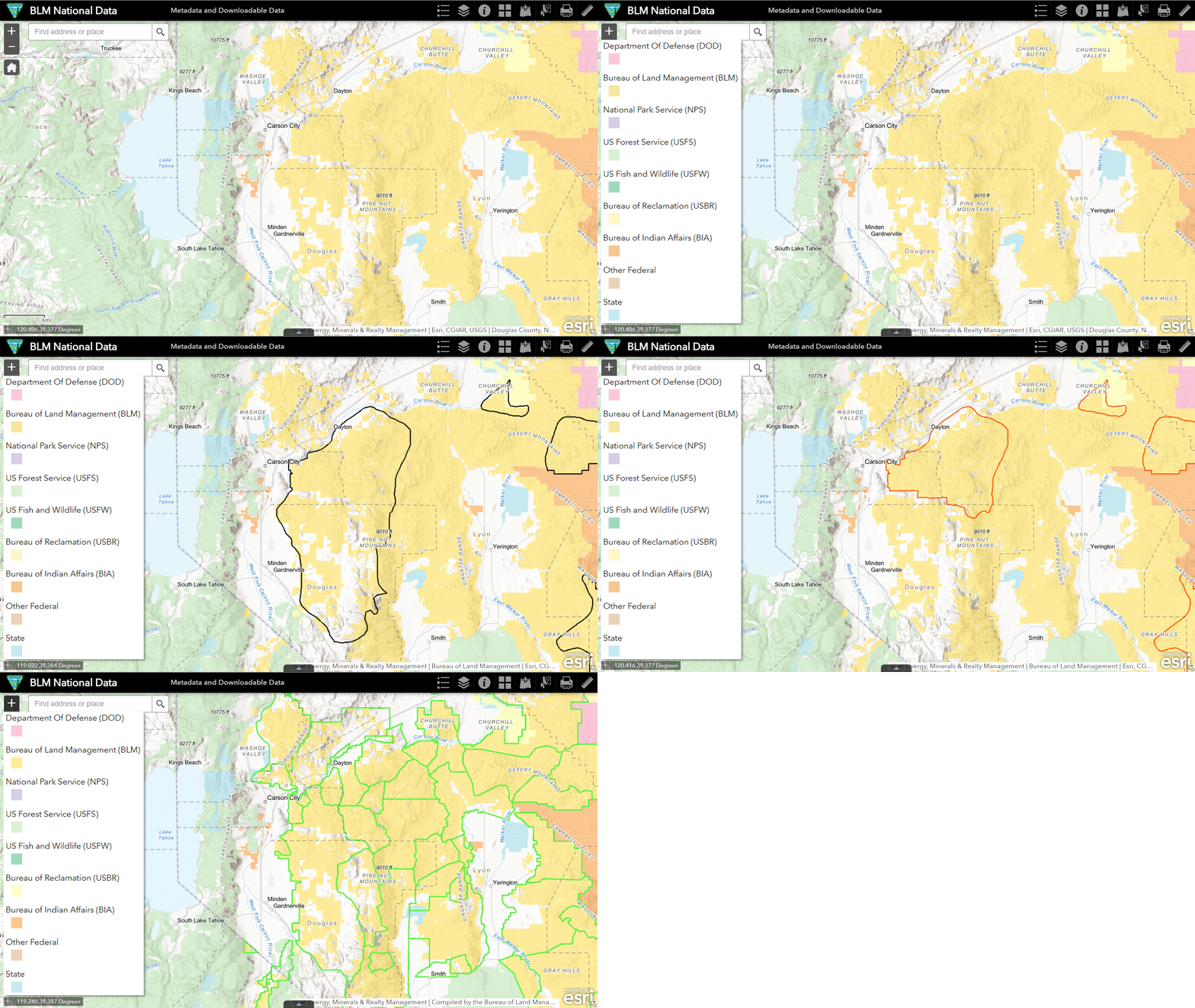
The National Data Viewer tells a different story.

The HMA, with the orange border, is half the size of the HA, shown in black.

Almost all of the acreage is subject to permitted grazing (green).

There is no BIA land in the area identified for wild horses.

Like the Campaign Against America’s Wild Horses, the Pine Nut advocates work hard to protect ranching interests, not wild horses.

The Virgina Range, site of world’s largest darting program and magnet for dozens of nitwits, is just a few miles to the north.  Click on image to open in new tab.

RELATED: Pine Nut Advocates Not Playing for Home Team.

Resource Management in Pine Nut Mountains 01-24-23

Another Rorschach Test for Wild Horse Advocates

What do you see in these data from the Pancake Complex in Nevada?

Pancake AUM Numbers 01-20-23

a. A wild horse problem, the ranchers only get 89% of the authorized forage.

b. A resource management problem, the horses get just 11% of the authorized forage.

c. The problem is drilling and mining.

d. We’re changing the way wild horse herds are managed, not their land.

e. You have to manage the numbers to fit what’s available for the horses.

RELATED: Rorschach Test for Advocates.

Thriving Ecological Balance-3

SHOCKER: HJR3 Co-Sponsor Runs Cattle on Public Lands!

The Operator Information Report at RAS indicates that Albert Sommers, co-sponsor of the resolution, has a permit to graze livestock on public lands managed by the Pinedale Field Office, authorization #4915862.

Go to this page for an overview of his ranch.

The Allotment Information Report ties the authorization to three BLM allotments, shown in the following map from the National Data Viewer (click on image to open in new tab).

The overview mentions grazing on the Upper Green River Allotment of the Bridger-Teton National Forest, which is not covered by the NDV, but you can find it on the Western Watersheds map.

The Allotment Master Report provides management status, acreage and active AUMs.

The nearest wild horse area is the Desert HA, last gathered in October 2001.

Unfit for free-roaming equids, it is well-suited to privately owned livestock, despite considerable dietary overlap between the two species.

RELATED: Wyoming Legislature Petitions Congress to Legalize Slaughter.

Sommers Ranch Allotments 01-22-23

Acknowledging the History of Wild Horses at TRNP

If you’re new to the story, pull up a chair and sit a spell.

Wild horses pre-date the 1947 park by more than 60 years, as noted in a column posted today by INFORUM.

The original herd is gone.  The horses you see today are an exhibit.

Some were rescued by Leo Kuntz and taken to his ranch near Linton.

He tells their story in a 2011 film titled “Nokota Heart.”

Sadly, Kuntz died in 2018.

RELATED: Lawmaker Seeks Extension of TRNP Comment Period?

Price of Hay Still in Stratosphere

A bale of alfalfa-grass mix fetched $36 today at the local feed store, 20 bales minimum, no change from November.  The single-bale price was $37.

The average horse would need around five bales per month, putting the cost of feed at $180 per AUM.

As for the concentrates, in 50-pound sacks, Equine Senior was $35 and rice bran pellets went for $30 each.

Layena Crumbles, for chickens, sold for $29.

The one-horse pony says his policies are working, which would be true if the goal is to put average American families out of business.

Meanwhile, on the range, the new grazing fee should be announced within days.

Ranchers currently pay $1.35 per AUM to feed their livestock on public lands, a bit less than what they’re paying on private lands, including their own, which explains why they want more wild horses crammed into feedlots at taxpayer expense.

RELATED: No Change in Price of Hay.

Lawmaker Seeks Extension of TRNP Comment Period?

A story posted this morning by KFYR News indicates that a North Dakota State Representative helped concerned citizens draft a letter to the acting Park Superintendent requesting another 60 days for public comments.

The comment period was set to close on January 31.

The extension would give the legislature enough time to decide if they would intervene in the planning process.

The report did not indicate if the letter had been submitted.

RELATED: TRNP Superintendent Says Genetic Viability Off the Table.

Reading the Pancake Tea Leaves

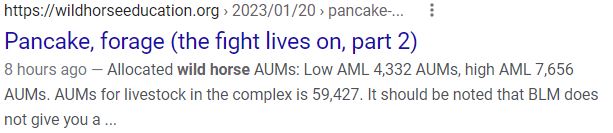
These AUM numbers came up in a Google search this evening, probably for the Pancake Complex in Nevada.

Western Horse Watchers believes the livestock AUMs are on the high side, as discussed previously, but let’s ignore that for now.

Pancake AUM Numbers 01-20-23

What can you conclude, without reaching for your calculator?

  • The horses have been cheated by the bureaucrats in favor of the ranchers
  • The Complex is managed primarily for livestock
  • You don’t have a wild horse problem, you have a resource management problem

Reaching for a calculator,

  • The AML ranges from 361 to 638
  • The number of horses displaced from the Complex by permitted grazing is 4,952
  • The True AML is 5,590

The current population was not given.

The BLM collects about $80,000 per year in grazing fees from ranching activity inside the Complex while it spends around $9 million per year to care for the horses displaced thereby.  Would you say that’s a wise use of the public lands?

Advocates Behind Surge in McCullough Peaks Comments?

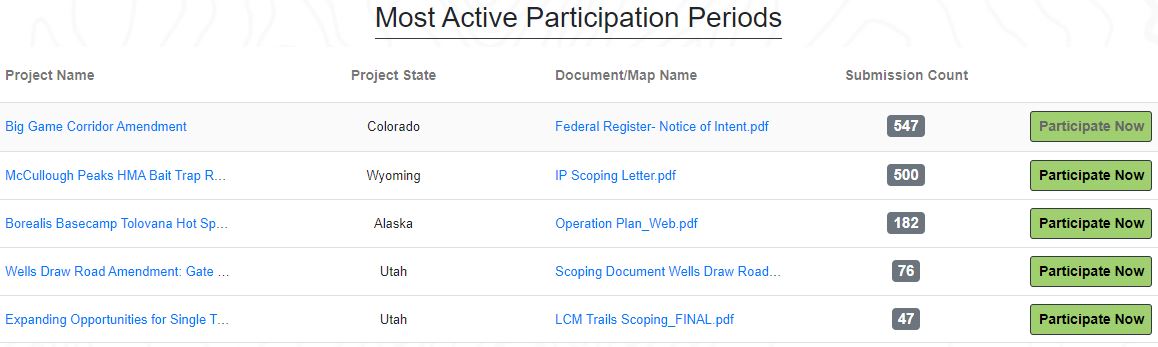
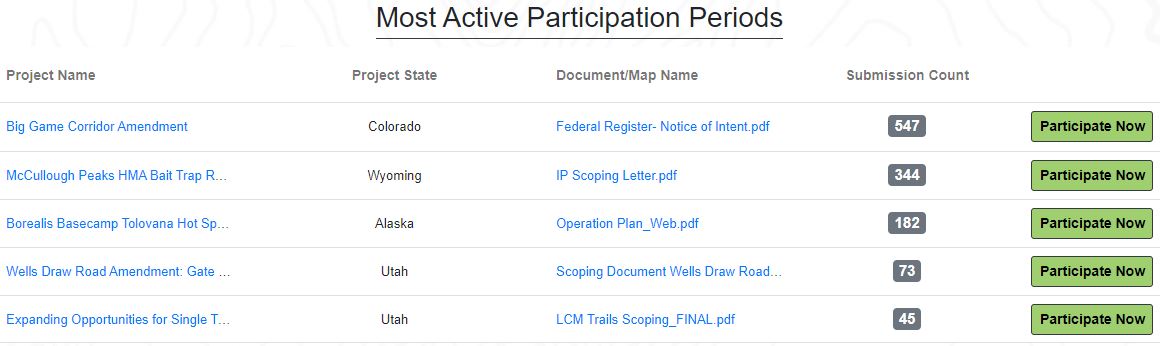
The comment count as of mid day was 344, compared to 267 yesterday morning.

Perhaps the advocates drafted a form letter and gave it to their drones to flood the project with the same comment?

“Less trapping, more darting.”

The Clan Alpine scoping period, which closes today, received just 19 comments.

RELATED: McCullough Peaks Now #2 in Top 5 (Most Active) on ePlanning.

Advocates Behind Surge in McCullough Peaks Comments 01-20-23