FREES Conference Announced

The Free Roaming Equids and Ecosystem Sustainability Network, a ranching advocacy group sponsored by the Utah State University Extension, will meet in St. George October 12-14, according to the conference home page.

Presenters have not been named and a schedule has not been posted.

The theme of this year’s summit is Community Connections.  The conference organizers probably won’t be rolling out the red carpet for those in the wild horse community.

A top-tier sponsor is the Utah Public Lands Policy Coordinating Office.

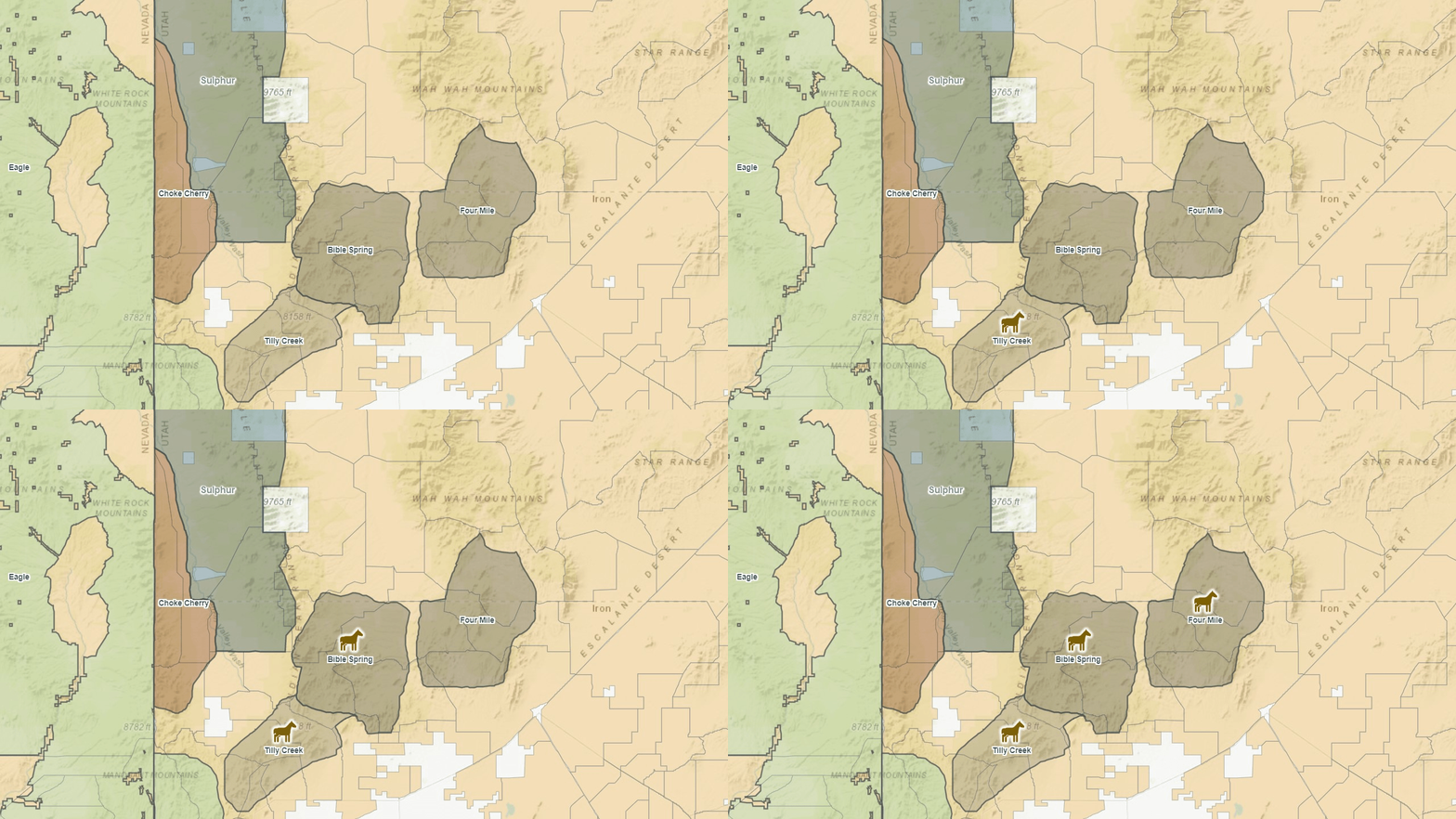
To understand their position on wild horses, read comments 5 and 6 in Appendix 12 of the Draft EA for resource enforcement actions in the Bible Springs Complex.

Contrary to what the advocates would have you believe, the event is not sponsored by drilling and mining interests and you won’t find any such comments in Appendix 12.

Information gathered at the meeting will aid the development of action plans towards the goal of “Healthy Herds on Healthy Rangelands,” code words for “most of the resources assigned to—and consumed by—privately owned livestock.”

RELATED: FREES Conference Last Week.

BLM to Remove Wild Burros from Yuma Proving Ground?

A new project has been created in ePlanning.

A Decision Memorandum was issued on July 13.

There were no opportunities for public involvement.

Approximately 80 animals will be removed from an area outside the Cibola-Trigo HMA but inside the Yuma Proving Ground north of Dome Valley, AZ.

The test center wraps around a wildlife refuge to the east.

The Western Watersheds map shows the arrangement.

Cibola-Trigo HMA Map 07-15-22

The incident will be carried out with bait traps and will probably not be open to public observation.

An announcement was not found at the BLM news site.

The roundup appears on the latest schedule with a start date of July 26.

The HMA is managed for horses and burros.

Colorado Governor Wants State Observer in Piceance Roundup

The duly elected sodomite sent a letter to the BLM this week asking the agency to ensure the animals’ safety amid concerns about high temperatures and potential impacts to foals, according to a story by The Grand Junction Daily Sentinel.

Almost certainly he’s responding to requests and recommendations from groups that would be first in line to get rid of them with the Montana Solution.

An ecologist with the Colorado Sierra Club visited the HMA this month and found no evidence to support the BLM’s claims of wild horse malnourishment, arguing that upland habitats provide ample forage to support the population.

The article did not indicate how much of that resource had been assigned to privately owned livestock.

Operations will transition to helicopters tomorrow, according to the gather page.

RELATED: Stupid Horses Won’t Take the Bait at Piceance HMA.

Story of Jicarilla Mustangs Told in New Documentary

The film premieres this weekend during a historical society fundraiser in Farmington, NM, according to a report posted yesterday by the Farmington Daily Times.

The JMA, consisting of the Carracas Mesa HMA and Jicarilla WHT, is jointly managed by the BLM and Forest Service.

The HMA covers 9,000 acres and the WHT contains 76,000 acres.  The combined AML is 128 and the stocking rate allowed by plan is 1.5 wild horses per thousand acres.

The HMA does not appear on the Western Watersheds map but is on the west side of the WHT abutting the Colorado state line.

Jicarilla JMA Map 07-13-22

The WHT overlaps three allotments and is probably subject to permitted grazing.

The grazing status of the HMA is not known.

The story did not indicate if the film would discuss resource allocations, land-use plans and the mismanagement of areas set aside for wild horses.

Warning to those wearing “Stay Wild” caps: The article contains images of foals.

Triple B Roundup Announced

The incident will begin on or about July 14, according to the BLM news release.

The capture goal is 1,900 and the removal goal is 1,800.  Mares returned to the range will be treated with GonaCon.

Helicopters will push the horses into the traps and operations will be open to public observation.

The Complex includes the Maverick-Medicine HMA, Triple B HMA and Antelope Valley HMA west of US Highway 93.

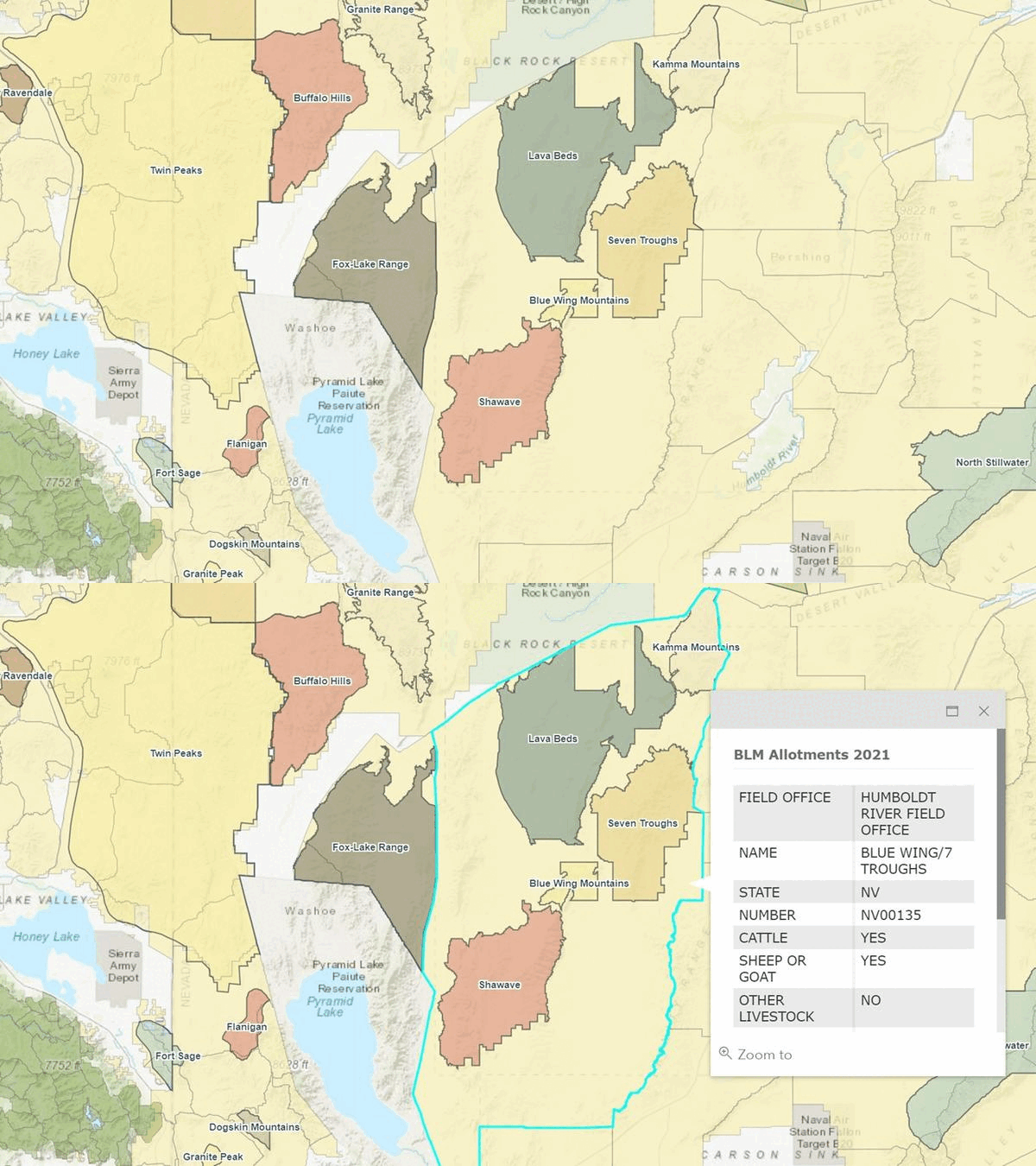
The 821 horses allowed by plan require 9,852 AUMs per year in an area covering over 1.6 million total acres.  The Western Watersheds map shows the arrangement.

The current population is thought to be 3,475.

Triple B Complex Map 07-11-22

Table 2 in the 2017 EA for resource enforcement actions includes the Cherry Springs WHT in the Complex, with an AML of 68, but it is not mentioned in the announcement.

The HMAs are subject to permitted grazing.  Livestock receive an estimated 49,188 AUMs per year, which would support an additional 4,099 wild horses.

Captured animals will be taken to the corrals in Fallon, NV and Sutherland, UT.

Gather stats and daily reports will be posted to this page.

The EA was posted with other project documents.

RELATED: Triple B Roundup Next?

Bible Springs Decision Released

The Decision Record, signed on July 7, authorizes the Proposed Action, which features removals of excess animals to low AML as quickly as possible, population suppression using PZP or GonaCon, IUDs, manipulation of sex ratios, and monitoring of herds with GPS tracking devices.  Refer to Section 2.2.1 in the Final EA.

A roundup is not imminent but at least 750 wild horses will need to be removed from state, private and BLM-managed public lands in and around the Complex to ensure a healthy landscape, according to the news release.

The new resource enforcement plan, effective immediately, has a ten-year life.

The Complex intersects 16 grazing allotments.

Three HMAs and one HA are affected.

The DR and EA were posted with other project documents.

RELATED: Draft EA for Bible Springs Complex Out for Review.

Buffalo Hills Roundup Over

Operations concluded yesterday, according to a statement at the gather page, with 390 horses captured, 369 shipped, ten deaths and one returned.

The total includes 147 stallions, 194 mares and 49 foals, based on the daily reports.

The total at the gather page was 380, based on 184 mares captured.

The capture goal was 383 and the removal goal was 353.  Mares treated with fertility control may be returned to the HMA at a later date.

The death rate was 2.6%.

Foals represented 12.6% of the total.

Of the adults, 43.1% were male and 56.9% were female.

Body condition scores were not provided.

Video from Day 2 showing the mistreatment of a foal sparked outrage among observers and may have killed public support for the Wild Horse Protection Act (helicopter ban).

RELATED: BLM to Thin Buffalo Hills Herd Starting This Week.

UPDATE: The July 11 news release said up to 27 mares will be treated with GonaCon and returned to the HMA.

Bad Data in Cedar Mountain EA for Livestock Grazing?

The project targets wild horses in and around the HMA, referred to in Section 1.1 of the EA as the HA.  The HA covers 411,636 total acres, including 211,593 acres in the HMA.

The HA was marked with a blue border on Map 1, page 92 in the pdf.  It extends into the Dugway Proving Grounds.

Lands outside the HMA are not managed for wild horses and have no AML.

The AML for the HA would be identical to the AML for the HMA but the stocking rate allowed by plan would be lower.

The 390 horses allowed by plan in the HMA require 4,680 AUMs per year.  The forage assigned to wild horses in the HA would be identical.

The HA intersects four allotments, discussed previously.

Cedar Mountain Allotments 02-18-22

Data for livestock grazing were presented in Table 6 of the EA, page 26 in the pdf.

Cedar Mountain Livestock Data 07-10-22

The table indicates that four percent of Aragonite is inside the HA.

Map 2 in the EA, page 93, shows the allotment boundaries relative to the blue border.

Map 2 Aragonite Allotment in Cedar Mountain HA 07-10-22

Would you say that Aragonite, circled in red, is 4% inside the HA?  Looks more like 95%.

How about North Cedar Mountain?  Table 6 says 15%.  Looks more like 90%.

Map 2 North Cedar Mtn Allotment in Cedar Mountain HA 07-10-22

The allotments represent forage taken from the horses and sold on the cheap to the public-lands ranchers.  This is why AMLs are small relative to the available resources.

If you use the figures in Table 6, you will underestimate the forage assigned to livestock inside the HA.

If you use the eyeball estimates above for Aragonite and North Cedar Mountain, you come up with 17,068 AUMs per year assigned to livestock inside the HA.

Cedar Mountain HA Forage Calcs 07-11-22

That’s 3.6 times more forage than assigned to the horses.

The HA is managed primarily for livestock.

The forage assigned to livestock would support an additional 1,422 wild horses, for a True AML of 1,812.

The current population, thought to be 766 according to Section 1.1 of the EA, is well within this range.

The True AML could be achieved by confining the ranchers to their base properties and expecting them to pay the going rate to feed their animals.

But that’s not what’s going to happen.

The new resource enforcement plan, or livestock protection plan if you prefer, will get rid of as many horses as necessary to ensure the ranchers get their due.

The advocates would likely support the plan if it was limited to the Montana Solution and helicopters were only used for catch-treat-release.

RELATED: New Resource Enforcement Plan for Cedar Mountain Announced.

Assateague Foal Naming Contest Yields $4,550

A foal born on the island will soon have a new name after a successful auction by the Assateague Island Alliance, according to a report published July 7 by The Dispatch of Berlin, MD.

A similar report last year gave the number of foals born in 2021 and the size of the herd.

Not so this year.

Those figures are no longer appropriate for the public domain.

The herd is still trying to recover from the darting program that was shut off in 2016.

The advocates point to the island as a paragon of wild horse management.

Western Horse Watchers was unable to find an announcement with the 2022 census results at the AIA home page, so they may be helping the Park Service with the cover-up.

Who knows?

RELATED: Park Service Goes Underground with Assateague Horse Census?

Piceance Gather Page Found!

Maybe they just created it.

Traps were built and put in service last month.

Horses were caught on June 28 and 29 but none since.

All were shipped on June 30.

The total includes eight stallions, seven mares and three foals.

Youngsters represented 16.7% of the horses captured.  Of the adults, 53.3% were males and 46.7% were females.

Body condition scores were not given.

No deaths were reported.

The number of unaccounted-for animals is zero.

RELATED: Piceance Bait Traps Fall Short.

ISPMB Complaint Explained

Refer to this brief dated July 7 by Law Street Media.

The complaint alleges violations of the National Environmental Policy Act, Wild Free-Roaming Horses and Burros Act and Administrative Procedures Act by the Forest Service regarding horses in the Apache National Forest.

Exhibits referenced in the complaint were not provided.

Plaintiff demands trial by jury.

Defendants include Tom Vilsack, acting United States Secretary of Agriculture, and Judy Palmer, acting U.S. Forest Supervisor.

RELATED: ISPMB Claims Forest Service Removing Wild Horses Illegally.