
On the San Rafael Swell with Camp and Ride.
Category: Range
On the range
Advocate Doesn’t Understand Planning Process?
The writer of a column appearing yesterday in Deseret News complained about the removal last year of cherished wild horses at Onaqui Mountain and Sand Wash Basin, noting they were in good condition and forage was adequate.
What he didn’t tell you is that most of the resource was assigned to privately owned livestock, a result of BLM’s planning and decision process.
The roundups enforced resource allocations already on the books.
If you go too fast on the freeway, you get a ticket. If you eat too much in your lawful home, you’re removed.
The horses are pests, they rob the permittees of their birthright.
The remark about “A top advocacy group” is probably a reference to the Campaign Against America’s Wild Horses, purveyor of the Montana Solution and defender of the public-lands ranchers.
With the roundups over, the Onaqui and Sand Wash advocates keep the herds from bouncing back with a pesticide that can sterilize the mares in as little as four years, giving the ranchers unfettered access to cheap feed in areas set aside for the horses, as specified in the land-use plans.
The writer supports these efforts.
File under: Charlatans.
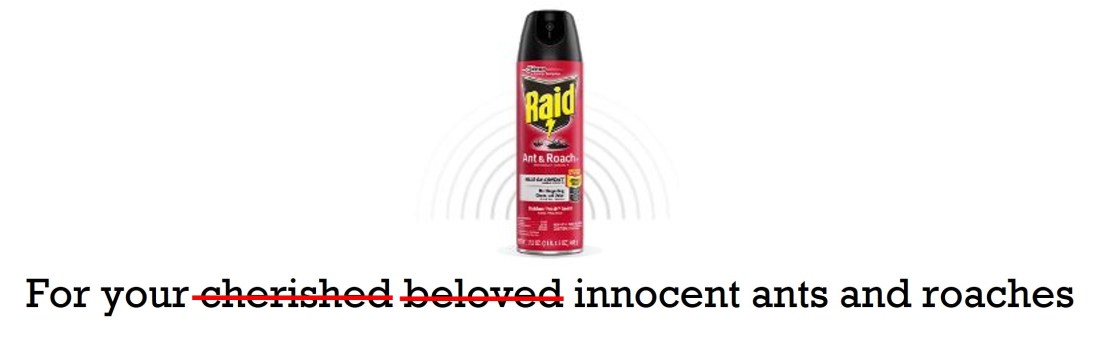
Foal-Free Friday, Anathema to the Advocates Edition
The Virginia Range advocates rely on predators to take out any foals that slip through their safe, proven and reversible darting program.
Could that be the case at the Salt River?
The release of this video will likely be met with resentment in darting circles and may prompt a root cause investigation to understand how the travesty occurred and to identify corrective actions.
One of the most astonishing developments in the wild horse world is the zeal of the advocates to get rid of wild horses.
In the old days they would walk away.
Today, they are full-fledged participants in the destruction.
RELATED: Foal-Free Friday, Brainwashing the Youngsters Edition.
Life on the Wind Farm
The Oak Creek herd lives on private land in the Tehachapi Mountains north of Los Angeles, now cluttered by man-made bird choppers.
You can stop the spread of eyesores like this on November 8. Not the horses, the Democrat pinwheels.
The report did not indicate if the advocates had offered to get rid of them with the Montana Solution.
Livestock Win More Forage in Coyote-Alvord-Tule HMA
The updated Decision Record and Environmental Assessment were posted to the project folder on October 21.
The active AUMs in the Alvord Allotment would increase to 8,992, as shown in Table 1 of the DR, compared to 7,355 in the previous authorization.
Of the 1,892 previously suspended AUMs, 255 would remain off limits, putting 1,637 in play, for a new total of 8,992.
New authorization = 1,892 – 255 + 7,355 = 8,992 AUMs per year
The resource increment would support an additional 136 wild horses.
Instead, those animals will remain in off-range holding at a cost of $248,200 per year, to be laid at the feet of American taxpayers, while the BLM collects an additional $2,210 per year in grazing fees from ranching activity inside the HMA.
Would you say the change qualifies as a wise use of the public lands?
Taxpayers and wild horses have been rooked by the bureaucrats, with the cooperation of the advocates (yes, the HMA has a fertility control program), to prop up a failed industry on America’s public lands.
RELATED: Two Days Left to Comment on Alvord Sleight of Hand.

Advocates, Not Climate Change, to Destroy Currituck Herd
These horses are a national treasure. They’ve survived on their own for 500 years.
Today, they are threatened not by man-made climate change, which is a hoax, not by visitors, motorists, development or swamp cancer, but by Meg Puckett and her ruinous darting program, carefully omitted from this story by PBS North Carolina.
Another exmple of managing the numbers to fit what’s available for the horses, a guiding principle of the advocates.
RELATED: Currituck County Commissioners Should Study Assateague Island.
Litchfield Arsonist Sentenced to Community Service, Time Served
The decision was announced yesterday, according to a story by The Oregonian, despite the prosecutor’s recommendation of seven more years behind bars.
The defendant pleaded guilty to arson at a meatpacking plant in Redmond, Oregon and to conspiracy to commit arson at the wild horse corrals near Litchfield, California.
The fire in Oregon was intended to stop the slaughter of wild horses at the facility.
The goal at Litchfield was to destroy the corrals and set the horses free.
RELATED: Litchfield Arsonist Pleads Guilty.
Canyonlands EA Out for Review
The project folders have been populated with maps and documents.
Comments on the Draft EA will be accepted through November 30.
The Proposed Action features removal of excess burros through one or more roundups, population suppression using PZP or GonaCon-Equine and IUDs, and GPS tracking of animals over a ten-year period, as discussed in Section 2.2.1 of the EA.
The HMA covers 89,392 acres in eastern Utah and the 100 burros allowed by plan require 600 AUMs per year,
The equivalent stocking rate is 0.6 wild horses per thousand acres, slightly more than half of the target rate across all HMAs.
The current population is thought to be 151, as shown in Table 2.1.
The HMA intersects two grazing allotments, not mentioned in the BLM news release.
About 70% of the HMA falls within Robbers Roost, with a tiny fraction in Saucer Basin, according to the Western Watersheds map.
Table 3.1 does not provide the percentages of the allotments inside the HMA, so the forage assigned to livestock and the number of burros displaced from their lawful home by permitted grazing are not known at this time.
RELATED: Resource Enforcement Actions Coming to Canyonlands HMA?

Mustang Monday
On the Virginia Range with Western Horse Watchers.
Managing the Numbers to Fit What’s Available for the Horses
As noted previously, privately owned livestock in the Stone Cabin HMA, the lawful home of wild horses, receive 3.3 times more forage than the horses.
A statement at the end of Section 1.1 in the Draft EA for resource enforcement actions in the Stone Cabin Complex says the AML of 364 must not be exceeded to achieve progress toward standards for rangeland health established by the Mojave-Southern Great Basin RAC.

The current horse population is 651.
Permitted grazing is equivalent to 1,192 wild horses.
Reducing livestock would take more pressure off the land and have a greater effect in achieving the stangards.
Perhaps the statement is a ploy to protect ranching interests at the expense of wild horses?
If you put the question to the advocates, they will defend the bureaucrats and ranchers, arguing that excess animals (of which there are none) should be removed with the Montana Solution, not helicopters.
“We’re changing the way wild horse herds are managed, not their land.”
Seems like they’re not playing for the home team.
Ever notice that?
McGregor Auction Results Posted
Bidders paid an average of $31.36 per AUM on six grazing units between Alamogordo, NM and El Paso, TX, according to a BLM news release, compared to $1.35 per AUM on public lands covered by term grazing permits.
If the ranchers are paying 4.3 cents on the dollar for the privilege, the American people are not receiving a fair return for their use of the public lands.
This also explains why they want wild horses off the range.
The auction was announced on September 6.
Too Many Wild Horses at Stone Cabin HMA?
Table 1 in the Draft EA for resource enforcement actions in the Complex shows more horses than allowed by plan.
The current population is thought to be 651, compared to an AML of 364.
Are there more horses than the land can support?
The advocates aren’t even curious. Defeated a long time ago and now solidly in the ranchers’ corner, they are lost in their darting paradigm.
To answer the question, you have to look at a map and the data in Table 3 and do a few simple calculations.

The HMA overlaps two allotments according to the Western Watersheds map, Willow Creek and Stone Cabin.
The Allotment Master Report puts them in the Improve category. The report provides a check on the data in the table.
The management plan assigns 1,990 + 11,973 + 338 = 14,301 AUMs per year to livestock inside the HMA, enough to support an additional 14,301 ÷ 12 = 1,192 wild horses.
How can the HMA be overpopulated with 651 wild horses when the BLM authorizes privately owned livestock equivalent to 1,192 wild horses in the same area, on top of the 364 horses allowed by plan?
The current population is not even close to the True AML of 364 + 1,192 = 1,556, so there are no excess animals.
The BLM collects 14,301 × 1.35 = $19,306 per year in grazing fees from ranchers inside the HMA while it spends 1,192 × 5 × 365 = $2,175,400 per year to care for the horses in off-range holding that could be returned to the HMA if livestock grazing was stopped.
The savings are huge but why would you change anything when you can prolong the scam and lay the costs off on American taxpayers?
RELATED: Stone Cabin Pest Control Plan Out for Public Review.

Foal-Free Friday, Brainwashing the Youngsters Edition
Students enrolled in Arizona State University’s pre-veterinary medicine program traveled to the Salt River this month for a challenging assignment: Determine if the herd exhibits the full range of wild behaviors in a natural setting, as the advocates claim.
An obvious indicator of trouble, not mentioned in a story by ASU, is the absence of foals.
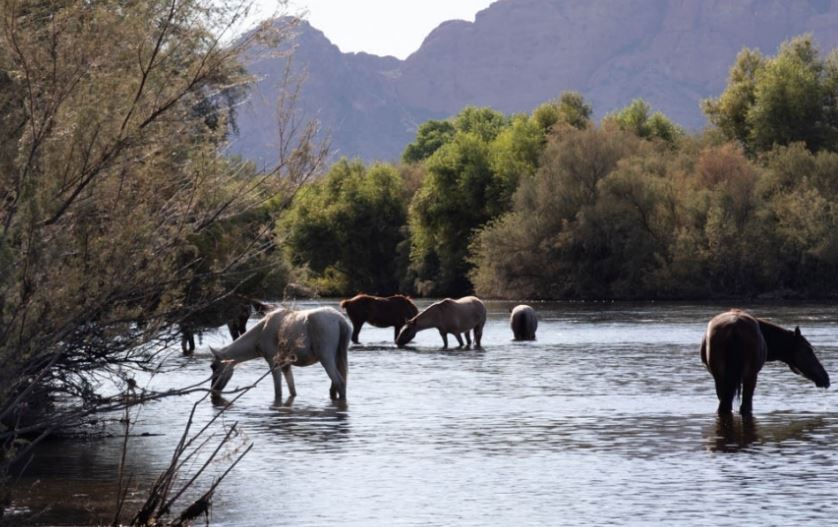
A representative of the Salt River Wild Horse Darting Group, a partner of the Campaign Against America’s Wild Horses, noted that after the herd was protected by state law, they were given an ultimatum to have the horses rounded up or reduce their population.
The advocates decided to get rid of them with the Montana Solution, the same approach used by professionals to protect ants, roaches and other cherished pests.
The report said the current population is around 430 animals on 19,000 acres.
The average herd produces fifteen to twenty percent foals every year, which means the advocates got rid of 65 to 85 horses in 2022, given that few if any foals have been born this year, twice as many as the Alpine shooters.
Who’s the greater threat to America’s wild horses? The advocates or the shooters?
RELATED: Foal-Free Friday, Predecessor to Horse-Free Friday.

Ranching Sympathizer Tries to Defend AIP
The subtitle of a column in Deseret News paints a dire picture of the American west:
“The rangelands can’t sustain the overlarge population of wild horses. New homes is the next best option.”
Anyone with a basic understanding of the situation knows the writer is full of crap, a shill for the public-lands ranchers.
“A population crisis is spiraling out of control and resulting in tens of thousands of horses enduring starvation, extreme thirst, disease and death.”
“The BLM estimates 82,000 wild horses and burros endure horrendous struggles to survive on a landscape that can only sustain roughly 27,000 of them.”
“Horses are malnourished with their ribs and hip bones protruding.”
“The wild horse and burro overpopulation crisis is also detrimental to other wildlife.”
More horses than allowed by plan does not necessarily mean more horses than the land can support.
AMLs are small because most of the resources have been assigned to privately owned livestock.
Herd sizes doubling every four years? Data from roundups don’t support that claim.
Foals typically represent fifteen to twenty percent of the horses captured, consistent with herd growth rates of ten to fifteen percent per year.
Horses starving? The BLM usually doesn’t report body condition scores during roundups but if they did the numbers would show the horses are in good condition overall, corroborated by eyewitness accounts.
Too many animals in off-range holding? Every one of them could be returned to their lawful homes by ending permitted grazing. Several times over.
HR 9154, which would alter the AIP, will die in committee. It is of no concern.
The goal remains the same: Get the horses off the range by any means necessary.
Don’t Exceed Saulsbury AML!
A statement at the end of Section 1.1 in the Draft EA for resource enforcement actions in the Stone Cabin Complex says the AML of 40 must not be exceeded to achieve progress towards the Standards for Rangeland Health in accordance with the Mojave-Southern Great Basin RAC.
How can that be true when the BLM authorizes privately owned livestock equivalent to 134 wild horses in the HMA, on top of the 40 allowed by plan?
RELATED: How Many Wild Horses Can the Saulsbury HMA Support?
How Many Wild Horses Can the Saulsbury HMA Support?
The HMA, part of the Stone Cabin Complex, consists of two parcels separated by the Monitor WHT.
Each parcel intersects one grazing allotment. The northerly portion overlaps Hunts Canyon, on which cattle are permitted, and the southerly portion overlaps Ralston, which is idle.
The HMA covers 135,081 total acres, including 134,508 public acres.
The forty horses allowed by plan require 480 AUMs per year.
The stocking rate allowed by plan is 0.3 wild horses per thousand public acres, compared to a target rate across all HMAs of one wild horse per thousand acres
The Western Watersheds map shows the arrangement.

The Allotment Master Report provides acreage, management status and active AUMs for the two allotments.
Table 3 in the Draft EA for resource enforcement actions in the Complex indicates that 72% of Hunts Canyon, and the forage assigned thereto, assuming the resource is evenly distributed across the allotment, falls within the HMA.
The forage assigned to Hunts Canyon livestock inside the HMA is 1,611 AUMs per year, also shown in Table 3.
The forage shifted from horses to livestock in the Ralston portion of the HMA is zero.
The total estimated forage assigned to livestock inside the HMA is therefore 1,611 AUMs per year, enough to support and additional 134 wild horses, for a True AML of 174.
The current population is thought to be around 280, meaning that 106 excess horses are present, not 256 as indicated in Table 3.
With cattle receiving 3.4 times more forage than the horses, the HMA is managed primarily for livestock.
The government collects $2,175 per year in grazing fees from ranching activity inside the HMA, while it spends $244,550 per year to care for the 134 horses in short-term holding that could be returned to the range if the public-lands ranchers were confined to their base properties and expected to pay (OMG) the going rate to feed their animals.
RELATED: Stone Cabin Pest Control Plan Out for Public Review.
Stone Cabin Pest Control Plan Out for Public Review
A new project has been created in ePlanning and the Draft EA has been copied to the document folder.
A letter soliciting public input for the scoping phase could not be found.
The project targets the Stone Cabin Complex in central Nevada, consisting of the Saulsbury and Stone Cabin HMAs, but not the Monitor WHT which lies in between.
The Proposed Action would remove excess animals with cruel and costly helicopter roundups, adjust sex ratios in favor of males, and apply population growth suppression such as safe, proven and reversible fertility control, gelding of stallions and IUDs, over a ten-year period.
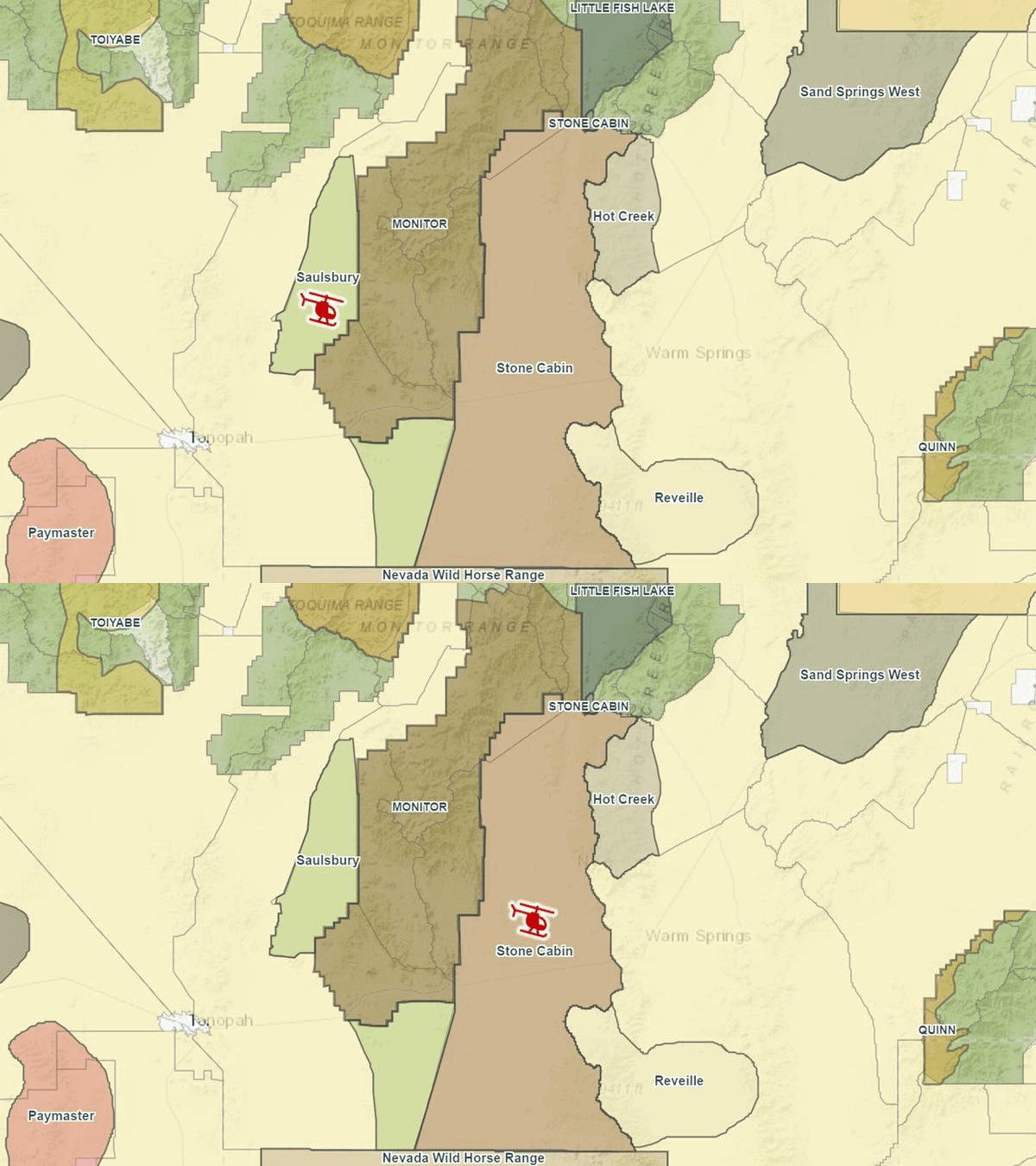
The Complex is subject to permitted grazing. Livestock in the Stone Cabin HMA receive 14,301 AUMs per year according to Table 3 of the EA, compared to 4,368 AUMs per year for the horses, at least on paper.
As the herd grows, the horses reclaim more and more of their food from the ranchers, upsetting the thriving ecological imbalance established by the bureaucrats.
The Proposed Action will shift resources back to the ranchers and keep them there.
The Complex has no HMAP. If it did, livestock in the Stone Cabin HMA would still receive 3.3 times more forage than the horses.
The problem is resource management, not humane management.
The BLM news release said comments will be accepted until November 23.
Bait Traps Coming to McCullough Peaks HMA?
A new project has been created in ePlanning but no documents have been posted.
The Proposed Action would conduct a bait trap removal of wild horses to reach the AML during the late fall/winter months, according to the description.
The HMA, in northern Wyoming, is subject to permitted grazing.
Efforts by the advocates to limit herd growth and keep the ranchers in the driver’s seat apparently have not been as successful as planned.
RELATED: McCullough Advocates Protect Livestock Not Wild Horses.

Wild Horse Population Out of Control in Wyoming?
A Wyoming Wildlife and Natural Resources Trustee said today in a meeting of the Legislature’s Travel, Recreation and Cultural Resources Joint Committee that the animals can be particularly hard on forage and water supplies upon which other wild animals rely, according to a story provided by Cowboy State Daily.
Western Horse Watchers thought the reference was to privately owned livestock, but a keyword search of the article yielded these results:
- Cattle – 0 occurrences
- Sheep – 0
- Allotment – 0
- Permit – 0
- Grazing – 0
- AUM – 0
- Pasture – 0
Hunters must be the injured party, not ranchers! Better luck next time.
More Wild Horses Confirmed Dead Near Alpine
The total now stands at 35, with 15 still missing and presumed dead, according to a report by KPHO News of Phoenix.
The increase was reported yesterday by The Epoch Times but the story was in their premium section so Western Horse Watchers didn’t link to it.
The loss is small compared to the number of wild horses eliminated each year by the advocates, especially the Campaign Against America’s Wild Horses and its offshoots.
The article said the Forest Service continues to remove horses from the area with bait traps, a process that received attention in March with the Jumping Mouse roundup.
RELATED: Alpine Reward Jumps to $35,000.
 Western Horse Watchers Association