Things That Make You Puke

Last year, she blew smoke up your butt about HMAPs.

This year, it’s habitat fragmentation.

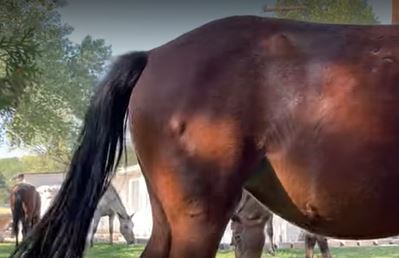
Things That Make You Puke 04-15-23

Anything to distract from the real problem, public-lands ranching, which devours entire HMAs and beyond, the driver of the overpopulation narrative and the reason why the off-range corrals and long-term pastures are flooded with “excess” animals.

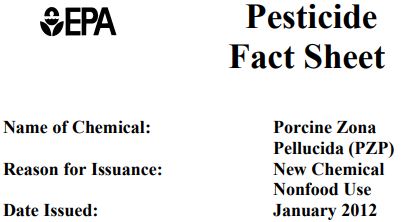
Pummeling the mares with restricted-use pesticides only helps the ranchers.

PSA 12-07-19

Pryor Comments Pass 1,500

The Campaign Against America’s Wild Horses, a leader in the wild horse removal industry, has issued an Action Alert, reposted on the propaganda page of the Lucky Three Ranch, urging its followers to speak out against the proposed management plan, and they are now flooding the project with the same stupid comments.

The plan would cut the population in half, according to CAAWH, exactly what it’s trying to do on the Virginia Range, if not more.

These people are charlatans, no longer deserving of your financial support.

RELATED: Pryor Comments Pass 1,000.

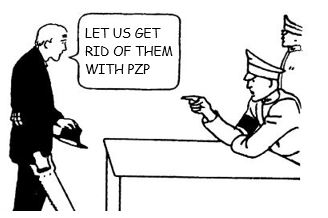
Pryor Comments Pass 1500 04-15-23

Foal-Free Friday, Avoiding the “S-Words” Edition

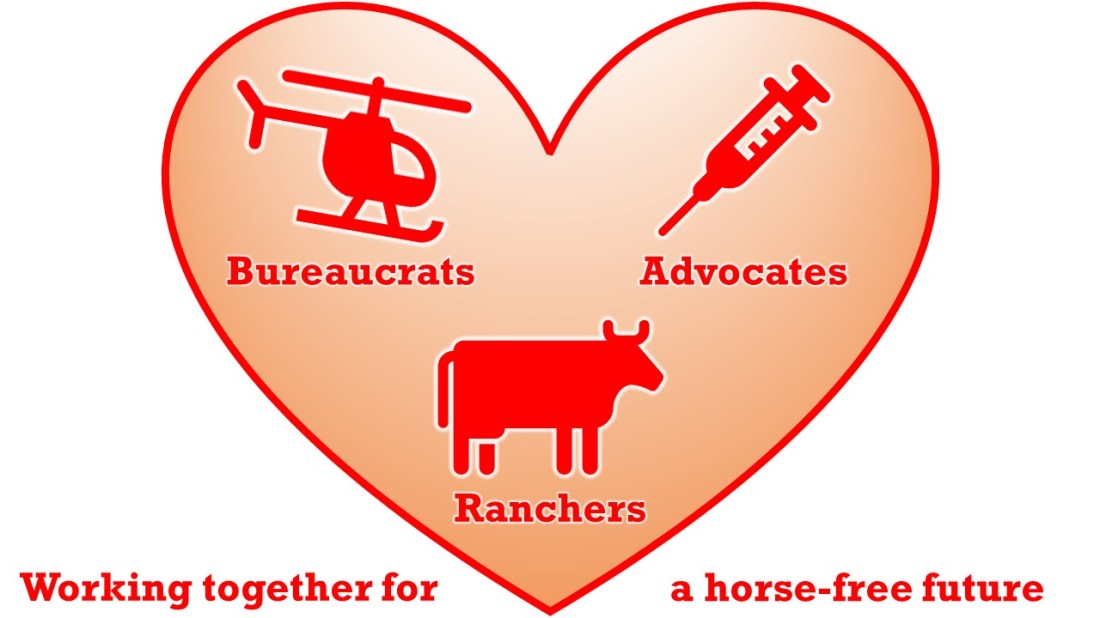
The bureaucrats, ranchers and advocates are united in their belief that wild horse reproduction is the problem, not the reproduction rate.

If you’re at 3X AML, you’re not interested in slowing the growth rate but reversing it.

Given that AMLs are small relative to the available resources, the conflict between wild horses and privately owned livestock can be alleviated by confining the ranchers to their base properties in a year-round off season and expecting them to pay (OMG) the going rate to feed their animals, but that’s taboo in the Love Triangle and fringe groups like the Wild Horse Fire Brigade.

The decision earlier this week to test two new fertility control drugs is just the latest attempt to eradicate the pests in favor of the most noble and deserving nonnative species on America’s public lands.

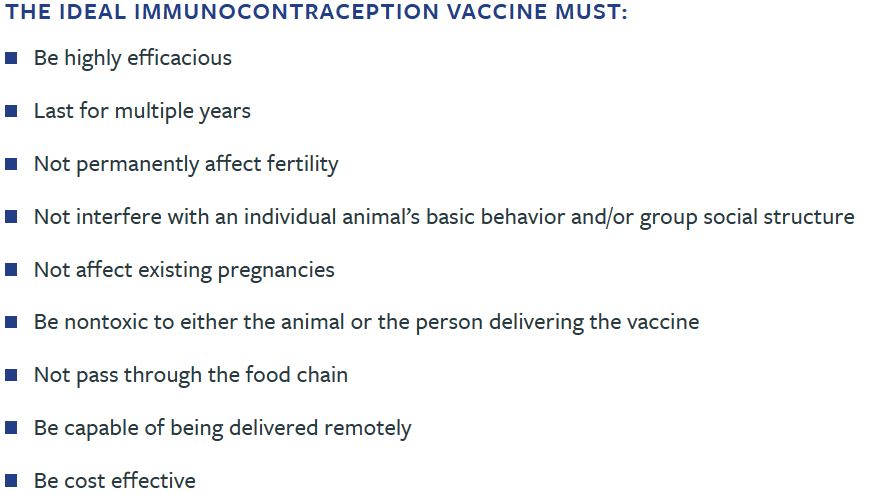
What’s the difference between long-lasting contraception (that can be achieved with just one dose) and sterility?

Not much.  But you can’t call it sterility and you can’t refer to the experiments as sterilization research.  Off limits.

You can talk about self-boosting mares, but not in mixed company.

Using the Rule of 72 for a quick estimate, you need a growth rate of 72 ÷ 5 = 14.4% per year to double the herd size in five years.  If the death rate is six percent per year, the required birth rate is 20.4% per year.

You need a growth rate of 18% per year, and a birth rate of 24% per year, to double the herd size in four years, as some land managers and wild horse detractors claim.

What do the data indicate?  Consider the results from last year’s roundups that started on or after July 1 (after foaling season).  These figures are based on the daily reports, which may differ slightly from the cumulative totals posted to the gather pages.

Roundup Data After 2022 Foaling Season 04-13-23

The weighted average birth rate was 17.4%, implying a growth rate of 11.4% per year.

The death rate this year may be higher than normal, as previously discussed.

On average, one foal was born to every 2.6 mares.  Each mare produced 0.38 foals.

With the probability of a mare delivering a live foal slightly more than one out of three, the advocates target every animal they can get their sights on.

Why?  Because their goal is one of the S-words.

Hopefully their enmity and mettle will appeal to the bureaucrats and ranchers, who, like them, want the wild herds minimized and domestic herds maximized.

RELATED: Foal-Free Friday, Busting the Myth of Reversibility Edition.

Thriving Ecological Balance-3

State Lawmakers Introduce Colorado Wild Horse Project

The bill would create the Wild Horse Management Project, a nonprofit, state-owned entity that manages and operates programs benefitting wild horses and supports wild horse management.

The project would provide state-level coordination, partnership development, and paid human resource development to support the work of those delivering contraceptives through darting, among other things.

Beware of the Advocates 01-21-23

Are you surprised by any of this?

Who do you suppose is pushing it?

A hearing by the Senate Agriculture & Natural Resources Committee has been set for April 20, according to the home page of SB23-275.

How Much Land Have the Roberts Mountain Horses Lost?

Almost half, according to the following map from the National Data Viewer.

The HMAs, currently managed for wild horses, are shown in orange, while the HAs, where horses were found in 1971, are drawn in black.

The bureaucrats have empowered themselves to take away roughly half of their land, not just in the Roberts Mountain Complex, but across the American west, then give most of the remaining food and water to privately owned livestock.

Of the land taken away, almost all of the food and water have been assigned to livestock.

How do the advocates respond to this injustice?

You need to manage the numbers to fit what’s available for the horses.”

Deniz Bolbol TCF Darter 03-11-23

They are defeatists, no longer worthy of your financial support.

Here are the requirements for managing land principally but not necessarily exclusively for wild horses and burros:

  • The animals were there in 1971 when the Act became law.

Today, management actions are designed to achieve and maintain Appropriate Management Levels, an undefined term that appears in the current statute.

There is nothing in the statute that says AMLs must be small relative to the available resources!

They are, however, because the bureaucrats, who never have to face the voters, write their own rules, known as regulations.

Regulations are inferior to laws, which are written and approved by the people’s representatives, and must be consistent with them.

In America, we tell the government what to do, not the other way around.

Pay no attention to the Democrat Party and its sycophants, they are enemies of your liberty and autonomy.

RELATED: Decision Published for Roberts Mountain Complex.

Land Lost in Roberts Mountain Complex 04-09-23

Foal-Free Friday, Busting the Myth of Reversibility Edition

The Maryland side of Assateague Island, a paragon of wild horse management according to the advocates, is a disaster.

The population in 2016, when the safe, proven and reversible darting program was shut off, was around 85.

Last month, it was 75.

The population should have doubled or tripled.  Look at the increase from 1976 to 1987 in this chart.

Assatuegue Population Trend 04-04-23

The herd has been ruined by the Montana Solution.  Most of the mares are sterile.

Which ones aren’t?

The ones with nice colors.  And bad feet, unfortunately.

In determining birth rates and breeding patterns, the advocates select for characteristics they think are desirable, not for traits essential to their survival.

Ruggedness and self-reliance take a back seat to exhibition, marketing and tourism.

The advocates know, and have always known, that PZP is a sterilant.  That’s why they invented euphemisms like “self-boosting” to describe barren mares.

They’ve been lying to you for years.

They are not voices for the horses.

Why are you still giving them money?

RELATED: Foal-Free Friday, Barren in the Desert Edition.

Who Paid for Billboard about TRNP Wild Horses?

Most of us refer to them as the Theodore Roosevelt wild horses but one group refers to them as the Teddy Roosevelt wild horses, as if they’re old hunting buddies.

Any guesses?

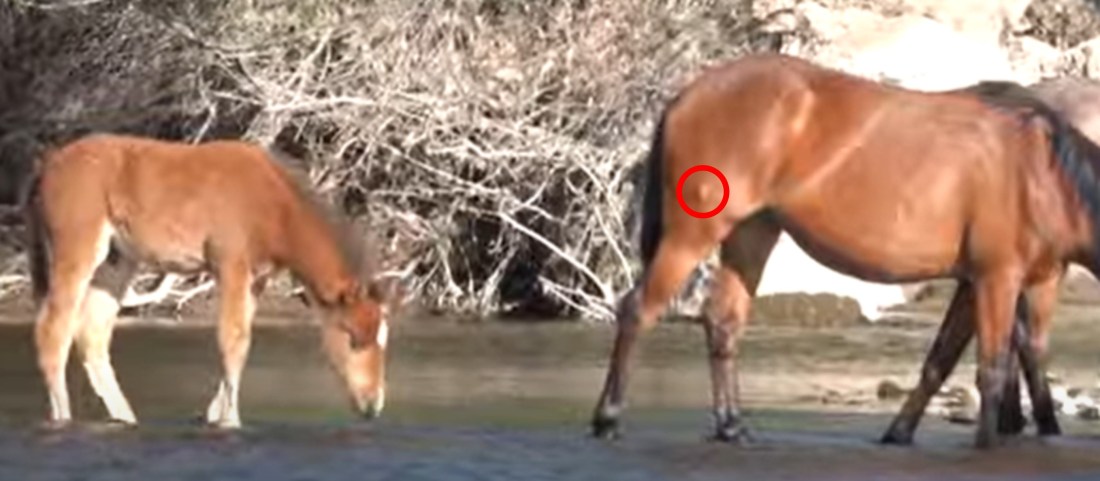
Save Teddy Roosevelt Wild Horses 04-04-23

They’re a recognized leader in the wild horse removal industry.

They’re destroying the ovaries of the Virginia Range mares with their favorite pesticide.

What they want most is a contract with the Park Service to carry out Alternative C, the Proposed Action, in the new livestock management plan.

If you still can’t figure it out, read this story by The Dickinson Press.

RELATED: Conflicting Priorities at TRNP?

Currituck Herd Grows by One?

Between four and six foals are born each year and the herd now numbers less than 100, according to a story dated March 27 by The Virginian-Pilot.

This is frightening.

The on-range population was 106 a year ago.

A herd of that size should produce 15 to 20 foals per year.

“We cannot afford to lose horses due to human-caused problems,” wrote herd manager Meg Puckett in a post on socialist media.  “They face so many challenges to their survival that are beyond our control…”

Nonsense!  She is the greatest threat to the herd, and her ruinous darting program, which was suspended in 2022 due to concerns about the long-term effects of PZP, a restricted-use pesticide that destroys the ovaries of mares in four to five years.

You only need to look at the herd on the Maryland side of Assateague Island to see where this is going.

RELATED: Advocates, Not Climate Change, to Destroy Currituck Herd.

BLM Expands Wild Horse and Burro Outplacement Program

The agency has awarded two grants totaling more than $4.7 million to accelerate the placement of excess animals into private care, according to today’s news release.

The Mustang Heritage Foundation received approximately $4 million and Mustang Champions received $750,000.

Use of the term “excess” reinforces the overpopulation narrative.

If ranchers operating in areas identified for wild horses and burros were confined to their base properties, all of the off-range corrals and long-term pastures could be emptied, several times over.

Huge savings can be realized by ending public-lands ranching, not by removing these animals from their lawful homes.

RELATED: New Grants Available for Wild Horse and Burro Management.

‘Path Forward’ Was Brainchild of Chris Stewart?

So says the writer of a column in today’s edition of The Intercept.

The ill-advised plan for achieving and maintaining AMLs, which are small relative to the available resources, was a bonanza for the public-lands ranchers.

Contrary to what you read in the article, the BLM knows how much food and water are available on the acreage it manages, and most of these have been assigned to privately owned livestock through the planning process, even in areas designated for wild horses.

Although many advocacy groups opposed the idea, today they are fierce supporters of tenet #3: Apply proven, safe and humane population growth suppression strategies to every herd that can be reached utilizing trained volunteers, Agency staff, and animal health professionals, as individual HMAs dictate to prevent repeated gathers.

RELATED: Chris Stewart: The ‘Horse Guy.’

UPDATE: Link to Path Forward fixed.

More on the Onaqui Poseurs

The hypocrisy of the Campaign Against America’s Wild Horses and the National Mustang Association, contributors to the $22,500 reward for information about the shootings, are well known and have been documented previously.

Of two other groups pledging financial support, the Onaqui Catalogue Foundation does not appear to be a 501(c)(3) non-profit while the Red Birds Trust is.

Both groups endorse the Montana Solution.

Bios of the Onaqui team begin with suggested pronouns, a big red flag.

Theresa Orison, treasurer, is “married” to Sue Robbins.

The Board at Red Birds includes Alisa Graham, treasurer, also “married” to a woman.

The groups know much about wild horses but little about permitted grazing, apparently.

Has their access to the herd and inside information from the BLM been purchased at the price of silence?

A coalition was formed and a reward was established before the agency went public with news of the incident.

RELATED: Reward Offered as Two Onaqui Stallions Found Dead.

Foal-Free Friday, All Roads Lead to Billings Edition

Overpopulation.

Mistreatment during roundups.

Illness and death in off-range holding.

Adoptions resulting in abuse and slaughter.

Why do the advocates harp about these things?

Because they have a better way.

These problems could be avoided if there were no wild horses.

Crime in the Wild Horse World 05-26-22

This of course means the Montana Solution.

There are no other options.

Deniz Bolbol TCF Darter 03-11-23

Sterility is the goal.

Ranching interests must prevail.

All roads lead to the Billings School of PZP Darting if you’re a wild horse advocate.

RELATED: Foal-Free Friday, Noticing Their Hypocrisy Edition.

Reward Offered as Two Onaqui Stallions Found Dead

The remains were discovered on March 19, according to a BLM news release.

Several poseurs joined the BLM in posting the $22,500 reward, including Suzanne Roy of the Campaign Against America’s Wild Horses, who said shooting these protected animals is a serious federal crime but did not acknowledge her role in the shooting of thousands of wild mares with a restricted-use pesticide.

Roy, of course, is trying to establish her bona fides with the bureaucrats and ranchers, hoping to become the dominant player in the wild horse removal industry.

The National Mustang Association runs cattle on a Utah allotment, consuming forage in areas set aside for wild horses.  Rock solid advocates, those guys, just like CAAWH and dozens of other charlatans.

Most of the wild horses were taken off the Onaqui Mountain HMA in a 2021 roundup and the advocates are now working diligently to make sure the herd never comes back.

Advocate Leads Readers Astray about HMAPs

A well-defined problem is half solved.  That may be true in some cases, but the other 50% comes from identification of causes, a concept that eludes the wild horse advocates.

For example, a column in today’s edition of The Nevada Independent indicates that tens of thousands of privately owned livestock graze on allotments overlapping the Pancake Complex in Nevada, an area identified for wild horses, yet only 638 such animals are allowed to live there.

This pattern occurs throughout the western U.S. not because the BLM failed to create HMAPs, as suggested by the author, but because it’s specified in the land-use plans.

HMAPs must comply with LUPs.  If the LUP assigns 84% of the authorized forage to privately owned livestock in an area set aside for wild horses, so will the HMAP.

Drilling and mining affect anywhere from a few acres to a few thousand acres, not mentioned by the writer, while public-lands ranching devours entire HMAs and beyond.  There’s no comparison.

As for the advocates, articles like this keep their base fired up and the donations rolling in, while accomplishing nothing useful for America’s wild horses.

RELATED: The Truth About HMAPs.

What’s So Important about the Virginia Range?

It defies the overpopulation and carrying capacity narratives.

You can’t be telling the American people that public lands in the western U.S. can only support one wild horse per thousand acres (27,000 animals on 27 million acres) while the Virginia Range is carrying ten (3,000 animals on 300,000 acres).

It must be erased, and the advocates are eager to help.

The population target of 600 animals, mentioned at the March 7 hearing for SB90, means an 80% reduction in herd size, at least, exactly what Velma was trying to stop.

As for the advocates, they are fools.  Don’t give them a penny.

RELATED: Why Oppose SB90?

Working Together for a Horse-Free Future 12-21-22