Colorado Wild Horse Project Helps Ranchers, Not Horses

The state is now in the business of achieving and maintaining AMLs with pesticide-laced darts, according to a story by The Daily Sentinel of Grand Junction.

As of this morning, the bill status says “Passed,” not “Became Law,” but an approved version dated May 20 has been posted to the Session Laws tab.

All four of the state’s HMAs are targeted:

  • Sand Wash Basin – Zonastat-H
  • Piceance – GonaCon Equine
  • Little Book Cliffs – Zonastat-H
  • Spring Creek Basin – Zonastat-H

These products appear on the same EPA list as toxic chemicals.

Using them to control free-roaming herds that interfere, or could interfere, with animal agriculture is outside the scope of their registration.

In “woke” America, truth takes a back seat to ideology.

Although you stopped the roundups, you’re still getting rid of the horses, but you can feel good about it.

RELATED: Colorado Wild Horse Project to Become Law Tomorrow?
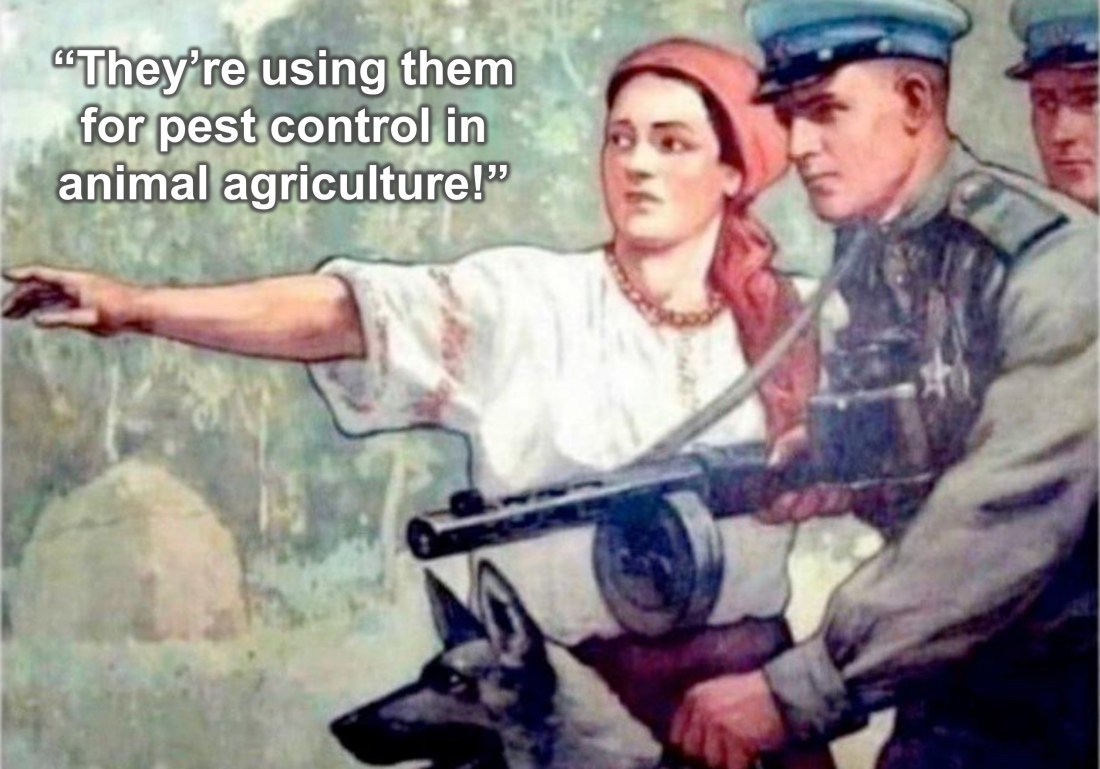
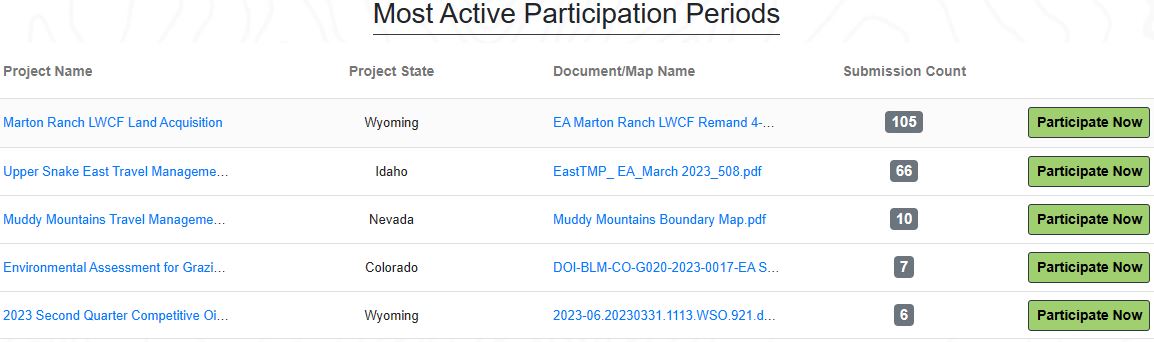
Unauthorized Use of Pesticides 05-24-23

What a Gal! Woman Rescues Horses, Takes Them to Slaughter

After her run-in with the law, maybe she’ll be content to poison wild mares with a restricted-use pesticide, as the advocates do.

She was a student at the time she took 13 horses from various people, and they were never seen again, according to a story dated May 23 by Advance Local Media.

Like the perp, the advocates tell you they’re protecting wild horses while they’re working quietly on the range to get rid of them.

Advocates are the Predators 11-30-21

SB90 Postmortem

The Nevada Independent confirmed the bill’s demise today, claiming that the measure did not succeed because of tension over land management concerns and degradation of habitat caused by wild horses.

Western Horse Watchers believes the legislators heard the not-so-subtle message of the advocates loud and clear, that wild horses are pests, and that other stakeholders just need to be patient while their volunteers get rid of them.

They owe an apology to the fourth graders at Doral Academy.

The following video from the final hearing on May 16 features a conga line of PZP fanatics testifying on behalf of their cherished wild horses.

The moral of the story: If you want to help wild horses, stay away from the advocates, especially the Campaign Against America’s Wild Horses, its affiliates, offshoots and supporters.  Everything they touch turns to crap.

RELATED: SB90 Dies in Committee?

Another Coalition Tries to Stop Rock Springs RMP Amendments

Front Range Equine Rescue and two wild horse photographers have joined forces with Return to Normal (Before WHB Act), signatory to the anti-horse/pro-livestock “Path Forward,” to stop the changes announced on May 9, according to a news release dated May 17 on PRN.

Their announcement claims that the White Mountain HMA will be managed as non-reproducing herd, an option that was dropped in the final plan.  Refer to the bullet list in Section 4.0 of the ROD.

The court will likely uphold BLM’s decision.

Actions like these keep their base fired up and the donations rolling in, while achieving nothing useful for wild horses.

They are free to spend their money as they please, within reason, but you don’t have to be part of it.

RELATED: Coalition Files Suit to Block Rock Springs RMP Amendments.

Villains and Victims in Elko County Emergency Declaration

The advocates point to conflicts between wild horses and drillers, miners and loggers, but if they were true, county commissioners would have cited them in their resolution.

Instead, they pointed to conflicts between wild horses and livestock, noting that some BLM grazing allotments have gone unused because of over-grazing by wild horses, that fences and crops of county ranches have been damaged by wild horses, and that a decline in the county’s agricultural output can be attributed to the horses.

There’s nothing new under the sun!

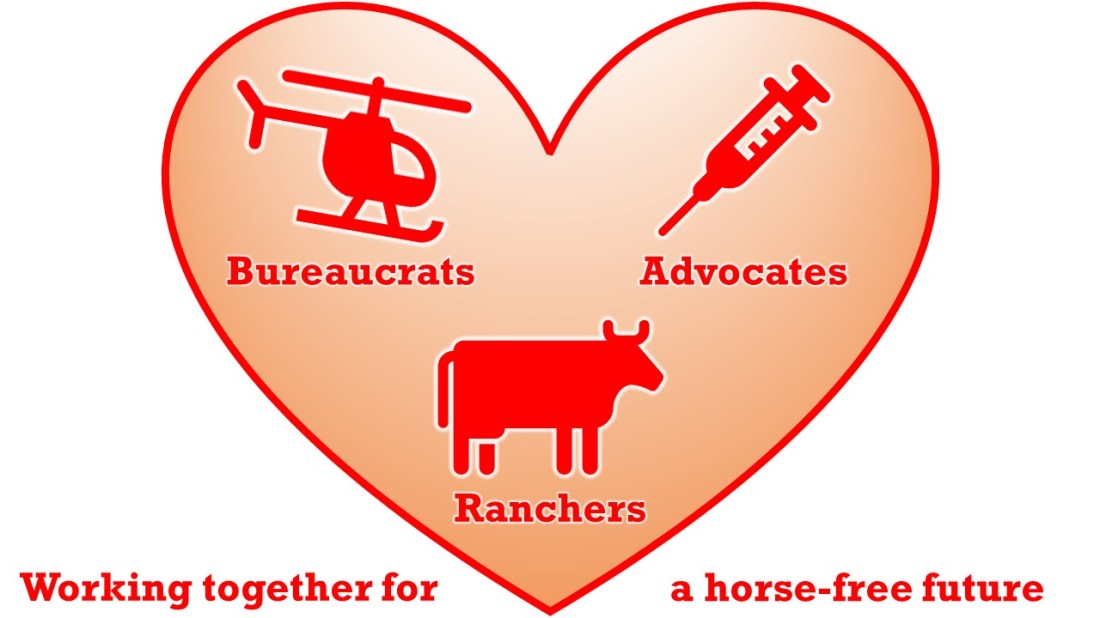
The advocates are united with the bureaucrats and ranchers in their belief that wild horses are pests, evident in their May 16 testimony before the Assembly Committee on Government Affairs regarding SB90.

They have their own vocabulary to conceal the truth about their ruinous darting programs, for which they’re always seeking your financial support.

They claim to be voices for the horses, yet they’re trying to get rid of them with a restricted-use pesticide.

Back in the day, we called this “mixed messaging.”

As a result, many in the legislature must be wondering why they’re being asked to designate a pest as the official state horse of Nevada.

RELATED: Assembly Committee Hears SB90.

Railroad Valley Base Property Illustrates Concept of Leverage

Acquisition of 3,314 private acres will give the new owner access to food and water in 333,399 public acres, a resource multiplier of 100!

This is how American Prairie is putting together a vast wildlife reserve in Montana.

A plan for rewilding captured horses in this manner would likely be met with considerable resistance from the bureaucrats and ranchers, as experienced by Madeliene Pickens fifteen years ago.

RELATED: Railroad Valley Base Property on the Market for $14 Million.

Colorado Wild Horse Project Bad for Wild Horses?

The bill will provide funding to support the poisoning of mares with a restricted-use pesticide, which the Campaign Against America’s Wild Horses describes in a recent news flash as “sustaining wild horse populations through robust fertility control and habitat stewardship programs.”

The project is not an outgrowth of public opposition to cruel and costly helicopter roundups, as indicated in the announcement, but is driven by a belief that areas identified for wild horses should be managed primarily for cattle and sheep.

Thus, it is an offshoot of the contemptible “Path Forward” and CAAWH, a leader in the wild horse removal industry, is one of its greatest supporters.

RELATED: Legislature Approves Colorado Wild Horse Project.

Owyhee Resource Enforcement Plan Out for Review

The Draft EA was copied to the project folder today, along with related documents.

Comments will be accepted through June 13.

Three HMAs in western Idaho are affected.  All are subject to permitted grazing.

The Proposed Action, discussed in Section 2.2 of the EA, features

  • Roundups
  • Fertility control treatments
  • Selective removals
  • Introduction of animals from other HMAs

Today’s news release said the BLM is required to manage wild horse herds at the appropriate management levels that were established through the analysis of monitoring data and water and forage availability on a sustainable basis.

This is nonsense.

AMLs represent the number of horses allowed by plan, not the number of horses the land can support.

How can they represent carrying capacities when livestock receive three to six AUMs for every AUM assigned to the horses?

There is nothing in the WHB Act that says AMLs must be small relative to the available resources, but they are, so ranchers can access most of the food and water in the lawful homes of wild horses.

The fourth component of the new plan is clearly a nod to the public-lands ranchers, as if the other three weren’t, that boosts genetic diversity while keeping herd sizes small.

In the future you won’t be able to adopt a Hardtrigger horse, only a horse captured in the Hardtrigger HMA—a mutt, Heinz 57.

As for the fertility control treatments, restricted-use pesticides such as Zonastat-H and GonaCon Equine are not approved for control of pests that interfere with animal agriculture, so that component is dead on arrival.

RELATED: Owyhee Scoping Period Comes and Goes, Draft EA Up Next.

Owyhee Mountains HMA Map 12-23-22

How the WHB Program Operates

The idea of achieving and maintaining AMLs, the goal of the ill-advised “Path Forward,” is to minimize pests that interfere with animal agriculture, even in areas where grazing does not occur, such as Pryor Mountain, Spring Creek Basin and Little Book Cliffs.

Animal agriculture occurs in adjacent allotments, where the horses might wander in search of greener pastures.

The leading methods of pest control are forcible removal by helicopters, voluntary separation from their lawful homes by baited traps and population growth suppression with restricted-use pesticides.

The advocates claim that helicopter roundups are cruel and costly and want the resource allocations—that greatly favor the ranchers—enforced by poisoning the mares.

VR Darting Injury 09-15-21

Thus, the wild horse and burro program operates as a pest control program for the grazing program, in defiance of the original statute.

All of the changes since 1971, including the introduction of AMLs, were intended to benefit the public-lands ranchers, not the drillers, miners, hunters and loggers as the advocates would have you believe.

The closure of two HMAs in Wyoming and the downsizing of a third, to appease the Rock Springs Grazing Association, is just the latest chapter in the long-running story.

RELATED: Rock Springs RMP Amendments Cleared for Implementation.

Thriving Ecological Balance-3

Wanting Wild Horses Off the Range Is Not the Same as Taking Them Off the Range

Hunters, trappers and ranchers want wild horses eradicated from public lands, according to a news flash earlier this week by the Campaign Against America’s Wild Horses, but they are not actually getting rid of any wild horses, at least not by an approved method.

CAAWH is, along with its affiliates, offshoots and supporters, in numbers that rival the largest of roundups.

Protect Wild Horses from Advocates 08-29-21

In a story dated May 11 about the case against the Rock Springs RMP Amendments, Suzanne Roy, monster-in-charge of CAAWH, told Cowboy State Daily that it’s not about saving the environment, it’s about getting rid of wild horses in favor of cattle grazing, exactly what her field workers are doing across the American west.

Around here, that qualifies as hypocrisy and fraud.

Why are you still giving her money?

RELATED: Coalition Files Suit to Block Rock Springs RMP Amendments.

Standing Up for Wild Horses on Virginia Range 06-18-22

Foal-Free Friday, Getting to the Heart of the Problem Edition

Like all good liberals, the advocates believe that reproduction is a problem, a defect of nature, to be controlled in some cases with abortion, contraception and sterilization.

The United States can’t support so many people, especially of white European descent, but it can sustain an unlimited number of criminal invaders of color.

The advocates project these beliefs onto wild horses, suppressing their numbers to a point where genetic viability is threatened, so millions of privately owned nonnative animals can reproduce and graze at large in their lawful homes.

The origin of this safe, proven and reversible technology is the Billings School of PZP Darting and Public Deception, featured in the following video by the Campaign Against America’s Wild Horses.

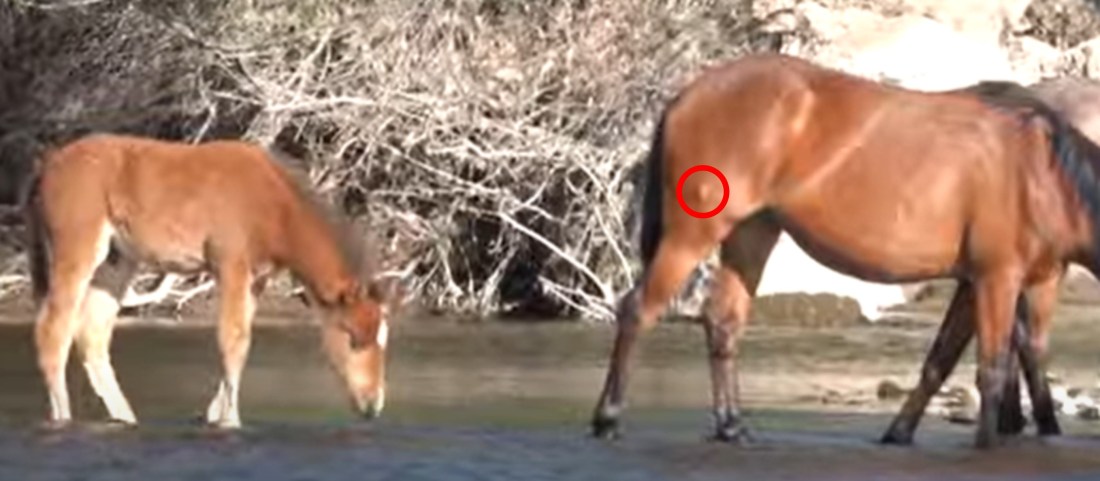
How to tell if the advocates are poisoning the mares in your favorite herd?

Salt River Darting Injury 05-11-23

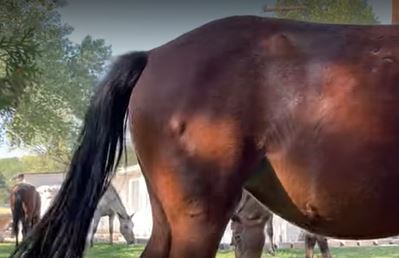
Look for injuries and adverse reactions in the target zone, evident at 0:15 in a video from the Salt River.

The advocates rely on predators to take care of any youngsters that defy their humane management programs.

RELATED: Foal-Free Friday, Tarnishing Kirkpatrick’s Legacy Edition.

Loss of Foals Attributable to Wild Horse Advocates?

If you saw 15% foals in an area two weeks ago, and now you only see 5%, and some of the animals show signs of attack, predators may be responsible.

If you saw 15% foals in an area three years ago, and now you only see 5%, and some of the animals show signs of attack, the advocates may be responsible.

VR Darting Injury 09-15-21

The story about the disappearance of foals in Grayson Highlands is a reminder that the advocates are not the only predators in areas inhabited by wild horses.

The bureaucrats and ranchers insist that there are none, even though the advocates rely on them to take out any foals that slip through their darting programs.

Their claim warrants some belief, however, because those animals also target calves and lambs, to the disdain of state wildlife agencies.

RELATED: Safer in Town Than on Their Home Range?

Immunocontraceptive Wish List

Perfect topic for Foal-Free Friday.

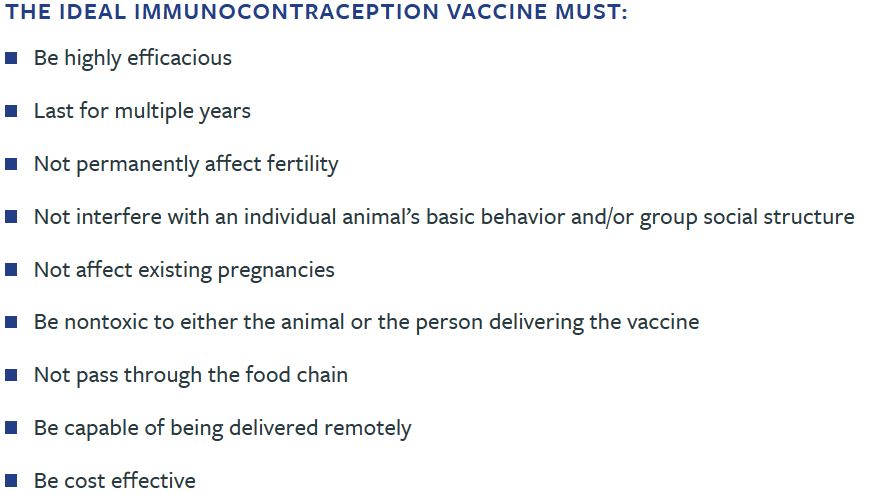
In a discussion of the Next Generation PZP Project, The Humane Society of the United States identified nine characteristics of the new product:

PZP Wish List 05-05-23

They note that the current formulation meets most of these criteria.

However, the signatory to the rancher-friendly “Path Forward” forgot one important detail that renders current use illegal:

PZP Wish List Adder 05-05-23

The folks at HSUS are joined by thousands of signatories in principle who want the herds reduced so ranchers can access most of their food, and they want you to pay for it.

RELATED: The Promises of PZP, Unfulfilled.

Foal-Free Friday, Tarnishing Kirkpatrick’s Legacy Edition

The developer of Zonastat-H, sometimes referred to as the Montana Solution, never envisioned the ruthlessness of the advocates and their enmity toward wild horses, reflected in their callous disregard for the rules when handling the product.

In the introduction to “Immunocontraceptive Reproductive Control Utilizing Porcine Zona Pellucida (PZP) in Federal Wild Horse Populations,” a paper published in 2012, he indicated that oversight by The Humane Society of the United States would assure that the vaccine is used only to slow reproduction and would not be used for extermination of entire herds.

He was wrong.

What we see today is the willful destruction of entire herds, with the cooperation of state and federal governments, while the Humane Society looks the other way.

Were you expecting something different from a signatory to the “Path Forward?”

In case you did not know, Zonastat-H is a restricted-use pesticide, not a vaccine, appearing on the same list as noxious chemicals.

The product skews sex ratios in favor of females, the opposite of what’s needed to reverse population growth, so the advocates must ensure that the mares are sterilized, a condition that occurs after five consecutive years of use, as Kirkpatrick warned in his introductory remarks.

RELATED: Foal-Free Friday, Actual Versus Expected Trends Edition.

Salt River Lawsuit in the News

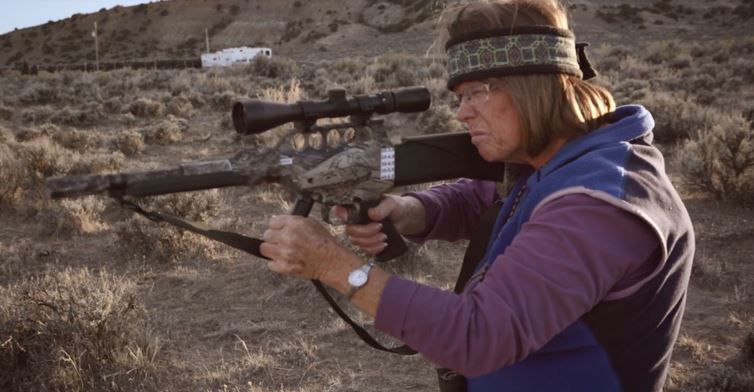
The ringleader of the Salt River Wild Horse Darting Group, an affiliate of the Campaign Against America’s Wild Horses, admits again in this report by KPNX News that her group is getting rid of the horses with their favorite pesticide.

At least she’s using neon orange darts and a Dan-Inject rifle, as specified by the EPA.

In the introduction to a lengthy paper about PZP, Jay Kirkpatrick, its developer, said oversight by the Humane Society of the United States assures that the product is used only to slow reproduction and would not be used for the extermination of entire herds.  He also indicated that PZP is designed to bring about short-term infertility and is reversible, if not used beyond five consecutive years.

We know that didn’t happen on the Maryland side of Assateague Island and massive reductions are now underway on the Virginia Range and Salt River.

In their enmity for the horses and their desire to be respected by the bureaucrats and ranchers, the advocates will end up sterilizing most of the mares.

RELATED: Coalition Sues Forest Service Over Salt River Horses.

Coalition Seeks Removal of Cumberland Island Horses

A senior scientist with the Center for Biological Diversity, the group that instigated the “Jumping Mouse” roundup last year and has now turned its sights on Salt River herd, has joined forces with an island resident and two advocacy groups alleging that the horses have trouble finding enough to eat and drink, and have degraded the marshes and dunes inhabited by threatened and endangered species, according to a story dated April 21 by Georgia Public Broadcasting.

The plaintiffs want the animals removed from the Cumberland Island Wilderness and Cumberland Island National Seashore, among other things.

They believe that the horses have standing to bring a suit in their own right, according to section 10 of the complaint.

They claim that the condition of the horses has had an adverse impact on their aesthetic enjoyment of the natural wonders of Cumberland Island.

They further claim that the horses receive no food, water, or veterinary care.

This is nuts!

Do they know anything about wild horses?

How many did they consult?

What percentage asked to be removed from their home range?

What about other animals that receive no food, water, or veterinary care, including those on public lands in the American west?

They can’t possibly be happy until they’ve been cut, locked in stalls, smell like carpet cleaner, wear blankets, have their manes and tails braided, and are ridden by morons who can’t control them without big pain bits, spurs, tiedowns and crops.

The case should be thrown out.

RELATED: Cumberland Horses Threatened by Legal Action?

The Promises of PZP, Unfulfilled

This collection in PryorWild, a blog about the Pryor Mountain wild horses, contains several posts from the years running up to the EPA’s approval of the pesticide in 2012.

One post from 2010 discusses research on the Maryland side of Assateague Island involving the Montana Solution, and what it portends for wild horses.

We now know that the experiment was a failure.  The herd has been ruined.

Trends in Assateague Population 04-27-23

What do you get from the advocates about this?  Silence, denial.

The truth will ruin their business models, thwarting their efforts to dominate the wild horse removal industry.

Another post from 2010 about reversibility says PZP is vaccine, a shameless attempt to sell poison as medicine.

A third post, also from 2010, discusses longevity of mares, code words for abnormal sex ratios, a documented side-effect of the wonder drug.

The advocates know and have always known about the harmful effects of PZP, yet they continue to lie about them.

They’re not who they say they are.

Their words don’t match their deeds.

They’re sterilizing as many mares as they can get their sights on, and they want you to pay for it.

RELATED: Reaffirming Previous Statements.

Advocates are the Predators 11-30-21