The new range is 47–57, according to a report by KTVZ News of Bend, OR. The Forest Service had originally proposed 12–57, down from the current 55–65.
RELATED: Big Summit Horses Await AML Decision.

Western Horse Watchers Association
Exposing the Hypocrisy, Lies and Incompetence of the Wild Horse Advocates
The new range is 47–57, according to a report by KTVZ News of Bend, OR. The Forest Service had originally proposed 12–57, down from the current 55–65.
RELATED: Big Summit Horses Await AML Decision.
Approximately 700 sheep will be turned out on 900 acres for 3.5 months, starting on May 11, according to a BLM news release issued yesterday.
The Cronan Ranch Trailhead is about 12 miles southeast of Auburn, CA. The area is in the Sierra foothills, on the windward side of the mountains. The climb over the Sierra on eastbound I-80 begins at Penryn.
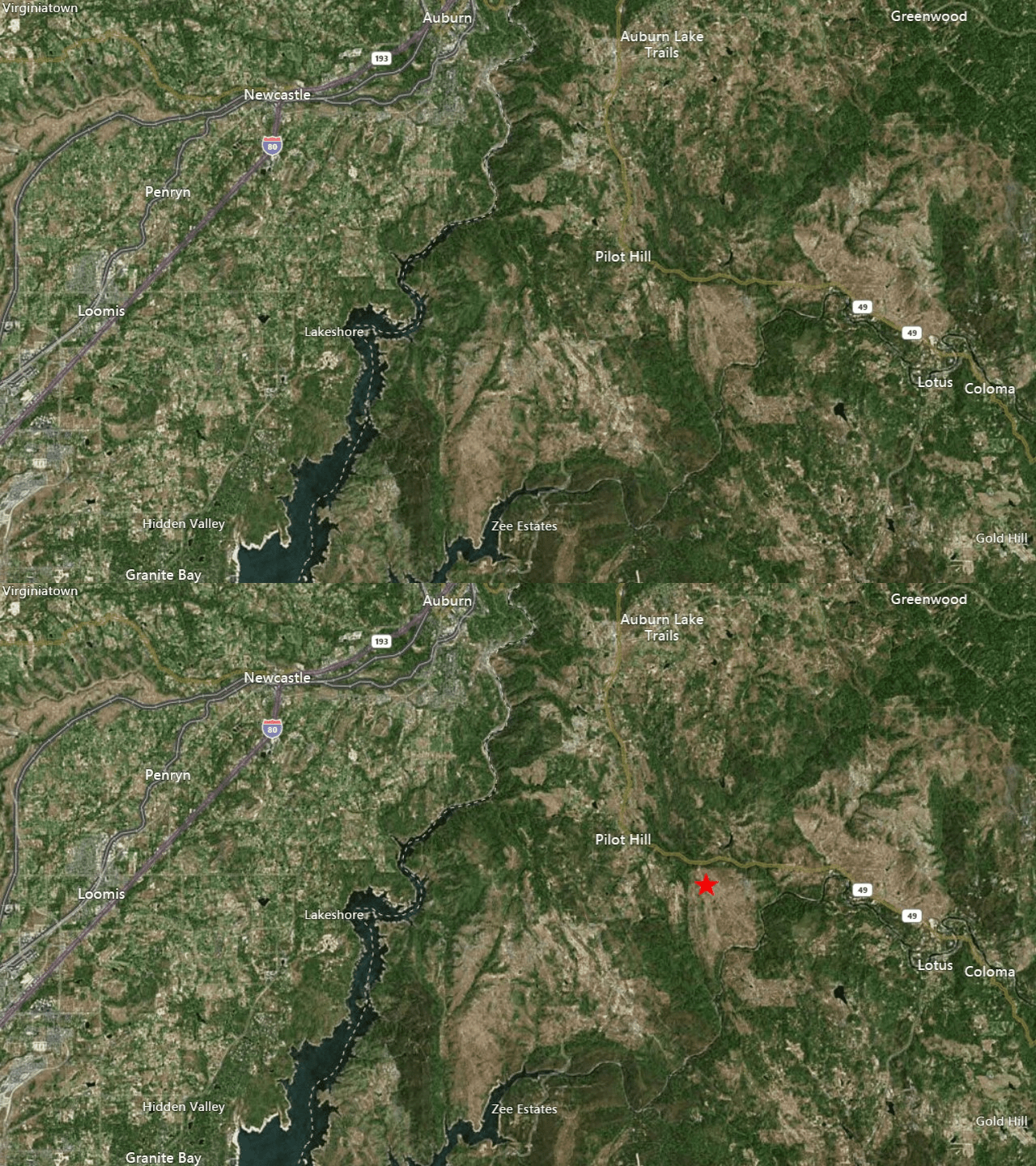
The sheep would be equivalent to 140 cow/calf pairs, for a stocking rate of 155 pairs per thousand acres. Or, if you prefer, 140 wild horses at a stocking rate of 155 animals per thousand acres.
The expected forage consumption is 490 AUMs. The grazing fee would be $662 at the current rate.
The announcement did not indicate if the sheepherder would pay the government for the privilege or government will pay the sheepherder for the service.
On the other side of the Sierra lies the Great Basin, home to many of America’s wild horses but not known for abundant moisture.
Stocking rates may be in the single digits for cow/calf pairs, and often less than one for the horses.
BLM announced today the signing of a Decision Record that authorizes Alternatives A and D in the Final EA, subject to a 30-day appeal period.
The plan, valid for ten years, features roundups, fertility control, sex ratio adjustment and castration.
The Complex is managed primarily for livestock.
RELATED: Pancake Comment Period Almost Over.
A story in today’s online edition of the Charlotte Observer describes a brawl between two stallions who were having a serious conversation—about mares, in all likelihood.
The studs share overlapping territory, according to the report.
Their herd is not growing, although nature is telling them to fill their niche.
Guys, it’s not you. It’s the advocates.
The court appearance was set for yesterday, according to a story by the Sacramento Bee.
Getting rid of wild horses with helicopters is bad, according to the advocates, but getting rid of them with contraceptives is good, so let’s take a closer look at the idea.
How long would it take to cut the size of a herd in half?
If the birth rate is zero, courtesy of the advocates, and the death rate is 5% per year, about fourteen years.
If the death rate is 10% per year, about seven years.
How long would it take to cut the herd by 80% (e.g., 500 to 100)?
Assuming the birth rate is zero and the death rate is 5% per year, 32 years. If the death rate is 10% per year, about 16 years.
That means the advocates would have to dart the mares for at least 16 years to get the population down to AML?
No. The mares would be sterile after five years, so they could walk away and ruin another herd.
There’s no point in discussing acreage, AMLs, stocking rates, resource allocations and genetic viability, because, under their plan, none of those things matter.
RELATED: Trajectory of Wild Horse Fertility Control Program.
The double standard was on full display at the April 22 rally, as protesters marched from a park to the Black Mesa District Office.
You may get the impression from photos by the White Mountain Independent that the event was co-opted by the PZP zealots but it was organized by them.
Instead of tearing families apart in roundups, it’s better to not have them. No natural breeding patterns, no turning over of the genetic soil.
The problem is not enough land and too many livestock but nobody’s talking about that.
This video, filmed in the Apache-Sitgreaves National Forests, east of the Heber WHT, includes remarks about the Salt River horses, a herd that’s being ruined by the local advocacy group.
RELATED: Saving the Salt River Horses by Getting Rid of Them.
Here is the headline on Drudge. The link pointed to a story by CNBC.

They couldn’t agree on the best way to depopulate the planet?
UP NEXT: Tensions increase as government, ranchers and advocacy groups can’t agree on the best way to get rid of wild horses.
RELATED: Double Standards in the Wild Horse World.
A statement issued today said the new facility will offer family-friendly mustang safari tours and luxury accommodations for guests wishing to stay overnight.
The International Society for the Protection of Mustangs and Burros, established by Velma Johnston, gave up most of its horses in 2016 when a whistleblower revealed conditions at the ranch. Approximately 900 animals were placed into private hands the following year through an adoption program.
The sanctuary took in horses from White Sands, New Mexico, Gila Bend, Arizona, the Virginia Range and Sheldon National Wildlife Refuge, both in Nevada.
On the Onaqui Mountain HMA with Infinite Explorers.
A video posted yesterday tells the story. He was born and captured in Nevada.
The YouTube channel, started in 2009, has quite a following.
In late 2011, when I was new to horses, I saw an ad in a magazine that said ‘think like a horse.’ Made sense so I searched the web, landed there and never went anywhere else.
As of today, the loss is not mentioned on the Think Like a Horse web site.
Why would you want to do that?
So they can be moved from places where they’re not wanted.
Not wanted by whom? Most Americans want these animals protected.
Ranchers.
Where to?
Remote wilderness areas not particularly suited to livestock grazing.
Can you corroborate that?
Refer to this opinion piece dated April 30 in the Pagosa Daily Post and this column in the Ag Information Network.
Why can’t the horses be moved?
It’s not allowed per Section 1339 of the statute.
Would they be safe in their new homes?
Probably not. The writers speak for the ranchers, not the horses.
Here are the prices at the local feed store as of May 1:
The drive-out price was $673, including $55 for our precious government.
If you deduct the chicken feed and two salt blocks, the total still exceeds $600, putting the cost of feeding six horses for one month at approximately $105 per AUM.
RELATED: Grain Tank Refilled.
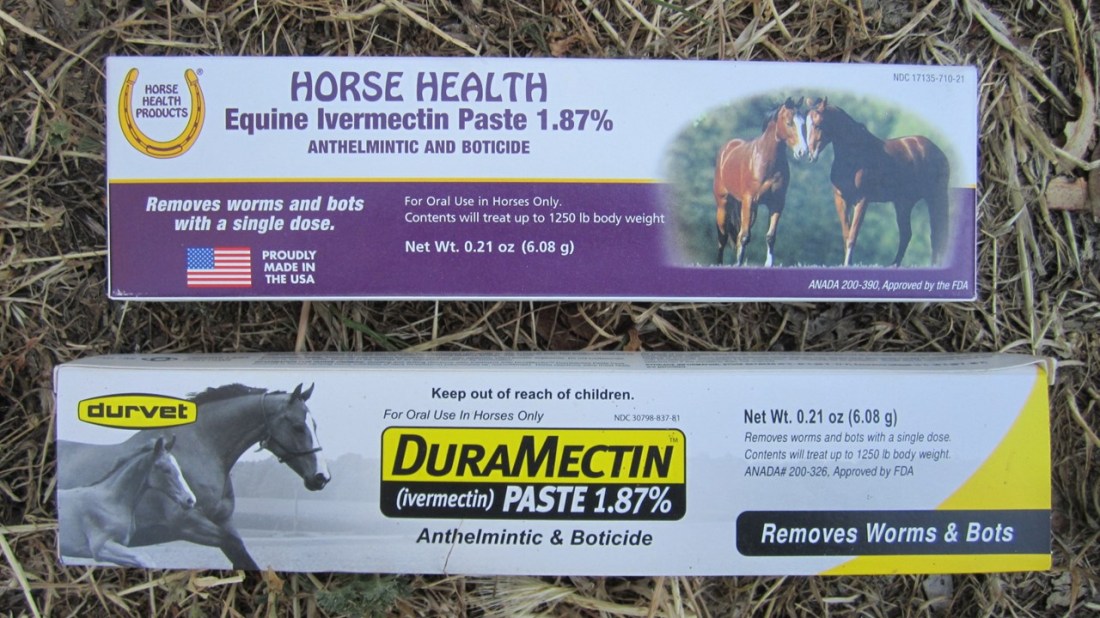
A trip to the feed store yesterday found empty slots where the dewormer used to be.
Other types, with different active ingredients, were available.
RELATED: FDA Warns Against Use of Ivermectin to Treat Covid.
If ranchers take voluntary non-use of their grazing allotments this year because of insufficient resources, what happens to their animals? Are they confined to deeded acres, known as base properties, and fed at the going rate?
If so, why can’t the ranchers do that year around?
RELATED: BLM Monitoring Dry Conditions in Northern California.
A notice in the Federal Register dated April 29 segregates approximately 23,000 acres from all forms of appropriation under the public land laws, including mining, mineral leasing and geothermal leasing for a period of two years, pending an Environmental Assessment that will analyze the effects of a proposal by the National Aeronautics and Space Administration.
The project area is in the Railroad Valley, 80 miles northeast of Tonopah, NV, according to a BLM news release posted yesterday.
The announcement did not explain ‘satellite calibration.’
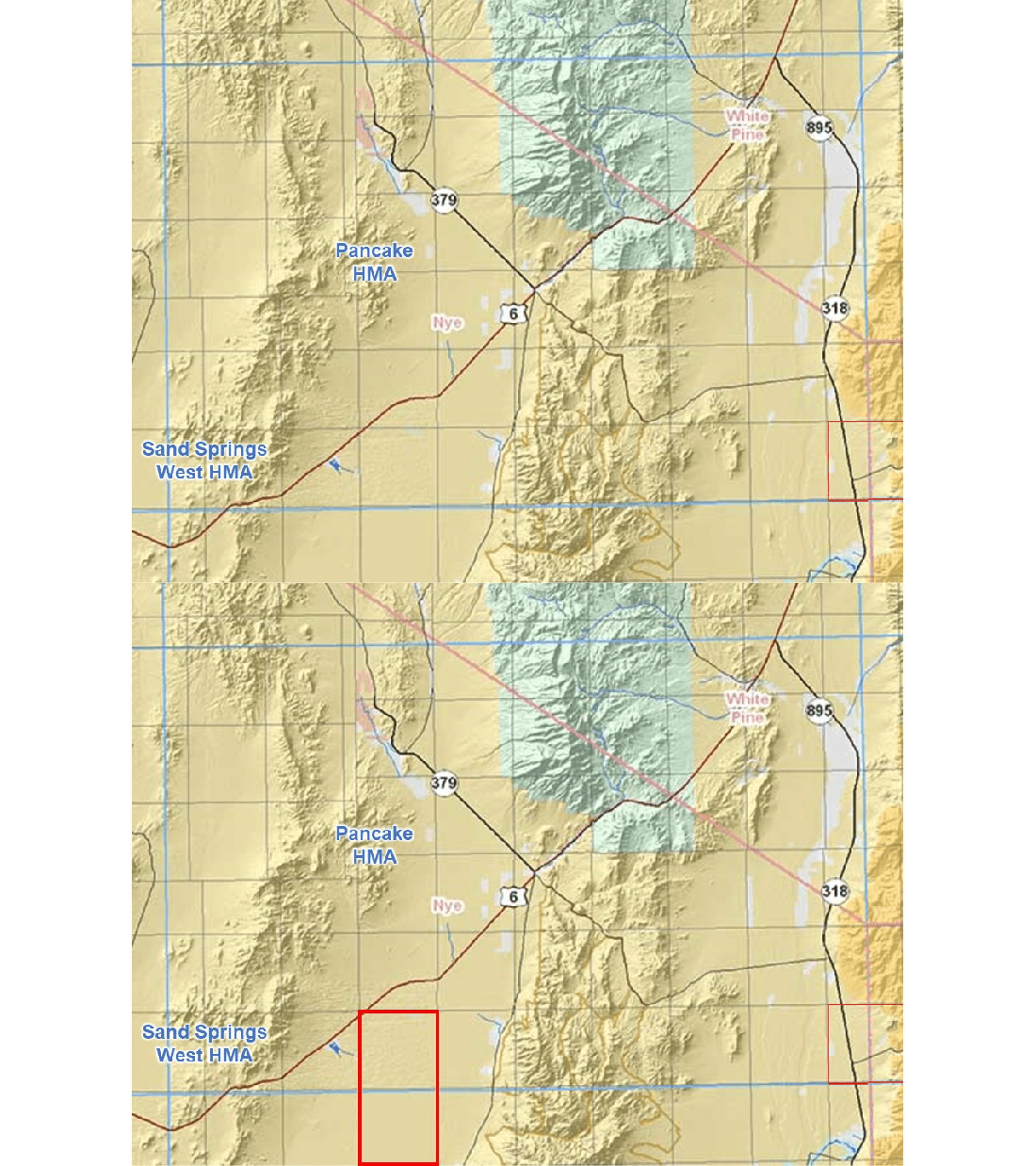
The area of interest is on the south side of Highway 6, based on the townships and ranges given in the Federal Register and a map in the BLM Land Records search tool.
The grid lines mark off parcels of approximately 36 square miles. Hover over each one in the BLM map to see its coordinates.
The withdrawal would include a portion of the land in the two parcels.
The news release did not say if the area would be off limits to wild horses and livestock.
Calibration usually involves the measurement of known quantities, called ‘standards,’ followed by adjustment of the instrument to bring the measured values in line with the known values.
The comment period closed today. Public concerns have not been addressed and a decision has been not been reached. But apparently it’s a done deal.
The governor wants a solution that balances multiple uses, including forage for livestock and habitat for wildlife, according to a report in today’s edition of Sweetwater Now.
A pest control program for wild horses would meet the requirement—and satisfy the special interests that influenced or drafted the governor’s letter.
RELATED: Conflating Rock Springs RMP Amendments and Gather Plan?

Public lands may not support the usual numbers of cattle and sheep this year and ranchers have been advised that early removal could be necessary.
BLM staff will also be looking at resource availability for wild horses and burros, and assessing the potential for wildfires, according to the news release.
A rescue in Webster, FL takes in wild horses, trains them and adopts them out, according to a video report posted yesterday by the Ocala Star-Banner.
A spokeswoman told Western Horse Watchers that most are owner surrenders, some purchased on sale authority and some adopted with the $1,000 incentive.
As of today, 49 of the 60 horses at the facility are mustangs.
 Western Horse Watchers Association