The outage has resumed. The site now displays the following message.
Page Not Found
RELATED: BLM IT Outage Resolved.
Western Horse Watchers Association
Exposing the Hypocrisy, Lies and Incompetence of the Wild Horse Advocates
The outage has resumed. The site now displays the following message.
Page Not Found
RELATED: BLM IT Outage Resolved.
The incident began on September 1. Gather stats through October 3:
The daily reports could not be accessed for two days due to a BLM IT outage.
No horses were caught on Days 21, 23, 25, 26, 27, 29, 30, 32 and 33.
The death rate is 2.6%.
Foals represented 14.8% of the horses gathered. Of the adults, 46.3% were male and 53.7% were female.
Body condition scores were not reported.
Day 33 ended with no unaccounted-for animals.
Other statistics:
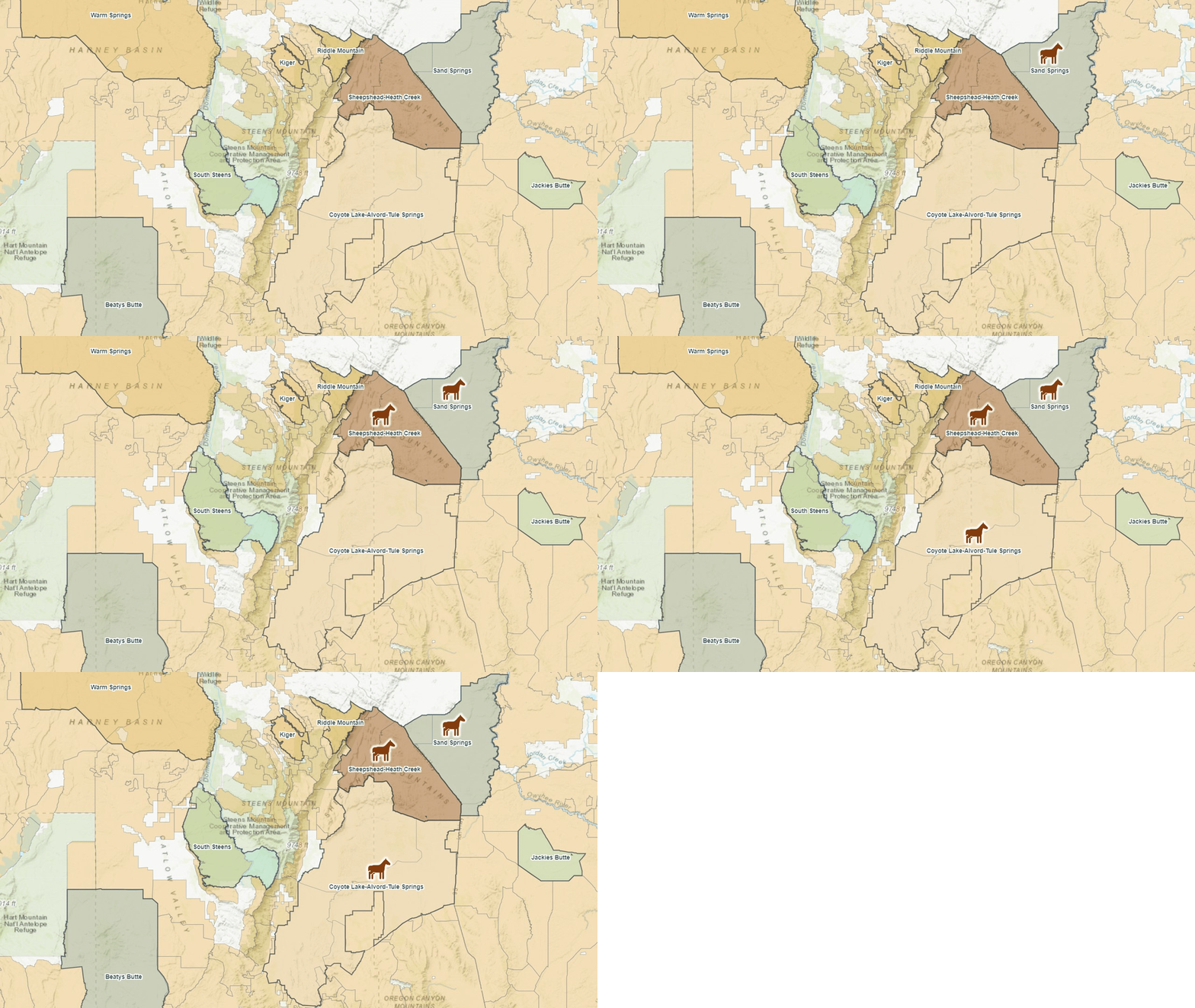
The Western Watersheds map shows two grazing allotments overlapping the HMA, Stone Cabin and Willow Creek. Click image to open in new tab.
An estimate of the forage assigned to livestock, and the number of wild horses displaced thereby, should be a straightforward task.
The number of horses the HMA can support, the True AML, can be computed from those estimates, even though the advocates say it’s almost impossible to determine.
RELATED: Stone Cabin Roundup Day 18.
A guest column about wild horses published this morning by The Durango Herald concludes with this question: “And what about those ranch families whose income depends on cattle and sheep that have less and less to eat?”
What about them? Nobody’s trying to put them out of business.
Confine them to their base properties and let them pay market rates to feed their animals, like everybody else. No more gravy train.
Manage wild horse areas principally for wild horses, not privately owned cattle and sheep, as specified in the statute.

The incident began on September 28. Gather stats through October 8:
The daily reports could not be accessed for two days due to a BLM IT outage.
Three horses were put down on Day 8 and one died of a broken neck. A yearling was put down on Day 11. The death rate is 1.6%.
On Day 8, 66 horses were returned to the Massacre Lakes, Bitner, Nut Mountain and Wall Canyon HMAs. Mares were treated with fertility control.
Body condition scores have not been reported.
Gather ops on Day 10 and 11 were in the High Rock and Fox Hog HMAs. Six HMAs are involved in the roundup.
Test results for pigeon fever, reported on Day 7, have not been provided.
Day 11 ended with 209 unaccounted-for animals.
Other statistics:
RELATED: Surprise Complex Roundup Day 7.
The incident will occur at the China Lake Naval Air Weapons Station, where most of the HMA is located, due to conditions related to the drought and two wildfires last year that burned approximately 45,000 acres.
Helicopters and wranglers will push the horses into the traps, according to the news release, but the operation will not be open to public observation.
The capture and removal goals are 250. The roundup is not on the August 30 schedule.
The HMA covers 318,499 acres in central California. The AML is 168 and the stocking rate allowed by plan is 0.5 wild horses per thousand acres.
The pre-gather population was not specified.
The Western Watersheds map, reproduced above, shows one grazing allotment on the northwest side of the HMA but outside of China Lake. Click image to open in new tab.
Captured animals will be taken to the off-range corrals at Ridgecrest, CA.
Gather stats and daily reports will be posted to this page.
Wild burros, not allowed by plan, were removed from the HMA earlier this year.
The following services are now available:
The Allotment Information Report in RAS still yields bad data. RSGA receives 1,555,088 AUMs per year on the Rocks Springs Allotment, as noted earlier.
The outage is now well into Day 2, with the top-level page displaying a brief message.
Under Maintenance
RELATED: BLM IT Issues Still Not Resolved.
BLM is clearing wild horses out of the way for livestock and hunting interests, according to a news release dated October 7.
Yes they are, dear. It’s what you signed up for in the rancher-friendly ‘Path Forward.’
RELATED: Unabashed and Unapologetic, DeMayo Pushes ‘Path Forward.’
The company announced today that it no longer plans to build a smart city at the north end of the Virginia Range, according to a story by AP News.
CEO Jeffrey Burns was one of the instigators of the 2019 darting program, which the advocates have continued to this day.

Blockchains is the largest landowner in the Tahoe Reno Industrial Center, on the south side of I-80, east of Reno, NV.
RELATED: Storey County Commissioners Oppose Autonomous Zone.
The top-level page says ‘Under Maintenance.’
The system has been down for about 24 hours.
RELATED: IT Failure at BLM?
Western Horse Watchers has been unable to access the following services for the past twelve hours:
WHIMS, the fertility control database, is still available, which is great news for the advocates.
The incident began on September 16. Reports covering activity through October 5 have been posted to the Modoc news page:
Foals represented 13.9% of the horses captured. Of the adults, 49.2% were males and 50.8% were female.
Body condition scores were not provided.
The death rate and number of unaccounted-for animals cannot be determined.
Other statistics:
RELATED: Devil’s Garden Roundup Day 18.
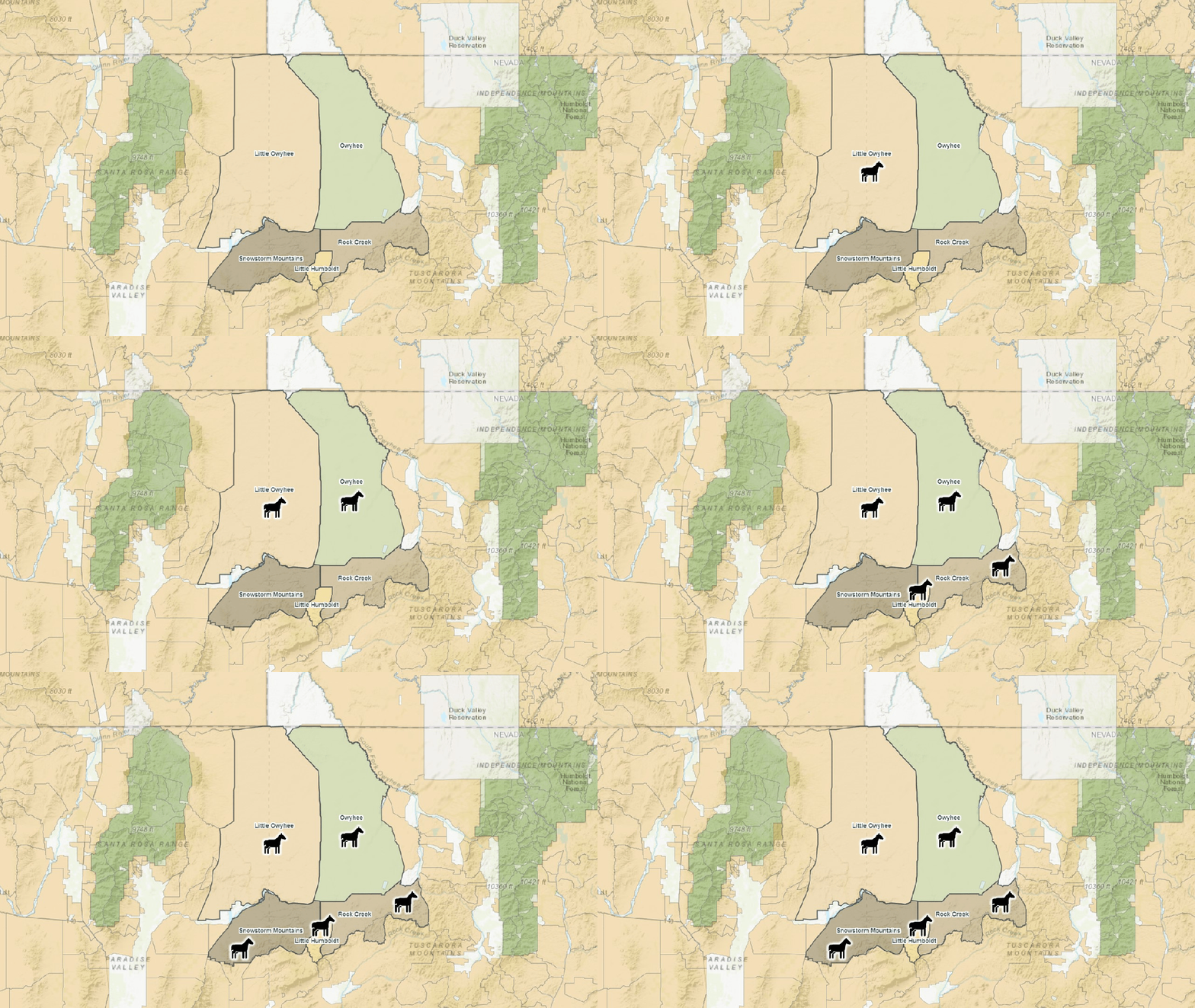
Six grazing allotments that overlap the five HMAs in the Owyhee Complex are listed in Table 5 of the Final EA for resource enforcement actions therein.
The Western Watersheds map, reproduced below, shows the arrangement.
Two of the allotments are managed by the Humboldt River Field Office. Four are managed by the Tuscarora Field Office.
Table 6 in the EA provides forage allocations from 2012, which were copied into the following table. Other values were sourced from the Allotment Master Report in RAS, one dataset for each field office [Humboldt River, Tuscarora].

Although the total forage allocation declined slightly over the past nine years, all six allotments are in the Improve category, along with all of the public acres.
The 999 horses allowed by plan receive 11,988 AUMs per year.
RELATED: Owyhee Roundup Announced.
The incident began on September 8. Gather stats through October 4:
Reports for Days 23 to 27 were posted today. No horses were taken on Days 21, 23, 24, 26 and 27. No explanations were given.
The cumulative total at the gather page is 1,124, with 1,097 shipped.
Two horses were euthanized on Day 20 due to pre-existing conditions. The death rate is unchanged at 1.4%.
Foals represented 21.4% of the horses gathered. Of the adults, 45.2% were male and 54.8% were female.
Body condition scores ranged from 3 to 4.
The location of gather activity is not known. Three HMAs are involved in the roundup.
Day 27 ended with 50 unaccounted-for animals.
Other statistics:
RELATED: Barren Valley Roundup Day 19.
The incident began on September 28. Gather stats through October 4:
Two stallions were put down for pre-existing conditions on Day 6, leaving the death rate at 1.6%. Another stallion was released.
The number of stallions, mares and foals caught each day have not been reported.
Body condition scores are not known.
Gather operations concluded at Wall Canyon on Day 6. Day 7 saw helicopters flying beyond the HMA boundaries. Six HMAs are involved in the roundup.
Pigeon fever may have affected some of the horses. Tests have been ordered.
Another release is set for Day 8.
Day 7 ended with 134 unaccounted-for animals.
Other statistics:
RELATED: Surprise Complex Roundup Day 5.
So says the operations manager of the Rock Springs Grazing Association in a report posted this morning by WyoFile, a public-interest news service in Wyoming.
The incident will comply with a 2013 court order resulting from a case brought by RSGA, according a BLM news release.
The roundup may be a prelude to the RMP amendments that will close three of the HMAs and downsize a fourth if approved.
The writer acknowledged that one of the goals was to reduce trespass onto 899,308 acres of private land in the Wyoming checkerboard, much of it owned by RSGA.
He did not say if Wyoming was a fence-out state.
No activity has been reported since September 29, when gather ops commenced at Coyote Lake.
The incident will begin on or about October 11, according to the new release.
It was on the schedule dated August 2 but was dropped from the current schedule, dated August 30.
Helicopters will push the horses into the traps and the operation will be open to public observation. Five HMAs are involved.
The capture goal is 947 and the removal goal is 615. Mares returned to the Complex will be treated with PZP.
The Complex covers about one million acres and has an AML of 999, as shown in Table 1 of the Final EA for resource enforcement actions therein. The stocking rate allowed by plan is one wild horse per thousand acres, in line with the target rate across all HMAs.
The pre-gather population was estimated to be 1,188.
The Complex intersects six grazing allotments, listed in Table 5 of the EA. Figure 13 shows the arrangement. The image above is from the Western Watersheds map.
Captured animals will be taken to the Sutherland off-range corrals in Utah.
Gather stats and daily reports will be posted to this page.
The EA was posted with other project documents in ePlanning.
Western Horse Watchers does not see the wisdom of mobilizing a contractor in an area that is only 20% above AML and almost certainly below the True AML.
The incident began on September 16. Reports covering activity through October 3 have been posted to the Modoc news page:
Foals represented 13.1% of the horses captured. Of the adults, 49.8% were males and 50.2% were female.
Body condition scores were not provided.
The death rate and number of unaccounted-for animals cannot be determined.
Other statistics:
RELATED: Devil’s Garden Roundup Day 14.