Advocates to ASNF: Let Us Fix Your Wild Horse Problem

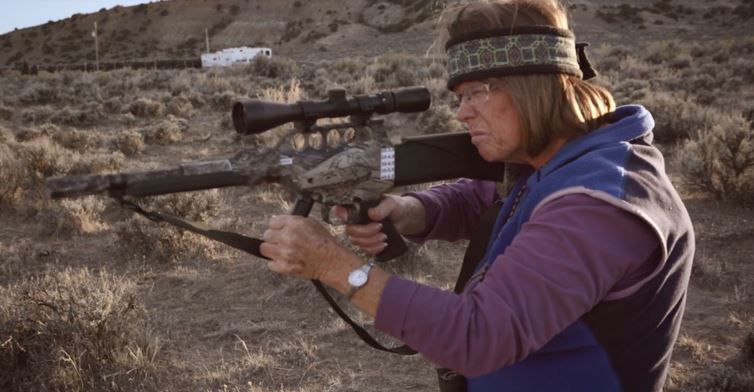
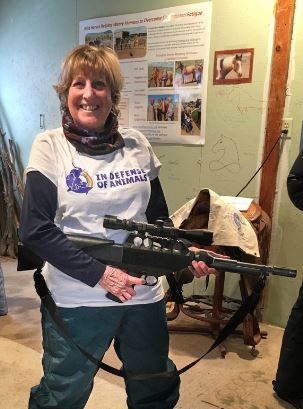
The ringleader of the Salt River Wild Horse Darting Group, a surrogate of the Campaign Against America’s Wild Horses, told the White Mountain Independent in a story posted today that she has the solution for unauthorized livestock in the Apache-Sitgreaves National Forests.

Pointing to the darting program at the Salt River, she explained:

“The SRWHMG fertility-control program has reduced the number of foals born in the Salt River wild horse population in the Tonto National Forest from more than 100 in 2019 to just two in 2021 and none yet for 2022.  The goal is to humanely decrease the size of the population over time so that it can remain in balance with its habitat [and other mandated uses of public lands].  This is what we have proposed to the Forest Service for the Alpine wild horses as well, but was rejected.  Now the Alpine wild horses will continue to grow while the Forest Service will continue to spend taxpayer money on removals.  These removals are not humane, not popular with the public, not cost efficient and not necessary.”

The advocates would protect the Apache wild horses from removal, whom the people of Arizona cherish and love, by getting rid of them with PZP, an EPA-registered pesticide.

Their words never match their deeds.

Ever notice that?

RELATED: ASNF ‘Jumping Mouse’ Horses Sold at Auction?

For Your Cherished Ants and Roaches 08-30-22

Satisfying the Wishes, Hopes and Dreams of Livestock Operators

The federal agency charged with protecting wild horses is still working to eliminate them from their habitat, according to a commentary on the Rock Springs RMP Amendments in today’s edition of WyoFile.

The amendments would zero out two HMAs in Wyoming and downsize a third.

BLM3

The advocates protect wild horses from removal by getting rid of them with PZP.

They walk in lockstep with the bureaucrats.

Ever notice that?

RELATED: Minor Problem with Rock Springs RMP Amendments?

New Briefing Book Shows Bias in Rangeland Management

Management plans for HMAs allow, on average, one animal per thousand acres.

Assume they’re all designated for horses.

The land must be able to produce at least 12 AUMs per year per thousand acres to sustain those animals.

A new BLM Briefing Book provides data for livestock grazing on Colorado rangelands, which occurs on 7.8 million acres.

Here are some of the results:

San Luis Valley Field Office

  • Authorized forage: 28,519 AUMs per year
  • Affected land: 474,000 acres
  • Forage production: 60.2 AUMs per year per thousand acres

Kremmling Field Office

  • Authorized forage: 38,865 AUMs per year
  • Affected land: 328,100 acres
  • Forage production: 118.5 AUMs per year per thousand acres

White River Field Office

  • Authorized forage: 117,694 AUMs per year
  • Affected land: 1,435,513 acres
  • Forage production: 82.0 AUMs per year per thousand acres

Colorado River Valley Field Office

  • Authorized forage: 35,500 AUMs per year
  • Affected land: 441,600 acres
  • Forage production: 80.4 AUMs per year per thousand acres

Tres Rios Field Office

  • Authorized forage: 20,528 AUMs per year
  • Affected land: 324,061 acres
  • Forage production: 63.3 AUMs per year per thousand acres

As observed on numerous occasions, public lands are always more productive when designated for privately owned livestock.

These numbers tell you that the carrying capacity of western rangelands is much higher than the government admits.

Allotments in the Kremmling Field Office could support 9.9 wild horses per thousand acres!

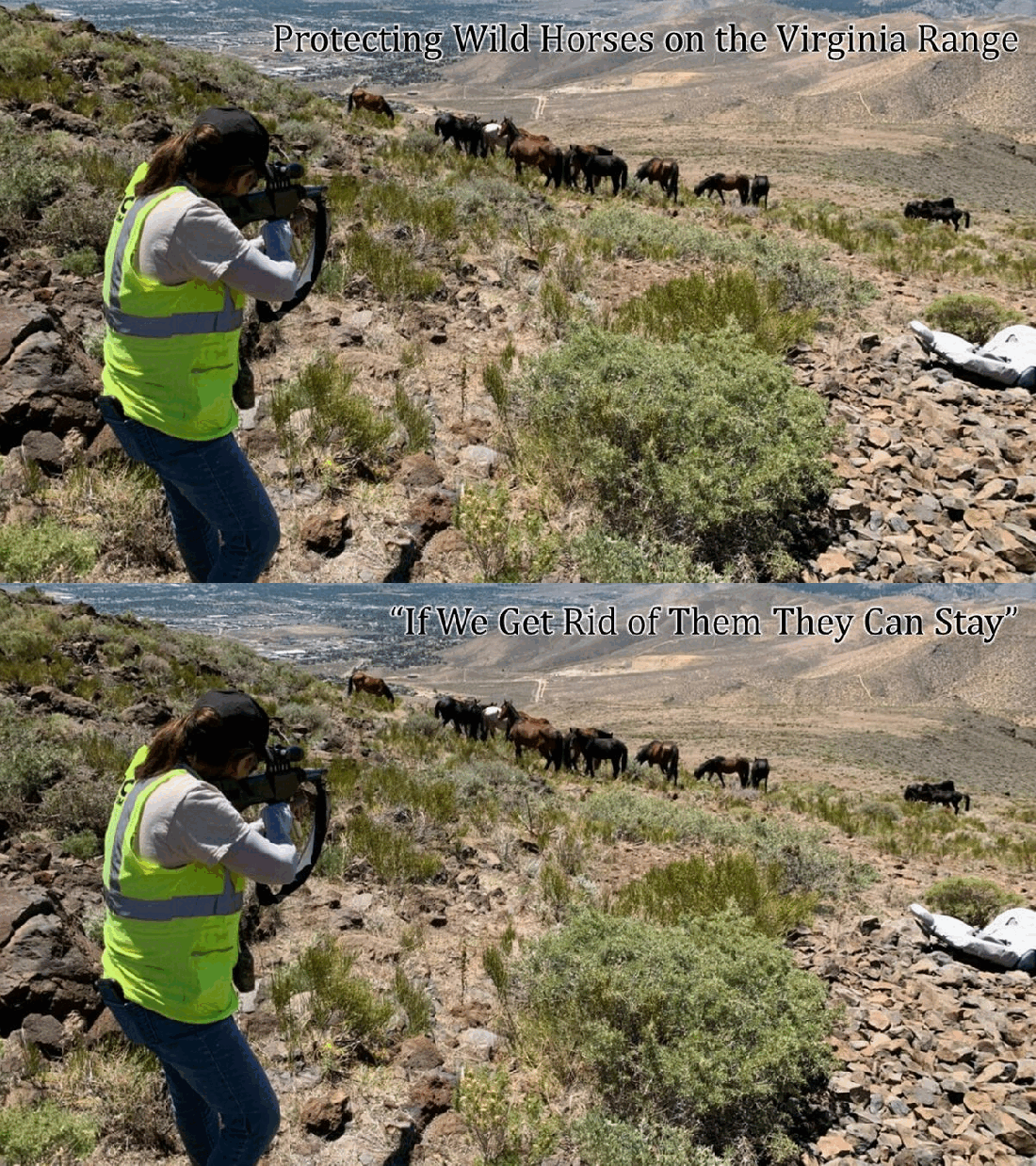
The Virginia Range has been carrying ten wild horses per thousand acres for years, although the advocates are now working with the bureaucrats at NDA to cover it up.

RELATED: Livestock Outnumber Horses and Burros on Public Lands?

How to Tell if an HMA or WHT Is Really Overpopulated

Overpopulation means more horses than allowed by plan, not necessarily more horses than the land can support.

AMLs, which represent the number of horses allowed by plan, are small relative to the authorized forage, because most of it has been assigned to privately owned livestock.

The authorized forage may correspond to half of the available forage, a safety factor that allows for natural variations in climate.

To determine if the area is really overpopulated, compare the current population to the True AML, which requires a few calculations as previously explained.

For example, the current population at Roberts Mountain HMA is 1,132, including foals, according to Table 1 of the Draft EA for resource enforcement actions in the Complex.

The True AML is 678, computed earlier today, to be achieved by confining the ranchers to their base properties.  (What do you think happens during the off season?)

The HMA is overpopulated because the current population exceeds the True AML.

The footnote in the table says the current population includes horses outside the HMA, and the number of foals was based on a 19% growth rate (24% birth rate, assuming a 5% death rate), so the situation inside the HMA may not be as bad as originally thought.

How Many Wild Horses Can the Roberts Mountain HMA Support?

Table 15 in the Draft EA for resource enforcement actions in the Roberts Mountain Complex indicates that 38% of the Roberts Mountain Allotment overlaps the HMA along with 46% of the Three Bars Allotment.

The HMA covers 99,990 acres and is 100% subject to permitted grazing.

The 150 wild horses allowed by plan require 1,800 AUMs per year.

The Western Watersheds map shows the arrangement.

Roberts Mountain HMA Allotments 08-28-22

The Allotment Master Report shows 5,840 active AUMs on Three Bars and 9,624 active AUMs on Roberts Mountain.  These figures may differ slightly from those in the EA.

The forage in Three Bars assigned to livestock inside the HMA would be 5,840 × .46 = 2,686 AUMs per year, assuming the resource is evenly distributed across the parcel.

The forage in Roberts Mountain assigned to livestock inside the HMA would be 9,624 × .38 = 3,657 AUMs per year.

The total estimated forage assigned to livestock inside the HMA is 2,686 + 3,657 = 6,343 AUMs per year, enough to support an additional 528 wild horses.

The True AML would be 150 + 528 = 678.

The stocking rate at the new AML would be 6.8 wild horses per thousand acres, compared to a target rate across all HMAs of one wild horse per thousand acres.

The Virginia Range was carrying ten, before the advocates got involved.

Livestock in Roberts Mountain receive 3.5 times more forage than the horses, yet the area was set aside for the horses.

The HMA is managed primarily for livestock.

The BLM will collect 6,343 × 1.35 = $8,563 per year in grazing fees from ranching activity inside the HMA while it spends 528 × 5 × 365 = $963,600 per year to care for the horses displaced thereby.

Would you say that permitted grazing is a wise use of the public lands?

RELATED: Status of Allotments in Roberts Mountain Complex.

Virginia City: Easy Day Trip Out of Reno

The Comstock Lode put the town on the map, with most of the production occurring between 1860 and 1880.

Today, it’s mostly a tourist attraction.

Virginia Range mustangs can be seen nearby.

Volunteers with the Campaign Against America’s Wild Horses are the greatest threat to their existence, not the BLM, not the visitors and not the townspeople.

RELATED: Virginia Range Darting Program a Model for Herd Management?

Artemis to Go Where No Rancher Has Gone Before

One of the headlines on Drudge pointed to a story by CNBC.

Artemis on Launchpad 08-27-22

Here are some details omitted by the compliant media.

The spacecraft was equipped with an array of sensors that will detect forage, water and cover, and will determine if the soil is amenable to fencing and cattle gates.

The resource management plans, still in development, were influenced by lessons learned from the westward migration on Earth.

Future legislation would initiate rulemaking that sharply limits the possession of horses and burros by explorers, settlers and prospectors.

The RMPs would assign at least 98.6% of the authorized forage to privately owned livstock, with the balance reserved for wildlife, inverting the intent of the WHB Act.

The scanners will also search for remote wilderness areas, not particularly suited to livestock grazing, where estrays could be shipped under the guise of wildfire prevention.

Desperate for a seat at the table, the advocates have already indicated their willingness to track down and inhibit any escaped mares.

They are bolstered by new technology that promises unmanned aerial vehicles equipped with global positioning, facial recognition and self-propelled darts.

“Like the Democrat Party,” one of them told Western Horse Watchers, “we’ve had to be coy about our long-term plans, but in this environment we’re coming out of the closet.”

Contrary to rumors going around on socialist media, if you look closely at the photo, the logo on the booster says NASA not NCBA.

RELATED: Moon Rocket to Search for New Grazing Opportunities?

Burning Man Starts Tomorrow

The theme of this year’s festival is Waking Dreams.  Most of the attendees will be woke.

The Reno Gazette Journal published several articles about the event this week.

One of the stories covers an art project known as Wild Horses of the American West.

Burning Man 08-27-22

Curiously, the area has been cleared of thousands of wild horses, following roundups over the past few months at Twin Peaks, Buffalo Hills and Blue Wing.

Calico is on the list for September 10.

The general route to Black Rock City is I-80 to Wadsworth, NV (home of Velma and Charlie), then north to Gerlach on 447, then northeast on 34 to the playa.

RELATED: Burning Man Returns to Black Rock Desert.

Black Rock Desert Map 07-01-22

Combat Veterans Duped by One of Their Own?

Cameron Ring, an Army National Guard veteran, told Cowboy State Daily in a story posted today that letting combat veterans tap into their battle skills by sneaking up on wild mares with darting rifles would help them heal, as well as keep the mustang populations at reasonable levels.

You heard that right.

Veterans suffering from PTSD can overcome the illness by targeting symbols of the values they fought to protect!

Our veterans deserve better.

Ring should study the work of Leo Kuntz, a veteran who tried to save the original wild horses of Theodore Roosevelt National Park, not get rid of them.

RELATED: Bold Prediction for Veterans Against Mustangs Act.

UPDATE: Added video about Kuntz and the Nokota horses.

Virginia Range Darting Program a Model for Herd Management?

Contrary to what you’ll read in this column, Velma Johnston would be shocked at the betrayal of wild horses by the advocates, a topic that fits perfectly with today’s episode of Foal-Free Friday.

To wit:

“Under state law, Virginia Range wild horses removed from their habitat can be sold at livestock auctions, which are frequented by ‘kill buyers’ who will ship them to Canada and Mexico for slaughter, something that three out of four Nevadans oppose.”

“A robust fertility control program is humanely slowing birth rates while keeping wild horses on the range.  It utilizes the PZP immunocontraceptive vaccine, which is more than 90% effective in preventing pregnancy.  The effort has become the world’s largest program of its kind in the world and it’s delivering dramatic results.  Births have decreased by over 60 percent and, when combined with a foal mortality rate of over 50 percent primarily due to natural predation, the program is close to achieving population reduction in just over three years.”

They’re protecting wild horses from removal by getting rid of them with PZP.

Here’s what you need to know about the Campaign Against America’s Wild Horses and its army of nitwits:

1. They care far more about their standing with the bureaucrats and ranchers than they do about the horses.

2. They’re trying to convince said bureaucrats and ranchers that the Montana Solution is a viable alternative to helicopter roundups.  The Virginia Range darting program is only a pilot project, a stepping stone.

3. They want to be a leader in the wild horse removal industry.

Pay attention to what they do, not what they say.

RELATED: Virginia Range Darting Program Working as Planned?

Frauds of the Wild Horse World 07-08-22

Triple B Roundup Ends

A statement at the gather page yesterday said gather ops concluded on August 24 but results for August 25 were not posted until this morning.

Operations ended with 1,897 horses captured, 1,849 shipped, 25 released and 23 dead.

The were no unaccounted-for animals.

The death rate was 1.2%.

Data quality was good.

The capture goal was 1,900 and the removal goal was 1,800.

The number of horses removed was 1,872.  Mares treated with fertility control may be returned to the Complex at a later date, bringing the figure closer to target.

The capture total included 654 stallions, 908 mares and 335 foals.

Youngsters represented 17.7% of the animals gathered.

Of the adults, 41.9% were male and 58.1% were female.

The observed percentage of foals suggests the herd was growing at a rate of 13% per year, not 20% per year, a rate used by land managers to predict herd sizes and justify resource enforcement actions.

The percentages of stallions and mares cannot be explained by a simple random process centered at 50% males / 50% females.

Abnormal sex ratios are common in herds subject to the Montana Solution but not double-digit birth rates.

The Complex is managed primarily for livestock.

RELATED: Triple B Roundup Announced.

UPDATE: Up to 50 mares will returned to the Complex, according to today’s news release, and the event will be open to public observation.

Foal-Free Friday, Changing the Way They’re Managed Edition

An estimated 250 wild horses have been displaced from their lawful home in the Pine Nut Mountains HA by permitted grazing.

The HA has a resource management problem, not a wild horse problem, yet the advocates are going after the horses.

“We’re changing the way wild horse herds are managed, not their land.”

That means taking them off the range with the Montana Solution, not helicopters.

Consider these two scenarios:

A. Helicopter roundup

  • Initial population – 440
  • Final population – 250
  • Duration – 10 days

B. Darting program

  • Initial population – 440
  • Final population – 250
  • Duration – 10 years

Only scenario A qualifies as removal.  Scenario B ranks as protection.

“We’re protecting them from removal by getting rid of them with PZP.”

Absurdity may be a symptom of too much exposure to the pesticide.

RELATED: Foal-Free Friday, On-Range Management Edition.

Bigger Not Necessarily Better for Cedar Creek Permittees

The allotment, subject of today’s stewardship awards, offers 2,657 active AUMs on 14,008 public acres.

It’s on the small side, as far as allotments go, but forage availablility is high, 189.7 AUMs per year per thousand acres.

For comparison, the allotments in the Roberts Mountain Complex offer an average of 49.7 AUMs per year per thousand acres.

The BLM authorizes privately owned livestock in Cedar Creek equivalent to 221 wild horses, with a stocking rate of 15.8 wild horses per thousand acres!

The average rate across all HMAs is one wild horse per thousand acres.

RELATED: Winners of 2022 Stewardship Awards Announced.

Winners of 2022 Stewardship Awards Announced

They will be recognized today in a ceremony during the 2022 Public Lands Council Annual Meeting for their exemplary rangeland management and outstanding accomplishments in restoring and maintaining rangeland health, according to yesterday’s news release.

The event will be open to public observation starting at 1:00 PM Mountain Time.

The conference agenda says the awards luncheon runs from 12:30 to 2:00 PM.

The winner of the Rangeland Stewardship Award is Charles Hibner of Cebolla, NM, a retired soil conservationist with the USDA’s Natural Resources Conservation Service and BLM permittee since taking over his father’s operation in the 1970s.

The winner of the Sagebrush-Steppe Stewardship Award is the Cedar Creek Grazing Association of Glendive, MT.  Established in 1967, it’s managed by a board and employs an experienced manager focused on positive outcomes for the land and its members.

The Operator Information Report in RAS ties Hibner to authorization #3001044.

The Allotment Information Report associates that number with the Rio Cebolla, Daggett Canyon, Tanques and Navajo Peak allotments.

The Allotment Master Report puts all four in the Improve category, suggesting that they don’t meet standards for rangeland health.

Hibner holds all of the active AUMs.

The Operator Information Report links the Cedar Creek Grazing Association with authorization #2502899 and #2502946.

The Allotment Information Report ties those numbers to the Lange and Cedar Creek allotments.

The Allotment Master Report puts Lange in Custodial and Cedar Creek in Improve.

The grazing association holds all of the active AUMs.

Western Horse Watchers is unable to explain how these results qualify as exemplary rangeland management.

The allotments should be in the Maintain category.

There are no federally designated wild horse areas near Glendive.

The Hibner allotments are near the inactive Mesa De Las Viegas WHT, according to the Western Watersheds map.

YPG Roundup, Day 16

The incident began on August 6.

As of August 21, 65 burros have been trapped, 49 have been shipped and no deaths have occurred, according to the gather page.

The capture total includes 28 jacks, 28 jennies and nine foals.

Youngsters represented 13.8% of the animals gathered.

The herd can’t be growing at a rate of 20% per year with a birth rate of 14%.

Of the adults, 50% were male and 50% were female.

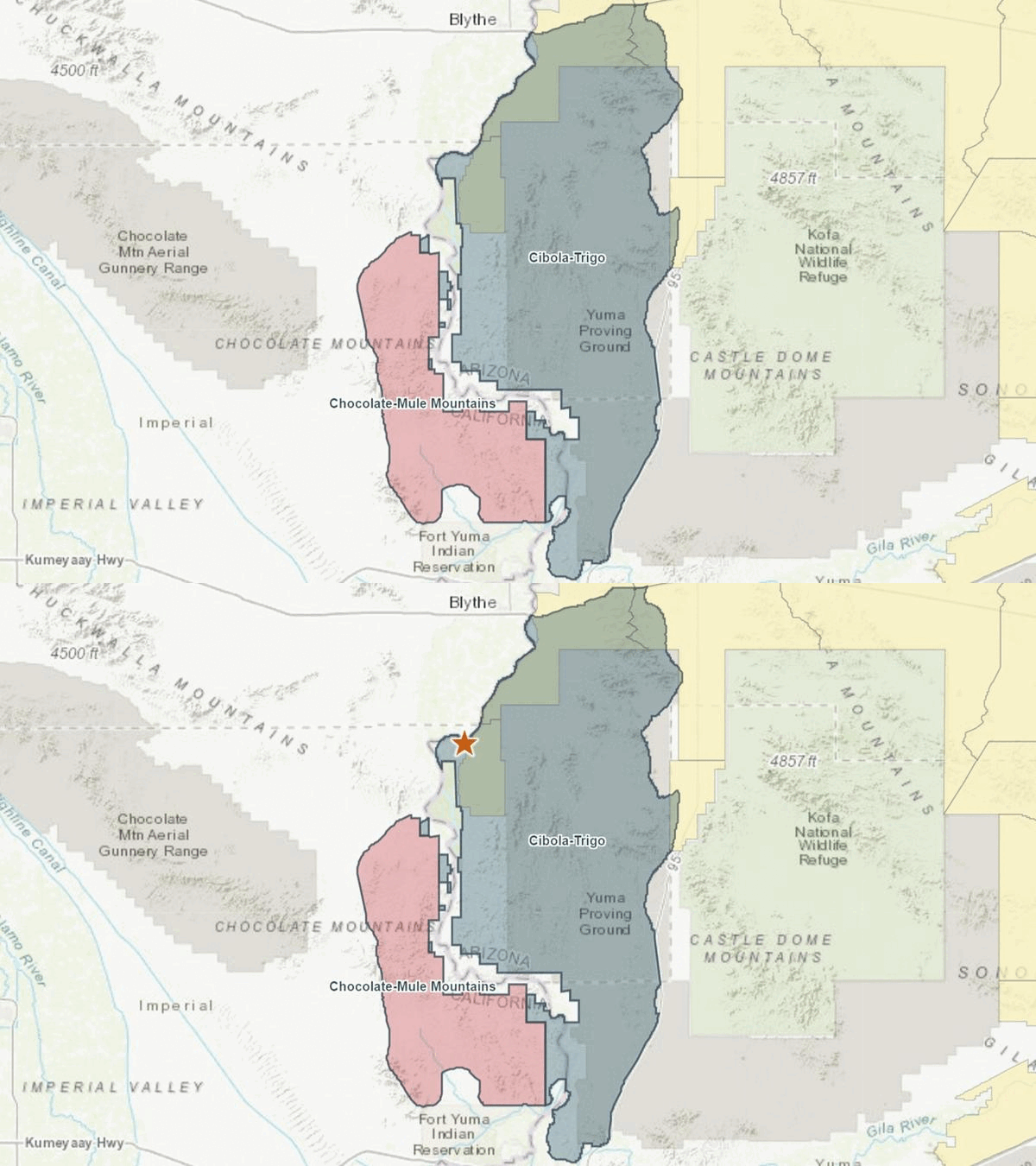
The location of the trap site is not known but the burros are associated with the Cibola-Trigo HMA, which overlaps the Yuma Proving Ground.

Cibola-Trigo HMA Map 07-15-22

Day 16 ended with 16 unaccounted-for animals.

The capture and removal goals are 80 each according to the latest schedule.

The roundup was not announced at the BLM news site.

RELATED: YPG Roundup in Progress.

Triple B Roundup, Day 38

The incident began on July 17.  Gather stats through August 23:

  • Target: Horses
  • Type: Planned
  • Method: Helicopter
  • Category: Cruel and costly
  • Captured: 1,854, up from 1,585 on Day 36
  • Average daily take: 48.8
  • Capture goal: 1,900
  • Removal goal: 1,800
  • Returned: None
  • Deaths: 23, no change from Day 36
  • Shipped: 1,616, up from 1,495 on Day 36

The figures above are based on the daily reports, not the totals posted by the BLM.

The death rate is 1.2%.

The capture total includes 638 stallions, 891 mares and 325 foals.

Youngsters represented 17.5% of the animals gathered.

Of the adults, 41.7% were male and 58.3% were female.

The herd can’t be growing at a rate of 20% per year with a birth rate of 18% per year.

A better estimate would be 13% per year, assuming a death rate of 5% per year.

The observed percentages of stallions and mares cannot be attributed to a simple random process centered at 50% males / 50% females.

Abnormal sex ratios are often found in herds subject to the Montana Solution but not double-digit birth rates.

Body condition scores were not provided.

The location of the trap was not disclosed.

The Complex and surrounding lands are subject to permitted grazing.

Triple B Complex Map 07-11-22

Day 38 ended with 215 unaccounted-for animals.

The capture goal is 98% complete.  Operations will probably conclude this week.

Mares treated with fertility control may be returned to the area at a later date.

Other statistics:

  • Horses allowed by plan (AML): 821
  • Forage assigned to horses: 9,852 AUMs per year
  • Pre-gather population: 3,475
  • Forage liberated to date: 22,248 AUMs per year
  • Water liberated to date: 18,540 gallons per day
  • Forage assigned to livestock: 49,188 AUMs per year (estimated)
  • Horses displaced from Complex by permitted grazing: 4,099
  • True AML: 4,911
  • Stocking rate at new AML: 3.0 horses per thousand acres
  • Horses displaced from Complex by drilling and mining: Ask the advocates

RELATED: Triple B Roundup, Day 36.