Frank Kuntz Running Out of Time to Care for Nokota Horses

Although there has been much angst over the last few months about the possible removal of wild horses from Theodore Roosevelt National Park, they have little historical significance.

The original wild horses of TRNP, thought to be descendants of Sitting Bull’s ponies, were removed by the Park Service over 20 years ago.

The herd you see today is only an exhibit.

Some of the horses were rescued by Frank and Leo Kuntz.  They called them Nokotas.

Their story was told in the 2011 film “Nokota Heart.”

Leo died in 2018.

Now, Frank, suffering from cancer as a result of serving in Vietnam, wonders who will care for his herd when he is gone.

One of the biggest problems is paying for hay, according to a story by INFORUM.

A GoFundMe has been started to help with expenses.

RELATED: Who Will Look After the Nokotas When Frank Is Gone?

CAAWH Distributes More Lies about VR Darting Program

The announcement, posted on the propaganda page hosted by Lucky Three Ranch, celebrates the fourth anniversary of the effort to snuff out new life on the Virginia Range, allowing the herd to die off at an increasing rate.

With a shrinking number of foals hitting the ground, the average age of the herd is increasing, along with the death rate.

Why are they doing this?
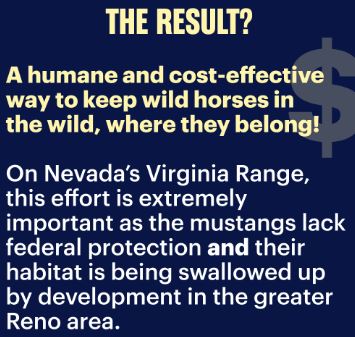
Virginia Range Darting Justification 04-10-23

Nonsense!  Some land has been lost to development at TRIC, but not enough to justify a reduction in herd size from 3,000 to 600 or less, the whisper target mentioned in the March 7 SB90 hearing.

At a stocking rate of ten wild horses per thousand acres, the Virginia Range defies the carrying capacity narrative peddled by the bureaucrats and ranchers.

They want it erased and the advocates—their allies—are eager to comply.

How are they doing this?

Virginia Range Fertility Control 04-10-23

They’re poisoning the mares with a restricted-use pesticide.

It’s not a vaccine.  It causes illness instead of preventing it.

It destroys the ovaries, usually within five years, resulting in sterility.  The damage begins with the first injection.

Effect on hormonal system?  Huge.

They are not keeping the horses wild and free.

They are not protecting them from removal.

They’re exterminating the herd with little if any fanfare, hoping you won’t notice.

What have they accomplished?
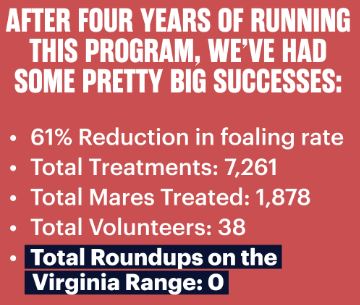
Virginia Range Darting Stats 04-10-23

With the program moving into its fifth year, many of the mares are at risk of sterility.

They’ve enriched those in the PZP supply chain.

Their enmity toward the horses has caught the eye of the bureaucrats and ranchers.

With the current lull in gather activity, they’re leaders in the wild horse removal industry.

Nobody’s getting rid of more wild horses than CAAWH.

Not motorists, not tourists, not shooters, not helicopter pilots and wranglers, not drillers, miners and loggers.  Nobody.

RELATED: What’s So Important about the Virginia Range?

How Much Land Have the Roberts Mountain Horses Lost?

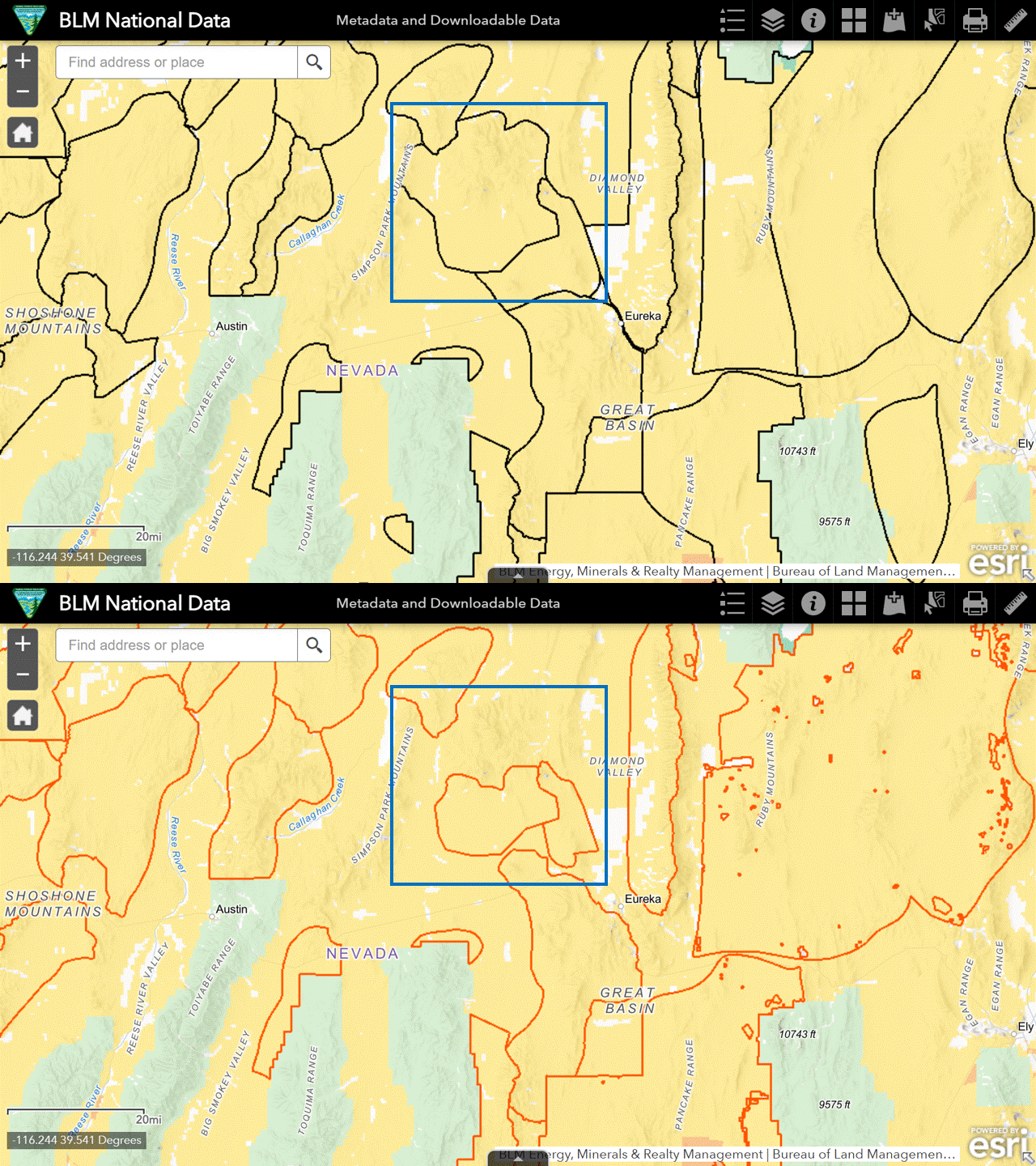
Almost half, according to the following map from the National Data Viewer.

The HMAs, currently managed for wild horses, are shown in orange, while the HAs, where horses were found in 1971, are drawn in black.

The bureaucrats have empowered themselves to take away roughly half of their land, not just in the Roberts Mountain Complex, but across the American west, then give most of the remaining food and water to privately owned livestock.

Of the land taken away, almost all of the food and water have been assigned to livestock.

How do the advocates respond to this injustice?

You need to manage the numbers to fit what’s available for the horses.”

Deniz Bolbol TCF Darter 03-11-23

They are defeatists, no longer worthy of your financial support.

Here are the requirements for managing land principally but not necessarily exclusively for wild horses and burros:

  • The animals were there in 1971 when the Act became law.

Today, management actions are designed to achieve and maintain Appropriate Management Levels, an undefined term that appears in the current statute.

There is nothing in the statute that says AMLs must be small relative to the available resources!

They are, however, because the bureaucrats, who never have to face the voters, write their own rules, known as regulations.

Regulations are inferior to laws, which are written and approved by the people’s representatives, and must be consistent with them.

In America, we tell the government what to do, not the other way around.

Pay no attention to the Democrat Party and its sycophants, they are enemies of your liberty and autonomy.

RELATED: Decision Published for Roberts Mountain Complex.

Land Lost in Roberts Mountain Complex 04-09-23

CAAWH Acquires Pine Nut Base Property?

The Campaign Against America’s Wild Horses is now one of the major grazing rights holders in Douglas County, according to a story posted today by The Record-Courier of Minden, NV.

Christopher and Camille Bently and Bently Family LLC donated 757 acres.

Funding from others enabled the purchase 15 additional parcels amounting to 2,578 acres, for a total of 3,335 acres in the Pine Nut Mountains.

The article did not name the allotment to which the acreage is tied but Western Horse Watchers suspects it’s Buckeye.

It did not indicate if the group, a leader in the wild horse removal industry, would lease out the grazing preference to local ranchers, whose approval it seeks above all else.

Petitioning the BLM for a change in livestock type and season of use, to accommodate wild horses, is not compatible with its mission, which is to eradicate as many herds as possible with a restricted-use pesticide.

The following map from the National Data Viewer shows the Pine Nut Mountains HMA in orange, the HA in black and the Buckeye Allotment in green.

Contrary to what you read in the report, CAAWH has been working closely with the Pine Nut advocates for years, providing support for their safe, proven and reversible darting program, targeting the beloved mares of the Fish Springs herd.

The article did not say if Mary Cioffi, president of the group, real estate agent and PZP darter in the Fish Springs area, whose writings frequently appear in Horse Tales, brokered some or all of the deal.

Bently is the only son and heir of Don Bently, founder of Bently Nevada, manufacturer of sensors that monitor the condition of rotating equipment, among other things.

Buckeye Allotment Map 04-08-23

No Relief in Hay Prices

One bale of alfalfa-grass mix cost $36 today, 20 bales minimum, the same as January.

The same bale cost $19 in July of 2021.

The average horse would need around five bales per month, putting the cost of feed at $180 per AUM.

Ranchers pay $1.35 per AUM to graze livestock on America’s public lands, including areas designated for wild horses.

That’s one reason why there are 62,000 such animals in off-range holding.

Let the taxpayers foot the bill.

RELATED: Price of Hay Still in Stratosphere.

Decision Published for Roberts Mountain Complex

The Mount Lewis Field Office authorized the Proposed Action, according to a Decision Record dated April 7, clearing the way for an initial roundup of approximately 1,000 wild horses, followed by removal of 954.

Mares returned to the Complex would be treated with pesticides and/or IUDs.

Stallions would be released in numbers that skew the sex ratio in favor of males.

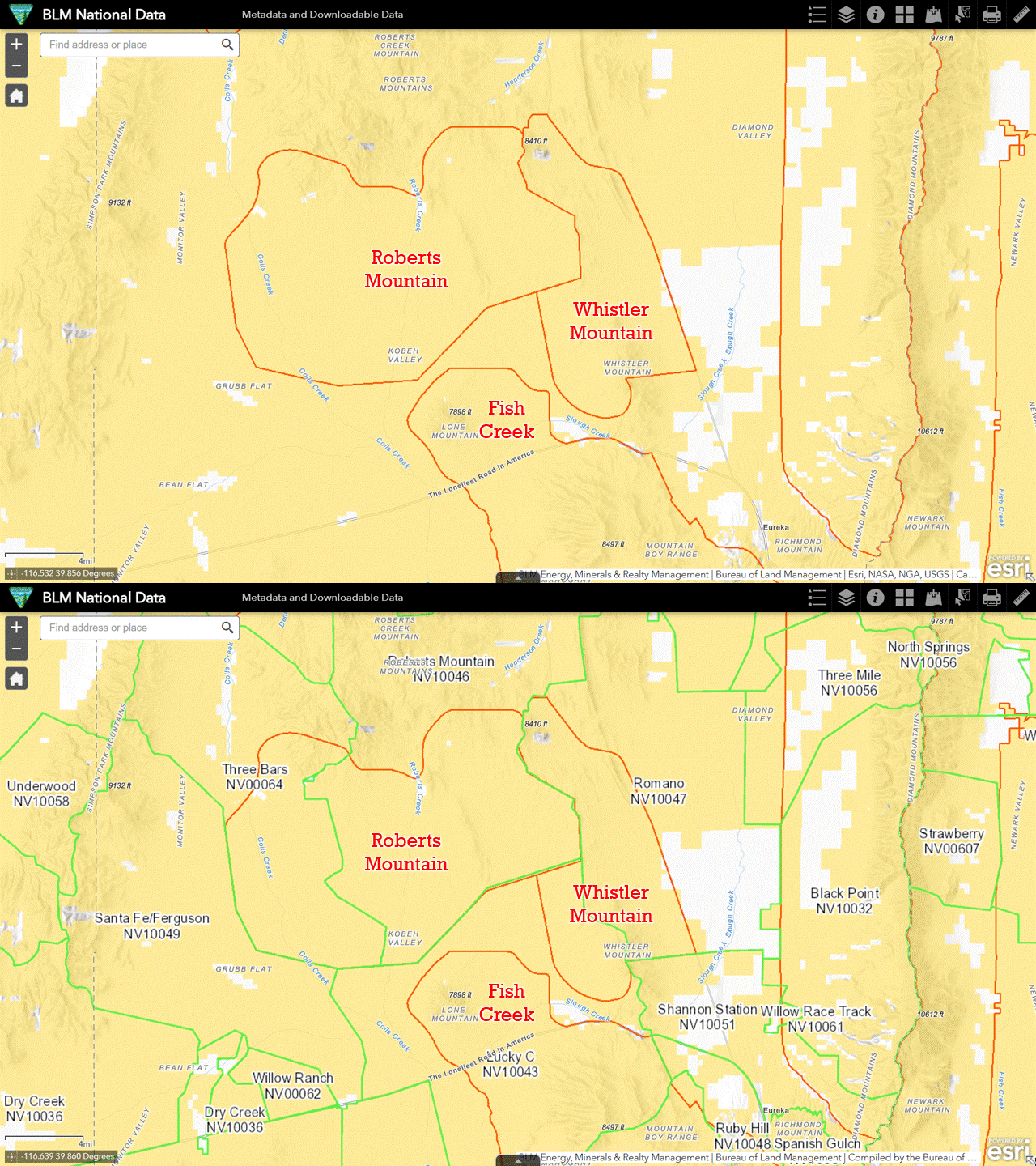
The Complex consists of three HMAs northwest of Eureka, NV and is subject to permitted grazing.

Curiously, one of the ranchers who testified against SB90 runs cattle in the area.

The Final EA and other related documents have been copied to the project folder.

The BLM’s response to comments begins in Section 17.0 of the Supplemental Information Report.

Approximately 3,600 form letters were received from followers of the Campaign Against America’s Wild Horses, demanding the use of PZP, among other things, an indication of the malice of its leadership and brainwashing of its supporters.

Form Letter for PZP 04-08-23

Note that they didn’t refer to it as reversible.

Concerns about forage allocations, although valid, were outside the scope of the project, which was a resource enforcement decision, not an RMP amendment.

RELATED: Roberts Mountain Pest Control Plan Goes Public.

Roberts Mountain Complex Map 04-08-23

Foal-Free Friday, Busting the Myth of Reversibility Edition

The Maryland side of Assateague Island, a paragon of wild horse management according to the advocates, is a disaster.

The population in 2016, when the safe, proven and reversible darting program was shut off, was around 85.

Last month, it was 75.

The population should have doubled or tripled.  Look at the increase from 1976 to 1987 in this chart.

Assatuegue Population Trend 04-04-23

The herd has been ruined by the Montana Solution.  Most of the mares are sterile.

Which ones aren’t?

The ones with nice colors.  And bad feet, unfortunately.

In determining birth rates and breeding patterns, the advocates select for characteristics they think are desirable, not for traits essential to their survival.

Ruggedness and self-reliance take a back seat to exhibition, marketing and tourism.

The advocates know, and have always known, that PZP is a sterilant.  That’s why they invented euphemisms like “self-boosting” to describe barren mares.

They’ve been lying to you for years.

They are not voices for the horses.

Why are you still giving them money?

RELATED: Foal-Free Friday, Barren in the Desert Edition.

SB90 Amended, Passed

The reference to the Virginia Range darting program was dropped from the preamble in yesterday’s work session.

SB90 Amended 04-05-23

The definition of wild mustang was also removed, suggesting that the state would continue to view the Virginia Range herd as estray livestock, with few if any protections.

The amended bill was posted to NELIS for public review.

The bill overview does not indicate the next step in the legislative process.

RELATED: SB90 Work Session Tomorrow.

Horses Grazing on Virginia Range 04-05-23

No Growth for Assateague Herd in Latest Census

The Park Service announced in an undated report that there were 75 wild horses on the Maryland side of the island last month, down from 76 a year ago.

The Assateague Island Alliance reported 78 animals in February.

The safe, proven and reversible darting program was shut off in 2016, and in the seven years since, the herd should have doubled in size, at least.

But the curve has been flat for the last five years, and slightly off aim.

Assatuegue Population Trend 04-04-23

The report did not indicate how many of the mares were sterile.

It did indicate an abnormal sex ratio, another byproduct of the Montana Solution, with mares outnumbering stallions 1.7 to 1.

The birth rate was 7.9%, barely enough to keep up with the death rate.

No new foals have hit the ground in 2023.

Like the advocates for the Currituck herd, park staff are pleading with visitors to keep their distance and protect expectant mares from undue stress, hopefully resulting in live births, a last-ditch effort to save the herds they ruined with a restricted-use pesticide.

RELATED: AIA Going Dark on Assateague Pony Census?

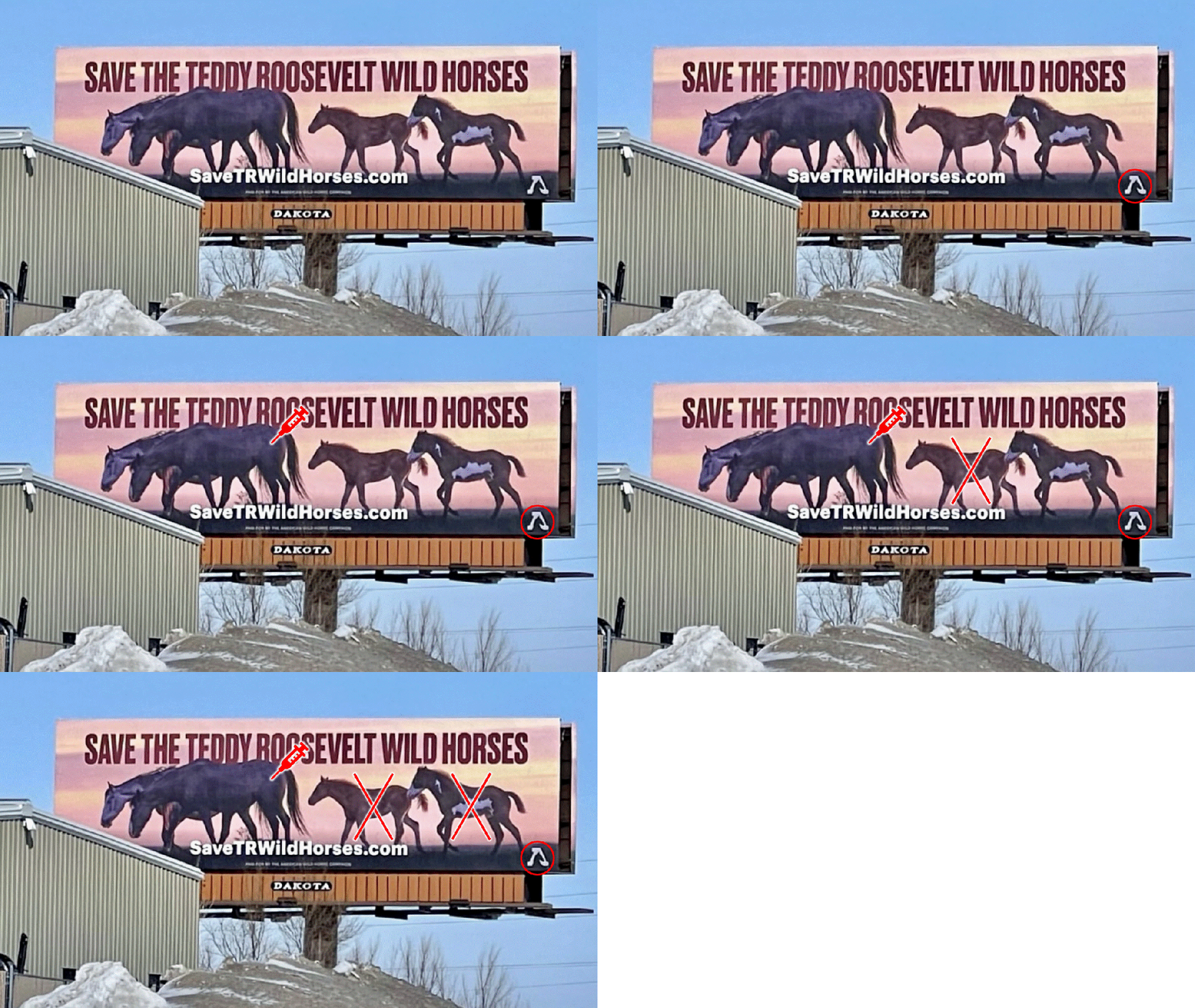
Who Paid for Billboard about TRNP Wild Horses?

Most of us refer to them as the Theodore Roosevelt wild horses but one group refers to them as the Teddy Roosevelt wild horses, as if they’re old hunting buddies.

Any guesses?

Save Teddy Roosevelt Wild Horses 04-04-23

They’re a recognized leader in the wild horse removal industry.

They’re destroying the ovaries of the Virginia Range mares with their favorite pesticide.

What they want most is a contract with the Park Service to carry out Alternative C, the Proposed Action, in the new livestock management plan.

If you still can’t figure it out, read this story by The Dickinson Press.

RELATED: Conflicting Priorities at TRNP?

How Many Wild Horses Can the Onaqui Mountain HMA Support?

As noted last week, the overlapping allotments offer a weighted average 71.9 AUMs per year per thousand public acres, on top of the 6.7 AUMs per year per thousand public acres allocated to the horses.

The HMA covers 375,915 public acres.

The forage assigned to livestock dwarfs the forage assigned to the horses.

This is why True AMLs are so much larger than current AMLs.  They represent the carrying capacities if HMAs were managed principally for wild horses, as specified in the original statute.

This also explains why the off-range corrals and long-term pastures are flooded with “excess” animals: Most HMAs are managed primarily for livestock.

All of the so-called solutions, including fertility control, adoptions, training and sanctuaries, not to mention the Wild Horse Fire Brigade, with which a growing percentage of the intelligentsia have been duped, ignore this basic truth.

The total estimated forage availability inside the HMA, neglecting wildlife, is (6.7 + 71.9) × 375,915 ÷ 1,000 = 29,547 AUMs per year, enough to support 2,462 wild horses.

That is your True AML, over ten times larger than the current AML.

The stocking rate at the True AML would be 6.5 wild horses per thousand public acres, a little more than half of the rate on the Virginia Range.

Onaqui is another counterexample that defies the carrying capacity narrative of the bureaucrats and ranchers, which the advocates support, not by words but by deeds.

Why are they silent about this?  You’d realize that fertility control isn’t necessary and that the mares are being poisoned for the benefit of the ranchers.

RELATED: How Many Allotments Overlap Onaqui Mountain HMA?

Onaqui Allotments 09-29-21

More Wild Horses Lost This Winter Than Usual?

Storms that rolled across California over the past three months knocking down trees and dumping record-breaking snow in the Sierra also threatened cattle in Nevada, according to a story by the Elko Daily Free Press.

The animals drift with the wind, sometimes into rugged terrain where they can’t be reached.

Some operators are fearful of losing them.  After flying over his spread, one rancher said, “I don’t know how I’m going to get to them.”

Although ranchers can bring hay to stranded cattle, wild horses are on their own.

Food and water may be hard to find for the same reason BLM staff can’t get on the range to assess the damage: Everything’s buried under several feet of snow.

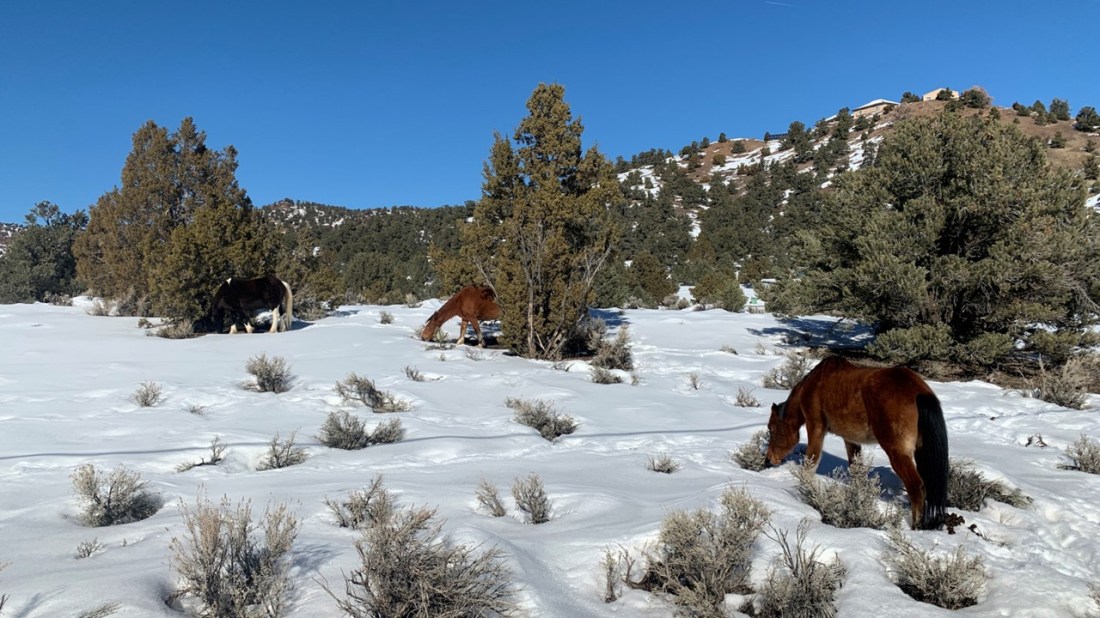
Winter on the Virginia Range 04-02-23