Catching up on trailcam photos. The horses fled the area in fear of the advocates.


Western Horse Watchers Association
Exposing the Hypocrisy, Lies and Incompetence of the Wild Horse Advocates
Catching up on trailcam photos. The horses fled the area in fear of the advocates.
The incident began on October 7. Gather stats through October 17:
Two deaths occurred on Day 8 that were not picked up in the last report.
One horse was put down on Day 9 due to injuries related to the roundup and another was euthanized due to pre-existing conditions. The death rate through Day 11 is 1.4%.
Foals represented 22.1% of the horses captured. Of the adults, 62.2% were male and 37.8% were female.
Body condition scores were not reported.
The location of gather ops was not given. Five HMAs are involved in the roundup.

Day 11 ended with 67 unaccounted-for animals.
Other statistics:
RELATED: Rock Springs Roundup Day 8.
Photos taken October 15. Click on image to open in new tab.
Water system was turned off for the season. One fitting was cracked and water was probably spraying out but someone was kind enough to snap the yard hydrant shut.

The incident, billed as an emergency, has been going on for six weeks.
The contractor uses bait to catch the horses, no activity has been reported since October 3, and the project is 67% complete, based on the removal goal of 450.
RELATED: Stone Cabin Roundup Day 33.
The incident began on September 16. Reports covering activity through October 14 have been posted to the Modoc news page:
Foals represented 13.5% of the horses captured. Of the adults, 49.9% were males and 50.1% were female.
Body condition scores were not provided.
The death rate and number of unaccounted-for animals cannot be determined.
The low percentage of foals suggests the herd is not growing at a rate of 20% per year, a benchmark often used by land managers to predict herd sizes.
Other statistics:
RELATED: Devil’s Garden Roundup Day 27.
The incident began on October 11. Gather stats through October 15:
Two horses were put down on Day 4 and two more on Day 5 due to pre-existing conditions, including a foal that was malnourished.
All four deaths were justified by IM 2021-007, Euthanasia of Wild Horses and Burros Related to Acts of Mercy, Health or Safety. The death rate through Day 5 is 2.1%.
Foals represented 16.8% of the horses captured. Of the adults, 52.5% were male and 47.5% were female.
Body condition scores were not reported.
The location of gather ops was not given. Five HMAs are involved in the roundup.
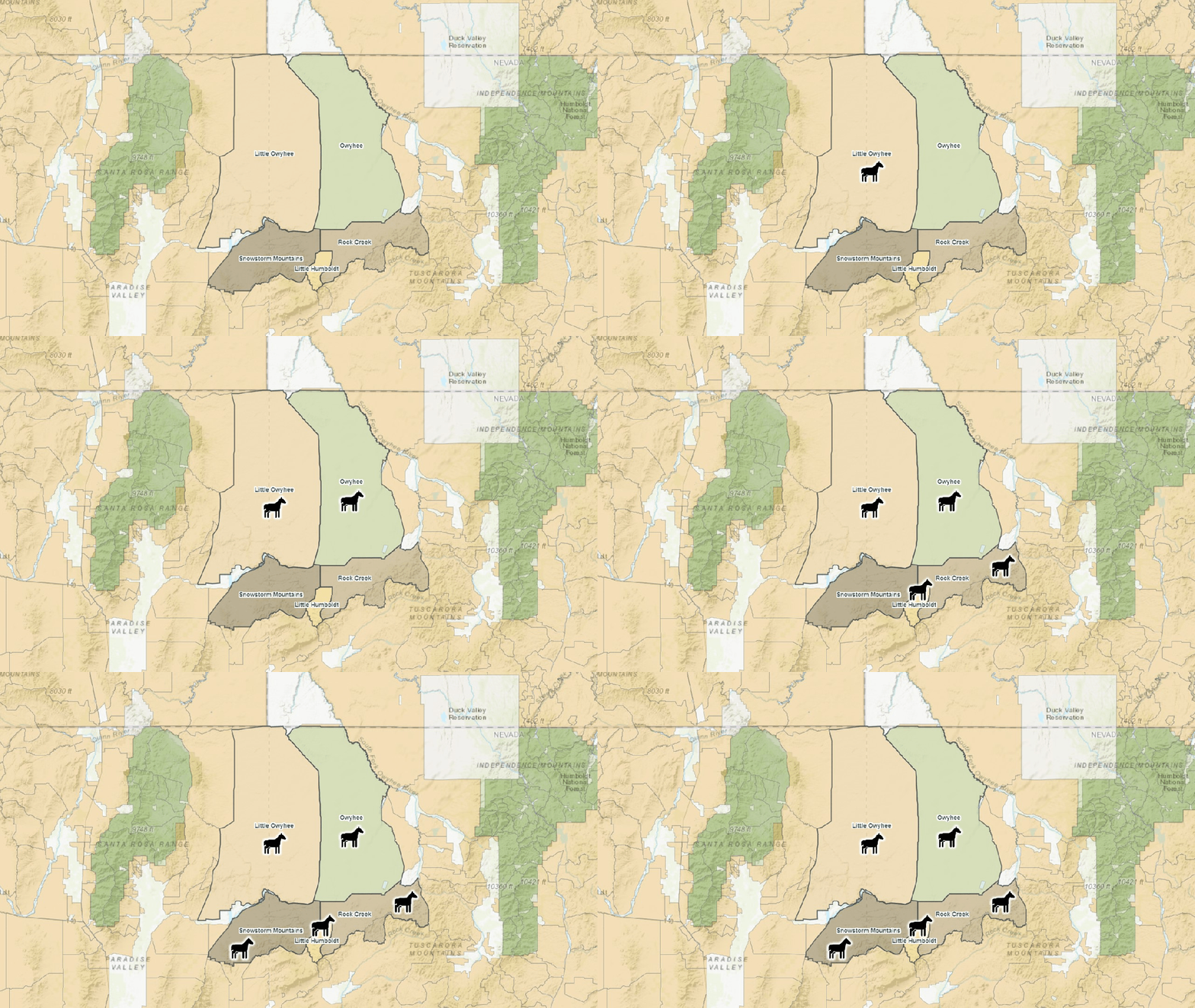
Day 5 ended with 107 unaccounted-for animals.
Other statistics:
RELATED: Owyhee Roundup Delayed.
With consumer prices rising, the government is taking steps to boost competition in the supply chain, according to a report posted this morning by AP News.
If startups can’t control their costs, they will need to find customers who will pay more for their beef or manage with a lower profit margin than the big companies.
But what if they didn’t have to pay market rates to feed the animals?
The value of an average 1,370-pound steer is about $1,630, but that amount must be split between the slaughterhouse, feed lot and the rancher, who typically bears the largest expense of raising the animal for more than a year.
Put wild horses in the feed lots and turn out more livestock. Take a closer look at the ‘Path Forward.’ Approve the Rock Springs RMP amendments. Initiate more such projects, perhaps on an emergency basis.
Supply goes up and costs come down, giving political cover to the one-horse pony, his ruinous policies and his illicit administration.
Details in this report by Carson Now.
RELATED: Motorcade to Protest Wild Horse Roundups in Nevada.
The incident began on October 7. Gather stats through October 14:
Helicopters were grounded on Day 7 due to weather.
Foals represented 24.9% of the horses captured. Of the adults, 70.1% were male and 29.9% were female.
Body condition scores were not reported.
Gather ops continued at Divide Basin. Five HMAs are involved in the roundup.
The Western Watersheds map shows the grazing allotments into which the HMAs have been divided. Click on image to open in new tab.
Not shown are the HAs that fill the spaces between the HMAs, now managed almost exclusively for livestock. They appear on pages eight and ten of the BLM map.
Day 8 ended with 42 unaccounted-for animals.
Other statistics:
RELATED: Rock Springs Roundup Day 6.
A story published this morning by The Colorado Sun describes life in Cañon City.
RELATED: Sand Wash Roundup Still Drawing National Attention.
The incident concluded on October 14, according to statement at the gather page, with 1,216 horses captured, 1,039 shipped, 156 returned and 21 dead.
Of the horses returned, 68 were treated with fertility control.
The removal goal of 1,050 was achieved.
Six HMAs were affected.
Wild horse roundups don’t restore thriving ecological balances.
They enforce the resource allocations of land-use plans, which usually put the interests of livestock operators far above those of the horses.
RELATED: Roundup Starts Next Week at Surprise Complex.
UPDATE: BLM news release issued October 15.
The film features an array of stories about individuals and groups that are working with wild horses, according to the news release.
Sounds great. If you want to help wild horses, don’t focus on the horses. The advocates focus on the horses.
RELATED: New Wild Horse Documentary Avoids Public-Lands Ranching?
The incident began on September 28. Gather stats through October 13:
The gather page could not be accessed for three days due to a BLM IT failure.
The removal goal has been exceeded. A remark in the Day 16 report suggests the roundup is over.
Five horses were put down on Day 13, followed by another on Day 14, due to pre-existing conditions. The death rate is 1.6%.
On Day 12, 13 stallions were returned to the High Rock HMA, which may have been an attempt to skew the sex ratio in a way that slows population growth.
Body condition scores have not been reported.
Gather ops from Day 12 to 16 were in the Fox Hog HMA. Six HMAs are involved in the roundup.

The numbers of stallions, mares and foals were not given for Days 1 to 8.
Foals represented 9.5% of the horses captured from Days 9 to 16. Of the adults, 53.8% were male and 46.2% were female.
The low percentage of foals suggests the herd has not been growing at a rate of 20% per year, a benchmark often cited by land managers.
Day 16 ended with 141 unaccounted-for animals.
Other statistics:
RELATED: Surprise Complex Roundup Day 11.
The incident began on September 16. Reports covering activity through October 12 have been posted to the Modoc news page:
Foals represented 14.0% of the horses captured. Of the adults, 50.5% were males and 49.5% were female.
Body condition scores were not provided.
The death rate and number of unaccounted-for animals cannot be determined.
The low percentage of foals may indicate the herd is not growing at a rate of 20% per year, a benchmark often used by land managers. Whether it is naturally occurring or induced by the advocates is not known.
Other statistics:
RELATED: Devil’s Garden Roundup Day 25.
Reports for October 11 and 12 were posted to the gather page, but helicopters were grounded due to weather.
RELATED: Owyhee Roundup Announced.
No activity has been reported at the gather page since October 4 and a reason for the delay was not given.
Operations will resume on October 15.
RELATED: Barren Valley Roundup Day 27.
The incident started on October 9, with 44 horses captured, followed by 58 on Day 2 and 16 on Day 3, according to the gather page. No deaths were reported and all animals were shipped.
The executive director of the Campaign Against America’s Wild Horses, a ranching advocacy group, told Wyoming News Now that her group is working with elected officials to force the BLM to use “the fertility shot.”
Folks, that’s all they bring to the table. They have nothing else.
Their plan, which will ensure, over the long run, that privately owned cattle and sheep consume most of the resources in areas set aside for wild horses and burros, disrupts natural behaviors and drives birth rates to zero, while letting the herds die off.
Why are you still giving them money?
RELATED: RSGA Understands Management Process, Unlike Advocates.
The infection was carried to the facility by horses removed from the Surprise Complex, according to a BLM news release. The condition was noted in the Day 7 report.
The incident began on October 7. Gather stats through October 12:
The daily reports were not posted until yesterday.
Helicopters were grounded on Days 3 and 6 due to weather.
Foals represented 25.2% of the horses captured. Of the adults, 69.2% were male and 30.8% were female.
Body condition scores were not reported.
Gather ops began at Divide Basin. Five HMAs are involved in the roundup.

Day 6 ended with 32 unaccounted-for animals.
Other statistics:
 Western Horse Watchers Association