SHOCKER: HJR3 Co-Sponsor Runs Cattle on Public Lands!

The Operator Information Report at RAS indicates that Albert Sommers, co-sponsor of the resolution, has a permit to graze livestock on public lands managed by the Pinedale Field Office, authorization #4915862.

Go to this page for an overview of his ranch.

The Allotment Information Report ties the authorization to three BLM allotments, shown in the following map from the National Data Viewer (click on image to open in new tab).

The overview mentions grazing on the Upper Green River Allotment of the Bridger-Teton National Forest, which is not covered by the NDV, but you can find it on the Western Watersheds map.

The Allotment Master Report provides management status, acreage and active AUMs.

The nearest wild horse area is the Desert HA, last gathered in October 2001.

Unfit for free-roaming equids, it is well-suited to privately owned livestock, despite considerable dietary overlap between the two species.

RELATED: Wyoming Legislature Petitions Congress to Legalize Slaughter.

Sommers Ranch Allotments 01-22-23

Acknowledging the History of Wild Horses at TRNP

If you’re new to the story, pull up a chair and sit a spell.

Wild horses pre-date the 1947 park by more than 60 years, as noted in a column posted today by INFORUM.

The original herd is gone.  The horses you see today are an exhibit.

Some were rescued by Leo Kuntz and taken to his ranch near Linton.

He tells their story in a 2011 film titled “Nokota Heart.”

Sadly, Kuntz died in 2018.

RELATED: Lawmaker Seeks Extension of TRNP Comment Period?

Lawmaker Seeks Extension of TRNP Comment Period?

A story posted this morning by KFYR News indicates that a North Dakota State Representative helped concerned citizens draft a letter to the acting Park Superintendent requesting another 60 days for public comments.

The comment period was set to close on January 31.

The extension would give the legislature enough time to decide if they would intervene in the planning process.

The report did not indicate if the letter had been submitted.

RELATED: TRNP Superintendent Says Genetic Viability Off the Table.

Reading the Pancake Tea Leaves

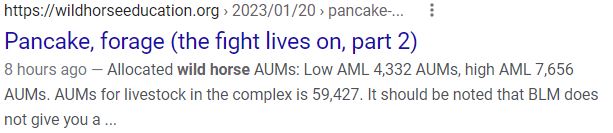
These AUM numbers came up in a Google search this evening, probably for the Pancake Complex in Nevada.

Western Horse Watchers believes the livestock AUMs are on the high side, as discussed previously, but let’s ignore that for now.

Pancake AUM Numbers 01-20-23

What can you conclude, without reaching for your calculator?

  • The horses have been cheated by the bureaucrats in favor of the ranchers
  • The Complex is managed primarily for livestock
  • You don’t have a wild horse problem, you have a resource management problem

Reaching for a calculator,

  • The AML ranges from 361 to 638
  • The number of horses displaced from the Complex by permitted grazing is 4,952
  • The True AML is 5,590

The current population was not given.

The BLM collects about $80,000 per year in grazing fees from ranching activity inside the Complex while it spends around $9 million per year to care for the horses displaced thereby.  Would you say that’s a wise use of the public lands?

Foal-Free Friday, Coddling the Ranchers Edition

Consider these two scenarios for wild horse removal.

A. Eliminate 150 excess horses

  • Initial population – 400
  • Final Population – 250

B. Eliminate 150 excess horses

  • Initial population – 400
  • Final Population – 250

In one case, 150 horses were removed from their lawful home and shipped to slaughter, as the Wyoming legislature desires.

In the other case, 150 horses died on the range and were not replaced because the advocates sterilized most of the mares with their safe, proven and reversible darting program.

In one case, the herd will rebound.  In the other case, the herd is toast.

Which one is which?

Which one is a win for the horses?

Both cases liberated 1,800 AUMs per year for the public-lands ranchers, enough to support 300 cow/calf pairs on a six-month grazing season.

Sadly, the premise about excess animals was false.  Both populations were well within their True AMLs.  The actions were carried out to help the ranchers.

Unabashed and undeterred, the advocates want this for all wild horse herds.

Why are you still giving them money?

RELATED: Foal-Free Friday, Getting Rid of Them Inconspicuously Edition.

Sand Wash Advocates 01-17-22

TRNP Superintendent Says Genetic Viability Off the Table

A story by KX News indicates the herd size under Alternative A, if approved, would not be maintained at a level that supports genetic viability.

The wild horse herd under Alternatives B and C would be reduced to zero.

Refer to the scoping newsletter for a discussion of the alternatives.

Public comments on the new livestock plan will be accepted through January 31.

RELATED: Park Service Has No Rationale for Keeping Wild Horses at TRNP.

New Adjuvants to Boost Efficacy of PZP?

With the public-lands ranchers demanding more and more forage in areas identified for wild horses, the bureaucrats and advocates are always looking for new and novel ways to get rid of the horses without arousing public suspicion.

Now comes news from the University of Toledo that the safety, shelf life, effectiveness and durability of the Montana Solution can be improved by reformulating it with a different, current-generation adjuvant.

Adjuvants amplify the immune response following inoculation, making a vaccine more effective, only in this case, the vaccine causes illness instead of preventing it.

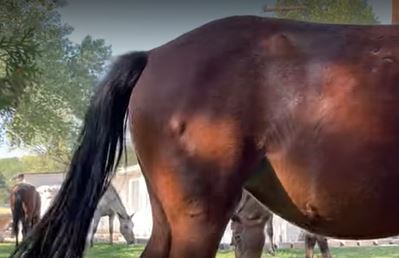
VR Darting Injury 09-15-21

The results of a study, published last month, were promising, with one new adjuvant allowing vaccine preparation days before injection and yielding a strong immune response without injection-site effects.

The research was conducted in part by Dr. John Turner, a colleague of the late Dr. Jay Kirkpatrick of Eastern Montana College.

Wyoming Legislature Petitions Congress to Legalize Slaughter

The sponsor of the new resolution, an outfitter and rancher, was moved by a visit to the Red Desert last year, according to a story posted this evening by WyoFile.

He was accompanied by a rangeland specialist (from the BLM?) and members of the Rock Springs Grazing Association, instigators of the Rock Springs RMP Amendments.

The bill asks Congress to enact legislation and make other necessary policy changes to allow federal land management agencies and agency partners to implement best management practices for wild horses and burros, including equine slaughter and processing for shipment to markets within or outside the United States.

Decision Posted for Three Fingers and Jackies Butte HMAs

The Decision Record, FONSI and Final EA have been copied to the project folder.

The Proposed Action, subject to appeal, features roundups and fertility control over a ten-year period.

The fertility control program will begin this year but the timing of the roundups will be determined by the BLM’s Washington D.C. office.

The decision was not announced at the agency’s news site.

RELATED: Decision Pending for Malheur County Pest Control Plan?

Resource Management at McCullough Peaks HMA

As noted yesterday, the 140 horses allowed by plan require 1,680 AUMs per year.

Livestock receive an average of 56.7 AUMs per year per thousand public acres on the six allotments that overlap the HMA.

The HMA covers 113,938 public acres so the forage assigned to livestock in the area managed for horses is 56.7 × 113,938 ÷ 1,000 = 6,460 AUMs per year.

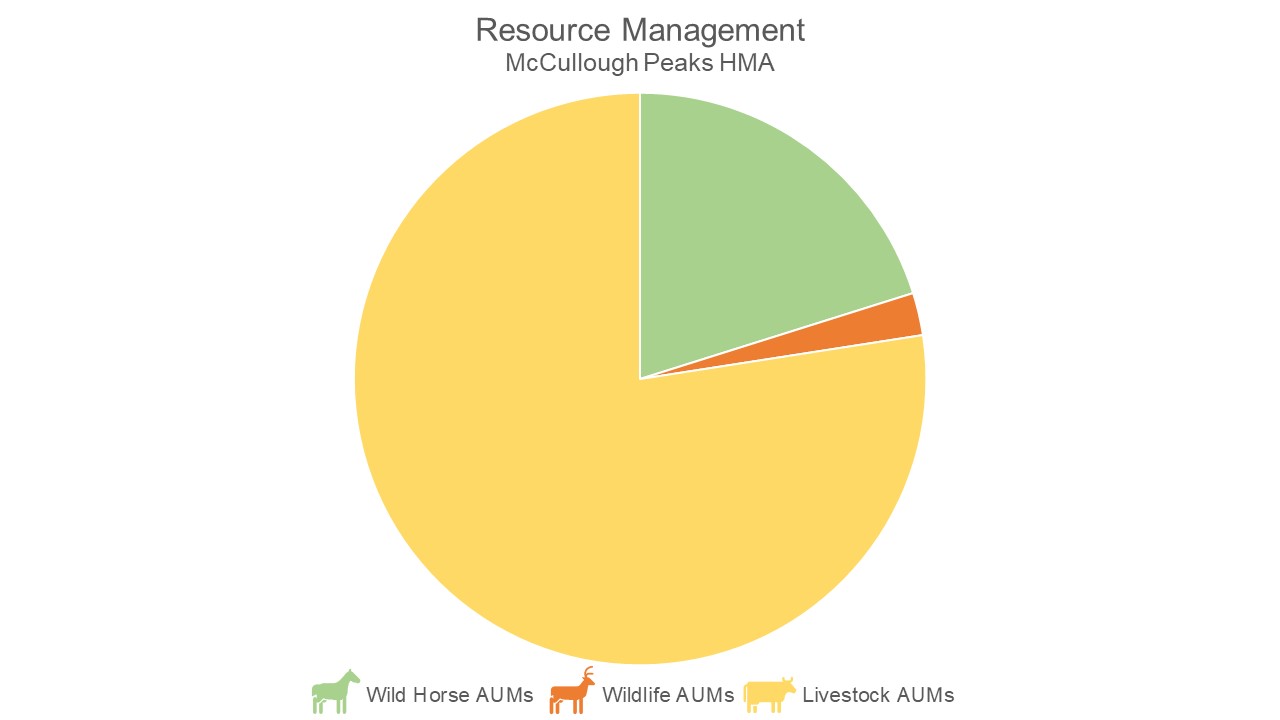
If you allow 200 AUMs per year for wildlife, the resource management pie chart would look like this:

McCullough Peaks Resource Management 01-14-23

The AML is small relative to the available resources because the HMA is managed primarily for livestock, contrary to the original statute.

The forage allocations will be enforced over a ten-year period by thinning the herd with bait traps and stifling its growth with fertility control.

The process is just getting started.

It’s not what Velma intended but it’s what the bureaucrats, ranchers and advocates intend.

RELATED: The Carrying Capacity Puzzle.

How Many Wild Horses Can McCullough Peaks Support?

The HMA overlaps six allotments, as shown in this map from the National Data Viewer.

Although Peaks 1064 and Red Point extend beyond the HMA boundary, the forage assigned to livestock inside the HMA is easy to estimate on a per-acre basis.

The HMA covers 120,412 total acres, including 113,938 public acres, according to the BLM HMA Report, and the 140 horses allowed by plan require 1,680 AUMs per year.

The stocking rate allowed by plan is 1.2 wild horses per thousand public acres.

Click on image to open in new tab.

McCullough Allotment Map 01-13-23

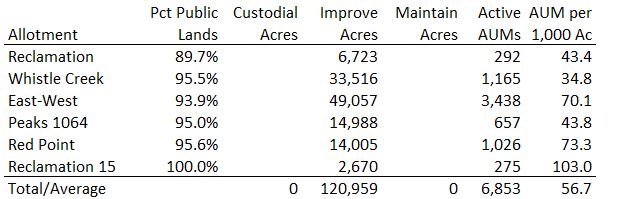
The Allotment Master Report from RAS provides management status, acreage and active AUMs.

McCullough Allotment Calcs 01-13-23

All of the allotments are in the Improve category.

The weighted average forage availability across the six parcels is 56.7 AUMs per year per thousand public acres, enough to support 4.7 wild horses per thousand public acres.

The number of wild horses displaced from their lawful home by permitted grazing is 4.7 × 113,938 ÷ 1,000 = 535, putting the True AML at 675, to be achieved by confining the ranchers to their base properties in a year-long off-season.

The BLM spends around $1 million per year to care for the 535 refugees in short-term holding, while it collects about $9,000 per year in grazing fees from ranching activity inside the HMA.

Would you say that’s a wise use of the public lands?

The current population is thought to be 179, well within the carrying capacity of the HMA.

Given that the advocates are trying to suppress the herd with their favorite pesticide, they are voices for the bureaucrats and ranchers, not the horses.

RELATED: What the McCullough Advocates Are Trying to Protect.

Burros Lost at Axtell?

Western Horse Watchers is unable to corroborate the story by Deseret News with reports from the BLM.

Unlike the incident at Cañon City, the agency has not acknowledged the loss at its news site or the Utah HMA page.

The reporter’s source was the self-serving Campaign Against America’s Wild Horses, whose representatives used the deaths to justify their ruinous darting programs.

In cases like these, you have to wonder if the reporter contacted CAAWH through the course of her research or if CAAWH approached her as an outlet for its propaganda.

Scoping Begins for McCullough Peaks Livestock Protection Plan

Your mission, should you decide to accept it, is to help the bureaucrats eliminate unauthorized native species (excess horses) in favor of authorized non-native species (livestock), under the guise of a thriving natural ecological balance.

Volunteers with FOAL are experts in this regard.

Suggestions that benefit the horses are outside the scope of the project.

Comments will be accepted through February 7, according to a BLM news release.

RELATED: Bait Traps Coming to McCullough Peaks HMA?

McCullough Peaks HMA Map 10-26-22

Purpose of Three Fingers and Jackies Butte Pest Control Plan?

As in other areas, the goal is to eliminate unauthorized native species (excess horses) in favor of authorized non-native species (lifestock).

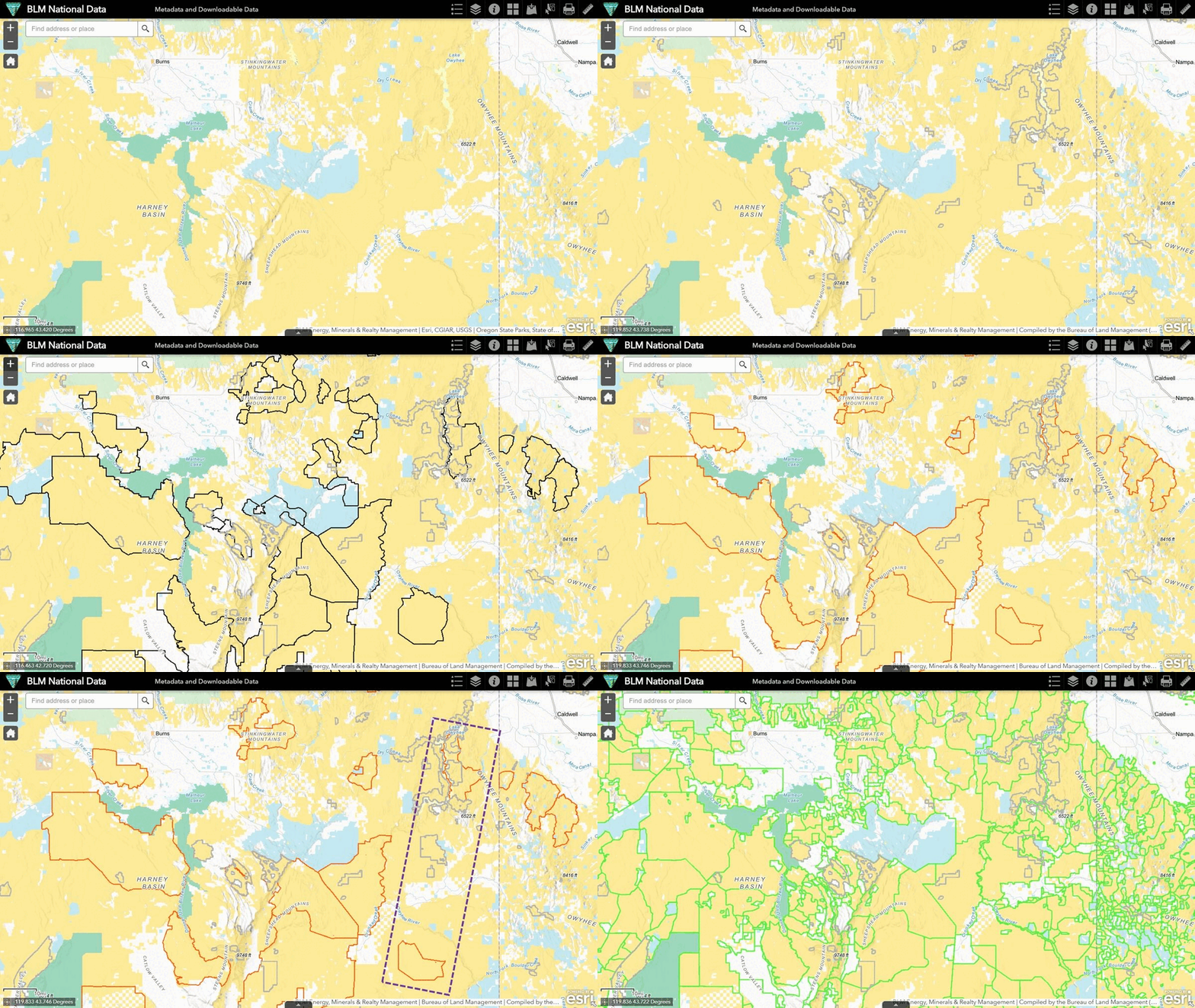
In this map from the National Data Viewer, areas of critical environmental concern are marked in gray, HAs are black, HMAs are orange and grazing allotments are green.

The two HMAs are in eastern Oregon near the Idaho state line.

Click on image to open in new tab.

RELATED: Decision Pending for Malheur County Pest Control Plan?

Three Fingers and Jackies Butte Allotments 01-06-23

Foal-Free Friday, Everything’s Going According to Plan Edition

Many more horses will be lost to the Virginia Range darting program, now moving into its fifth year, than harsh winter conditions.

With few if any new foals hitting the ground, the death rate is going up as the average age of the herd increases.

Many of the mares are now at risk of sterility.

Advocates with the Campaign Against America’s Wild Horses and bureaucrats with the Nevada Department of Agriculture are responsible for the destruction.

RELATED: Foal-Free Friday, Auld Lang Syne Edition.