New Reg Would Treat All Public Lands Like Grazing Allotments?

The proposed rule would apply standards for rangeland health to all BLM-managed public lands and uses, including watershed function, ecological processes, water quality, and wildlife habitat.

According to the definitions, land enhancement means any infrastructure or other use related to the public lands that is designed to improve production of forage, improve vegetative composition, direct patterns of use to improve ecological condition, provide water, stabilize soil and water conditions, promote effective wild horse and burro management, or restore, protect, and improve the condition of land health or fish and wildlife habitat.

The term includes, but is not limited to, structures, treatment projects, and the use of mechanical devices or landscape modifications achieved through mechanical means.

Wild horse and burro management was not defined, but generally equates to population reduction, to be achieved by helicopters, baited traps, wranglers and/or pesticides, so the regulation could provide the authority to reduce AMLs and zero-out more HMAs.

The rule would direct land managers to identify and prioritize lands and waters through the land management process that require habitat restoration work, such as removing invasive species or restoring streambanks, according to today’s news release.

Publication in the Federal Register will initiate a 75-day public comment period, accompanied by five information forums to discuss the details of the rule.

What the Onaqui Advocates Are Trying to Protect

There are three layers of forage demand within the HMA: Horses, wildlife and livestock.

The 210 horses allowed by plan require 2,520 AUMs per year.

The HMA covers 507,681 total acres, including 375,915 public acres, according to the March 2022 HA/HMA Report.

The stocking rate allowed by plan is 0.6 wild horses per thousand public acres.

Recall that low stocking rates may indicate large amounts of forage assigned to privately owned livestock.

The land must be able to produce at least 6.7 AUMs per year per thousand public acres to support the horses.

The forage assigned to wildlife inside the HMA is unknown, but is probably small, maybe 200 to 300 AUMs per year.

The HMA intersects twelve grazing allotments, as noted previously.

The National Data Viewer shows thirteen, but one, the Pony Express Trail, has no active AUMs.  It appears as a gray strip across the HMA in the map below.

The Allotment Master Report at RAS provides acreage, management status and active AUMs (Salt Lake City Field Office | Fillmore Field Office).

Onaqui Allotment Calcs 03-29-23

About two-thirds of the land is in the Improve category.

The allotments provide 71.9 AUMs per year per thousand public acres, on average, 10.7 times more forage than the land can produce for the horses.  For the most part, it’s the same land!

As the advocates get rid of the horses, the ranchers can get enjoy more of what their allotments have to offer.

RELATED: Onaqui Herd Struggling?

Onaqui Allotments 09-29-21

Beatys Butte Roundup Delayed

A gather page has been created but no activity has been reported.

The HMA covers 438,140 total acres in southern Oregon, according to the March 2022 HA/HMA Report, including 399,725 public acres.

The AML is 250, which is small relative to the available resources.

Livestock receive six times more forage than the horses.

The incident was set to begin in December according to the latest schedule.

RELATED: Another Beatys Butte Roundup in the Works.

Onaqui Herd Struggling?

The Onaqui Catalogue Foundation reported earlier this year that the herd consisted of 144 males, 127 females, ten undetermined and 24 foals, for a total of 305, compared to an AML of 210.

The 2021 roundup took 435 wild horses into custody and returned 123 to the HMA, for a net removal of 312.

The BLM said the pre-gather population was over 475, plus that year’s foals.

Today, foals represent just 7.9% of the population, which is unnatural, a product of the darting program administered by the Wild Horses of America Foundation, not climate change or drought.

This amount is probably only two or three percentage points above the death rate, which was not given.

Why is it important to achieve and maintain AMLs?  So ranchers can access most of the resources in the lawful homes of wild horses.

WITHOUT DARTING PROGRAMS

  • Livestock receive most of the authorized forage, in theory
  • Herds bounce back after roundups

WITH DARTING PROGRAMS

  • Livestock receive most of the authorized forage, in practice
  • Herds don’t bounce back after roundups
  • Massive human involvement
  • Disruption of natural order
  • Injuries and infections
  • Increasing death rates
  • Abnormal sex ratios
  • Sterility

These programs are safe, proven and reversible according to their adherents.

VR Darting Injury 09-15-21

Those who disagree with permitted grazing, and don’t want the mares’ ovaries destroyed with a restricted-use pesticide, are derided by the charlatans at WHAF, who claim to be “in the know” and describe the concern as a “juvenile argument.”

Against PZP 03-26-23

A keyword search of their page about PZP yielded these results:

  • Sterilization – 0 occurrences
  • Sterility – 0
  • Injuries – 0
  • Infections – 0
  • Sex ratios – 0
  • Death rates – 0

As for the wild horse shootings, two stallions were lost.

A herd composed of 281 adults should see around 50 new foals in a given year, a 17.8% birth rate, but only 22 were born in 2022.

That means the advocates got rid of 28 federally protected animals, 14 times more than the shooters.

Why hasn’t a warrant been issued for their arrest?

RELATED: Onaqui Reward Climbs.

Shackleford Herd Grew Slightly in 2022

There were 124 wild horses on the island at the end of the year, according to an undated report by the Park Service, up from 121 at the end of 2021.

The growth rate was 2.5%, considerably less than the rate for free-roaming herds in the American west (provided the advocates are not involved).

Thirteen foals were born in 2022, for a birth rate of 10.7%.

Nine horses died.

One of the foals was removed illegally.

The herd was 61% female and 39% male.

The report said that some females are living longer, typical of herds subject to the Montana Solution.

Readers of these pages know that as a euphemism for abnormal sex ratio.

RELATED: Shackleford Herd Grows Slightly in Latest Census.

Pesticide-Laced Darts Are Not the Perfect Symbol for Nevada!

Contrary to what you read in this column by Tracy “You need to manage the numbers to fit what’s available for the horses” Wilson, field marshal for the Campaign Against America’s Wild Horses, the people of Nevada should tell their state representatives not to pass SB90 until the following language is removed:

SB90 Text to be Removed 03-20-23

No glorifying, legitimizing or ratifying the darting program and those involved, an affront to Velma’s legacy.

In her March 7 testimony before the Nevada Senate Natural Resources Committee, Wilson described the poisoning of the Virginia Range mares as the world’s largest wild horse conservation program.

With the effort moving into its fifth year, many are now at risk of sterility.

RELATED: We’re Out for Ourselves!

Assessing Resource Adequacy in the Majuba Allotment

The allotment offers 3,325 AUMs per year on 186,083 public acres, as noted last week.

Is that good or bad?

Forage availability works out to 17.9 AUMs per year per thousand public acres, enough to support 1.5 cow/calf pairs, or 1.5 wild horses, per thousand public acres.

That’s not very much, when you realize the Virginia Range is carrying ten, or at least it did before the advocates got involved.

For comparison, the allotments in Sand Wash Basin HMA offer a weighted average 117.6 AUMs per year per thousand public acres, enough to support an additional 9.8 wild horses per thousand public acres, on top of the 2.4 wild horses allowed by plan.

This is what sinks the overpopulation narrative, repeated constantly by the advocates, not by what they say but by what they do.

The limited amount of forage on Majuba explains why the Antelope Range HA was zeroed out and why the doctrine of multiple use goes out the window in such cases.

HMAs Freed from Grazing 05-23-21

Pine Nut Horses Headed to Freedom Reigns Sanctuary

The advocates are working with BLM staff at Palomino Valley to purchase 18 animals trapped last month in a nuisance roundup, according to a story on page 11 of the March edition of Horse Tales.

The studs will be cut and the mares may be sterile, thanks to the darting program.

The sanctuary is not open to the public.

RELATED: Advocates Upset as BLM Traps More Pine Nut Horses.

Foal-Free Friday, Noticing Their Hypocrisy Edition

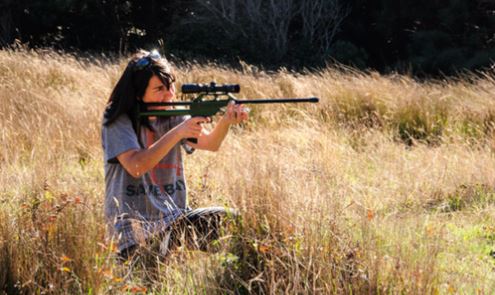
Advocates with the Salt River Wild Horse Darting Group, an affiliate of the Campaign Against America’s Wild Horses, said on March 14 that “It’s never nice to disturb any wild animals, but to come in with gloves and lasso and pursue Salt River wild horses will get you in deep trouble here, because the Salt River wild horses are protected from harassment and interfering by State law.”  Click on image to read the story.

SRWHDG Hypocrisy 03-16-23

There are no foals in the photos, because the advocates have poisoned the mares with a restricted-use pesticide.

Apparently, riding your horse on public lands is harassment, but stalking wild horses with phones, tablets and darting rifles, with the intent of destroying their ovaries, is not.

Students Learn About Darting 10-26-22

If PZP was taken off the market, the advocates would have nothing, no reason to exist.

RELATED: Foal-Free Friday, Developing a Critical Eye Edition.

Strangles Outbreak Closes Litchfield Off-Range Corrals

Adoptions will be suspended for thirty days according to a BLM news release.

The announcement said the infection presents as nasal discharge, fever and swollen lymph nodes around the throat, and runs its course in two to four weeks, but did not indicate that 19 horses died from it last year at Wheatland.

The facility has a capacity of one thousand animals, with 389 wild horses and 334 wild burros present as of February 20.

Nevada Checkerboard Parcel Hits Market for $130K

The property covers 640 acres (one square mile) near Imlay, with spectacular views of Imlay Summit, Rye Patch Reservoir and sometimes wild horses and antelope, according to the listing on Redfin.

The National Data Viewer puts it inside the Antelope Range HA, the lawful home of wild horses, which lies within the Majuba Allotment.

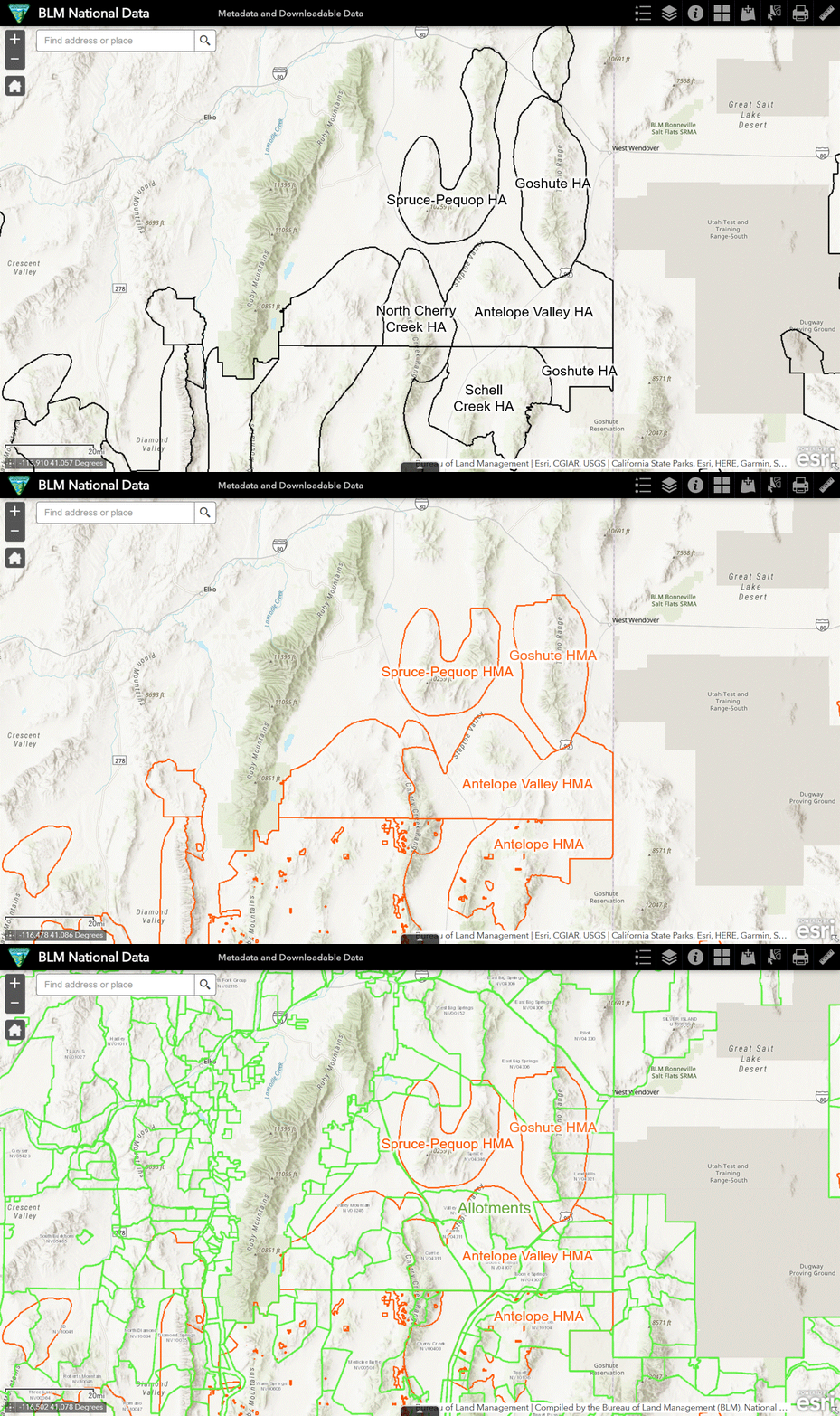
To the west are the Kamma Mountains, Lava Beds and Seven Troughs HMAs, shown with orange borders in the following map.  Click on image to open in new tab.

There were 172 horses in the HA last year, according to the HA/HMA Report.

The Allotment Master Report puts Majuba in the Improve category, with 3,325 active AUMs on 186,083 public acres.  The subject parcel was likely counted among the 90,434 private acres contained in the allotment.

Nevada Cherckerboard Parcel 03-17-23

Draft EA Released for Pryor Mountain RMP Update

The preliminary EA and supporting documents were copied to the project folder today.

Comments will be accepted through April 14, according to the BLM news release.

Alternative 2, the Proposed Action, would try to achieve these goals:

  • Manage wild horses and resources to maintain a thriving natural ecological balance and multiple use relationship
  • Manage for healthy wild horses, maintain a level of genetic diversity that avoids inbreeding and maintain characteristics that are typical of Pryor Mountain horses of mixed ancestry including Colonial Spanish
  • Manage population growth using including gathers, fertility control, natural means, or a combination of these techniques

The AML would increase slightly, from the current 90-120 to 108-121.

The current population is thought to be around 200 wild horses.

The WHR is not subject to permitted grazing but is subject to the Montana Solution according to the February 7 resource enforcement schedule.

RELATED: Additional Comments Sought for Pryor Management Plan Update.