A news release dated August 10 said the incident will begin on July 7.
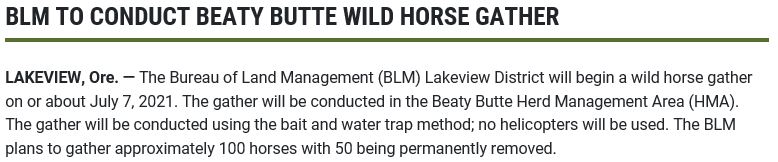
An email to the BLM rep was answered thus: Roundup delayed until late August.
The HMA, known as Beatys Butte, lies within the Beaty Butte allotment.

Western Horse Watchers Association
Exposing the Hypocrisy, Lies and Incompetence of the Wild Horse Advocates
On the range
A news release dated August 10 said the incident will begin on July 7.
An email to the BLM rep was answered thus: Roundup delayed until late August.
The HMA, known as Beatys Butte, lies within the Beaty Butte allotment.
The incident began on August 2. Gather stats through August 9:
Two horses were put down on Day 8 due to pre-existing conditions, bringing the death rate to 0.9%.
Foals accounted for 18.6% of the horses gathered. Of the adults, 45.3% were male and 54.7% were female.
Body condition scores were not provided.
Day 8 ended with 109 unaccounted-for horses. The contractor is probably holding them on site.
Other statistics:
RELATED: Antelope Roundup Day 6.
UPDATE: The average daily take should be 57, not 76.
The area is in an elevated risk zone, according to a map at NV Energy’s PSOM page.
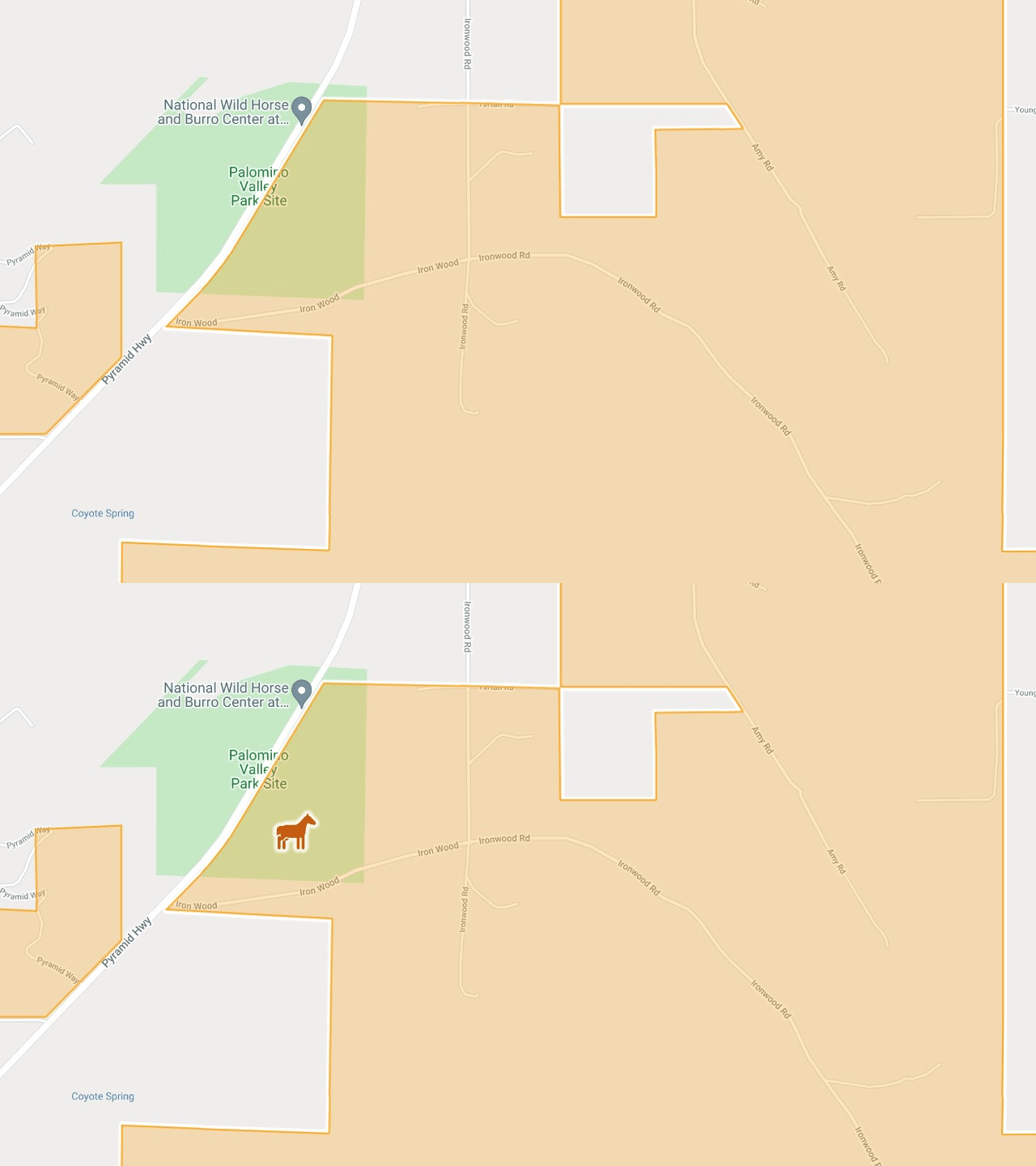
It includes BLM’s off-range corrals, destination of wild horses and burros captured in northern Nevada roundups.
The facility backs to the Pyramid Highway on the west and Ironwood Road on the south.
RELATED: Virginia Range Now Subject to Public Safety Power Shutoffs.
The HMA covers 85,407 acres in eastern Oregon, including 71,893 BLM-managed acres, 10,898 privately owned acres and 2,615 acres of Bureau of Recreation land, according to the 2017 Final EA for resource enforcement actions therein.
The 80 horses allowed by plan require 960 AUMs per year.
The stocking rate allowed by plan is 0.9 wild horses per thousand acres.
Table 3-4 in the EA supplies information for three allotments inside the HMA. The total allotment acreage is slightly less than the HMA acreage, so most, but not all, of the HMA is subject to permitted grazing.
The map provided with the project documents shows the arrangement.

The allotments, including current status, were discussed in this post from August 1.
The Texaco Basin permittee would have to place 2,350 ÷ 7 = 336 cow/calf pairs on the allotment to graze off 2,350 AUMs in seven months.
The stocking rate at Texaco Basin would be 336 ÷ 14,558 × 1,000 = 23.1 cow/calf pairs per thousand acres.
The total number of cow/calf pairs inside the HMA would be 1,280, with an overall stocking rate of 15.5 cow/calf pairs per thousand acres.
Western Horse Watchers usually converts AUMs to horses and cow/calf pairs, even if the HMA is designated for burros and/or the allotments are permitted for sheep. The resource requirements of wild horses and cow/calf pairs are said to be equivalent.
The stocking rates and forage allocations are compared in the following charts.
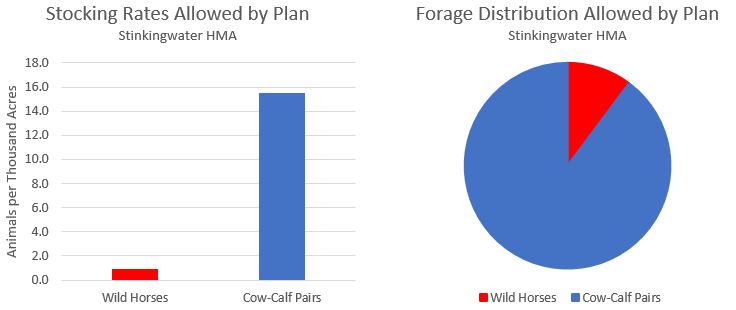
The HMA is managed primarily for livestock, contrary to §1332(c) of the statute, with the horses receiving just 10% of the authorized forage, neglecting wildlife.
The forage assigned to livestock would support an additional 705 horses, for a True AML of 785.
The pre-gather population of 450 is well within this range, so there are no excess horses, no overpopulation and no justification for a fertility control program. As usual, the advocates are wrong.
The 705 wild horses cheated out of a spot on their home range represent 1.4% of the 50,000 horses in off-range holding.
The incident began on July 26. Gather stats through August 9:
The death rate is 2.1%. The summary at the gather page shows seven deaths but the daily reports show eight.
Body condition scores were not reported.
Foals accounted for 18.5% of the horses gathered. Of the adults, 43.1% were male and 56.9% were female.
Day 15 ended with 86 unaccounted-for horses.
Other statistics:
RELATED: West Douglas Roundup Day 13.
BLM released 113 animals, according to this report by Fox 13 News of Salt Lake City.
RELATED: Onaqui Aftermath.
Horses have the day off. Somewhere in southern Nevada with Earth and Medicine.
The incident began on August 2. Gather stats through August 7:
Helicopters were grounded on Day 5 due to smoke.
The death rate is 0.6%.
Foals accounted for 18.0% of the horses gathered. Of the adults, 47.6% were male and 52.4% were female.
Body condition scores were not given.
Day 6 ended with 148 unaccounted-for horses.
Other statistics:
RELATED: Antelope Roundup Day 3.
The incident began on July 26. Gather stats through August 7:
A stud and foal were put down on Day 10 due to pre-existing conditions. Another stud was put down on Day 11, boosting the death rate to 2.3%. The summary at the gather page shows seven deaths but the daily reports show eight.
Body condition scores were not reported.
Foals accounted for 18.9% of the horses gathered. Of the adults, 43.7% were male and 56.3% were female.
Day 13 ended with 86 unaccounted-for horses.
Other statistics:
RELATED: West Douglas Roundup Day 11.
According to 43 CFR 4710.1, a federal regulation, management activities affecting wild horses and burros shall be in accordance with approved land use plans.
This is government writing its own rules, perhaps at the behest of special interests.
It’s not necessarily a bad idea. You don’t want to place 1,600 wild horses in an area that can only support 1,200.
Unfortunately, there is no requirement that the plans assign most of the resources to wild horses, which explains what you see today in many wild horse areas.
Now that the link to the statute is broken, you’ll find 200 wild horses in an area that can support 1,200, accompanied by hundreds or thousands of privately owned livestock.
The advocates, unfazed by the practice, worry instead about the best way to get rid of ‘excess’ animals, horse #201 and so on.
The incident began on July 26. Gather stats through August 5:
No gather operations occurred on Day 11.
The death rate is 1.7%. The summary at the gather page shows four deaths but the daily reports show five.
Body condition scores were not reported.
Foals accounted for 20.1% of the horses gathered. Of the adults, 42.6% were male and 57.4% were female.
Day 11 ended with 80 unaccounted-for horses.
Other statistics:
RELATED: West Douglas Roundup Day 9.
The incident began on August 2. Gather stats through August 4:
A mare suddenly expired on Day 3. A foal died (was put down?) on the same day due to pre-existing conditions, boosting the death rate to 1.1%.
Foals accounted for 20.5% of the horses gathered. Of the adults, 48.3% were male and 51.7% were female.
Body condition scores were not given.
Day 3 ended with 103 unaccounted-for horses.
Other statistics:
RELATED: Antelope Roundup in Progress.
A story posted yesterday by Vail Daily provides an account of the roundup on Day 6.
Body condition scores, not reported at the gather page, are mostly 4s (healthy).
Of special interest are the pictographs and petroglyphs on sandstone walls in the area dating back at least 800 years. Many feature horses, which is not consistent with the wild horse narrative.
The article did not indicate if the area was subject to permitted grazing, and if the resource shortage associated with the drought and Oil Springs Fire—drivers of the roundup—had affected grazing operations.
RELATED: West Douglas Roundup Day 9.
BLM said today that 73 wild horses will be gathered and removed from the HMA and surrounding lands, starting August 9, due to inadequate water.
The animals will be drawn into the traps with water, according to the news release, and the incident will not be open to public observation.
The operation was preceded by a categorical exclusion signed on June 24.
The HMA covers 17,147 acres in western Nevada, including 16,319 public acres.
The AML is 124, for a stocking rate of 7.3 wild horses per thousand acres, considerably higher than the average rate of one wild horse per thousand acres across all HMAs.
The stocking rate on the Virginia Range, before the advocates got involved, was ten wild horses per thousand acres.
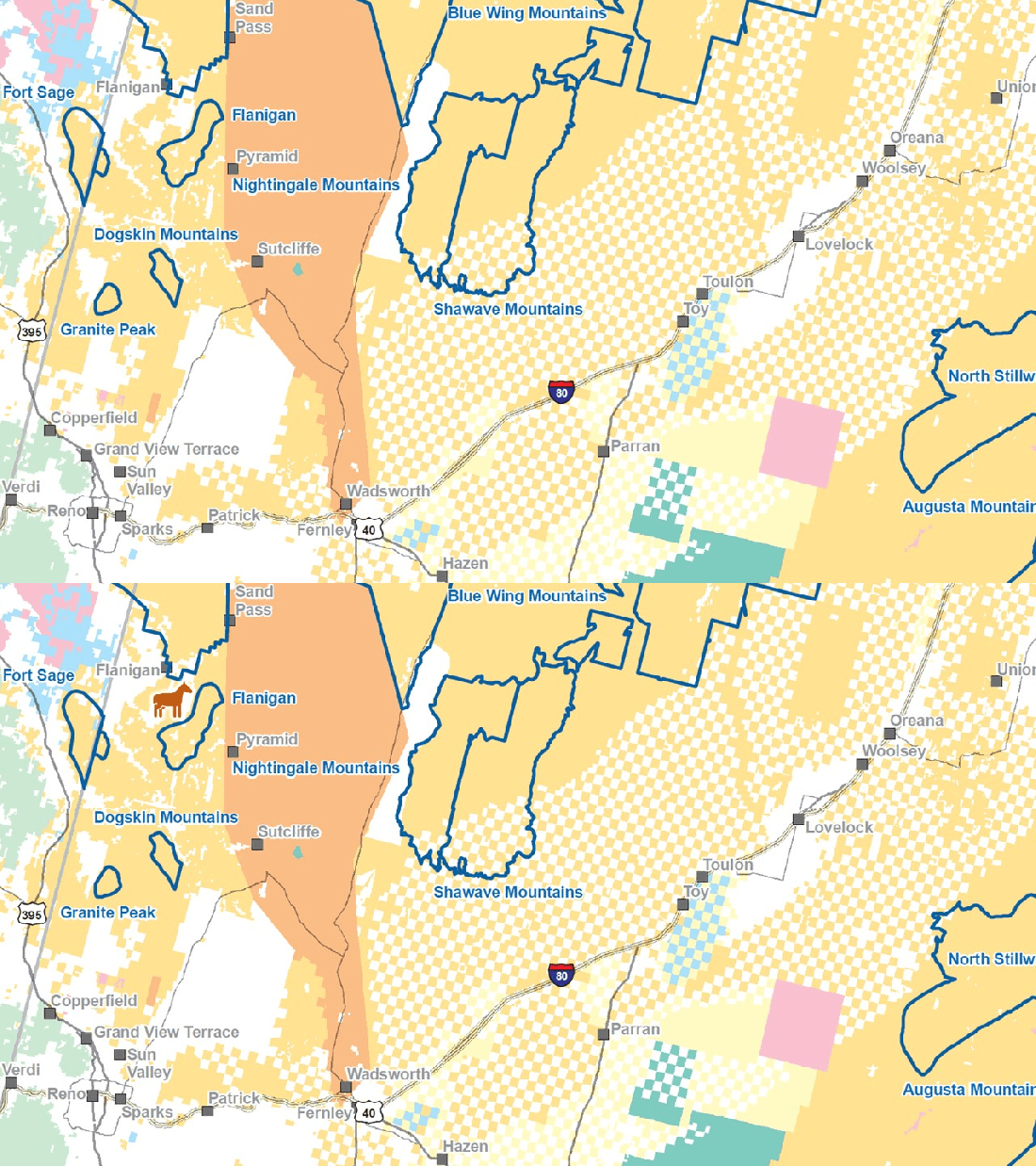
The HMA intersects three grazing allotments according to Table 10 in a 2011 EA for resource enforcement actions in the area. Livestock receive an estimated 5,400 AUMs per year inside the HMA, subject to verification in RAS.
The horses allowed by plan receive 1,488 AUMs per year.
Captured animals will be taken to the off-range corrals at Palomino Valley.
Gather stats and daily reports will be posted to this page.
There are about 500 wild horses out there, but only one was spotted in this story by the CBS affiliate in Phoenix. Includes video.
They may be protected by the state of Arizona but not from the advocates.
The incident began on July 26. Gather stats through August 3:
A stud was put down on Day 9 due to injuries related to the roundup, increasing the death rate to 1.7%.
Foals accounted for 19.2% of the horses gathered. Of the adults, 42.7% were male and 57.3% were female.
Day 9 ended with 98 unaccounted-for horses.
Other statistics:
RELATED: West Douglas Roundup Day 7.
BLM said today that 296 wild horses will be removed from the Conger HMA, starting on August 11, due to drought.
Helicopters will push the horses into the traps and the incident will be open to public observation.
Some may be returned to the area to maintain herd genetic diversity, according to the news release.
The HMA covers 170,993 acres west of Delta, UT, including 151,506 acres of public lands. The AML is 80 and the aimed-at stocking rate is 0.5 horses per thousand acres.
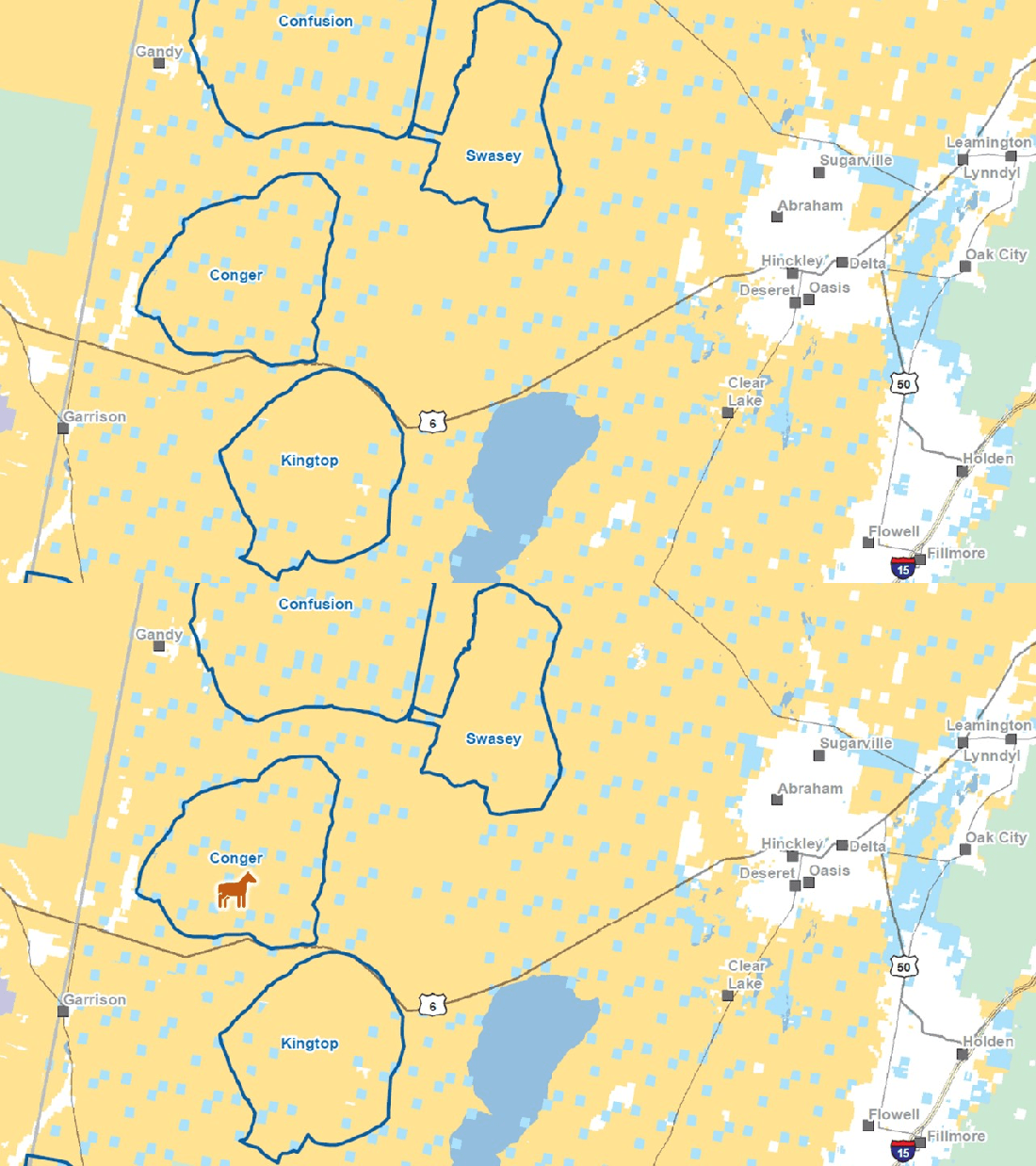
The HMA intersects seven grazing allotments, according to Section 3.2 of an EA from 2016. Livestock receive an estimated 3,400 AUMs per year inside the HMA, compared to 960 AUMs per year for the horses.
Captured animals will be taken to the off-range corrals at Axtell, UT.
Gather stats and daily reports will be posted to this page.
So says the writer of a letter to The State Journal of Frankfort, KY.
RELATED: Letter Seeks Delay of Roundups But Not Darting Programs?
Refer to this story by AP News. The FY 2021 removal goal is now 18,000, consisting mostly of wild horses.
Western Horse Watchers estimates that at least 200,000 horses have been displaced from their home range by privately owned livestock, on top of the 86,000 currently out there.
There is no overpopulation, only gross mismanagement by government bureaucrats.
RELATED: More Emergency Roundups in the Works.
CORRECTION: Over 200,000 on top of the 27,000 currently allowed by plan.
Day 1 ended with 12 horses captured, according to the gather page, including seven studs, three mares and two foals. No deaths were reported.
RELATED: Antelope Complex Emergency Roundup Starts This Weekend.
UPDATE: Added video.

