The preliminary EA and supporting documents were copied to the project folder today.
Comments will be accepted through April 14, according to the BLM news release.
Alternative 2, the Proposed Action, would try to achieve these goals:
Manage wild horses and resources to maintain a thriving natural ecological balance and multiple use relationship
Manage for healthy wild horses, maintain a level of genetic diversity that avoids inbreeding and maintain characteristics that are typical of Pryor Mountain horses of mixed ancestry including Colonial Spanish
Manage population growth using including gathers, fertility control, natural means, or a combination of these techniques
The AML would increase slightly, from the current 90-120 to 108-121.
The current population is thought to be around 200 wild horses.
The WHR is not subject to permitted grazing but is subject to the Montana Solution according to the February 7 resource enforcement schedule.
The action begins at 13:29 in the following video when Tracy “You need to manage the numbers to fit what’s available for the horses” Wilson, field marshal with the Campaign Against America’s Wild Horses, describes the poisoning of the Virginia Range mares as the world’s largest wild horse conservation program, humanely reducing the population without the need for removals.
Wilson notes that the measure is a designation, it does not seek protections, which is what the horses need—from her and her army of volunteers.
Why did they leave CAAWH? Or were they pushed out? Not radical enough?
At 27:35, Senator Hansen confronts Hendricks about the Virginia Range darting program. The question should have been put to Wilson.
“It’s been a miserable failure.”
“You obviously want to see the horse numbers reduced, have you guys got a number in your head as to what the proper herd management level should be in Storey County?”
Wilson takes up the response at 28:37, explaining that between the pesticide applications and foal predations, the population has declined by almost 20%, meaning the herd is now dying off, exactly what the bureaucrats and ranchers want.
This is what the advocates mean by “a better way.” Drive the birth rate to zero for maximum effect.
As for the big picture, Wilson is not just answering the Senator’s questions but signaling an interest in more such business from the bureaucrats and ranchers.
Hansen, a ranching sympathizer, was likely coached before the hearing and his target of 600 wild horses was probably suggested by bureaucrats at NDOW, NDA and/or the BLM, to bring the Virginia Range in line with targets on public lands that shift most of the resources to privately owned cattle and sheep.
As of today, it’s still an outlier that contradicts their narrative and they want it erased.
His claim at 30:25 that wild horses destroy the habitat of indigenous species conveniently ignores the presence and impact of non-native livestock across Nevada and the American west. This is why bighorn sheep, a native species, are on the decline.
Wilson doesn’t push back because CAAWH, like most advocacy groups, is their ally.
Senator Goicoechea, who runs cattle on the Mitchell Creek Allotment and pleaded for more control of wild horses at 41:04, should have recused himself, as his personal fortunes might be affected by the outcome of the debate.
Public comments in favor of the bill begin at 45:20.
Comments in opposition begin at 1:02:59.
Neutral testimony begins at 1:46:32.
Closing remarks begin at 1:51:00.
The hearing concludes with public comments not related to SB90, at least in theory.
Contrary to remarks in this news release by AEA, today she has few if any disciples.
Most of the advocates want the herds destroyed with their favorite pesticide.
As for the Virginia Range—referred to in the announcement as the hills of the Comstock Lode—supporters of SB90, including the Campaign Against America’s Wild Horses, want it remembered as one of the largest fertility control programs for wild mustangs, not the origin of her efforts to save them.
The agency shared the findings on socialist media.
The article did not indicate if the most noble and deserving non-native species on America’s public lands had been similarly affected. Perhaps it is still off season.
The grand total, including donations from GoFundMe, checks mailed and contributions at the museum’s web site, has passed $100,000, the first milestone according to today’s update.
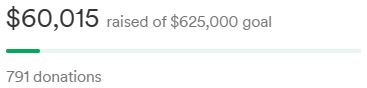
The GoFundMe total, representing about two thirds of the grand total, has increased from $60,015 on Day 7.
The museum has 30 days to match the developer’s bid. Donations can be made here.
She has identified every water source in the HMA and has worked with stakeholders to ensure the water continues to flow.
She’s documented 65 bands, the largest with 13 members.
Bachelor stallions make up 16.3% of the population.
Almost one third of the horses are pintos.
But she doesn’t see any livestock.
The ratio of females to males is not given nor the percentage of foals.
The herd is subject to the Montana Solution according to the February 7 roundup schedule but she does not say if she’s involved.
She’s with the Campaign Against America’s Wild Horses, defender of the ranchers, and you can read her story on the propaganda page hosted by Lucky Three Ranch.
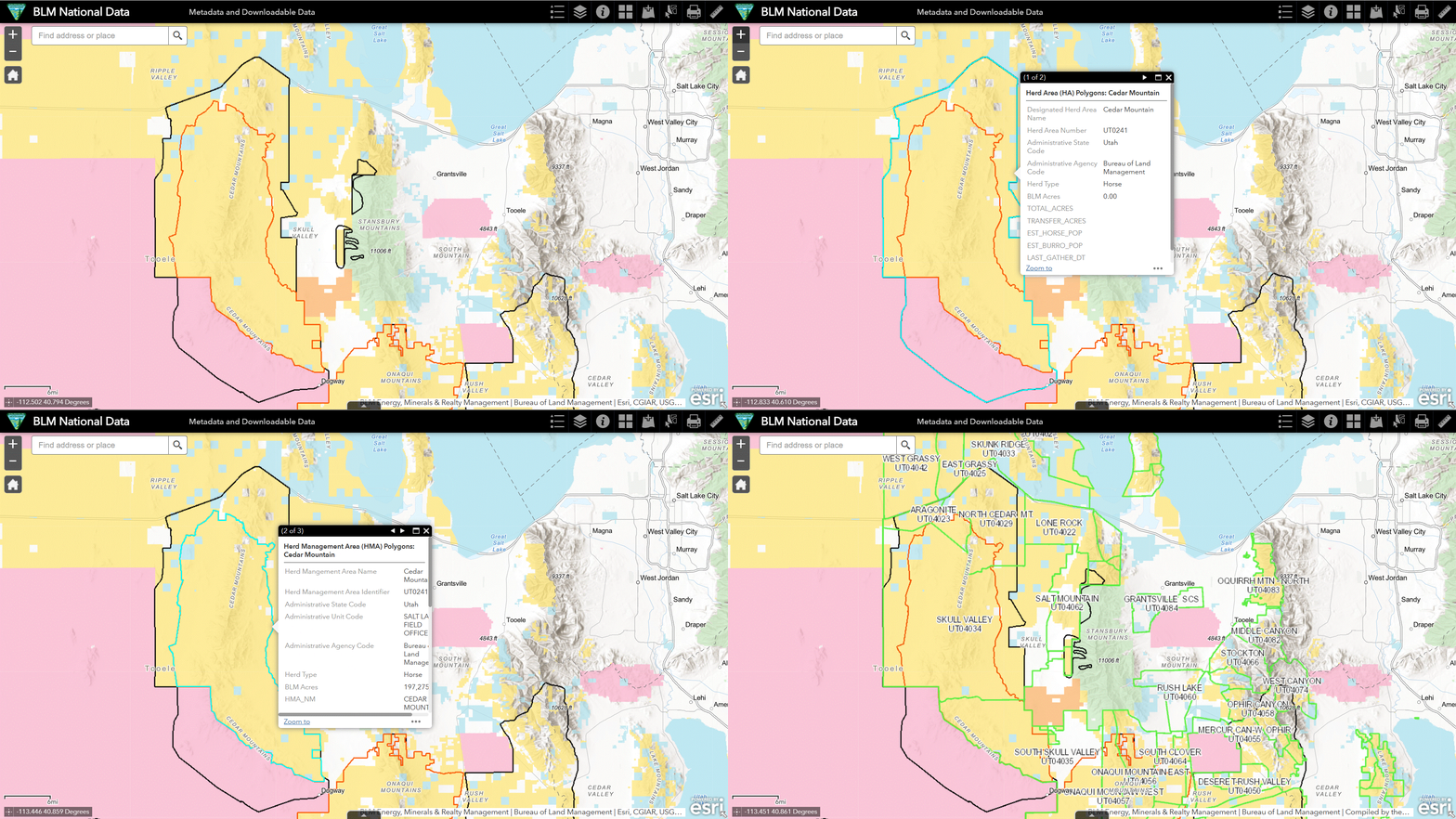
In this map from the National Data Viewer, the HA boundary is black, the HMA border is orange and the allotment boundaries are green. Click on image to open in new tab.
They’re taking public comment on the proposal, according to a story dated February 24 by the Corrales Comment.
The topic does not appear on their March 8 meeting agenda.
A web page managed by the County indicates that Mt. Taylor Mustangs was hired to apply the Montana Solution to the herd, which is considered the industry standard wildlife fertility control method that has been successfully used for decades.
Success, of course, means gradual extermination.
The fourth quarter update indicates 168 horses roaming in 22 bands, with 80 treatments delivered and six foals born in 2022.
A herd of that size would probably see eight to nine deaths in the same period, meaning the herd is probably shrinking, a hallmark of PZP darting programs.
The 10.3 acre farm, popularized by Marguerite Henry’s novel, is on the market and a developer has already offered $625,000, according to a story posted yesterday by Chesapeake Bay Magazine.
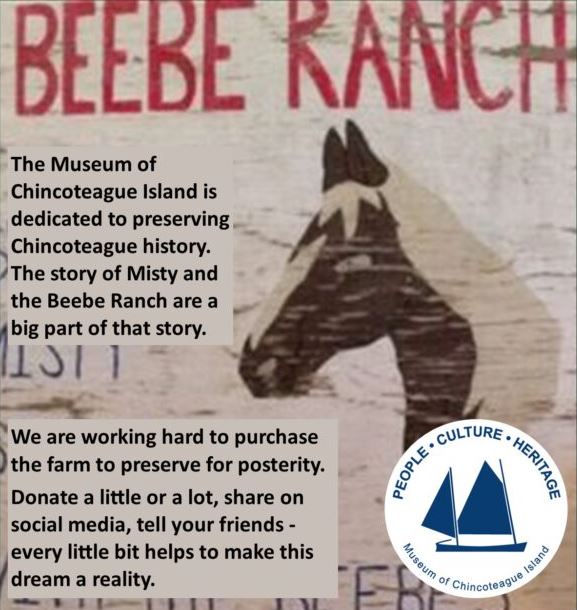
Staff with the Museum have launched a fundraising campaign to purchase the property and save it future generations.
The family prefers to sell to the museum, but it has only one month to raise the funds.
Donations are tax-deductible and can be made online or by mail.
The agency seeks public input regarding historic properties in or near the project area, according to today’s news release.
The preferred method for submitting comments is at the project site on ePlanning, but a Participate Now button has not been added to the documents folder.
The project would gather and remove excess wild horses from in and around the HMA and implement a range of fertility control techniques to maintain the population within AML over a period of ten years.
The issue started when a permittee abandoned cattle on the Redstone Allotment, according to the Decision Memo, copied to the project folder with other documents.
That happened in the 1970s according to remarks at the bottom of page two in the Response to Comments.
Scroll down to the documents section and click on the Decision folder to access these files.
Western Horse Watchers has been unable to find any news reports covering the killings, which were to start on February 23.






 Western Horse Watchers Association