Haaland to Head Interior?

Her nomination is subject to Senate confirmation, as reported last month by The Hill.

“Hey Western Horse Watchers, she’s native American.”

Hatred of God and country are learned behaviors.  They can be taught to anyone, even native Americans.

She would be responsible for a number of federal agencies, including the Bureau of Land Management.  What do you suppose the priorities will look like after January 20?

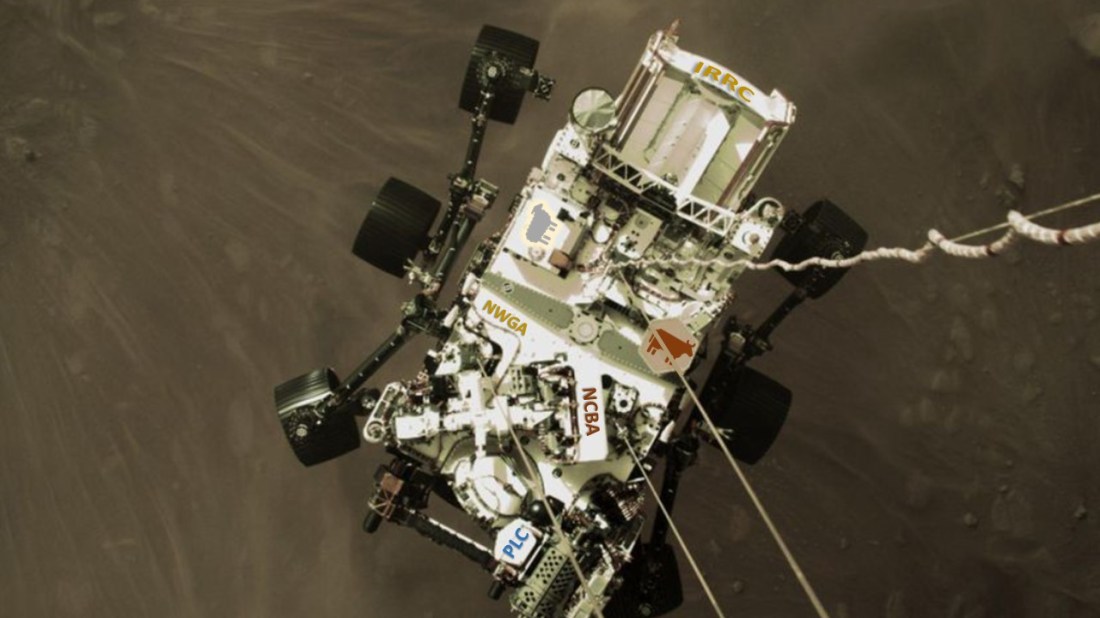
Drilling and Mining Companies In Same League as PL Ranchers?

If you’re talking about the impact on wild horses, the answer is yes, according to the writer of a story posted today by World Animal News.  It’s an interview with filmmaker James Kleinert.

Western Horse Watchers disagrees.  Drilling and mining affect anywhere from a few acres to a few thousand acres, while public-lands ranching affects entire HMAs and beyond—hundreds of thousands of acres.

The emergency roundup mentioned in the article is probably Delamar.

UNR Cattlemen’s Update to Include Session On WHB

The conference will be held virtually this year, according to an announcement dated January 4.

The WHB update will be presented by Barry Perryman, UNR professor and member of the Wild Horse and Burro Advisory Board, on the afternoon of January 13.

If it was a driller’s conference, would there be a session on wild horses and burros?

What if it was a miner’s conference?

Wild Horses Reduce Wildfires?

They can, according to a guest column appearing today in the Pagosa Daily Post, by consuming grass and brush that carry flames to other fuels, such as trees.

The writer is described as a naturalist, author and conservationist.

A related article posted today by the Ag Information Network of the West provides additional details.

The author of the guest column wants horses removed “from areas where they are not wanted,” such as HMAs, and placed “in the mountains in an effort to reduce wildfire fuel.”

You see, many of these “remote wilderness areas are poorly suited to commercial livestock grazing due to the extensive predation of calves and lambs, poor accessibility and very difficult terrain,” so horses should live there.

Does this sound familiar?

The author is the same guy who wrote a column last month about moving wild horses into remote areas so public-lands ranchers can have full access to their food.

He’s listed as a rancher/conservationist in the Ag Info article.

Virginia Range Darting Program Spreading to South Africa?

A report by Deseret News says that a researcher from the University of Pretoria will be collaborating with personnel from the American Wild Horse Campaign regarding the use of PZP to manage elephants in limited habitats.

Volunteers on the Virginia Range have treated 1,333 mares in a herd of 3,000 horses that roam on 300,000 acres, according to the story, with an expectation that 600 lives will be denied this year.

You can’t have healthy horses at a stocking rate of ten animals per thousand acres when you’re an ally of those who demand stocking rates of one wild horse per thousand acres or less on public lands in the western U.S.—to accommodate more privately owned cattle and sheep.

These people are preventing wild horses, not protecting them, an insult to Velma’s legacy.

The report confirmed that the ‘One-Horse Pony‘ Amendment was dropped from the FY 2021 spending bill.

RELATED: PZP Zealotry on a Global Scale, So Long, PZP Amendment?

Water Tanks 06-25-20

The Horses Are Still a Problem But the Statute Is Not

The WHB Act, formally known as 16 USC 30, turns 50 in December but no longer functions as Velma intended.  Most of the protections are gone.

How did we get to the point where almost half of the land identified for wild horses and burros has been taken away and most of the resources on the remaining land have been diverted to privately owned livestock?

  • Changes to the statute by Congress (amendments)
  • Rules promulgated by the unelected bureaucracy (regulations)

The regulations have probably had the greatest impact.

In the original Act, land where wild horses and burros were found was to be “devoted principally but not necessarily exclusively to their welfare.”  That was the only condition.

Today, land is managed principally for them if the bureaucracy says so.

And what has been the response of the ‘advocacy’ groups?  Bash oil and mining companies while pushing contraceptives.

Reform has to start on the advocacy side and that’s what this blog is all about.

RELATED: Coming Soon: WHB Act at 50, Statutes and Regulations.

Economic Viability of Wild Horse Roundups

The economic attractiveness of the scenario considered yesterday, which was based on data from Table 3-3 in the Draft EA for resource enforcement actions in the Desatoya HMA, was zilch.

  • Spend $954 to remove a wild horse from his home range
  • Spend $568 per year to keep him in long-term holding
  • Collect $16 per year from the rancher to whom his food is sold

So the question arises: By how much would the grazing fee have to increase to justify the endeavor from an economic viewpoint?

A crude approach to the problem would be to solve for x in the following expression, where 12 represents the forage that would have been consumed by the horse but is now available to livestock (AUMs per year), x is the grazing fee ($ per AUM) and 568 is the cost of long-term holding ($ per year).

12 × x = 568

The answer is x = $47.33 per AUM.  The fee would have to increase from $1.35 to $47.33 to pay for long-term holding.  But it doesn’t pay for the cost of capture and doesn’t reflect the time-value of money.

That’s why the BLM used present values in the EA.

Another way to answer the question is to model the situation in a Excel, using the built-in present value functions.  Most of the cells in this example have text and numbers except B13, B15, B17 and B19, which have formulas.

Economic Viability of Wild Horse Roundups-1

If you put the data in different cells the formulas won’t work.  The sign convention for cash flows is negative for expenditures, positive for revenues.

The present value function discounts a series of future payments (or receipts) back to the present, for a given interest rate and time period, which in this case were taken from the EA.

The model assumes that a captured horse is not adopted and is transferred immediately to long-term holding.  The analysis in the EA is a bit more complex, using both short-term and long-term holding, a topic for future discussion.

The present value of the capture cost is $954, as it occurs at the start of the process.

The other transactions are assumed to occur at the end of the year and are assumed to be constant over the life of the project.

  • Beginning of year 1: Spend $954 to capture a wild horse
  • End of year 1: Spend $568 for holding, receive $16 in grazing fees
  • End of year 2: Spend $568, receive $16
  • End of year 3: Spend $568, receive $16
  • ¦
  • End of year 25: Spend $568, receive $16

The present value of the proposal is the difference between the present value of the grazing revenues and the present value of the holding costs, minus the capture cost.

The formulas are as follows:

  • B13: =12*B5
  • B15: =PV(B9/100,B11,-B13)
  • B17: =PV(B9/100,B11,B7)
  • B19: =B15+B17-B3

The cell formats were changed to two decimals, getting rid of the accounting formats applied by Excel when entering financial functions.  You can download a copy of the spreadsheet here.

The present value of the proposal, in cell B19, is negative, meaning the present value of the costs exceeds the present value of the revenues.  It is a bad investment.

By how much would the grazing fee have to increase to make the present value of the proposal positive?

Try entering some larger values in cell B5, observing the effect in B19.  You may have to enable editing when the file opens, depending on the security settings of your computer.

The amount that flips the present value from negative to positive would be the smallest fee that makes wild horse roundups economically viable.  If the proposal involved a mix of short-term and long-term holding, as in the EA, the fee would be higher.

Of course, everything is off the table until areas identified for wild horses and burros are managed principally for wild horses and burros, as specified in the original statute.

Commenting On the Desatoya EA

The present-value analysis following Table 3-3 in the Draft EA, as noted yesterday, shows there is no economic justification for wild horse roundups.  That would be a substantive comment.

If the present value of the costs exceeds the present value of the benefits, the proposal should be rejected.  In this case, the proposal is to remove and warehouse wild horses.

Another comment involves the rationale for the benefit calculation: Money spent on removing and warehousing wild horses is offset by grazing fees, not the price of hay the ranchers would have to pay if (OMG) their livestock were confined to private property with imported feed.

  • Spend $954 to remove a wild horse from his home range
  • Spend $568 per year to keep him in long-term holding
  • Collect 12 × $1.35 = $16 per year from the rancher to whom his food is sold

There’s no way you could get that past your boss in the private sector.

Concerns about resource allocations and management priorities, although valid, should not be submitted as they are outside the scope of the project.

Comments on the EA can be submitted through January 9.

RELATED: New Desatoya Gather Plan Available for Review.

Grazing Program Receives Annual Endowment

The $10 million payment is acknowledged on page 14 of the Division G Explanatory Statement for the FY 2021 appropriations bill.

Those funds, derived from grazing fees, are plowed back into the program every year to make life better for the public-lands ranchers.  Refer to paragraph (b)(1) in Section 1751 of the Federal Land Policy and Management Act (the ‘No Rancher Left Behind Act’).

Money to remove animals that rob forage from the ranchers, such as wild horses and burros, is discussed on page 13 of the statement.  Taxpayers provide those funds.

The current fee is $1.35 per AUM, determined by a formula in Section 1905 of the Public Rangelands Improvement Act.  Note that the base fee, $1.23 per AUM, was set in 1966.

Section 3.2.8 in the Draft EA for resource enforcement actions in the Desatoya HMA notes that the value of grass hay in Nevada is $68 per AUM.

That means the ranchers are paying two cents on the dollar to feed their livestock, even on lands set aside for wild horses and burros.

Paragraph (a)(9) in Section 1701 of FLPMA says the United States shall receive fair market value for the use of the public lands and their resources, unless otherwise provided by statute, which in the case of livestock grazing is PRIA.

Now you know why there is so much interest in achieving and maintaining AMLs, the goal of the rancher-friendly ‘Path Forward.’

What would happen if grazing fees reflected market conditions?

Table 3-3 in the EA provides costs associated with roundups and off-range holding.

In the discussion that follows, the present value of gathering and holding an animal over a 25 year period was estimated to be $15,950.  The present value of the benefits arising therefrom—forage available to privately owned livestock over the same period—was estimated to be $14,209.

The present value of the costs exceeds the present value of the benefits, meaning it’s a bad investment.  Nobody in the private sector would do it.

But insulating the ranchers and their overlords from the realities of a free market is what the grazing program is all about.

If grazing receipts were used in the benefit calculation ($1.35 per AUM), instead of avoided costs ($68 per AUM), the present value would be nil and the proposal would never even see the light of day.

RELATED: Grazing Program Ancillaries.

Cattle and Horses

So Long, PZP Amendment?

The Division G Explanatory Statement in the FY 2021 appropriations bill does not direct the BLM to spend $11 million on wild horse contraceptives, although it does include an expectation that wild horse management actions will “include a robust expansion of fertility control utilizing methods that are proven, safe, effective, and humane.”

That may signify the end of the story, at least for now.  Roundups and off-range holding will likely consume most of the budget, as adoptions go down and surrenders go up.

It’s sad, really.  An idea so good that even the Rolling Stones would support it.

RELATED: PZP Amendment Omitted from Senate Spending Bill?

Pancake Gather Plan

Note to Visitors: Stay Away from Currituck Horses

You should never approach wild horses unless you’re a trained volunteer with CO2 pistol, CO2 rifle or blowgun in hand.

A report published yesterday by WAVY News shows several people getting too close to the horses, which is illegal.  The photo initially appeared on socialist media.

Cruelty, enticing, harboring, luring, seizing and failure to report injury are also unlawful, according to the story.

RELATED: Currituck Horses at Great Risk?

Ivermectin Cures Covid?

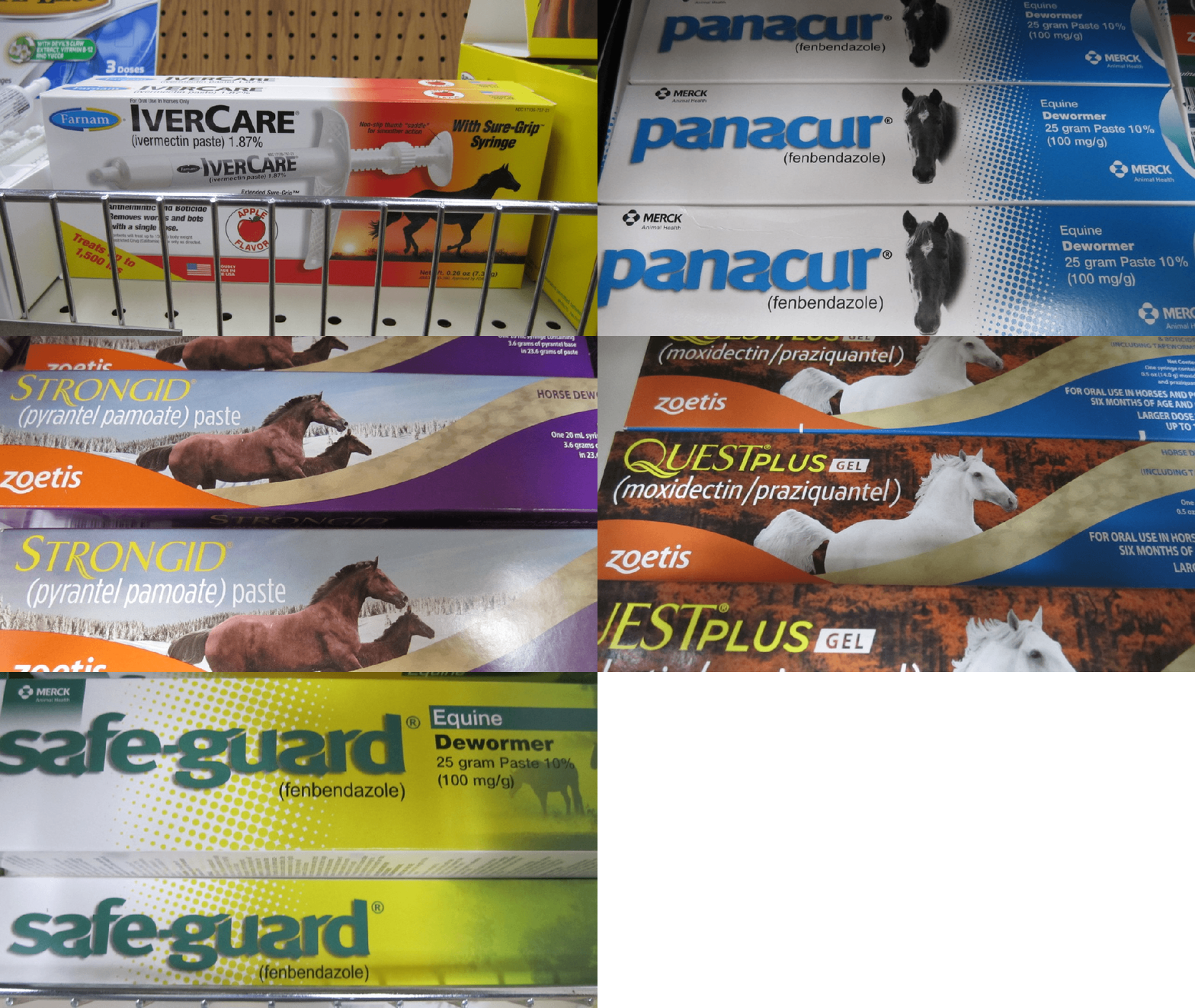
Many in the horse world know it as a dewormer.  But if you search for Ivermectin Covid-19, you’ll find reports on its use in treating the virus.

The local feed store had it in paste form on December 24.  But it also had several other types of dewormers.  There were no special warning signs in that area—Ivermectin not fit for human consumption—and there were no indications that it was being taken off the market or going out of stock.

My guys get Panacur on an as-needed basis.  It’s expensive but works well.

RELATED: Colt’s First Worm Treatment.

Dewormers

‘D’ Is for Demonic

If we have three co-equal branches of government, why is there so much interest in the presidency?

The political party trying to force its way into the White House hates Christmas as much as it hates the Constitution.

What exactly did they do yesterday?  Spend some time in front of their holiday trees, listening to holiday music, wishing each other happy holidays?

Most of its members already subscribe to the movement discussed in this video, they just haven’t come out of the closet yet.

The PZP Zealots Want Many One-Horse Ponies

Some want no-horse ponies, mares that have become sterile through extended use of contraceptives.

Do they agree with the idea of managing HMAs primarily for livestock and HAs almost exclusively for livestock?  Sure looks like it.

How do they differ from the public-lands ranchers?  The ranchers want AMLs achieved as quickly as possible, while the ‘advocates’ want herd sizes reduced gradually.

Unfortunately, darted mares consume resources assigned to ‘other mandated uses of public lands,’ and that’s at the center of the debate.

RELATED: What Is a One-Horse Pony?

What Is a Scandal?

When the words or deeds of one person cause others to lose the faith or act in ways that offend God, you have a scandal.

Here are a few facts about the material world, in case you didn’t get the memo:

  • It’s God’s creation
  • You don’t get to make the rules
  • All men will be held to the same standard

Keep these things in mind when you look at a nativity scene and see the Word made flesh, lying in a manger.

There are tens of thousands of churches but only one standard.  Which one has the fullness of the truth?

RELATED: What Triggered the ‘One-Horse Pony’ Remark?