Mind Not Required

Which is easier?

A. Digging through ePlanning and RAS for the necessary data, computing the resource allocations, and demonstrating that an HMA can support six times more wild horses than the government allows.

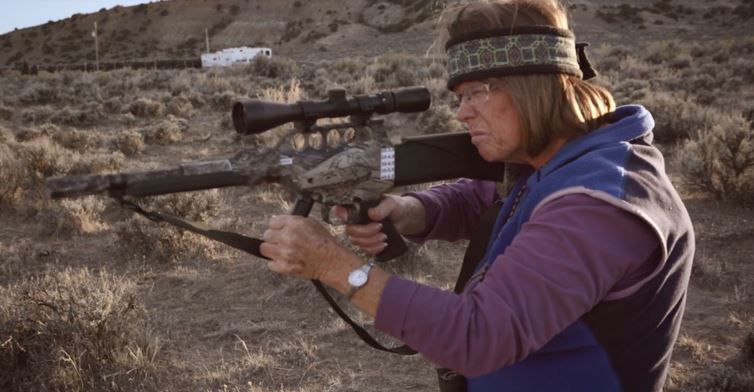
B. Pulling the trigger on your darting rifle and denying the transmission of life, with benefits accruing to the public-lands ranchers.

Which one is better for the horses in the long run?

Which one will be featured in Google search results?

Countdown to 50 | 4 Days to Go

The addition of AMLs to the original Act put an end to the idea that areas identified for wild horses and burros would be devoted principally but not necessarily exclusively to their welfare.

This undefined concept has shifted large amounts of resources from wild horses and burros to privately owned cattle and sheep.

In this regard the truth is a bit technical and requires some basic analytical skills to articulate.

Today we recognize the importance of data in helping others understand how their public lands are managed.

For example, in the five HMAs subject to the Rock Springs roundup, livestock receive 7.4 times more forage than the horses.  The forage assigned to livestock would support an additional 16,000 wild horses, for a True AML that exceeds 18,000.

There is no overpopulation and no justification for a roundup or darting program.

The horses displaced by livestock in these HMAs account for almost one third of those in off-range holding.

The advocates want you to follow the science (of population suppression) but they don’t want you to follow the math.  They are servants of the public-lands ranchers.

RELATED: Countdown to 50 | 5 Days to Go.

Wild Horse Management

Countdown to 50 | 5 Days to Go

Relocation of wild horses and burros to areas of the public lands where they were not found in 1971 was prohibited by the original Act.  That provision carried over into the current statute.

Today we recognize the importance of protecting their land.

Policies and plans that put ranching interests far above those of the horses and burros must be blasted out and replaced with others that reflect the will of the American people, expressed through their elected representatives, fifty years ago.

Don’t expect any leadership from the advocates in this regard, they are already whipped.

RELATED: Countdown to 50 | 6 Days to Go.

Cattle and Horses

Countdown to 50 | 6 Days to Go

In the original Act, free-roaming horses and burros were to be protected from capture, branding, harassment and death.

Today we see widespread capture, branding, harassment and death, inflicted mostly by the government and the advocates.

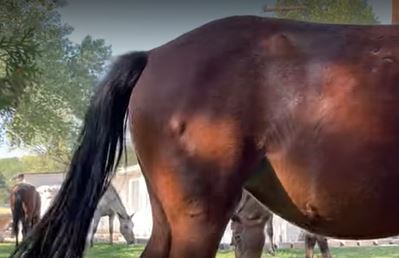
VR Darting Injury 09-15-21

Why?  Because most of the resources in areas set aside for wild horses and burros have been assigned to privately owned cattle and sheep.

The wild horse and burro program is a pest control program designed to minimize its impact on the grazing program.

That’s what you’re supposed to celebrate on December 15.

RELATED: Countdown to 50 | 7 Days to Go.

What’s Missing from Wild Horse Darting Programs?

An inconspicuous way of increasing wild horse deaths.

Helicopter roundups shift large amounts of resources back to the ranchers in short periods of time.

Darting programs can accomplish the same thing but over a much longer timeframe, which is why the bureaucrats and ranchers reject them.

To put their programs on par with the roundups and strengthen their relationship with the bureaucrats and ranchers, the advocates need to come up with a strategy that alters birth rates and death rates.

Salt River Advocates Complain About Reduced Water Flow

They don’t protect life, they prevent it.  Now, they’re worried that the herd they’re trying to eradicate won’t have enough food for the winter, according to a report by Cronkite News, the news division of Arizona PBS.

Maybe they don’t like the competition.  Getting rid of the horses is their job.

With the birth rate approaching zero, the herd is shrinking.

The Salt River Horse Exhibit, a product of the local advocacy group in cooperation with the Campaign Against America’s Wild Horses, contains about 440 adults in the Tonto National Forest, east of Phoenix, AZ.

The darting program is equivalent to a roundup of about 100 horses every year.

Countdown to 50 | 7 Days to Go

When the original Act was signed into law, around 9,500 wild horses and 11,000 wild burros remained on western rangelands.

Today we acknowledge the impact of drilling and mining on these animals, which is small compared to that of the government and the advocates.

Those activities affect anywhere from a few acres to a few thousand acres, while public-lands ranching devours entire HMAs and beyond.

Despite the constant thrashing of the advocates, they cannot produce any figures for the number of horses and burros displaced by exploration and production.

They can tell you exactly how much adjuvant to add to the PZP but couldn’t convert an AML to AUMs if their lives depended on it.

RELATED: Countdown to 50 | 8 Days to Go.

Countdown to 50 | 8 Days to Go

In the original WHB Act, areas identified for wild horses and burros were to be devoted principally but not necessarily exclusively to their welfare, in keeping with the multiple-use management concept for the public lands.  Only four of them are.

Today we recognize the efforts of the bureaucrats, who never have to face the voters.

They steadfastly defend and promote the ranching agenda, write their own rules and bring various stakeholders together.

As a result, most of the HMAs are managed primarily for livestock and the former HMAs, demoted to HAs, are managed almost exclusively for livestock.

RELATED: Countdown to 50 | 9 Days to Go.

Love Triangle on Americas Public Lands 08-19-21

The Charade Is Climate Change

It’s a naturally occurring process that is not affected by human activity, despite claims to the contrary by the writers of this column in the Sierra Nevada Ally.

We don’t want livestock off the public lands because they emit carbon, we want them removed because they displace wild horses and burros.

Confine the ranchers to their base properties and let them pay market rates to feed their animals.  Impact on carbon emissions?  None.

Stick with rangeland degradation, which is a repeated and repeatable pattern, but avoid carbon-induced climate change, which is unproven.

Countdown to 50 | 9 Days to Go

The natural ecological balance of the original WHB Act referred to wildlife that inhabit public lands, particularly endangered species.  There was no provision for livestock.

Today we recognize the legislative achievements of the cattlemen.

Their desire for unfettered access to cheap feed on America’s public lands drove many of the changes to the statute, including the introduction of AMLs, which shifted most of the resources in areas identified for wild horses to privately owned livestock.

RELATED: Countdown to 50 | 10 Days to Go.

Thriving Ecological Balance-3

Countdown to 50 | 10 Days to Go

The current statute bears little resemblance to the original and no longer affords the protections sought by Velma.

Today we recognize the important work of the advocates.

Next to the federal government, nobody’s getting rid of more wild horses than they are.

Like the helicopter pilots and wranglers, the advocates stop the horses from reclaiming their food, ensuring that ranchers receive most of the resources in areas set aside for wild horses, as specified by the bureaucrats in the land-use plans.

Advocates are the Predators 11-30-21

Rock Springs Gather Deaths in the News

The loss of two mares on Day 53 is discussed in this article by Cowboy State Daily but that’s not the story.

The writer sourced some of the information from the Campaign Against America’s Wild Horses, architects of the industrial-scale darting program on the Virginia Range that’s equivalent to a roundup of 500 to 1,000 wild horses every year.

The way to avoid gather-related injuries and deaths is to end wild horse reproduction, not public-lands ranching, which is the cause of the removals.

Many of the advocates concur with that approach.  Some send mixed messages.

Note that the author repeated the government’s figures without checking the math: “As of Sunday, BLM officials have gathered 2,478 horses (1,044 stallions, 1,001 mares and 503 foals), with the goal of rounding up 3,500 by the end of the year, if not sooner.”

Virginia Range Darting Program Rivals Major Roundups

The BLM retiree hired by the Campaign Against America’s Wild Horses said in a video included with the story last week by KLAS News that they are darting between 1,200 and 1,400 mares every year.

They are targeting every one of them—whether they need it or not—as suspected in the previous post, and the number of horses treated over the past two years is well in excess of the 2,000 stated in the article.

With the birth rate approaching zero, the only thing missing is a strategy to increase the death rate.

The long-term goal is not to eradicate these mustangs but to convince the bureaucrats that the technique is viable in other areas.

Almost certainly they are watching closely, and may be most surprised by the lack of public outcry.

Conversation Starters for Your Thanksgiving Get-Together

Assertions are best.  Rock your opponents back on their heels.

  • The bureaucrats assign most of the resources in areas set aside for wild horses to privately owned livestock.
  • AMLs are small relative to the available resources.
  • To solve the problem, the advocates want to end wild horse reproduction, not permitted grazing.
  • The off-range corrals and long-term pastures could be emptied three to five times over if the resources were shifted back to the horses.
  • The government manages HMAs primarily for cattle and sheep, HAs almost exclusively for cattle and sheep.
  • The advocates lead you astray, take your money and help the public-lands ranchers.
  • The advocates would have you believe that drilling and mining are the greatest threats to wild horses (but can’t produce any figures for the number of animals displaced thereby).
  • Next to the federal government, nobody’s getting rid of more wild hoses than the advocates.
  • Whenever the advocates get involved, wild horse numbers go down.
  • The government insulates public-lands ranchers from the realities of a free market.
  • Public-lands ranching is government dependency and redistribution of wealth.
  • Livestock belong in feedlots, not wild horses.  Confine the ranchers to their base properties and expect them to pay market rates to feed their animals.
  • The forage assigned to livestock would support hundreds or thousands of additional wild horses in each HMA, making roundups and darting programs unnecessary.
  • Wild horses are never allowed to seek their level, never allowed to fill their niche, leading to elevated growth rates.
  • The forage assigned to livestock on public lands managed by the BLM would support one million wild horses, enough to empty all of the off-range corrals and long-term pastures twenty times over.
  • The wild horse and burro program has devolved into a pest control program, with benefits accruing to the public-lands ranchers.
  • The WHB Act no longer affords the protections sought by Velma.

If you want to help America’s wild horses, don’t focus on the horses.  The advocates focus on the horses.  Look upstream in the management process.  Change the policies and plans that put ranching interests far above those of the horses.

RELATED: Rift in Wild Horse World, Origin of AMLs?