Not exactly, the advocates are using PZP to get rid of them, not Zyklon B.
If I was a resident of Montana, I would not want the name of my state associated with the chemical eradication of wild horses.

Western Horse Watchers Association
Exposing the Hypocrisy, Lies and Incompetence of the Wild Horse Advocates
Opinion
Not exactly, the advocates are using PZP to get rid of them, not Zyklon B.
If I was a resident of Montana, I would not want the name of my state associated with the chemical eradication of wild horses.
He came into the world that we might be saved from eternal damnation.
If the government was going to remove the horses with helicopters, there’d be outrage.
But the Proposed Action will get rid of them with GonaCon or PZP.
Silence.
In both cases, the management plan assigns four times more forage to privately owned livestock than the horses.
The advocates don’t oppose the removals, only the way they are carried out.
What about the resource allocations that prompt them?
More silence.
RELATED: Comments Invited on Stewart Creek Pest Control Plan.
For livestock, words.
For horses, darts.
Which species do they think is the problem? Which one is overpopulated?
Your Christmas giving should not include them. They are wrong about almost everything in the wild horse world.
RELATED: Criticize Livestock, Target Horses.
This article in Horse Nation, written by a senior advisor to the Animal Welfare Institute, a sponsor of the misleading Rock Springs petition, notes that livestock vastly outnumber wild horses and graze on the same public lands.
Further, the government is trying to reduce the nation’s wild horse population to just 27,000 animals, citing arbitrary AMLs that are not supported by science.
Yet it concludes with this inconsistent and unoriginal idea: The BLM should implement safe and humane fertility control methods to keep horses on the range.
If a darting program prevents 125 births in a herd of 600, it is equivalent to a roundup of 125 wild horses—every year. It does not keep horses on the range.
There is no turning over of the genetic soil, the older horses die off, and the population goes down. Exactly what the ranchers want, although on a much longer timeframe.
The wild horse world is full of charlatans.
“Stay Wild,” a favorite of the advocates, is a lie. Next to the federal government, nobody’s getting rid of more wild horses than they are.
RELATED: Why Don’t the Advocates Talk About Resource Allocations?
No, Congress did.
Western Horse Watchers reminds you to think in terms of a process and to realize that the causes of roundups, adoptions, warehousing and slaughter are far upstream.
Statutes > Regulations > Policies > Plans > Programs > Procedures > Actions
Problems are solved by addressing the causes, not by treating the symptoms, a concept that has eluded the advocates for decades.
The year is almost over and while the advocates are reviewing what they did to our wild ones in 2021, Craig Downer explains in this article what can be done for them.
Regarding base properties, Western Horse Watchers believes that they are part of the solution: Confine the ranchers to their deeded acres and let them pay market rates to feed their animals, in a year-round off-season.
The proposed feedlot north of Winnemucca will support 4,000 animals on 100 acres of private property. If it works for the horses it works for the cattle.
As for climate change, Western Horse Watchers believes that it’s a naturally occurring process that’s been going on for eons and is not attributable to modern life, as the Marxists would have you believe.
They’re not interested in protecting the environment but controlling every aspect of your life. Why are you still voting for them?
This column in yesterday’s edition of The Salt Lake Tribune was written by the director of communications for the Campaign Against America’s Wild Horses.
Whenever they get involved, there is no more wildness, no natural selection, no legacy.
When are you leaving, dear?
The December edition of Horse Tales is out, along with another article by the real estate agent and PZP darter in the Minden-Gardnerville area.
The listings are on page 24 and the article begins at the bottom of page 5.
The action takes place on the Pine Nut Mountains HA, which includes the HMA but extends well to the south, coinciding roughly with the Buckeye and Pine Nut allotments.
The land was identified for wild horses in 1971 but has since been taken away and is now managed principally for livestock.
Horses still inhabit the area, which is unfit for them, supposedly. The AML is zero.

Instead of demanding that the HA be managed principally for wild horses—as specified in the statute—the advocates are getting rid of them with PZP.
There is little if any turning over of the genetic soil and the herd may be dying off, depending on how severely they’ve reduced the birth rate.
If things get out of hand, the government will remove them, ensuring that all of their food, except for a small amount reserved for wildlife, goes to public-lands ranchers.
Good job, guys.
Like the Virginia Range a few miles to the north, the Campaign Against America’s Wild Horses has its tentacles in this program.
The Allotment Master report puts Buckeye and Pine Nut in the Improve category.
An article by Cowboy State Daily said it was delivered to U.S. Department of the Interior Secretary Deb Haaland on Monday.
Not mentioned in the narrative:
If the sponsoring organizations were honest about the circumstances affecting these horses, nobody would have signed their petition.
RELATED: Advocates to Interior: Let Us Get Rid of Rock Springs Horses.
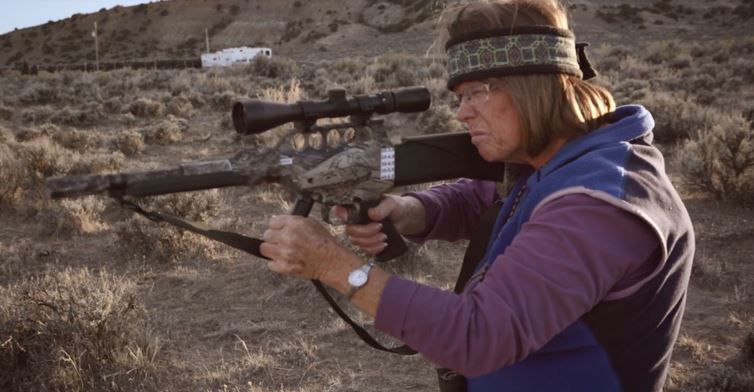
Manage HMAs and WHTs primarily for livestock.
Make AMLs small relative to the available resources.
Assign most of the forage to privately owned cattle and sheep.
Remove excess horses and burros to achieve these objectives.
But do it with PZP, not helicopters.
That’s what needs to change.
RELATED: Irby Transforming AWA Into Ranching Advocacy Group?
The current statute bears little resemblance to the original and no longer affords the protections sought by Velma.
The task ahead is rebuilding and restoration.
RELATED: Countdown to 50 | 1 Day to Go.

Refer to this opinion piece in today’s online edition of The Oregonian.
What about the Forest Service and the advocacy groups?
Today we celebrate the work of Velma Johnston, whose steely determination earned her the nickname “Wild Horse Annie.”
The origin of the Wild Horse and Burro Act is the Virginia Range, where the horses she first encountered were captured in 1950.
RELATED: Countdown to 50 | 2 Days to Go.
Reports about free-roaming horses and burros usually do not mention permitted grazing and how the original WHB Act was altered at the behest of ranching interests.
The new priorities, which protect the public-lands ranchers, not the horses and burros, are reflected in the current statute and the federal regulations affecting those animals.
Today we we acknowledge the role of big tech and the media in controlling what the American people see and hear about wild horses and burros.
Search results point to groups that accept the overpopulation narrative, promote PZP darting and other means of population suppression, and are helping the government achieve and maintain AMLs—which are biased in favor of the ranchers.
Film crews don’t go back to the HMAs after roundups to see what type of animals filled the void and follow-up reports suggest the horses are better off in the gulags.
Is it because they’re not curious or are they just following orders?
These people don’t bring you the truth, they insulate you from it.
RELATED: Countdown to 50 | 3 Days to Go.
She would have been 93 today but left this world on December 4.
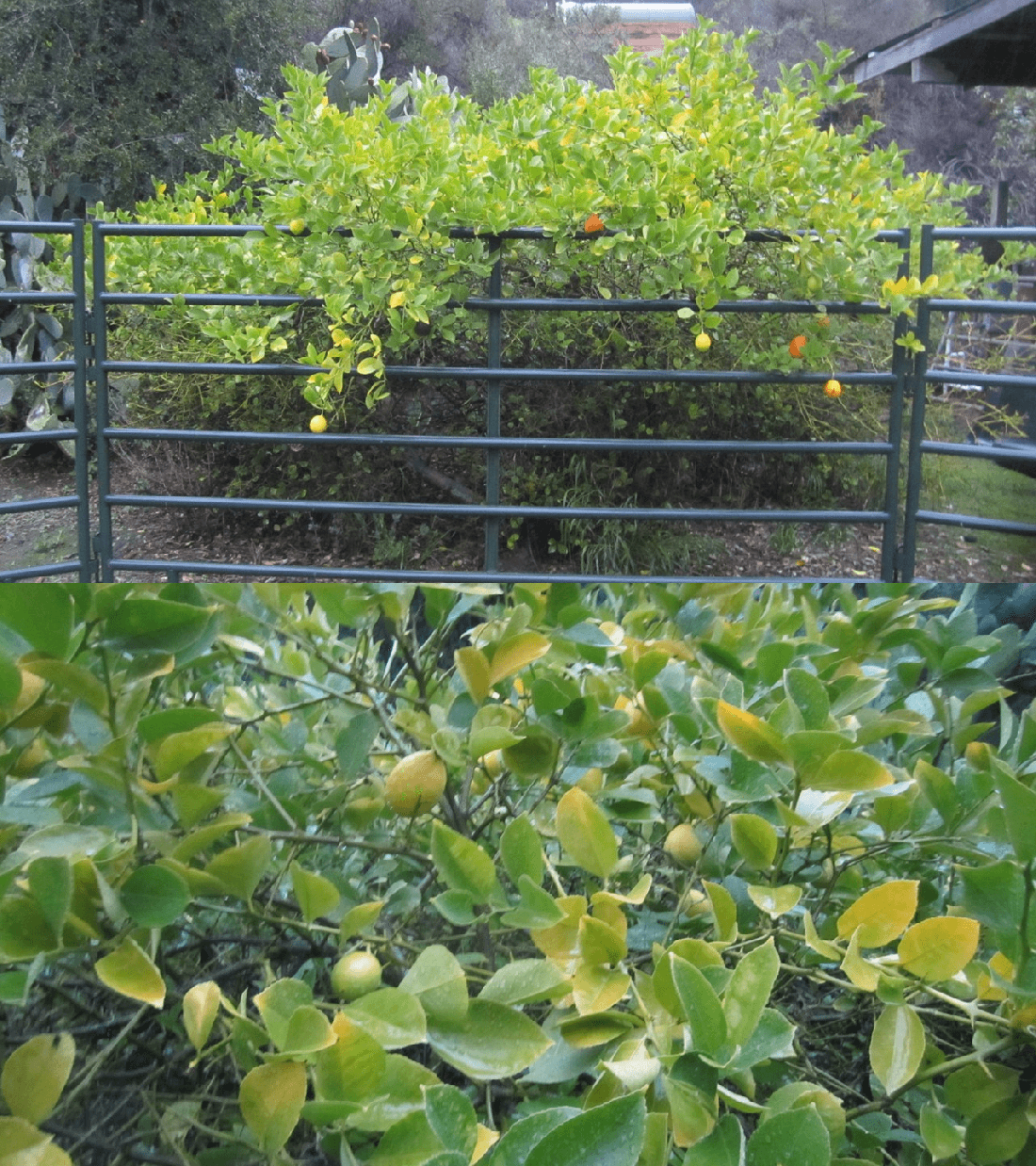
Her favorite, a lemon tree by the round pen, carries on without her, as we all are.
She stopped coming out to the ranch in 2018. She would usually drop off something for me to eat, say hi to the horses, then go work on the tree.
The visit would last about an hour. I was usually cleaning one of the corrals.
After pruning a few branches and removing the fruit that had ripened, she’d carry them back to her car and drive home.
How I miss those days.
The current statute, and the program arising therefrom, have a downstream focus that can be summarized as ‘Off the Range.’ This is the realm in which the advocates operate.
The proactive approach, codified in the original Act, is gone.
Today we recognize the importance of an upstream focus in protecting these animals, which requires an understanding of cause and effect.
A process is a series of steps that must be carried in a specified order to achieve the desired results. The steps are often described in a procedure.
Causes are upstream in the process, effects are downstream.
If a plane crashes, do the investigators look at events that occurred 24 hours after it hit the ground?
Of course not! They look upstream in the flight process to identify actions or conditions that may have contributed to the crash. The investigation may take them through events that occurred minutes, days or months before.
Improvements to safety and reliability, designed to prevent future crashes, focus on those actions and conditions, which, in the final report, are identified as causes.
If you want to help America’s wild horses, don’t focus on the horses. The advocates focus on the horses.
Instead, look upstream in the management process, understand why they’re being forced off their home range, and address those causes for a lasting solution.
RELATED: Countdown to 50 | 4 Days to Go.
Which is easier?
A. Digging through ePlanning and RAS for the necessary data, computing the resource allocations, and demonstrating that an HMA can support six times more wild horses than the government allows.
B. Pulling the trigger on your darting rifle and denying the transmission of life, with benefits accruing to the public-lands ranchers.
Which one is better for the horses in the long run?
Which one will be featured in Google search results?
The addition of AMLs to the original Act put an end to the idea that areas identified for wild horses and burros would be devoted principally but not necessarily exclusively to their welfare.
This undefined concept has shifted large amounts of resources from wild horses and burros to privately owned cattle and sheep.
In this regard the truth is a bit technical and requires some basic analytical skills to articulate.
Today we recognize the importance of data in helping others understand how their public lands are managed.
For example, in the five HMAs subject to the Rock Springs roundup, livestock receive 7.4 times more forage than the horses. The forage assigned to livestock would support an additional 16,000 wild horses, for a True AML that exceeds 18,000.
There is no overpopulation and no justification for a roundup or darting program.
The horses displaced by livestock in these HMAs account for almost one third of those in off-range holding.
The advocates want you to follow the science (of population suppression) but they don’t want you to follow the math. They are servants of the public-lands ranchers.
RELATED: Countdown to 50 | 5 Days to Go.

Relocation of wild horses and burros to areas of the public lands where they were not found in 1971 was prohibited by the original Act. That provision carried over into the current statute.
Today we recognize the importance of protecting their land.
Policies and plans that put ranching interests far above those of the horses and burros must be blasted out and replaced with others that reflect the will of the American people, expressed through their elected representatives, fifty years ago.
Don’t expect any leadership from the advocates in this regard, they are already whipped.
RELATED: Countdown to 50 | 6 Days to Go.

 Western Horse Watchers Association