Permitted Grazing a Wise Use of Public Lands?

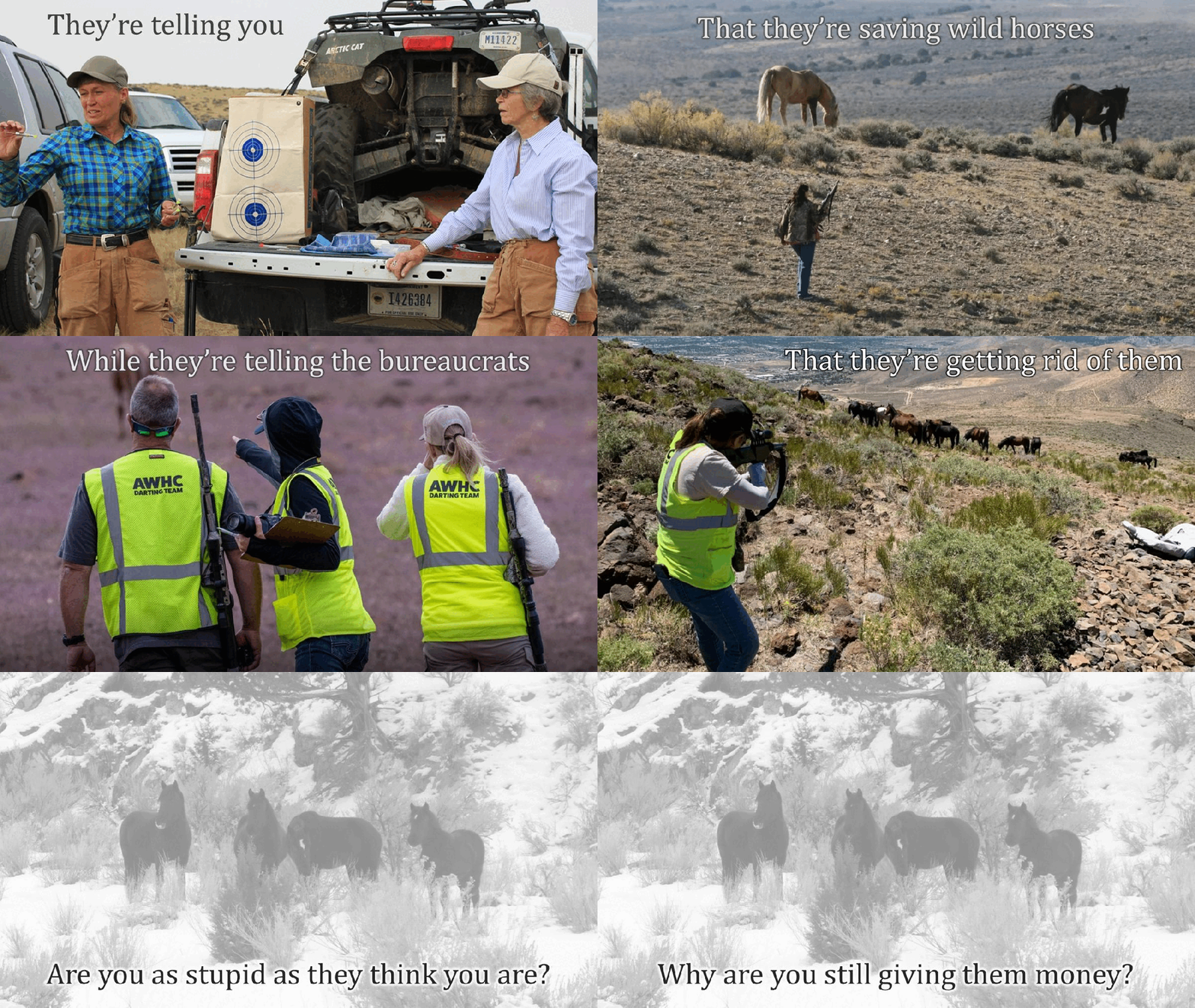
The advocates seems to be saying “Yes,” as they are determined to make privately owned livestock the primary consumers of resources in areas set aside for horses and burros.

The BLM collects $936,600 per year in grazing fees from ranching activity that displaces the 58,000 wild horses in off-range holding, while it spends around $60 million per year to care for them.  But you’re not supposed to know that.

RELATED: Rorschach Test for Advocates.

Frauds of the Wild Horse World 07-08-22

Livestock Outnumber Horses and Burros on Public Lands?

Refer to this handout for proposed changes to livestock grazing regulations.

The BLM authorizes around twelve million AUMs per year for livestock (page 11) on 155 million acres (page 1), enough to support one million wild horses, or, if you prefer, one million cow/calf pairs on a 12-month grazing season.

The agency also authorizes about 27,000 wild horses and burros on 27 million acres.

Assume it’s all horses.

The resource requirements of wild horses are said to be equivalent to those of cow/calf pairs, according to this 2016 infographic.

Livestock Grazing Infographic 08-14-22

Livestock can access 5.7 times more land than the horses, but the number of animals allowed by plan is 37 times higher.

Land is always more productive, from a resource viewpoint, and has a much higher carrying capacity, when it’s designated for livestock.  In some cases, it’s the same land.

The stocking rate allowed by plan in HMAs is one wild horse per thousand acres but the target rate in allotments is 6.5 wild horses (or cow/calf pairs) per thousand acres.

If there was no dietary overlap, livestock would not thrive inside the HMAs and the horses would die beyond them.

Neither is true.

The BLM will collect $936,600 in grazing fees from ranching activity that displaces the 58,000 wild horses in off-range holding, while it spends around $60 million per year to care for them.

Would you say that permitted grazing is a wise use of the public lands?

Thriving Ecological Balance-3

Blue Wing Roundup Ends, Again

The statement at the gather page was not correct.  The incident concluded on August 12, with 228 horses captured, 214 shipped, four dead and none released.

The number of unaccounted-for animals was ten.

The operation also took 805 burros off the land, with 794 shipped, ten dead and none released, leaving one unaccounted-for animal.

These figures are based on the daily reports, not the totals posted by the BLM.

The capture and removal goals were identical, 200 horses and 800 burros, suggesting that no animals will be treated with fertility control and returned to the Complex.

Foals represented 11.0% of the horses gathered and 7.7% of the burros, considerably less than the 25% needed to produce growth rates of 20% per year.

The roundup proceeded as planned, despite two legal complaints by the advocates, one involving HMAPs and the other involving rights protected by the First Amendment.

RELATED: Blue Wing Roundup Ends.

UPDATE: Refer to BLM news release dated August 15.

Triple B Roundup, Day 27

The incident began on July 17.  Gather stats through August 12:

  • Target: Horses
  • Type: Planned
  • Method: Helicopter
  • Category: Cruel and costly
  • Captured: 1,189, up from 1,043 on Day 25
  • Average daily take: 44.0
  • Capture goal: 1,900
  • Removal goal: 1,800
  • Returned: None
  • Deaths: 20, no change from Day 25
  • Shipped: 1,092, up from 926 on Day 25

The figures above are based on the daily reports, not the totals posted by the BLM.

The death rate is 1.7%.

The capture total includes 420 stallions, 577 mares and 192 foals.

Youngsters represented 16.1% of the animals gathered.

Of the adults, 42.1% were male and 57.9% were female.

The herd can’t be growing at a rate of 20% per year with a birth rate of 16% per year.

A better estimate would be 11% per year, assuming a death rate of 5% per year.

The observed percentages of stallions and mares cannot be attributed to a simple random process centered at 50% males / 50% females.

Abnormal sex ratios are often found in herds subject to the Montana Solution but not double-digit birth rates.

Body condition scores were not given.

The location of the trap was not disclosed.

The Complex and surrounding lands are subject to permitted grazing.

Triple B Complex Map 07-11-22

Day 27 ended with 77 unaccounted-for animals.

Mares treated with fertility control may be returned to the area at a later date.

Other statistics:

  • Horses allowed by plan (AML): 821
  • Forage assigned to horses: 9,852 AUMs per year
  • Pre-gather population: 3,475
  • Forage liberated to date: 14,268 AUMs per year
  • Water liberated to date: 11,890 gallons per day
  • Forage assigned to livestock: 49,188 AUMs per year (estimated)
  • Horses displaced from Complex by permitted grazing: 4,099
  • True AML: 4,911
  • Stocking rate at new AML: 3.0 horses per thousand acres
  • Horses displaced from Complex by drilling and mining: Ask the advocates

RELATED: Triple B Roundup, Day 25.

Twin Peaks Roundup, Day 21

The incident began on July 23.  Gather stats through August 12:

  • Target: Horses and burros
  • Type: Planned
  • Method: Helicopter
  • Category: Cruel and costly
  • Horses captured: 2,110, up from 2,109 on Day 18
  • Burros captured: 200, up from 38 on Day 18
  • Average daily take: 100.5 horses, 9,5 burros
  • Capture goal: 1,978 horses, 339 burros, horses increased to 2,106 on Day 17
  • Removal goal: 1,868 horses, 339 burros, horses increased to 1,996 on Day 17
  • Horses returned: None
  • Burros returned: None
  • Horse deaths: 31, up from 28 on Day 18
  • Burro deaths: None
  • Horses shipped: 2,075, up from 1,905 on Day 18
  • Burros shipped: 97, up from 38 on Day 18

The figures above are based on the daily reports, not the totals posted by the BLM.

The trap was moved on Day 19 and operations shifted to burros on Day 20.

One burro and 27 horses have been returned to the HMA but this has not been documented in the daily reports.

A mare was found dead in a holding pen on Day 19, cause unknown.  Another mare, unable to move through the holding area, was euthanized.  A third mare collapsed in the holding area and could not be revived.

The horse death rate is 1.5%.

These losses would occur in catch-treat-release but they would be tolerated by the advocates, a small price to pay for greater use of the Montana Solution.

The horse total includes 818 stallions, 942 mares and 350 foals.

Youngsters represented 16.6% of the horses captured.

Of the adults, 46.5% were male and 53.5% were female.

The burro total includes 101 jacks, 78 jennies and 21 foals.

Youngsters represented 10.5% of the burros gathered.

Of the adults, 56.4% were male and 43.6% were female.

The herd can’t be growing at a rate of 20% per year with a birth rate of 11%.

A better estimate would be 6% per year, assuming a death rate of 5% per year.

Body condition scores on Days 20 and 21 ranged from 4 to 5.

The trap is in the Skedaddle Home Range.

The HMA is subject to permitted grazing.
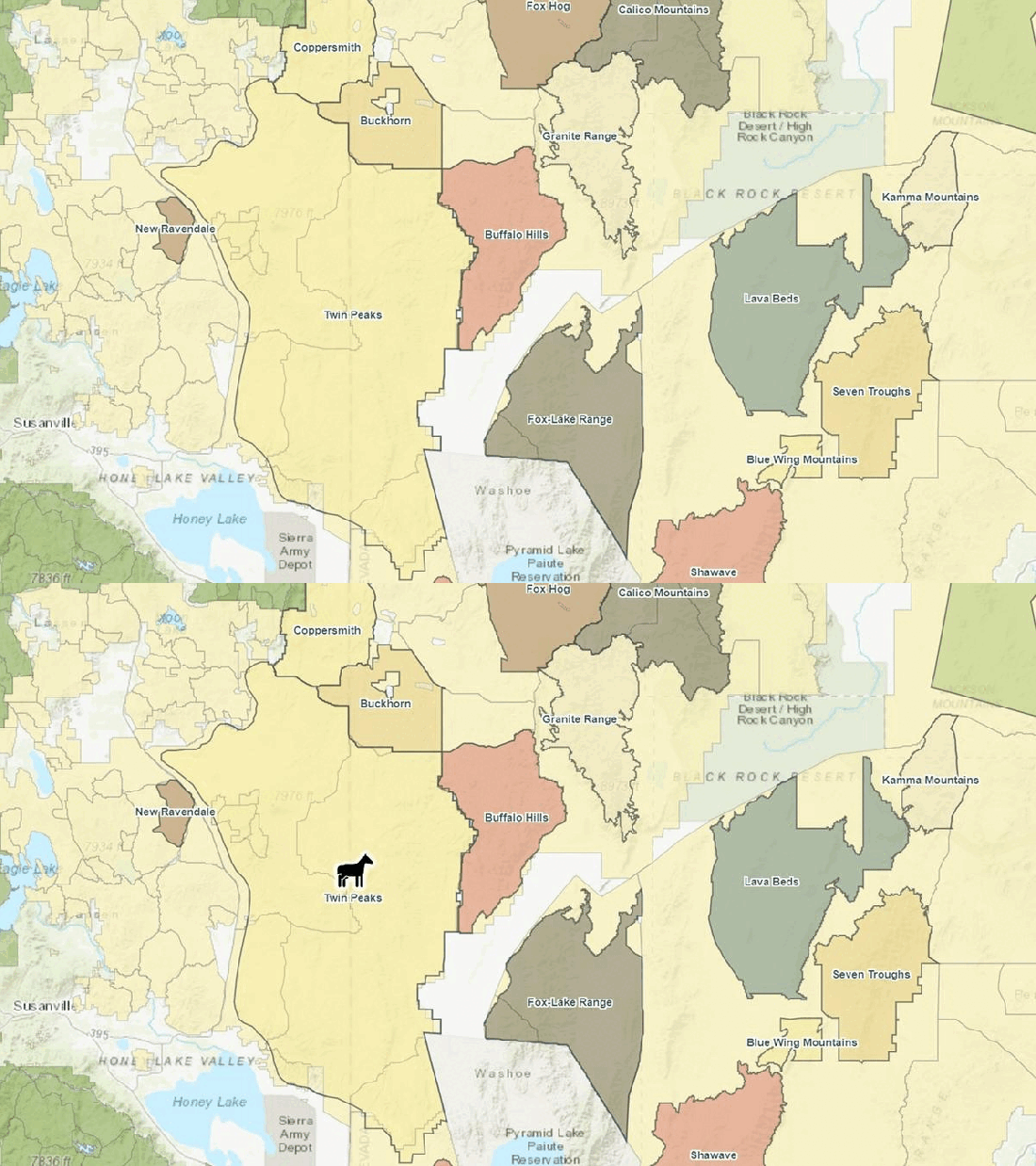
Twin Peaks HMA Map 07-19-22

Day 21 ended with four unaccounted-for horses and 103 unaccounted-for burros.

The horse capture goal has been reached and the burro goal is 59% complete.

Mares treated with fertility control will be returned to the area at a later date.

Other statistics:

  • AML: 758 horses and 116 burros, equivalent to 816 horses
  • Forage assigned to horses and burros: 9,792 AUMs per year
  • Pre-gather population: 3,316 horses and 401 burros, equivalent to 3,516 horses
  • Forage liberated to date: 26,520 AUMs per year
  • Water liberated to date: 22,100 gallons per day
  • Forage assigned to livestock: 27,178 AUMs per year (estimated)
  • Animals displaced from HMA by permitted grazing: 2,264 horses
  • True AML: 3,022 horses and 116 burros, equivalent to 3,080 horses
  • Stocking rate at new AML: 4.1 horses per thousand acres
  • Horses displaced from HMA by drilling and mining: Ask the advocates

RELATED: Twin Peaks Roundup, Day 18.

Blue Wing Roundup Ends

The incident concluded on August 11, according to a statement at the gather page, with 162 horses captured, 130 shipped, four dead and none released.

The number of unaccounted-for animals was 28.

The operation also took 805 burros off the land, with 754 shipped, ten dead and none released, leaving 41 unaccounted-for animals.

These figures are based on the daily reports, not the totals posted by the BLM.

The capture and removal goals were identical, 200 horses and 800 burros, suggesting that no animals will be treated with fertility control and returned to the Complex.

Foals represented 10.5% of the horses gathered and 7.7% of the burros, considerably less than the 25% needed to produce herd growth rates of 20 % per year.

The roundup proceeded as planned, despite two legal complaints by the advocates, one involving HMAPs and the other involving rights protected by the First Amendment.

RELATED: Blue Wing Roundup Announced.

Nevada Conservation Operations Manager Sought

The successful candidate will be responsible for overseeing wild horse protection and habitat conservation programs and will manage and expand relationships with the scientific community, government agencies, public officials and other allied organizations, according to an undated posting on the Conservation Job Board.

You must be a resident of Nevada.

The deadline is September 30.

Your new employer?

The Campaign Against America’s Wild Horses.

You’ll join others trying to change the way wild horses are managed, not the way their land is managed.

Warm Springs AUM Summary-1

Figures like those above, which indicate a resource management problem not a wild horse problem, mean nothing because you’re driven by ideology not facts.

You view Cattoor, Uhalde and Sun J as competitors.

And your favorite words of encouragement are “A little to the left.”

Advocates are the Predators 11-30-21

Bible Springs Roundup, Day 5

The incident began on August 7.  Gather stats through August 11:

  • Target: Horses
  • Type: Planned
  • Method: Helicopter
  • Category: Cruel and costly
  • Captured: 121, up from 33 on Day 3
  • Average daily take: 24.2
  • Capture goal: 450
  • Removal goal: 410
  • Returned: None
  • Deaths: 1, up from zero on Day 3
  • Shipped: 69, up from 33 on Day 3

The figures above are based on the daily reports.

A mare was put down on Day 5 due to single-eye blindness.  She’d be alive today if there was no roundup.

The death rate is 0.8%.

The capture total includes 36 stallions, 59 mares and 26 foals.

Youngsters represented 21.5% of the animals gathered.

Of the adults, 37.9% were male and 62.1% were female.

A birth rate of 22% is consistent with a growth rate of 17% per year, assuming a death rate of 5% per year.

Body condition scores were not given.

The location of the trap was not disclosed.

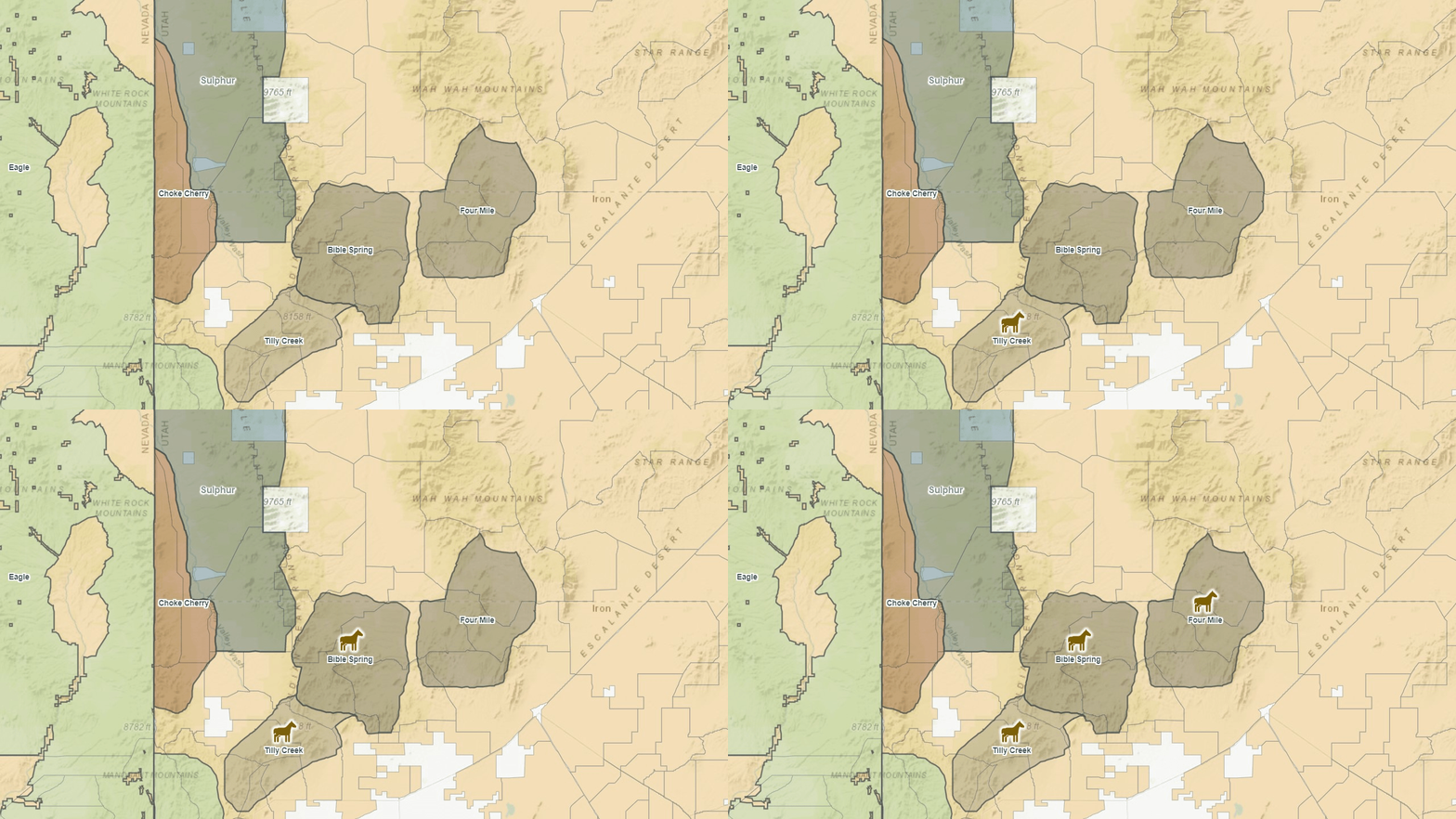
The Complex and surrounding lands are subject to permitted grazing.

Bible Springs Complex Map 02-24-22

Day 5 ended with 51 unaccounted-for animals.

Mares treated with fertility control would be returned to the area at a later date.

Other statistics:

  • Horses allowed by plan (AML): 170
  • Forage assigned to horses: 2,040 AUMs per year
  • Pre-gather population: 831
  • Forage liberated to date: 1,452 AUMs per year
  • Water liberated to date: 1,210 gallons per day
  • Forage assigned to livestock: 9,890 AUMs per year (estimated)
  • Horses displaced from Complex by permitted grazing: 817
  • True AML: 987
  • Stocking rate at new AML: 4.6 horses per thousand acres
  • Horses displaced from Complex by drilling and mining: Ask the advocates

RELATED: Bible Springs Roundup, Day 3.

Colorado’s Wild Horses Also Need Protection from Advocates

There’s not one word about permitted grazing, which affects three of the four HMAs in the state, in this column posted yesterday by The Denver Post.

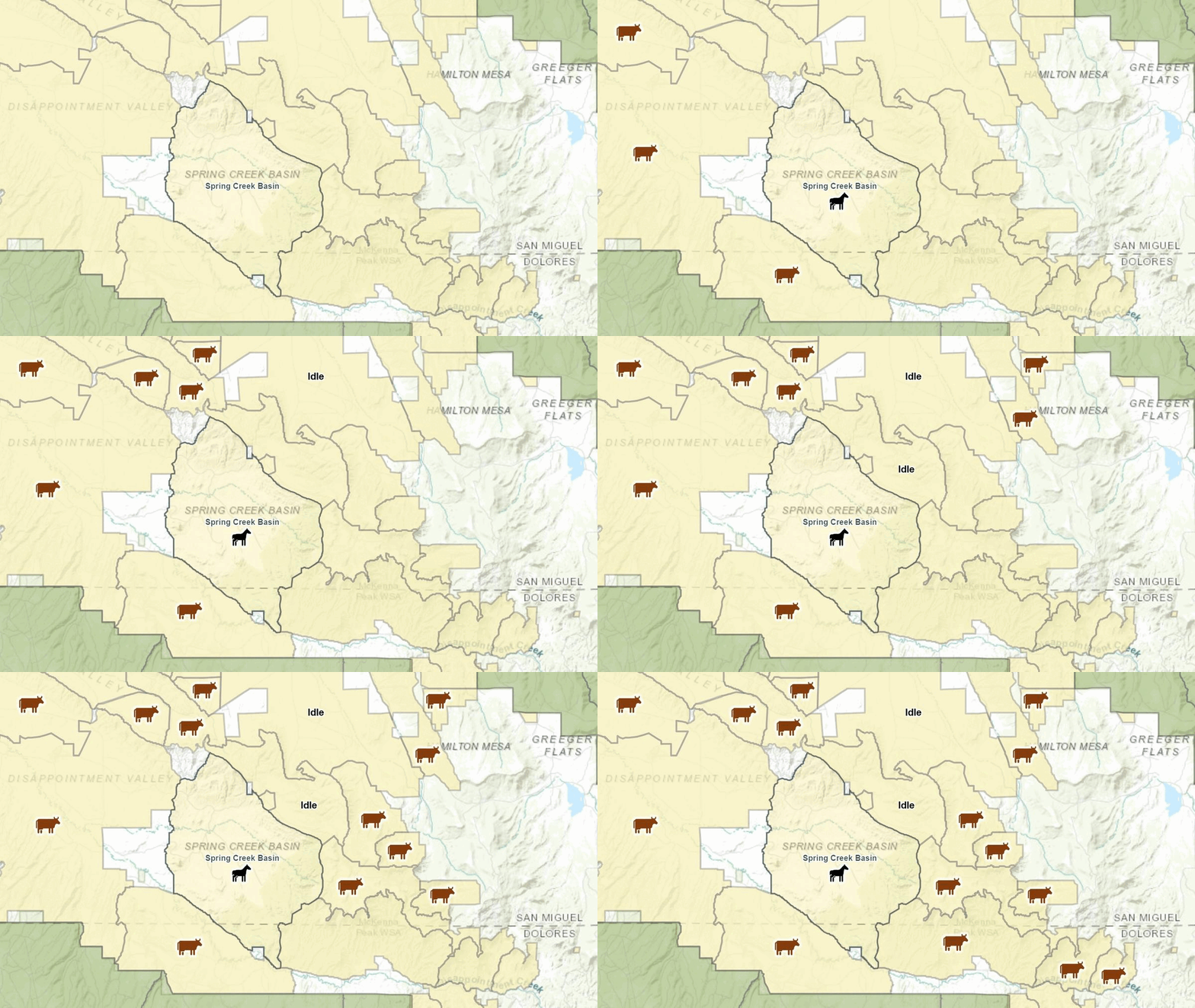
All of them are subject to the Montana Solution, or similar product, including the curated horse exhibit at Spring Creek Basin.

Three or four foals are born every year, down from 12 to 15 each year before the darting program was put in place, according to an article by The Journal of Cortez, CO.

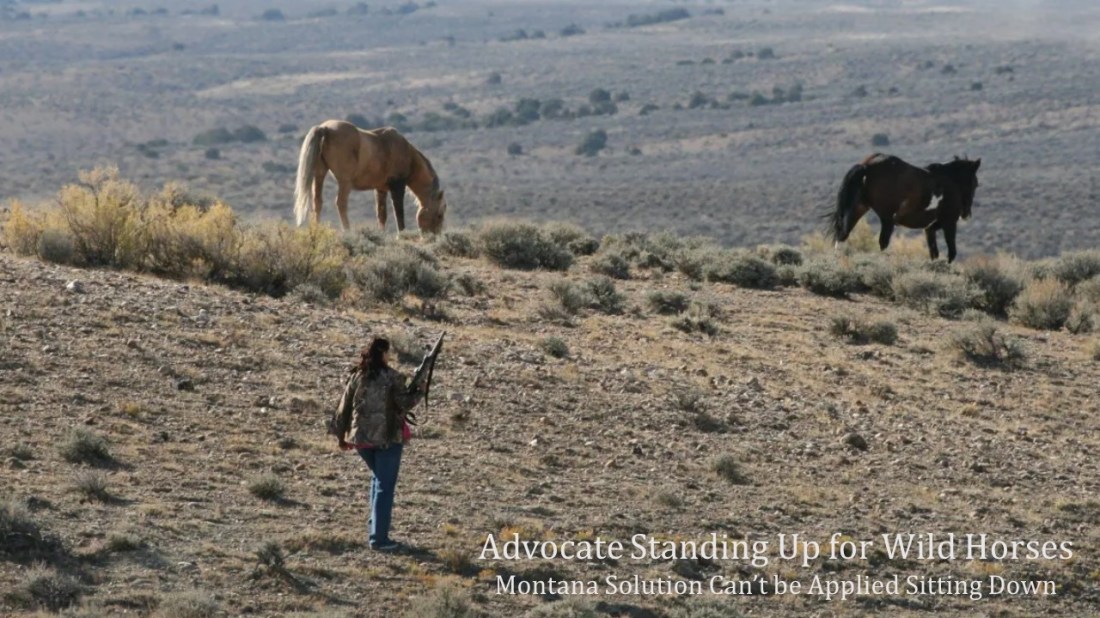
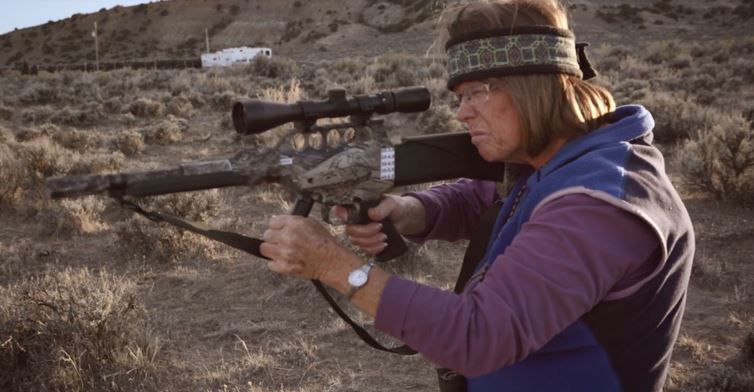
The advocates refer to the practice as on-range management, but the goal in most cases is to take horses off the range.  Helicopters don’t fly but the results are the same.

Why don’t they talk about the way public lands are managed?

Spring Creek Basin is not subject to permitted grazing and the darting program has been in effect for 11 years.

RELATED: Spring Creek Herd to Die Off in Ten Years?

Spring Creek HMA Map 08-12-22

Foal-Free Friday, Pesticides and Cherished Horses Edition

Everybody uses Raid to get rid of their cherished ants and roaches.

Treatment for Cherished Cockroaches 07-27-22

What do the advocates use on their cherished wild horses?

PZP, an EPA-registered pesticide, sometimes referred to as the Montana Solution.

Symptoms include barren mares, confused stallions, shrinking herds, abnormal sex ratios, injuries, infections, disruption of natural order and subordination to livestock.

RELATED: Foal-Free Friday, No Turning Over of the Genetic Soil Edition.

RTF Applauds BLM Grants, If They Involve Fertility Control

The ranching advocacy group and signatory to the ill-advised Path Forward said today in a news release that the agency needs to overhaul the way that wild horse herds are managed on our public lands, not the way that public lands are managed.

Consider this example from the Warm Springs HMA in Oregon.  The calculations were discussed in a previous post.

Warm Springs AUM Summary-1

These figures signify nothing to the advocates because they are innumerate.

The BLM will collect $26,179 per year in grazing fees from ranching activity inside the HMA, while it spends $2,949,200 per year to care for the 1,616 wild horses displaced thereby.

The problem is permitted grazing but the advocates want to get rid of the horses!

  • The AML is small relative to the available resources
  • The horses receive a small fraction of the authorized forage
  • The HMA is managed primarily for livestock

That’s what Return to Freedom and its supporters are trying to protect.

RELATED: New Grants Available for Wild Horse and Burro Management.

Thriving Ecological Balance-3

WHBAB Nominations Sought

An unofficial notice at the Federal Register, set to publish tomorrow, indicates vacancies in these categories for three-year terms:

  • Humane Advocacy
  • Livestock Management
  • Wildlife Management

The official notice will appear at this page.

In the original statute, the needs of wild horses and burros were to be balanced with those of wildlife, not privately owned livestock.

The Board has not met in a official capacity for over a year.

REL:ATED: WHBAB Offers New Slate of Anti-Horse Recommendations.

UPDATE: Refer to BLM news release dated August 15.

Cattle and Horses

Triple B Roundup, Day 25

The incident began on July 17.  Gather stats through August 10:

  • Target: Horses
  • Type: Planned
  • Method: Helicopter
  • Category: Cruel and costly
  • Captured: 1,043, up from 867 on Day 23
  • Average daily take: 41.7
  • Capture goal: 1,900
  • Removal goal: 1,800
  • Returned: None
  • Deaths: 20, up from 17 on Day 23
  • Shipped: 926, up from 801 on Day 23

The figures above are based on the daily reports.

A mare died of a broken neck on Day 24.  A foal died on Day 25 of colic and a mare was put down because of a broken leg.

The death rate is 1.9%.

The capture total includes 371 stallions, 507 mares and 165 foals.

Youngsters represented 15.8% of the animals gathered.

Of the adults, 42.3% were male and 57.7% were female.

The herd can’t be growing at a rate of 20% per year with a birth rate of 16% per year.

A better estimate would be 11% per year, assuming a death rate of 5% per year.

The observed percentages of stallions and mares cannot be attributed to a simple random process centered at 50% males / 50% females.

Abnormal sex ratios are often found in herds subject to the Montana Solution but not double-digit birth rates.

Body condition scores were not given.

The location of the trap was not disclosed.

The Complex and surrounding lands are subject to permitted grazing.

Triple B Complex Map 07-11-22

Day 25 ended with 97 unaccounted-for animals.

Mares treated with fertility control may be returned to the area at a later date.

Other statistics:

  • Horses allowed by plan (AML): 821
  • Forage assigned to horses: 9,852 AUMs per year
  • Pre-gather population: 3,475
  • Forage liberated to date: 12,516 AUMs per year
  • Water liberated to date: 10,430 gallons per day
  • Forage assigned to livestock: 49,188 AUMs per year (estimated)
  • Horses displaced from Complex by permitted grazing: 4,099
  • True AML: 4,911
  • Stocking rate at new AML: 3.0 horses per thousand acres
  • Horses displaced from Complex by drilling and mining: Ask the advocates

RELATED: Triple B Roundup, Day 23.

Blue Wing Roundup, Day 10

The incident began on August 1.  Gather stats through August 10:

  • Target: Horses and burros
  • Type: Planned
  • Method: Helicopter
  • Category: Cruel and costly
  • Horses captured: 129, up from zero on Day 8
  • Burros captured: 805, no change from Day 8
  • Average daily take: 12.9 horses, 80.5 burros
  • Capture goal: 200 horses, 800 burros
  • Removal goal: 200 horses, 800 burros
  • Horses returned: None
  • Burros returned: None
  • Horse deaths: 4, up from zero on Day 8
  • Burro deaths: 10, no change from Day 8
  • Horses shipped: 67, up from zero on Day 8
  • Burros shipped: 695, up from 540 on Day 8

The figures above are based on the daily reports.

The capture goal for burros has been reached.  The goal for horses will likely be achieved by the weekend.

A filly was put down on Day 9 because of a broken leg.  Two fillies were put down on Day 10 due to hernias and a mare was euthanized because of a missing eye.

The horse death rate is 3.1% and the burro death rate is 1.2%.

The burro total includes 338 jacks, 405 jennies and 62 foals.

The horse total includes 50 stallions, 62 mares and 17 foals.

Youngsters represented 13.2% of the horses captured.

Of the adults, 44.6% were male and 55.4% were female.

The herd can’t be growing at a rate of 20% per year with a birth rate of 13% per year.

A better estimate would be 8% per year, assuming a death rate of 5% per year.

Land managers often use a growth rate of 20% per year to predict herd sizes and justify resource enforcement actions.

Body condition scores were not given.

The location of the trap was not disclosed.

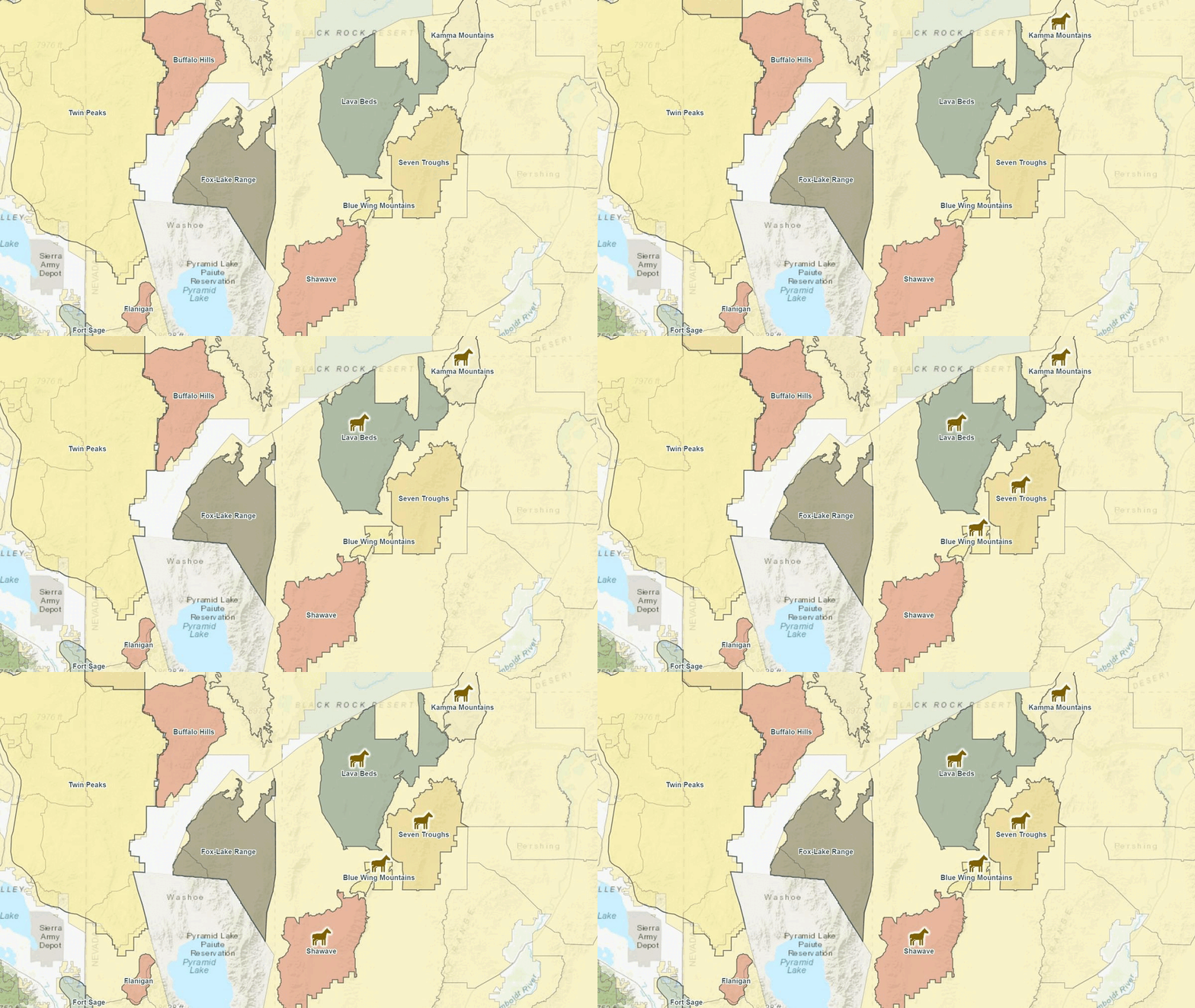
The HMAs in the Complex are subject to permitted grazing.

Blue Wing Complex Map 07-26-22

Day 10 ended with 58 unaccounted-for horses and 100 unaccounted-for burros.

No animals are to be returned to the area.

Other statistics:

  • AML: 553 horses and 90 burros, equivalent to 598 horses
  • Forage assigned to horses and burros: 7,176 AUMs per year
  • Pre-gather population: 1,695 horses and 1,327 burros, equivalent to 2,359 horses
  • Forage liberated to date: 6,378 AUMs per year
  • Water liberated to date: 5,315 gallons per day
  • Forage assigned to livestock: 9,631 AUMs per year (estimated)
  • Animals displaced from Complex by permitted grazing: 802 horses
  • True AML: 1,355 horses and 90 burros, equivalent to 1,400 horses
  • Stocking rate at new AML: 1.2 horses per thousand acres
  • Animals displaced from Complex by drilling and mining: Ask the advocates

RELATED: Blue Wing Roundup, Day 8.

Twin Peaks Roundup, Day 18

The incident began on July 23.  Gather stats through August 9:

  • Target: Horses and burros
  • Type: Planned
  • Method: Helicopter
  • Category: Cruel and costly
  • Horses captured: 2,109, up from 1,837 on Day 16
  • Burros captured: 38, no change from Day 16
  • Average daily take: 117.2 horses, 2.1 burros
  • Capture goal: 1,978 horses, 339 burros, horses increased to 2,106 on Day 17
  • Removal goal: 1,868 horses, 339 burros, horses increased to 1,996 on Day 17
  • Horses returned: None
  • Burros returned: None
  • Horse deaths: 28, up from 23 on Day 16
  • Burro deaths: None
  • Horses shipped: 1,905, up from 1,657 on Day 16
  • Burros shipped: 38, no change from Day 16

The figures above are based on the daily reports.  They may differ from the totals at the gather page.

No burros have been taken since Day 8.

The gather and removal targets changed on August 8 as noted above.

One burro and 22 horses have been returned to the HMA but this was not documented in the daily reports.

Three horses were euthanized on Day 18 due to pre-existing conditions and two foals died in temporary holding, causes unknown.

The horse death rate is 1.3%.

The horse total includes 817 stallions, 942 mares and 350 foals.

Youngsters represented 16.6% of the horses captured.

Of the adults, 46.4% were male and 53.6% were female.

The herd can’t be growing at a rate of 20% per year with a birth rate of 17% per year.

A better estimate would be 12% per year, assuming a death rate of 5% per year.

Body condition scores on Days 17 and 18 ranged from 4 to 5.

The trap is in the North Twin Peaks Home Range.

The HMA is subject to permitted grazing.

Twin Peaks HMA Map 07-19-22

Day 18 ended with 176 unaccounted-for horses and no unaccounted-for burros.

The horse capture goal has been reached but the burro goal is only 11% achieved.

Mares treated with fertility control will be returned to the area at a later date.

Other statistics:

  • AML: 758 horses and 116 burros, equivalent to 816 horses
  • Forage assigned to horses and burros: 9,792 AUMs per year
  • Pre-gather population: 3,316 horses and 401 burros, equivalent to 3,516 horses
  • Forage liberated to date: 25,536 AUMs per year
  • Water liberated to date: 21,280 gallons per day
  • Forage assigned to livestock: 27,178 AUMs per year (estimated)
  • Animals displaced from HMA by permitted grazing: 2,264 horses
  • True AML: 3,022 horses and 116 burros, equivalent to 3,080 horses
  • Stocking rate at new AML: 4.1 horses per thousand acres
  • Horses displaced from HMA by drilling and mining: Ask the advocates

RELATED: Twin Peaks Roundup, Day 16.

New Grants Available for Wild Horse and Burro Management

The program, started last year, has been extended and projects ranging from $1,000 to $50,000 are eligible, according to today’s news release.

Proposals need not have a theme of “off the range” but those will likely receive highest consideration.

A darting program in Eastern Oregon was cited as an example.

Like HMAPs, your project must align with the priorities and goals of the land-use plans.

RELATED: Funding Available for WHB Protection Projects.

Pancake Gather Plan

Bible Springs Roundup, Day 3

The incident began on August 7.  Gather stats through August 9:

  • Target: Horses
  • Type: Planned
  • Method: Helicopter
  • Category: Cruel and costly
  • Captured: 33, up from 8 on Day 1
  • Average daily take: 11.0
  • Capture goal: 450
  • Removal goal: 410
  • Returned: None
  • Deaths: None
  • Shipped: 33, up from zero on Day 1

The figures above are based on the daily reports.

No animals were taken on Day 3.

The capture total includes 12 stallions, 13 mares and eight foals.

Youngsters represented 24.2% of the animals gathered.

Of the adults, 48.0% were male and 52.0% were female.

A birth rate of 24% is consistent with a growth rate of 19% per year, assuming a death rate of 5%.  That figure will likely change as the incident continues.

Body condition scores were not given.

The location of the trap was not disclosed.

The Complex and surrounding lands are subject to permitted grazing.

Bible Springs Complex Map 02-24-22

Day 3 ended with no unaccounted-for animals.

Mares treated with fertility control would be returned to the area at a later date.

Other statistics:

  • Horses allowed by plan (AML): 170
  • Forage assigned to horses: 2,040 AUMs per year
  • Pre-gather population: 831
  • Forage liberated to date: 396 AUMs per year
  • Water liberated to date: 330 gallons per day
  • Forage assigned to livestock: 9,890 AUMs per year (estimated)
  • Horses displaced from Complex by permitted grazing: 817
  • True AML: 987
  • Stocking rate at new AML: 4.6 horses per thousand acres
  • Horses displaced from Complex by drilling and mining: Ask the advocates

RELATED: Bible Springs Roundup Begins.

OPB Looks at Fertility Control Research for Wild Horses

The discussion in this 19-minute audio segment goes off the rails in the second half when the advocate rambles on about drought, mineral extraction and climate change.

Instead of building on the dialogue of the first half, which focused on the way public lands are managed, she’s worried about saving the planet.

This is why our horses are in trouble.  Those who claim to be their voice are detached from reality and unmoored from the truth.  Men can be women and water flows uphill.

Warm Springs AUM Summary-1

The data above, from the Warm Springs HMA in Oregon, identify the problem and explain why the wild horse and burro program operates like a pest control program.

RELATED: Draft EA for Fertility Control Research Out for Review.