
The incident would remove over 3,500 wild horses from five HMAs in southwest Wyoming, as announced in July, but it’s not on the schedule published August 30.
Month: September 2021
Barren Valley Roundup Day 5
The incident began on September 8. Gather stats through September 12:
- Type: Emergency
- Method: Helicopter
- Horses captured: 316, up from 98 on Day 1
- Average daily take: 63.2
- Capture goal: 1,900
- Removal goal: 1,900
- Returned: 0
- Deaths: 6, up from 2 on Day 1
- Shipped: 270, none on Day 1
Reports for Days 3, 4 and 5 were not published until today.
Three horses were put down on Day 2 due to pre-existing conditions. Another was euthanized on Day 5 for similar reasons, bringing the death rate to 1.9%.
Foals represented 20.9% of the horses gathered. Of the adults, 44.8% were male and 55.2% were female.
Body condition scores ranged from two to four.
Yesterday the trap was moved from Sand Springs to Sheepshead. Three HMAs are involved in the roundup.
Day 5 ended with 40 unaccounted-for animals.
Other statistics:
- AML: 892 (total for three HMAs)
- Forage assigned to horses: 10,704 AUMs per year
- Pre-gather population: 2,500
- Forage liberated to date: 3,792 AUMs per year
- Water liberated to date: 3,160 gallons per day
- Forage assigned to livestock: 27,011 AUMs per year (estimated)
- Horses displaced from Complex by livestock: 2,258 (4.5% of off-range holding)
- True AML: 3,150
RELATED: Barren Valley Roundup Begins.
Refugees from War on Virginia Range Mustangs?
You might think from today’s episode of Mustang Monday that the horses found a place where they’re safe from the advocates, but stop the video at 4:27. What do you see?
There’s a war going on in those hills, led by the Campaign Against America’s Wild Horses and staffed by an army of kool-aid drinking volunteers.
All because some bureaucrat said there should be around 300 wild horses on the Virginia Range, ideally, and no more than 600.
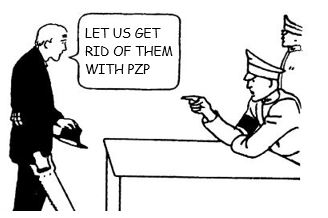
The lower end of that range corresponds to a stocking rate of one wild horse per thousand acres, identical to the target rate for horses on public lands. Imagine that.
Stone Cabin Roundup Day 12
The incident began on September 1. Gather stats through September 12:
- Type: Emergency
- Method: Bait
- Horses captured: 207, up from 197 on Day 9
- Average daily take: 17.3
- Capture goal: 450
- Removal goal: 450
- Returned: 0
- Deaths: 7, no change from Day 9
- Shipped: 193, up from 115 on Day 9
No horses were caught on Days 10 and 12.
The death rate is 3.4%.
Foals represented 13.0% of the horses gathered. Of the adults, 45.0% were male and 55.0% were female.
Body condition scores were not reported.
Day 12 ended with seven unaccounted-for animals.
Other statistics:
- AML: 364
- Forage assigned to horses: 4,368 AUMs per year
- Pre-gather population: 1,037
- Forage liberated to date: 2,484 AUMs per year
- Water liberated to date: 2,070 gallons per day
- Forage assigned to livestock: Unknown
- Horses displaced from HMA by livestock: Unknown
- True AML: Unknown
RELATED: Stone Cabin Roundup Day 9.
Mustang Monday
At Steamboat Hot Springs with Olivia Gustin. Virginia Range in background.
Sand Wash Roundup Over
Helicopter operations concluded today, according to the gather page, with 684 horses captured, 591 shipped, two deaths and 52 returned.
There were 39 unaccounted-for animals.
The capture goal was 783 and the removal goal was 733.
The pre-gather population in and around the HMA was thought to be 896.
RELATED: Sand Wash Roundup Announced.
Sand Wash Advocate Says There Are Too Many Horses
She’s with the Sand Wash Darting Team, referred to in this audio segment by KDNK News as a wild horse protection group, along with the Campaign Against America’s Wild Horses and Return to Normal (Before WHB Act).
The BLM should have left more horses on the range, she argues, because this band of merry men can control their numbers with PZP.
Like the ranchers, the advocates want to get rid of the horses, but they want it done with safe and humane darting programs, not cruel and inhumane helicopter roundups.
These people are jumping through hoops to make sure the ranchers receive most of the resources in an area set aside for wild horses.
Why are you still giving them money?
RELATED: Sand Wash Basin Devoid of Life?
Sand Wash Roundup Day 11
The incident began on September 1. Gather stats through September 11:
- Type: Emergency
- Method: Helicopter
- Horses captured: 667, up from 631 on Day 9
- Average daily take: 60.6
- Capture goal: 783
- Removal goal: 733
- Returned: 53, up from 1 on Day 9
- Deaths: 2, no change from Day 9
- Shipped: 591, up from 520 on Day 9
The death rate is 0.3%.
Gather operations are now occurring outside the HMA. The project area is much larger than the wild horse area, as shown on the map in Appendix A of the Final EA (page 62 in the pdf).
The breakdown between stallions, mares and foals captured on Day 9 has not been provided.
Foals represented 13.5% of the horses gathered, excluding Day 9. Of the adults, 42.7% were male and 57.3% were female.
The low percentage of foals may be due to the darting program. With most of the herd captured, females outnumbered males by a ratio of 1.3 to 1.
Body condition scores were not reported.
Day 11 ended with 21 unaccounted-for animals.
Other statistics:
- AML: 362
- Forage assigned to horses: 4,344 AUMs per year
- Pre-gather population: 896
- Forage liberated to date: 7,368 AUMs per year (adjusted for horses returned)
- Water liberated to date: 6,140 gallons per day (adjusted for horses returned)
- Forage assigned to livestock: 16,827 AUMs per year (estimated)
- Horses displaced from HMA by livestock: 1,402 (2.8% of off-range holding)
- True AML: 1,764
RELATED: Sand Wash Roundup Day 9.
Sand Wash Release Today
Three horses were taken to the Spring Creek HMA and released, while 49 horses were returned to the Sand Wash Basin HMA, according to the gather page.
Bringing in horses from other areas improves genetic diversity while keeping herd sizes small.
Unfortunately, it dilutes herd identity. Today you might be able to adopt a Spring Creek horse, but in the future you’ll be adopting a horse captured at Spring Creek, assuming they haven’t been wiped out by a safe and humane darting program.
UPDATE: Event acknowledged in BLM news release.
Humiliation: Another Goal of Wild Horse Roundups
Government is full of psychopaths and other assorted kooks, all levels. They are not faithful public servants, they have an agenda.
They don’t get their thrills by announcing emergency roundups that don’t meet the criteria for emergencies, by telling you the horses are starving while livestock are not, or by removing more horses than necessary with no plans to return them.
They get their kicks by doing these things in your face and getting away with them.
New Darting Machine Promo Will Delight Advocates
It feeds and darts! What’s not to like? No more riding around in rough terrain, lugging heavy equipment and stalking wild horses.
Just keep it stocked.
The facial recognition upgrade was not mentioned, but soon these machines could be scattered across western rangelands, disrupting natural herd behaviors, driving birth rates to zero and letting the herds die off, ensuring that public-lands ranchers receive most of the resources in wild horse areas.
SJR3 Grifter Lectures Us on Wild Horses and Public Lands
She does not distinguish between public lands and public lands set aside for wild horses in this opinion piece posted yesterday’s by the Reno Gazette Journal.
Why?
The woman testified in favor of the failed resolution and was instrumental in its development.
Does she have a real job? Or is she a rabble-rouser and malcontent, tying to establish credibility with hunters, ranchers, bureaucrats and the PZP zealots?

Sand Wash Roundup Day 9
The incident began on September 1. Gather stats through September 9:
- Type: Emergency
- Method: Helicopter
- Horses captured: 631, up from 501 on Day 7
- Average daily take: 70.1
- Capture goal: 783
- Removal goal: 733
- Returned: 1, no change from Day 7
- Deaths: 2, up from 1 on Day 7
- Shipped: 520, up from 370 on Day 7
A colt was euthanized on Day 8 due to pre-existing conditions, lifting the death rate to 0.3%.
Gather operations occurred outside the HMA on Day 9. The project area is much larger than the HMA, as shown on the map in Appendix A of the Final EA (page 62 in the pdf).
The roundup is not over, as reported by some news outlets.
The breakdown between stallions, mares and foals captured on Day 9 was not provided.
As of Day 8, foals represented 12.7% of the horses gathered. Of the adults, 43.1% were male and 56.9% were female.
The low percentage of foals may be due to the darting program. The gap between males and females may indicate the sex ratio of the herd is not 1:1 (50/50).
Body condition scores were not reported.
Day 9 ended with 108 unaccounted-for animals.
Other statistics:
- AML: 362
- Forage assigned to horses: 4,344 AUMs per year
- Pre-gather population: 896
- Forage liberated to date: 7,560 AUMs per year
- Water liberated to date: 6,300 gallons per day
- Forage assigned to livestock: 16,827 AUMs per year (estimated)
- Horses displaced from HMA by livestock: 1,402 (2.8% of off-range holding)
- True AML: 1,764
RELATED: Sand Wash Roundup Day 7.
Stone Cabin Roundup Day 9
The incident began on September 1. Gather stats through September 9:
- Type: Emergency
- Method: Bait
- Horses captured: 197, up from 122 on Day 6
- Average daily take: 21.9
- Capture goal: 450
- Removal goal: 450
- Returned: 0
- Deaths: 7, up from 3 on Day 6
- Shipped: 115, up from 43 on Day 6
No horses were caught on Days 8 and 9.
One horse was put down on Day 7 because of a broken leg and another was euthanized because of colic.
On Day 8, another horse was put down due to colic, the third such case reported.
A horse fractured its neck on Day 9 and was euthanized, lifting the death rate to 3.6%.
Foals represented 13.7% of the horses gathered. Of the adults, 45.9% were male and 54.1% were female.
Body condition scores were not reported.
Day 9 ended with 75 unaccounted-for animals.
Other statistics:
- AML: 364
- Forage assigned to horses: 4,368 AUMs per year
- Pre-gather population: 1,037
- Forage liberated to date: 2,364 AUMs per year
- Water liberated to date: 1,970 gallons per day
- Forage assigned to livestock: Unknown
- Horses displaced from HMA by livestock: Unknown
- True AML: Unknown
RELATED: Stone Cabin Roundup Day 6.
Sand Wash Basin Devoid of Life?
Nonsense! Grazing season is just getting started. Did you think the HMA was managed principally for wild horses?
Unfortunately, this boots-on-the-ground update by the Steamboat Pilot does not look upstream at the resource allocations and land-use plans that the helicopters are trying to enforce.
The roundup, sold as an emergency, is likely an attempt to shield the public-lands ranchers from the effects of a temporary change in the weather. The operation was scheduled and the conditions that preceded it accrued gradually.
Drought helps you accomplish what you wouldn’t be able to do otherwise.
Never let a crisis go to waste.
Jackson Mountains Emergency Roundup Starts Next Week
Approximately 600 wild horses will be removed from the HMA and surrounding lands, starting on September 15, due to inadequate water and overpopulation.
Helicopters will push the horses into the traps, according to the news release, and the incident will be open to public observation.
The announcement refers to an Environmental Assessment and Decision Record from 2018 but all of the documents in the project folder are dated 2012.
A Draft EA for a new resource enforcement plan was posted for review in late August.
The HMA covers about 265,000 acres in northern Nevada per Table 1 of the new EA and the 217 horses allowed by plan have a stocking rate of 0.8 animals per thousand acres.
Table 1 indicates a current population of 1,018 but the announcement says 848 plus foals, which are the same if you assume a 20% birth rate.
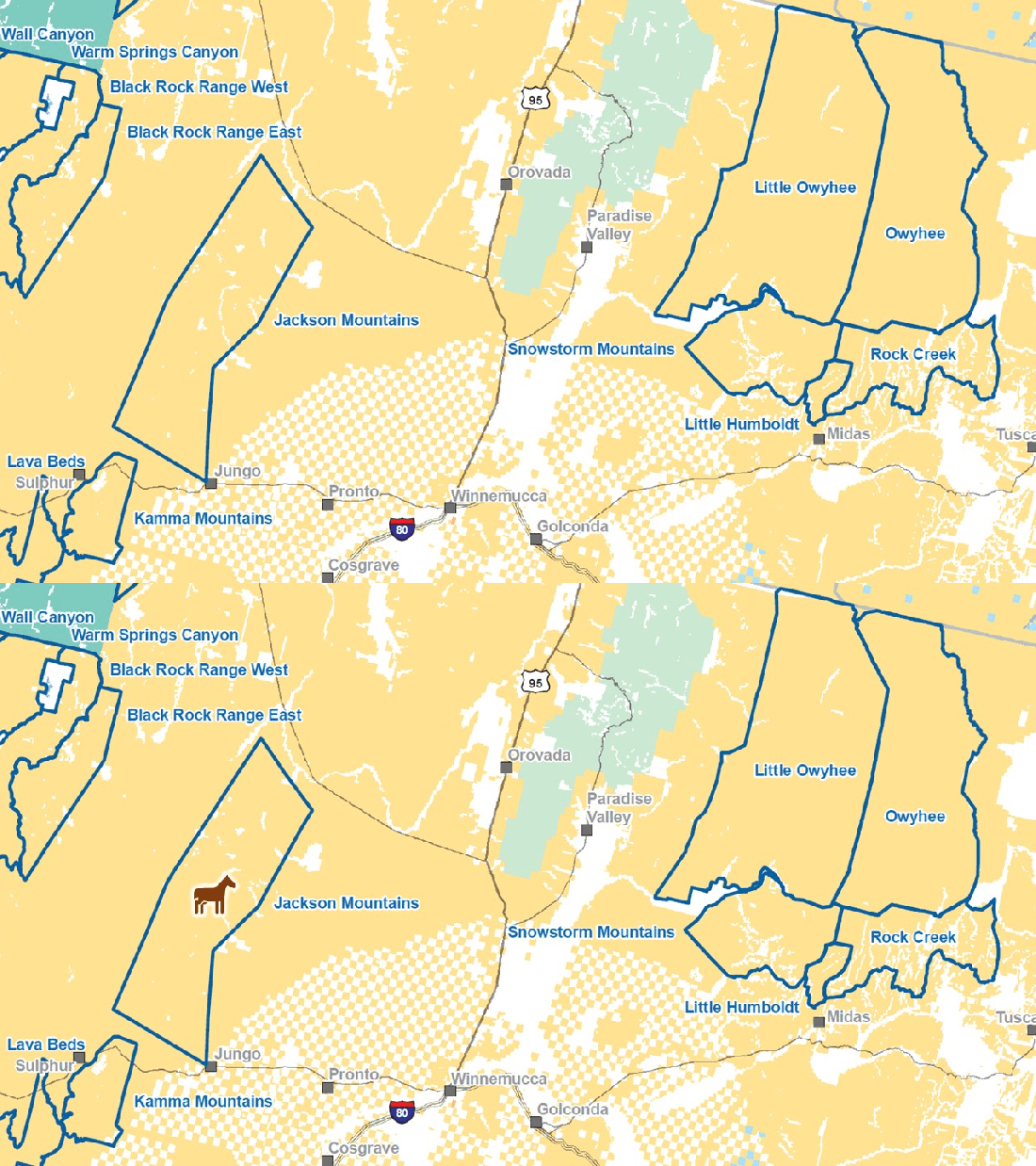
Table 7 in the new EA shows six grazing allotments that intersect the HMA.
Captured animals will be taken to the off-range corrals at Palomino Valley.
Gather stats and daily reports will be posted to this page.
Does this roundup qualify as an emergency? Probably not, as the conditions that preceded it did not occur suddenly and the response did not occur immediately, as outlined in this post.
It’s not in the latest schedule, revised on August 2 when other such roundups were announced.
Barren Valley Roundup Begins
The incident started on September 8, with 98 horses captured, two deaths and none shipped, according to figures at the gather page. No details were given.
The location of gather activity was not reported. Three HMAs are involved.
The combined AML is 892 and the pre-gather population was around 2,500.
The preliminary removal goal is 1,900.
Sand Wash Basin Can Support More Wild Horses?
Yes, about 1,400 more than currently allowed by plan.
Monsoons have restored the watering holes, according to a story posted today by 9News of Denver, and critics say the BLM is clearing out the herd to make room for more cattle and sheep.
Resources assigned to livestock and the number of animals allowed in the area are controlled by land-use plans and grazing permits. Roundups can’t change them.
But by getting rid of the horses, food and water they tried to reclaim—the HMA was created for them—can be shifted back to the ranchers as specified in the plan, reducing the effects on livestock grazing associated with a temporary change in the weather.
Advocates Help BLM with Sand Wash Roundup
They have a list of 25 stallions and 25 mares to return to the HMA, and look through each day’s take to find them and prevent their shipment, according to a story posted yesterday by The Craig Press.
The mares will be treated with fertility control, not necessarily the same type as they’ve been receiving for the past few years?
The advocates want to replace cruel and inhumane roundups with cruel and inhumane darting programs, ensuring that most of the resources in wild horse areas go to the public-lands ranchers.
Good work, guys.
RELATED: Sand Wash Roundup Day 7.

Idaho Fish and Game Warns of Four Mile Roundup
Refer to this announcement dated September 7.
RELATED: Four Mile Roundup Starts Next Week.
 Western Horse Watchers Association