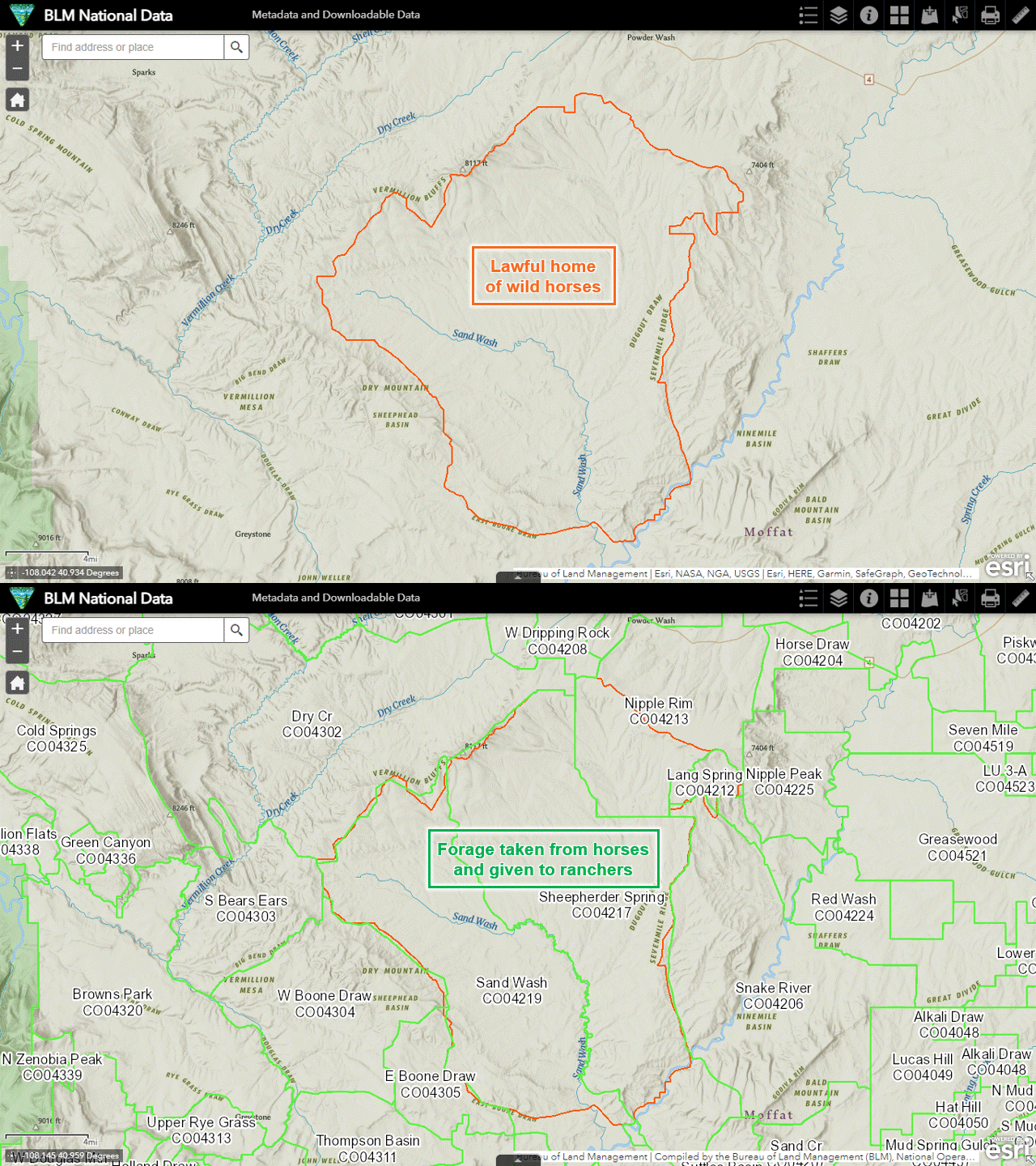
The comment period opened yesterday and runs through August 12, according to the BLM news release.
The Proposed Action, discussed on page 6 of the EA, features bait trap removal of excess horses to achieve AML, continued application of the fertility control pesticide PZP and something new—use of the longer-lasting pesticide GonaCon Equine on mares that have contributed to the genetic diversity of the herd.
Older horses would be allowed to remain within the HMA.
The HMA, a subset of the HA, covers 120,412 total acres east of Cody, WY, including 113,938 public acres, and the AML ranges from 70 to 140.
The stocking rate allowed by plan is 1.2 wild horses per thousand public acres.
The area is managed primarily for animal agriculture, a purpose for which PZP was not approved.
As for the project, it does not allocate resources.
It cannot change resource allocations.
It enforces resource allocations already on the books, just like HMAPs.
Rising temperatures this weekend will create a danger for humans and horses under the pressure of an ongoing helicopter roundup, according to a news release dated July 13.
The BLM stated that it will have a veterinarian onsite and is not considering suspending operations at this time.
Located between the Rocky Hills and Diamond HMAs, Diamond Springs Ranch covers 994 deeded acres, with grazing preference on three BLM allotments producing 2,100 AUMs per year, according to the listing by Hall and Hall.
The property features 341 acres under three pivots, three mobile homes, a shop, barn and corrals.
Water sources include seven springs, three ponds and two wells.
The agent’s map ties the deeded acreage to the Jiggs, Flynn/Parman and Parman Individual allotments.
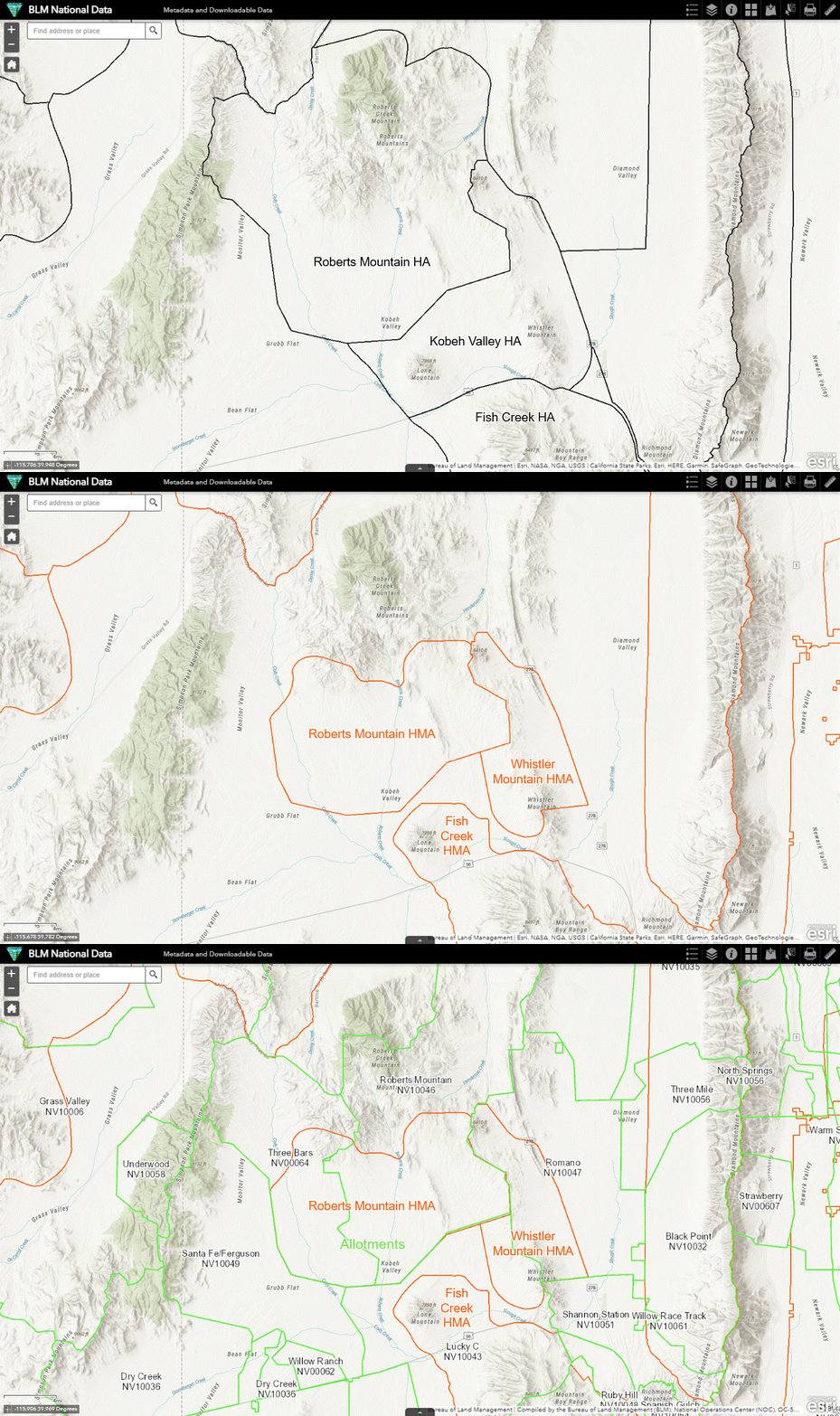
The National Data Viewer shows the arrangement. Click on image to open in new tab.
The Allotment Master Report puts Jiggs and Flynn/Parman in the Improve category, with Parman Individual in Custodial (condition unknown).
Where do the animals go during the off season? Back to the base property.
The allotments offer a combined 2,124 AUMs per year on 33,303 public acres, enough to support 177 wild horses.
The stocking rate would be 5.3 wild horses per thousand public acres, five times higher than the rate allowed by the bureaucrats (27,000 animals on 27 million acres).
A buyer could petition the BLM for a change in livestock type and season of use, turning the ranch into a wild horse sanctuary, as American Prairie did for bison in Montana.
Think of it as a rewilding project, where you leverage 994 private acres to control 33,303 public acres. No off season.
Clear Creek Ranch, located about 15 miles south of Winnemucca, NV, sold last year to J6 Ranches, according to Pershing County assessor’s records.
The listing by Hall and Hall says it covers 10,457 deeded acres, with grazing preference on 48,370 BLM acres producing 2,995 AUMs per year.
The asking price was $8.9 million.
The base property, described in the following video, lies mostly within the Clear Creek Allotment, which lies within the Sonoma Range HA, an area identified for wild horses.
A reporter for Lancaster Farming looks at the work of Tinia Creamer and her rescue in a story dated July 8.
As mentioned previously, some horses were abandoned and some were turned out to save money, including stallions, despite an unwritten rule to the contrary.
The area is outside the BLM’s jurisdiction.
The article did not indicate if advocates from western states had offered to pummel the mares with ovary-killing pesticides.
According to the 2015 Final EA for the Water Canyon Wild Horse Growth Suppression Pilot Program, mentioned in the July 5 roundup announcement,
When injected, the GonaCon vaccine targets the reproductive hormone gonadotropin releasing hormone (GnRH) secreted by the hypothalamus of the brain. Antibodies produced in response to the vaccine inactivate endogenous GnRH, which in turn eliminates stimulation of the pituitary gland and gonads in males or females. The resulting “immunocastration” renders animals unable to produce reproductive steroids or gametes.
The EA was copied to the project folder in ePlanning with other related documents.
The Proposed Action, Alternative A, called for the use of PZP-22, but the Decision Record authorized Alternative B, similar to Alternative A except the mares would be treated with GonaCon-B instead of PZP-22.
The description of Alternative B (bottom of page 34 in the pdf) refers to the registration of GonaCon-Equine, suggesting a rebranding or reformulation of the product.
A 2017 labeling amendment dropped the restricted-use designation and increased the interval between primer and booster from 30 days to 90 days.
Two news releases appeared yesterday, one covering pest control actions in and around the Spruce-Pequop and Goshute HMAs, as well as a portion of the Antelope Valley HMA, and the other for pest control actions in and around the Antelope HMA and remaining portion of Antelope Valley.
Highway 93 Alt, which runs northeast to West Wendover, serves as the split line for Antelope Valley.
The National Data Viewer shows the arrangement. Click on image to open in new tab.
Call them resource enforcement actions or rancher protection actions if you’d like.
The HMAs are subject to, and managed primarily for, permitted grazing.
The combined capture and removal goals are 3,107 and 3,107, respectively, with no animals to be returned to their lawful homes.
One of the announcements said 15 mares in the Water Canyon area previously treated with GonaCon Equine will receive another dose of the pesticide before being released back to the range.
Captured animals will be taken to the off-range corrals at Indian Lakes and Palomino Valley.
Gather stats and daily reports for the northern portion will be posted to this page.
Data for the southern portion will be posted here.
The Spruce-Pequop HMA lies mostly within the massive Spruce Allotment, one of the parcels to which Madeleine Pickens obtained grazing preference through the purchase of the associated base property.
Friends of Animals announced on Monday that it has filed suit in U.S. District Court against the BLM for its plan to eliminate wild horses from more than one million acres of public lands in the southwestern Wyoming.
The complaint alleges that nothing in the WHB Act allows the BLM to respond to requests from private landowners to remove wild horses from public lands.
Nevertheless, such requests are common in the scoping and document review phases of wild horse gather projects in ePlanning, with ranchers and ranching advocacy groups among the most vocal.
Section 1334 in the statute authorizes the agency to remove free-roaming horses that stray from public lands onto privately owned land.