The headline at Drudge points to a story by the Daily Mail.

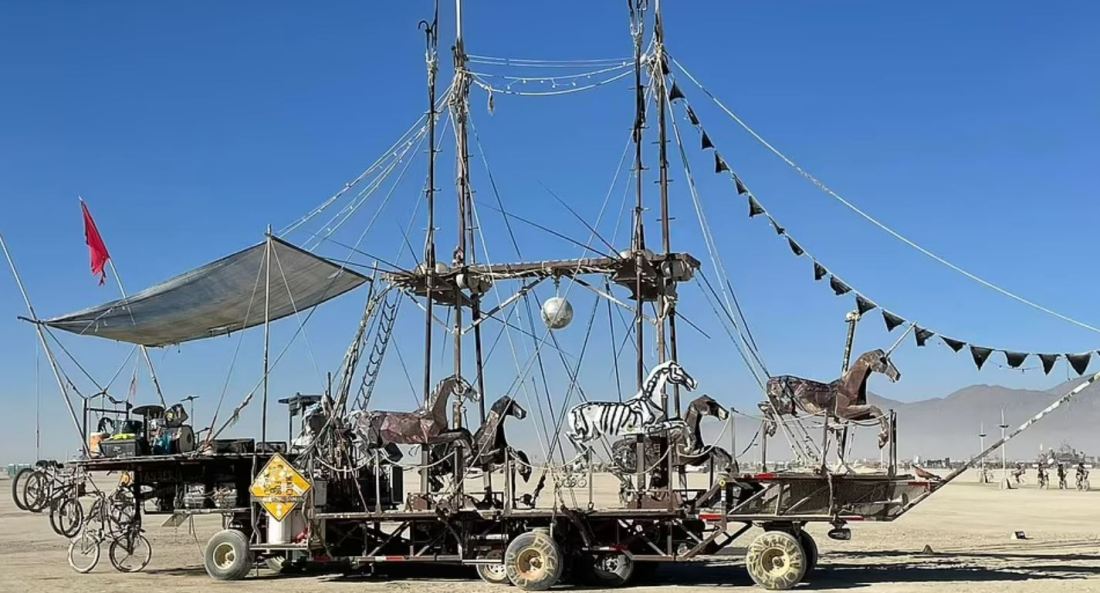
One of the floats resembles Grandfather Cuts Loose the Ponies.
The real ponies, smarter, range high.
The event concludes tomorrow.
RELATED: Burning Man Starts Tomorrow.

Western Horse Watchers Association
Exposing the Hypocrisy, Lies and Incompetence of the Wild Horse Advocates
On the range
The headline at Drudge points to a story by the Daily Mail.
One of the floats resembles Grandfather Cuts Loose the Ponies.
The real ponies, smarter, range high.
The event concludes tomorrow.
RELATED: Burning Man Starts Tomorrow.
With the darting program shut off since 2016, the advocates no longer point to the island as a model of wild horse management.
The Virginia Range has taken that title.
The presence of a youngster means the film won’t receive any Likes from them.
They truly are a miserable lot.
RELATED: Park Service Goes Underground with Assateague Horse Census?
The incident began on August 11 and does not appear in the latest schedule.
As of September 2, 172 burros have been trapped, 172 have been shipped and none have died, according to figures at the gather page.
The daily reports provide totals only.
The capture and removal goals are 275 each.
The cumulative total includes 79 jacks, 65 jennies and 28 foals.
Youngsters represented 16.3% of the animals gathered.
Of the adults, 54.9% were male and 45.1% were female.
The herd can’t be growing at rate of 20% per year with a birth rate of 16%.
The location of the trap was not specified.
The Day 22 report said nine burros had been caught during the night but were set free by hunters who did not want them in a confined space when they started shooting.
Day 23 ended with no unaccounted-for animals.
RELATED: Chemehuevi Nuisance Roundup in Progress.
The incident concluded yesterday, according to a statement at the gather page, with 74 burros captured, 74 shipped, none released and none dead.
There were no unaccounted-for animals.
Data quality was good.
The August 10 schedule indicated capture and removal goals of 80 each, with no animals to be returned to the HMA.
The capture total included 31 jacks, 33 jennies and 10 foals.
Youngsters represented 13.5% of the animals gathered.
Of the adults, 48.4% were male and 51.6% were female.
The BLM received complaints from farmers and personnel at Yuma Proving Ground alleging that the burros were creating hazardous conditions near highways and public health and safety issues.
RELATED: BLM to Remove Wild Burros from Yuma Proving Ground?
The incident concluded yesterday, according to a statement at the gather page, with 51 horses captured, 48 shipped, none released and three dead.
There were no unaccounted-for animals.
The death rate was 5.9%.
Data quality was good.
The August 10 schedule indicated a capture goal of 97 and removal goal of 67, with up to 30 animals returned to the HMA, including 15 mares treated with fertility control.
The gather page suggests that treat-and-release was not part of the plan.
The capture total included 25 stallions, 16 mares and 10 foals.
Youngsters represented 19.6% of the animals gathered.
Of the adults, 61% were male and 39% were female.
The observed percentage of foals suggests the herd was growing at a rate of 15% per year, not 20% per year, a rate used by land managers to predict herd sizes and justify resource enforcement actions.
The HMA has an HMAP and is managed primarily for livestock.
RELATED: Frisco Roundup Announced.
As stated in Section 1.3 of the Draft EA, there is currently no Herd Management Area Plan in place for the Roberts Mountain Complex or any of the individual HMAs.
Livestock in Roberts Mountain HMA receive 3.5 times more forage than the horses.
Livestock in Whistler Mountain HMA receive 4.4 times more forage than the horses.

What would those ratios look like if they had HMAPs?
Livestock in Roberts Mountain would receive 3.5 times more forage than the horses.
Livestock in Whistler Mountain would receive 4.4 times more forage than the horses.
Both HMAs have resource management problems, not wild horse problems.
Totally on their own? Left to their own resources?
The whole range of wild behaviors in their natural state?
Why are there no youngsters in this video?
RELATED: Foal-Free Friday, Changing the Way They’re Managed Edition.
Up to fifty cherished mares taken from the Complex last month will be returned on or about October 20, after receiving a second dose of GonaCon Equine, according to a BLM news release.
The incident will be open to public observation.
The roundup restored a thriving ecological balance and multiple-use relationship on public lands in eastern Nevada, meaning it shifted large amounts of forage—that the horses tried to reclaim—back to the public lands ranchers.
RELATED: Triple B Roundup Ends.

The form may indicate that the Forest Service will not be posting any daily reports, only the cumulative totals.
The link points to a site on socialist media.

Western Horse Watchers has been unable to find an announcement for the roundup at the Forest Service newsroom.
RELATED: Fifth Annual Devil’s Garden Roundup Starts Next Month.
The incident began on August 29. Gather stats through August 31:
The figures above are based on the daily reports, not the totals posted by the BLM.
A stallion was euthanized on Day 2 because of a club foot.
The death rate is 2.9%.
The capture total includes 19 stallions, 9 mares and 6 foals.
Youngsters represented 17.6% of the animals gathered.
Of the adults, 67.9% were male and 32.1% were female.
The herd can’t be growing at a rate of 20% per year with a birth rate of 18% per year.
A better estimate would be 13% per year, assuming a death rate of 5% per year.
Body condition scores were not provided.
The location of the trap was not disclosed.
The HMA and surrounding lands are subject to permitted grazing.
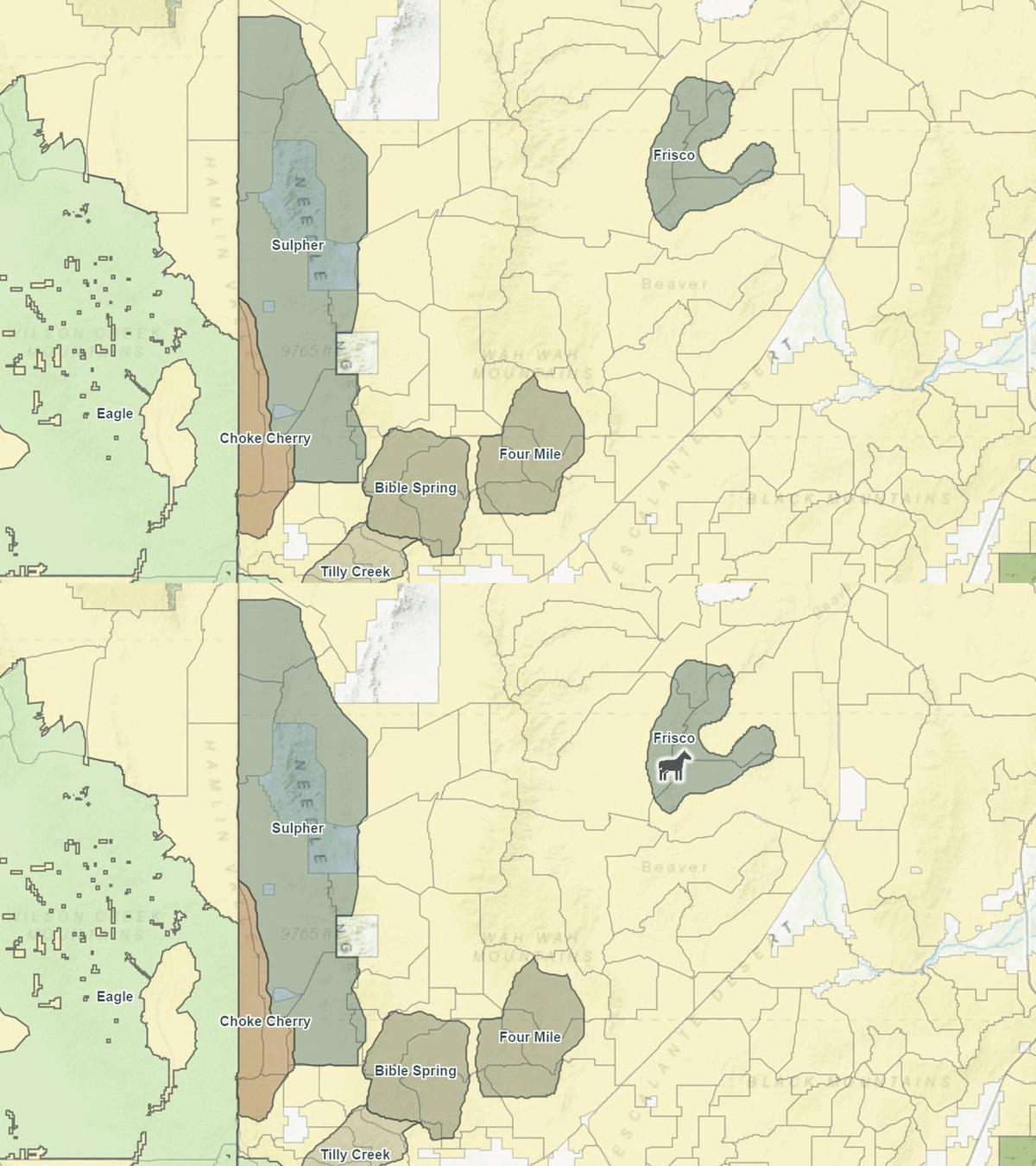
Day 3 ended with 33 unaccounted-for animals.
Mares treated with fertility control may be returned to the area at a later date.
Other statistics:
RELATED: Frisco Roundup in Progress.
Table 15 in the Draft EA for resource enforcement actions in the Roberts Mountain Complex indicates that 11% of the Lucky C Allotment overlaps the HMA along with 32% of the Romano Allotment.
The HMA covers about 43,250 acres and is 100% subject to permitted grazing.
The 24 wild horses allowed by plan require 288 AUMs per year.
The Western Watersheds map shows the arrangement.

The Allotment Master Report shows 3,054 active AUMs on Lucky C and 2,887 active AUMs on Romano. These figures may differ slightly from those in the EA.
The forage in Lucky C assigned to livestock inside the HMA would be 3,054 × .11 = 336 AUMs per year, assuming the resource is evenly distributed across the parcel.
The forage in Romano assigned to livestock inside the HMA would be 2,887 × .32 = 924 AUMs per year.
The total estimated forage assigned to livestock inside the HMA is 336 + 924 = 1,260 AUMs per year, enough to support an additional 105 wild horses.
The True AML would be 24 + 105 = 129, over five times higher than the current AML, to be achieved by confining the permittees to their base properties and expecting them to pay the going rate to feed their animals.
What do you think happens during the off season?
The stocking rate at the new AML would be three wild horses per thousand acres, compared to a target rate across all HMAs of one wild horse per thousand acres.
Livestock in Whistler Mountain receive 4.4 times more forage than the horses, yet the area was set aside for the horses.
The HMA is managed primarily for livestock.
The BLM will collect 1,260 × 1.35 = $1,701 per year in grazing fees from ranching activity inside the HMA while it spends 105 × 5 × 365 = $191,625 per year to care for the horses displaced thereby.
Would you say that permitted grazing is a wise use of the public lands?
This story by KRQE News gives few details, but the plan was to send excess horses from the WHT to the school for training and placement into private homes.
The Western Watersheds map indicates that the WHT overlaps three allotments and is 100% subject to permitted grazing.
File under: Off the range.
RELATED: Community College Moving Ahead with Wild Horse Program.
The incident began yesterday, according to a statement at the gather page, but Day 1 results weren’t posted until today.
Twelve horses were captured, with none shipped and no deaths.
The capture goal is 97 and the removal goal is 67.
RELATED: Frisco Roundup Announced.
The ringleader of the Salt River Wild Horse Darting Group, a surrogate of the Campaign Against America’s Wild Horses, told the White Mountain Independent in a story posted today that she has the solution for unauthorized livestock in the Apache-Sitgreaves National Forests.
Pointing to the darting program at the Salt River, she explained:
“The SRWHMG fertility-control program has reduced the number of foals born in the Salt River wild horse population in the Tonto National Forest from more than 100 in 2019 to just two in 2021 and none yet for 2022. The goal is to humanely decrease the size of the population over time so that it can remain in balance with its habitat [and other mandated uses of public lands]. This is what we have proposed to the Forest Service for the Alpine wild horses as well, but was rejected. Now the Alpine wild horses will continue to grow while the Forest Service will continue to spend taxpayer money on removals. These removals are not humane, not popular with the public, not cost efficient and not necessary.”
The advocates would protect the Apache wild horses from removal, whom the people of Arizona cherish and love, by getting rid of them with PZP, an EPA-registered pesticide.
Their words never match their deeds.
Ever notice that?
RELATED: ASNF ‘Jumping Mouse’ Horses Sold at Auction?
The Wild Horse and Burro Advisory Board will meet October 4 – 6 in Phoenix, AZ, according to an unofficial notice at the Federal Register.
The preliminary agenda includes a public comment session each day.
The formal announcement will go live tomorrow.
The Board has not met in over a year.
RELATED: WHBAB Nominations Sought.
UPDATE: The BLM news release said the meeting would be livestreamed.
Management plans for HMAs allow, on average, one animal per thousand acres.
Assume they’re all designated for horses.
The land must be able to produce at least 12 AUMs per year per thousand acres to sustain those animals.
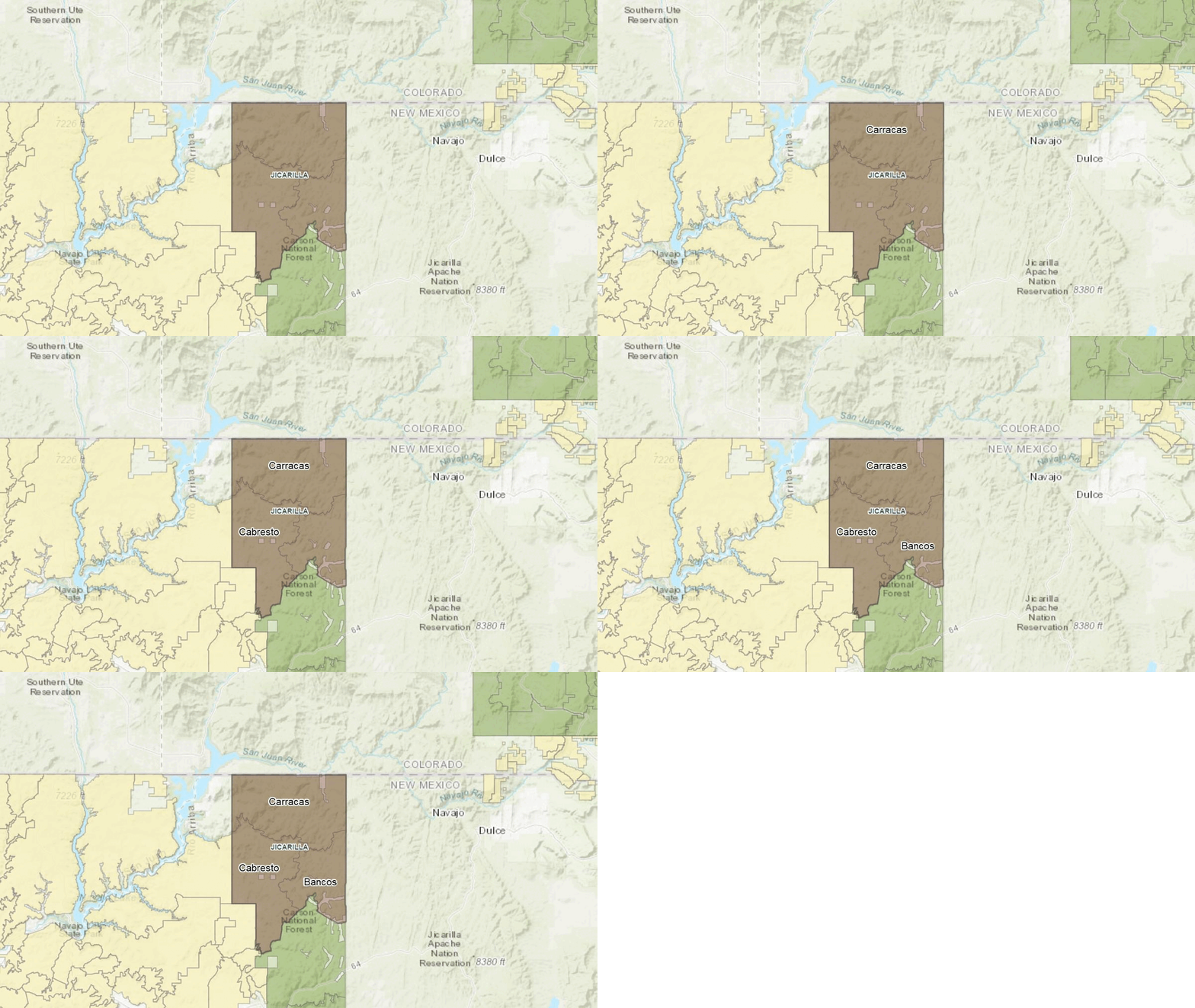
A new BLM Briefing Book provides data for livestock grazing on Colorado rangelands, which occurs on 7.8 million acres.
Here are some of the results:
San Luis Valley Field Office
Kremmling Field Office
White River Field Office
Colorado River Valley Field Office
Tres Rios Field Office
As observed on numerous occasions, public lands are always more productive when designated for privately owned livestock.
These numbers tell you that the carrying capacity of western rangelands is much higher than the government admits.
Allotments in the Kremmling Field Office could support 9.9 wild horses per thousand acres!
The Virginia Range has been carrying ten wild horses per thousand acres for years, although the advocates are now working with the bureaucrats at NDA to cover it up.
RELATED: Livestock Outnumber Horses and Burros on Public Lands?
An issue with the fuel system on #3 engine could not be resolved in a timely manner.
The next opportunity for liftoff is September 2, according to the live feed from NASA.
Near Wild Horse Reservoir with Dynamic Jasmine.
Overpopulation means more horses than allowed by plan, not necessarily more horses than the land can support.
AMLs, which represent the number of horses allowed by plan, are small relative to the authorized forage, because most of it has been assigned to privately owned livestock.
The authorized forage may correspond to half of the available forage, a safety factor that allows for natural variations in climate.
To determine if the area is really overpopulated, compare the current population to the True AML, which requires a few calculations as previously explained.
For example, the current population at Roberts Mountain HMA is 1,132, including foals, according to Table 1 of the Draft EA for resource enforcement actions in the Complex.
The True AML is 678, computed earlier today, to be achieved by confining the ranchers to their base properties. (What do you think happens during the off season?)
The HMA is overpopulated because the current population exceeds the True AML.
The footnote in the table says the current population includes horses outside the HMA, and the number of foals was based on a 19% growth rate (24% birth rate, assuming a 5% death rate), so the situation inside the HMA may not be as bad as originally thought.
Table 15 in the Draft EA for resource enforcement actions in the Roberts Mountain Complex indicates that 38% of the Roberts Mountain Allotment overlaps the HMA along with 46% of the Three Bars Allotment.
The HMA covers 99,990 acres and is 100% subject to permitted grazing.
The 150 wild horses allowed by plan require 1,800 AUMs per year.
The Western Watersheds map shows the arrangement.

The Allotment Master Report shows 5,840 active AUMs on Three Bars and 9,624 active AUMs on Roberts Mountain. These figures may differ slightly from those in the EA.
The forage in Three Bars assigned to livestock inside the HMA would be 5,840 × .46 = 2,686 AUMs per year, assuming the resource is evenly distributed across the parcel.
The forage in Roberts Mountain assigned to livestock inside the HMA would be 9,624 × .38 = 3,657 AUMs per year.
The total estimated forage assigned to livestock inside the HMA is 2,686 + 3,657 = 6,343 AUMs per year, enough to support an additional 528 wild horses.
The True AML would be 150 + 528 = 678.
The stocking rate at the new AML would be 6.8 wild horses per thousand acres, compared to a target rate across all HMAs of one wild horse per thousand acres.
The Virginia Range was carrying ten, before the advocates got involved.
Livestock in Roberts Mountain receive 3.5 times more forage than the horses, yet the area was set aside for the horses.
The HMA is managed primarily for livestock.
The BLM will collect 6,343 × 1.35 = $8,563 per year in grazing fees from ranching activity inside the HMA while it spends 528 × 5 × 365 = $963,600 per year to care for the horses displaced thereby.
Would you say that permitted grazing is a wise use of the public lands?

