Calico Roundup, Day 11

The incident began on September 10.  Gather stats through September 20:

  • Target: Horses
  • Type: Planned
  • Method: Helicopter
  • Category: Cruel and costly (advocates have a better way)
  • Captured: 508, up from 459 on Day 9
  • Average daily take: 46.2
  • Capture goal: 1,076
  • Removal goal: 1,036
  • Returned: None
  • Deaths: 15, up from 12 on Day 9
  • Shipped: 478, up from 404 on Day 9

The figures above are based on the daily reports, not the totals posted by the BLM.

Three horses were put down on Day 10 as acts of mercy, raising the death rate from 2.6% to 3.0%.

The capture total includes 197 stallions, 233 mares and 78 foals.

Youngsters represented 15.4% of the animals gathered.

Of the adults, 45.8% were male and 54.2% were female.

The herd can’t be growing at a rate of 20% per year with a birth rate of 15% per year.

A better estimate would be 10% per year, assuming a death rate of 5% per year.

Body condition scores were not provided.

The location of the trap site was not disclosed.

The HMAs and surrounding lands are subject to permitted grazing.

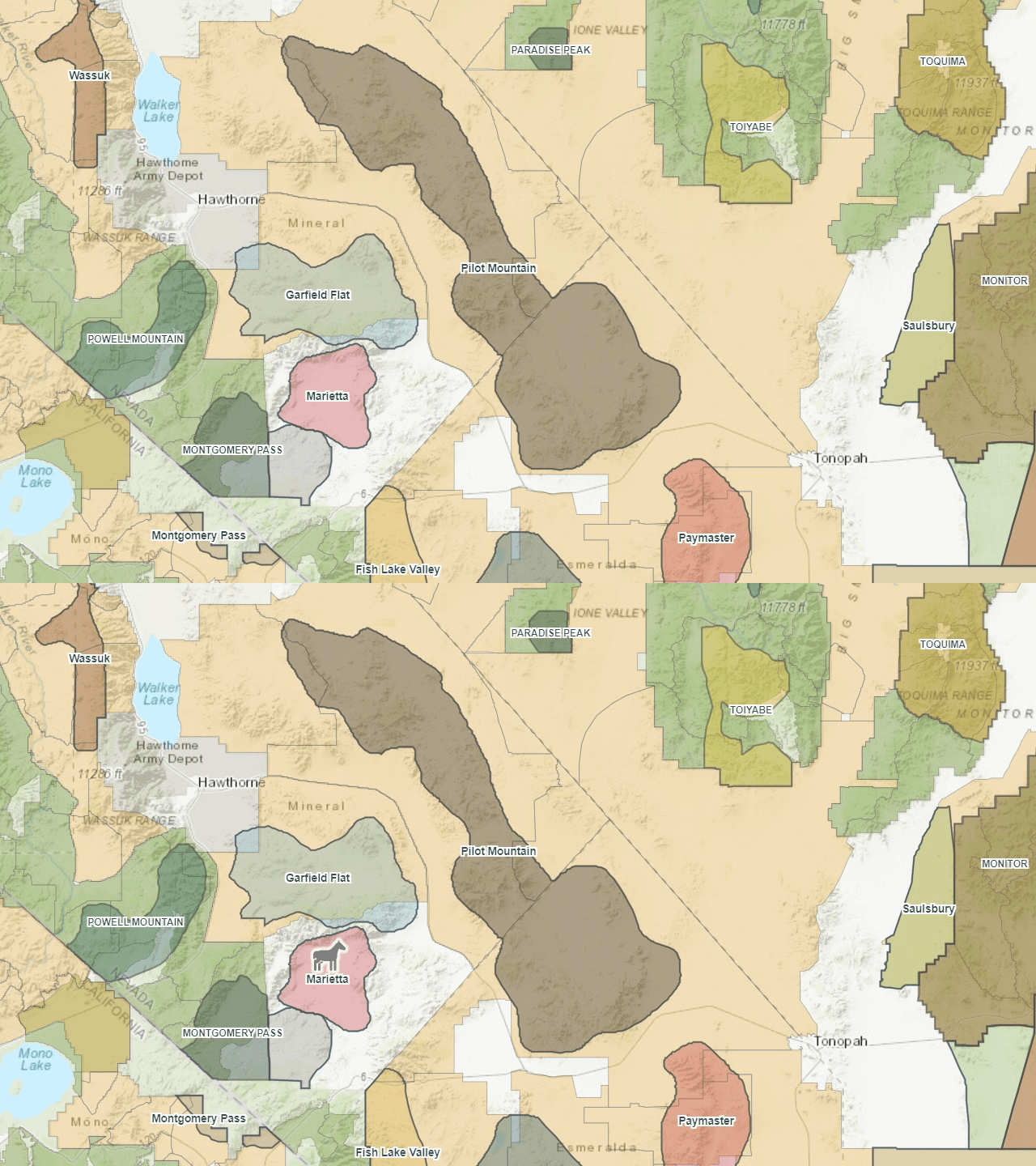
Calico Complex Map 09-07-22

Day 11 ended with 15 unaccounted-for animals.

Mares treated with fertility control may be returned to the area at a later date.

Other statistics:

  • Horses allowed by plan (AML): 952
  • Forage assigned to horses: 11,424 AUMs per year
  • Pre-gather population: 1,593
  • Forage liberated to date: 6,096 AUMs per year
  • Water liberated to date: 5,080 gallons per day
  • Forage assigned to livestock: Unknown
  • Horses displaced from Complex by permitted grazing: Unknown
  • True AML: Unknown
  • Stocking rate at new AML: Unknown
  • Horses displaced from Complex by drilling and mining: Ask the advocates

RELATED: Calico Roundup, Day 9.
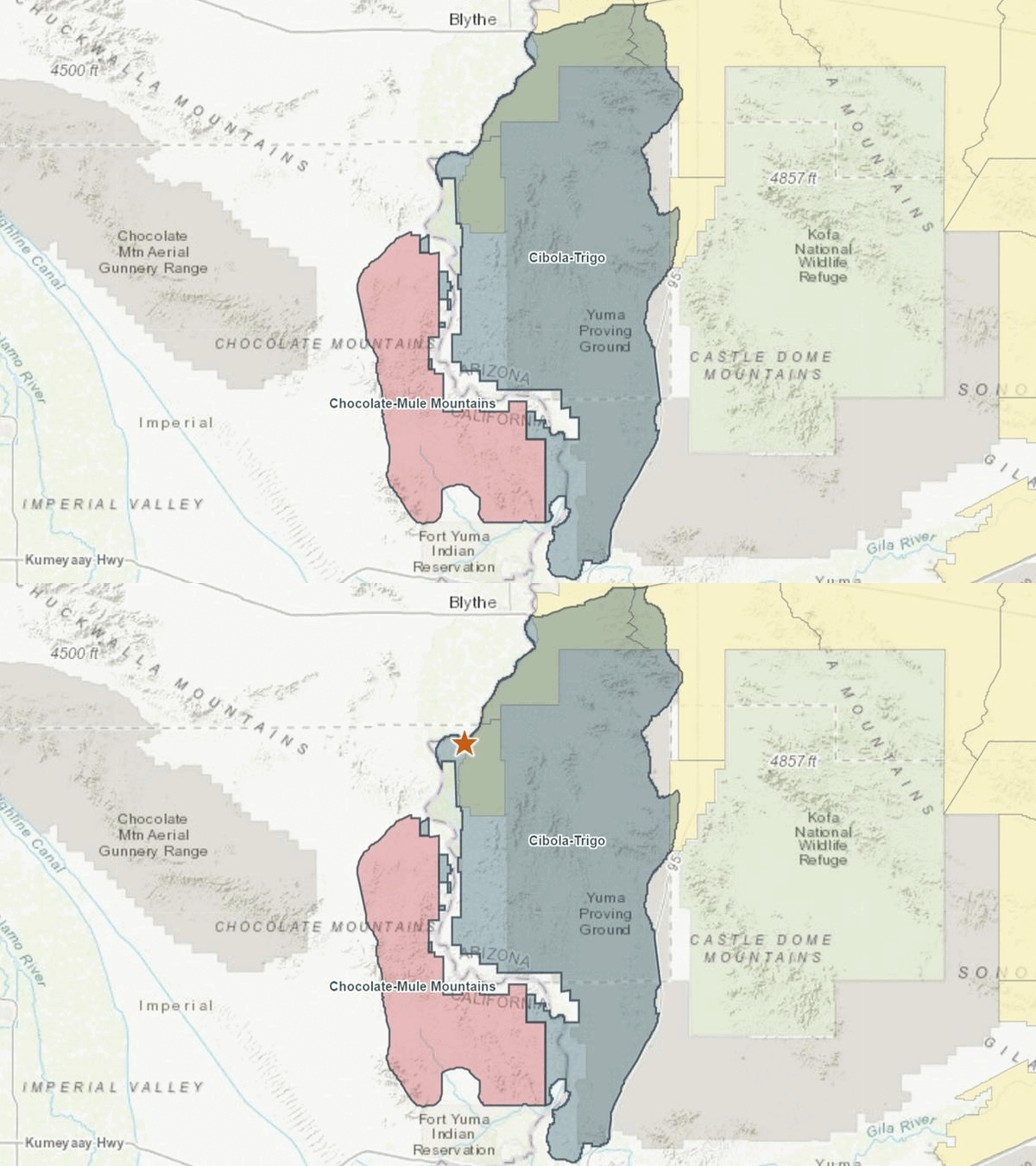
BLM to Yank More Horses and Burros from Cibola-Trigo HMA?

The project targets animals outside the HMA, according to the CX, but the map in Attachment 2 indicates inside the HMA.

The Proposed Action would capture 85 burros and 15 horses on private property near the CA-AZ state line.

Cibola-Trigo Nuisance Roundup Map 09-21-22

The CX was posted to the project folder with no opportunities for public comment.

Burros were removed from the area last month and last year.

The management plan allows 150 wild horses and 165 wild burros.

The roundup may or may not be announced at the BLM news site and would likely occur in FY 2023, which begins on October 1.

Cedar Mountain Roundup, Day 3

The incident began on September 17.  Gather stats through September 19:

  • Target: Horses
  • Type: Planned
  • Method: Helicopter
  • Category: Cruel and costly (advocates have a bettter way)
  • Captured: 223, up from 108 on Day 1
  • Average daily take: 74.3
  • Capture goal: 700
  • Removal goal: 400
  • Returned: None
  • Deaths: None
  • Shipped: 153, up from zero on Day 1

The figures above are based on the daily reports, not the totals posted by the BLM.

The capture total includes 83 stallions, 87 mares and 53 foals.

Youngsters represented 23.8% of the animals gathered.

Of the adults, 48.8% were male and 51.2% were female.

The herd may be growing at a rate of 20% per year, a figure used by land managers to predict herd sizes and justify management actions, given a birth rate of 24% per year.

Body condition scores were not provided.

The location of the trap site was not disclosed.

The HMA and surrounding lands are subject to permitted grazing.

Cedar Mountain HMA Map 01-29-22

Day 3 ended with 70 unaccounted-for animals.

Mares treated with fertility control may be returned to the area at a later date.

Other statistics:

  • Horses allowed by plan (AML): 390
  • Forage assigned to horses: 4,680 AUMs per year
  • Pre-gather population: 920
  • Forage liberated to date: 2,676 AUMs per year
  • Water liberated to date: 2,230 gallons per day
  • Forage assigned to livestock: 17,068 AUMs per year (estimated)
  • Horses displaced from HMA by permitted grazing: 1,422
  • True AML: 1,812
  • Stocking rate at new AML: 8.6 horses per thousand acres
  • Horses displaced from HMA by drilling and mining: Ask the advocates

RELATED: Cedar Mountain Roundup Begins.

Wild Horses Rule the Range?

So says the writer of an opinion piece in the Carlsbad Current Argus.

You only need to look at the data.

The BLM assigns most of the forage on public lands to privately owned cattle and sheep, even in areas set aside for horses and burros.

Horses and burros receive about 324,000 AUMs per year on 27 million acres, compared to 12 million AUMs per year on 155 million acres for livestock.

Livestock can access 5.7 times more land than horses and burros, but the number of animals allowed by plan, equivalent to one million wild horses, is 37 times higher.

Ranching interests control the range, not wild horses.

RELATED: Livestock Outnumber Horses and Burros on Public Lands?

Calico Roundup, Day 9

The incident began on September 10.  Gather stats through September 18:

  • Target: Horses
  • Type: Planned
  • Method: Helicopter
  • Category: Cruel and costly
  • Captured: 459, up from 351 on Day 7
  • Average daily take: 51.0
  • Capture goal: 1,076
  • Removal goal: 1,036
  • Returned: None
  • Deaths: 12, up from 8 on Day 7
  • Shipped: 404, up from 251 on Day 7

The figures above are based on the daily reports, not the totals posted by the BLM.

Three horses were put down on Day 8, followed by one more on Day 9.  Most would be alive today if there was no roundup.

The death rate is 2.6%.

The capture total includes 180 stallions, 208 mares and 71 foals.

Youngsters represented 15.5% of the animals gathered.

Of the adults, 46.4% were male and 53.6% were female.

The herd can’t be growing at a rate of 20% per year with a birth rate of 16% per year.

A better estimate would be 11% per year, assuming a death rate of 5% per year.

Body condition scores were not provided.

The location of the trap site was not disclosed.

The HMAs and surrounding lands are subject to permitted grazing.

Calico Complex Map 09-07-22

Day 9 ended with 43 unaccounted-for animals.

Mares treated with fertility control may be returned to the area at a later date.

Other statistics:

  • Horses allowed by plan (AML): 952
  • Forage assigned to horses: 11,424 AUMs per year
  • Pre-gather population: 1,593
  • Forage liberated to date: 5,508 AUMs per year
  • Water liberated to date: 4,590 gallons per day
  • Forage assigned to livestock: Unknown
  • Horses displaced from Complex by permitted grazing: Unknown
  • True AML: Unknown
  • Stocking rate at new AML: Unknown
  • Horses displaced from Complex by drilling and mining: Ask the advocates

RELATED: Calico Roundup, Day 7.

Use of Montana Solution Greater Than Originally Thought?

Immunocontraceptive vaccines such as PZP are currently being used in over 75 areas managed for wild horses and burros by the National Park Service, U.S. Forest Service and the Bureau of Land Management, according to the Final EA for management actions at the Marietta WBR.  Go to page 26 in the pdf.

The Park Service shut off the darting program at Assateague Island in 2016.

The latest roundup and fertility control schedule shows 14 HMAs with fertility control programs.

Where else is it in use and who are the organizers?

RELATED: Proposals Sought to Catch, Treat, Release Wild Horses and Burros.

Trajectory of Wildh Horse Fertility Control Program 04-11-21

Cedar Mountain Roundup Begins

The incident started yesterday, as planned, with 108 horses captured, none shipped and no deaths.

The gather page indicates a capture goal of 700, consistent with the latest schedule, but does not specify a removal goal.

The schedule puts that number at 400, suggesting that many cherished mares will receive fertility control vaccines and IUDs, followed by return to the HMA.

RELATED: Cedar Mountain Pest Removal Starts This Week.

Devil’s Garden Roundup, Day 6, No Need to Know Edition

The incident started on September 12.  Yesterday the report was showing results for September 15 then jumped to September 17.  What happened on September 16?

Devils Garden Roundup Day 6 09-17-22

Number of horse shipped: Unknown

Number of deaths: Unknown

Number of horses released: Unknown

Percentage of foals: Unknown

Percentages of males and females: Unknown

Number of unaccounted-for animals: Unknown

RELATED: Devil’s Garden Roundup, Day 3, Keeping You in the Dark Edition.

FREES Agenda Posted

Early registration has been extended to September 26 according to the flyer.

This year conferees will “war game” a new management tool that shows population trends for various strategies such as roundups, fertility control and no action.

The presentation titled “Can cougars eat their way to AML?” will be of great interest.

Western Horse Watchers believes the answer is No, not when lands designated for wild horse are full of fat calves.

RELATED: FREES Conference Announced.

Two Days Left to Comment on Alvord Sleight of Hand

The project description says the 15-day comment period started on September 2 but the list in ePlanning shows an end date of September 19.

Alvord Comment Period Almost Over 09-17-22

Writing a new AMP to permanently transfer AUMs to livestock that are currently off limits to everybody, including wildlife and wild horses, probably isn’t valid without an RMP amendment but that’s what the BLM appears to be doing at Alvord.

The email sent to the BLM on September 8 asking if suspended AUMs can be moved to active status without changes to the RMPs still hasn’t been answered.

RELATED: How Many Wild Horses Could the Alvord Allotment Support?

Calico Roundup, Day 7

The incident began on September 10.  Gather stats through September 16:

  • Target: Horses
  • Type: Planned
  • Method: Helicopter
  • Category: Cruel and costly
  • Captured: 351, up from 258 on Day 5
  • Average daily take: 50.1
  • Capture goal: 1,076
  • Removal goal: 1,036
  • Returned: None
  • Deaths: 8, up from 7 on Day 5
  • Shipped: 251, no change from Day 5

The figures above are based on the daily reports, not the totals posted by the BLM.

Helicopters did not fly on Day 6 as the trap was moved to another area.

One stallion was euthanized on Day 7 due to severe tooth loss.

The death rate decreased slightly to 2.3%.

The capture total includes 140 stallions, 156 mares and 55 foals.

Youngsters represented 15.7% of the animals gathered.

Of the adults, 47.3% were male and 52.7% were female.

The herd can’t be growing at a rate of 20% per year with a birth rate of 16% per year.

A better estimate would be 11% per year, assuming a death rate of 5% per year.

Body condition scores were not provided.

The location of the trap site was not disclosed.

The HMAs and surrounding lands are subject to permitted grazing.

Calico Complex Map 09-07-22

Day 7 ended with 92 unaccounted-for animals.

Mares treated with fertility control may be returned to the area at a later date.

Other statistics:

  • Horses allowed by plan (AML): 952
  • Forage assigned to horses: 11,424 AUMs per year
  • Pre-gather population: 1,593
  • Forage liberated to date: 4,212 AUMs per year
  • Water liberated to date: 3,510 gallons per day
  • Forage assigned to livestock: Unknown
  • Horses displaced from Complex by permitted grazing: Unknown
  • True AML: Unknown
  • Stocking rate at new AML: Unknown
  • Horses displaced from Complex by drilling and mining: Ask the advocates

RELATED: Calico Roundup, Day 5.

Marietta Decision Announced?

Yesterday’s news release said the final environmental assessment, finding of no significant impact and decision record were posted to the project folder for review, but Western Horse Watchers was unable to find the DR.

A keyword search of the BLM news site for Marietta yielded a notification dated April 15 for the scoping period but no announcement for the comment period on the preliminary EA, which was posted with other supporting documents on July 22.

A letter was apprently sent to interested parties but the public was kept out of the loop.

The Proposed Action features removal of excess burros, removal of all wild horses, sex ratio skewing and population control measures such as PZP and GonaCon, over a ten-year period, according to Section 2.2.2 of the EA, but Western Horse Watchers does not know if it will be implemented in whole, in part or not at all.

The current population is thought to be around 500 burros and 50 horses, as discussed on page 13 in the pdf.

The WBR has an AML of 104 wild burros and zero wild horses.

It is not subject to permitted grazing.

RELATED: Marietta Wild Burro Roundup in the Works?

Marietta WBR Map 04-07-22

South Steens Roundup Ends

The incident concluded yesterday, according to a statement at the gather page, with 753 horses captured, 732 shipped and 22 dead.

The number of horses processed exceeded the number of horses captured by one.

The death rate was 2.9%.

The capture total included 281 stallions, 326 mares and 146 foals.

Youngsters represented 19.4% of the animals gathered.

Of the adults, 46.3% were male and 53.7% were female.

The capture goal was 500 but was increased after three days to 750.

Up to 25 mares treated with fertility control may be returned to the HMA at a later date.

RELATED: South Steens Roundup Set for Next Month.

Foal-Free Friday, Fighting Crime on the Virginia Range

The advocates care far more about their standing with the bureaucrats and ranchers than they do about the horses.

They’re trying to convince them that the Montana Solution is a viable alternative to helicopter roundups.

They want to be leaders in the wild horse removal business and the Virginia Range has become their proving ground.

Crime in the Wild Horse World 05-26-22

Breeding has to be stopped and the advocates are on the case, led by four individuals that have administered over 1,000 doses of the pesticide each.

Predators take out the foals that slip through.

By the end of 2023, five years into the program, the herd will be toast.

RELATED: Foal-Free Friday, Barren Mares and Paragliders Edition.

Virginia Range Foal 05-08-22

No Leads in Shootings of Jakes Valley Horses?

The reward for information has grown from $5,000 to $10,000, according to a BLM news release, thanks to a pledge from the Campaign Against America’s Wild Horses.

Don’t be fooled by the gesture.  Next to the federal government, nobody, including shooters, is getting rid of more wild horses than they are.

RELATED: Information Sought in Killing of Jakes Valley Horses.

South Steens Roundup, Day 5

The incident began on September 10.  Gather stats through September 14:

  • Target: Horses
  • Type: Planned
  • Method: Helicopter
  • Category: Cruel and costly
  • Captured: 628, up from 525 on Day 3
  • Average daily take: 125.6
  • Capture goal: 500, increased to 750 on Day 3
  • Removal goal: 450, increase not reported
  • Returned: None
  • Deaths: 16, up from 7 on Day 3
  • Shipped: 579, up from 476 on Day 3

The figures above are based on the daily reports, not the totals posted by the BLM.

Nine horses were put down on Day 4 due to pre-existing conditions.

The death rate has increased from 1.3% to 2.5%.

The capture total includes 234 stallions, 274 mares and 120 foals.

Youngsters represented 19.1% of the animals gathered.

Of the adults, 46.1% were male and 53.9% were female.

The herd can’t be growing at a rate of 20% per year with a birth rate of 19% per year.

A better estimate would be 14% per year, assuming a death rate of 5% per year.

Body condition scores were not provided.

The location of the trap site was not disclosed.

The HMA and surrounding lands are subject to permitted grazing.

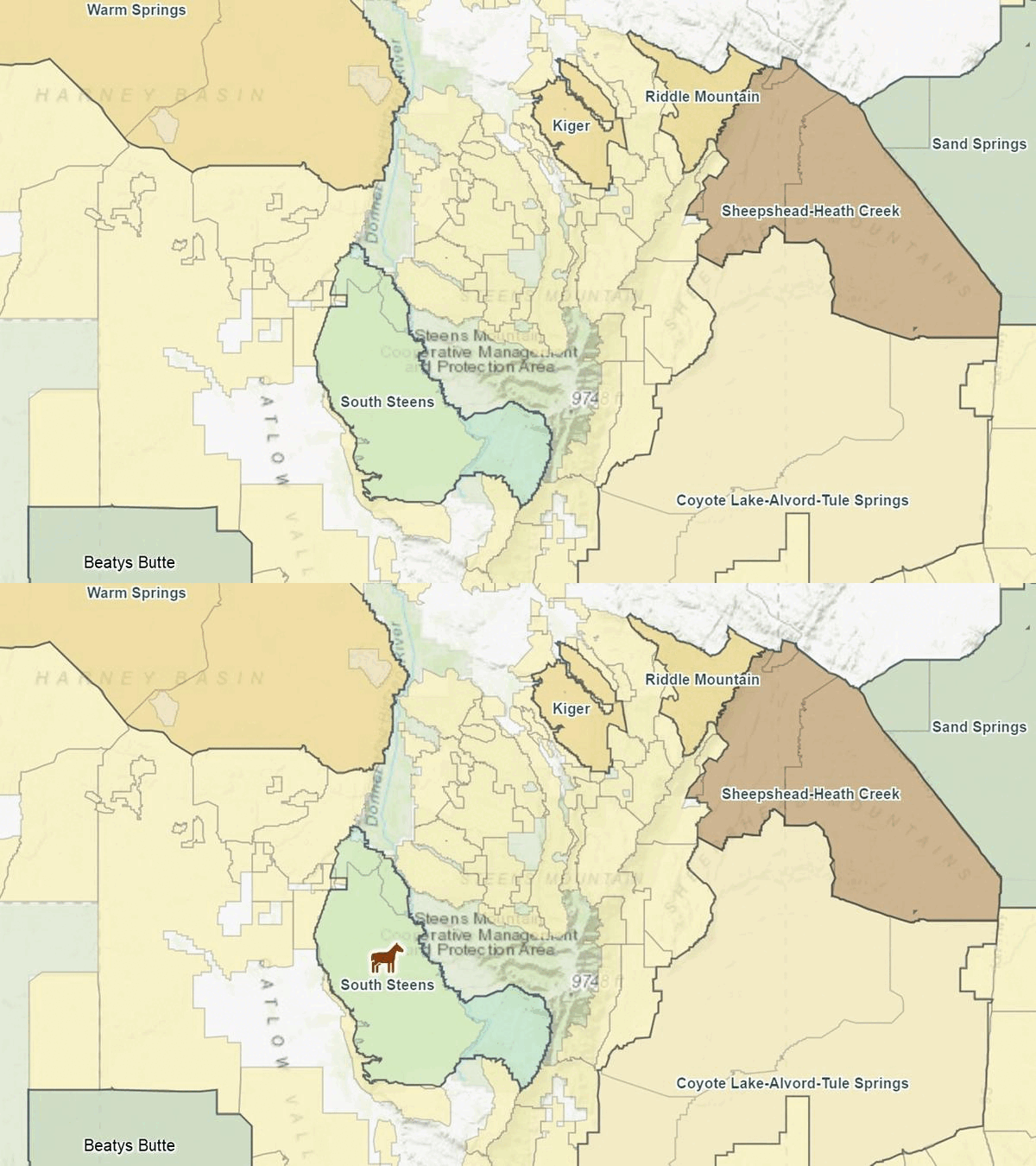
South Steens HMA Map 08-17-22

Day 5 ended with 33 unaccounted-for animals.

Mares treated with fertility control may be returned to the area at a later date.

Other statistics:

  • Horses allowed by plan (AML): 304
  • Forage assigned to horses: 3,648 AUMs per year
  • Pre-gather population: 1,370
  • Forage liberated to date: 7,536 AUMs per year
  • Water liberated to date: 6,280 gallons per day
  • Forage assigned to livestock: 10,299 AUMs per year (estimated)
  • Horses displaced from HMA by permitted grazing: 858
  • True AML: 1,162
  • Stocking rate at new AML: 8.6 horses per thousand acres
  • Horses displaced from HMA by drilling and mining: Ask the advocates

RELATED: South Steens Roundup, Day 3.

Calico Roundup, Day 5

The incident began on September 10.  Gather stats through September 14:

  • Target: Horses
  • Type: Planned
  • Method: Helicopter
  • Category: Cruel and costly
  • Captured: 258, up from 235 on Day 3
  • Average daily take: 51.6
  • Capture goal: 1,076
  • Removal goal: 1,036
  • Returned: None
  • Deaths: 7, up from 5 on Day 3
  • Shipped: 251, up from 133 on Day 3

The figures above are based on the daily reports, not the totals posted by the BLM.

No animals were taken on Day 5 and no explanantion was given.  Operations may have moved to another HMA.

The number of horses shipped on Day 3 was changed from 90 to 81.

Two stallions were euthanized on Day 4 for non-life-threatening conditions.

The death rate is 2.7%.

The capture total includes 99 stallions, 117 mares and 42 foals.

Youngsters represented 16.3% of the animals gathered.

Of the adults, 45.8% were male and 54.2% were female.

The herd can’t be growing at a rate of 20% per year with a birth rate of 16% per year.

A better estimate would be 11% per year, assuming a death rate of 5% per year.

Body condition scores were not provided.

The location of the trap site was not disclosed.

The HMAs and surrounding lands are subject to permitted grazing.

Calico Complex Map 09-07-22

Day 5 ended with no unaccounted-for animals.

Mares treated with fertility control may be returned to the area at a later date.

Other statistics:

  • Horses allowed by plan (AML): 952
  • Forage assigned to horses: 11,424 AUMs per year
  • Pre-gather population: 1,593
  • Forage liberated to date: 3,096 AUMs per year
  • Water liberated to date: 2,580 gallons per day
  • Forage assigned to livestock: Unknown
  • Horses displaced from Complex by permitted grazing: Unknown
  • True AML: Unknown
  • Stocking rate at new AML: Unknown
  • Horses displaced from Complex by drilling and mining: Ask the advocates

RELATED: Calico Roundup, Day 3.

BLM, Media Feed Public Steady Diet of Disinformation

A BLM spokesman told The Grand Island Independent in a story about wild horse adoption at Husker Harvest Days that the herds are growing at a rate of 20% per year.

The article also indicated that climate change has reduced the carrying capacity of the land.

Anybody who reads these pages knows that birth rates of 25%, needed for growth rates of 20%, are rarely seen in roundup data.

For example, the blitzkrieg at South Steens, which took wild horses off the range at an average rate of 175 per day, yielded 19% foals in 525 horses captured.

The operation was so productive that the BLM decided to extend it by 50%.

Followers of this blog also know that permitted grazing has sharply reduced the carrying capacity of public lands, not man-made climate change, which is a hoax.

True AMLs often exceed current AMLs by a factor of four of five because the horses receive just fifteen to twenty percent of the authorized forage, neglecting wildlife.