Location of Utah Wild Horse Shootings Identified

The remains were found on the McCracken Wash Allotment, one of three such parcels between Bluff and Montezuma Creek, according to a story posted today by KSL News of Salt Lake City.

The San Juan County Sheriff’s Office is leading the investigation.

The allotment offers 950 AUMs per year on 15,323 public acres.  The resource can be accessed by one permittee.

Forage availability works out to 62 AUMs per year per thousand acres, enough to support five wild horses per thousand acres.

The BLM has maintained that public lands in the American west can only support one wild horse per thousand acres, on average.

RELATED: Wild Horses Found Dead in Southeast Utah.

Montezuma Creek Horse Shooting Map 10-20-22

Devil’s Garden Roundup Over?

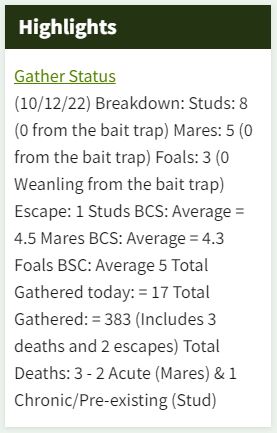
The incident began on September 12.  No updates have been posted since October 12.

Devils Garden Roundup Over 10-23-22

If this is the final report, 383 horses were captured, with three dead and two returned.

The number of horses shipped was not specified.

The death rate was 0.8%.

The number of horses removed was 381.

The percentage of foals is not known.

The percentages of males and females are not known.

The capture and removal goals are unknown.

The WHT is managed primarily for livestock.

RELATED: Fifth Annual Devil’s Garden Roundup Starts Next Month.

HR 9154 Good for Wild Horses?

No, of course not, the advocates support it.

In the current edition of Horse Tales, page 7, the Campaign Against America’s Wild Horses said the original Wild Free-Roaming Horses and Burros Act has been weakened by amendments that benefit private interests.

No disputing that.

But the proposed revamp, a thinly veiled attempt to substitute the Montana Solution for helicopter roundups, serves its interests!

Instead of tossing out “Appropriate Management Level,” an undefined term introduced in 1978 that favors the public-lands ranchers, the bill ratifies it.

Were you expecting something better from the advocates?

AMLs are small relative to the available resources because most of the food and water have been assigned to privately owned livestock.

HR 9154 Typical Forage Assignments 10-23-22

The bureaucrats, and now the advocates, refer to the arrangement as a thriving natural ecological balance.

In the original statute, areas designated for wild horses were to be managed principally but not exclusively for them.  There was no provision for livestock.
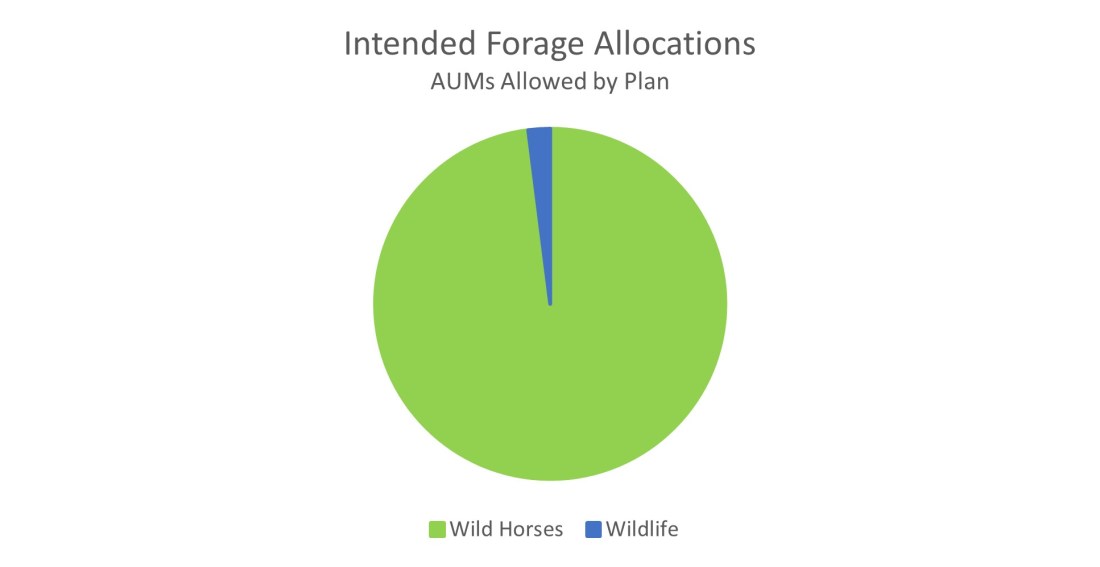
HR 9154 Intended Forage Assignments 10-23-22

This should be the goal of any new legislation, to be achieved by confining the ranchers to their base properties in a year-round off season.

There’s nothing natural about livestock grazing on public lands.  They’re not, and never were part of the North American ecosystem.

As for HR 9154, the advocates are extremely proud of the bill, according to the writer, and now they need the support of other members of Congress to protect these innocent animals (with a restricted-use pesticide).

RELATED: Whose Fingerprints on HR 9154?
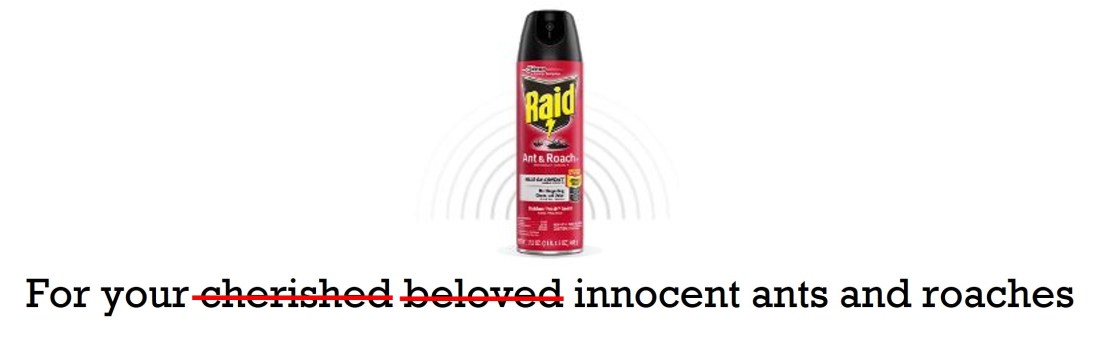
For Your Innocent Ants and Roaches 10-23-22

HR 9154 Prohibits Surgical, Not Chemical Sterilization

The text defines surgical sterilization as a procedure involving an incision and either the removal of reproductive organs, or the alteration thereof, that makes an animal permanently incapable of producing offspring.

“Nothing in this Act authorizes the Secretary to surgically sterilize any wild free-roaming horse or burro for the purposes of on-range population management.”

Nothing in the bill prohibits the chemical sterilization of said animals, as may occur with four to five consecutive years of treatment with the Montana Solution.

Why?

Because that is the plan!

The advocates backing the self-serving bill want the ranchers to succeed, not the horses.

RELATED: HR 9154 Text Released, Finally.

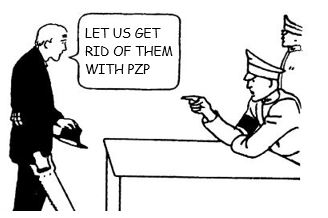
PZP Dangers 10-21-22

HR 9154 Text Released, Finally

The short title is the Wild Free-Roaming Horses and Burros Protection Act of 2022, originally marked HR 9154, written by special interests for special interests.

“In order to better manage and protect wild free-roaming horses and burros, and to achieve and maintain a thriving natural ecological balance, the Secretary shall implement the most humane, minimally invasive, scientifically proven fertility control methods, such as reversible immunocontraception vaccines, to achieve on-range management goals.”

“In carrying out this paragraph, the Secretary may contract with or enter into partnerships with nonprofit organizations (with preference given to veterans organizations and animal welfare or wild horse organizations trained or otherwise certified in the humane management or population control of wild horses and burros [such as the Campaign Against America’s Wild Horses and its surrogates]).”

Prediction verified.

RELATED: Bold Prediction for HR 9154.

Thriving Ecological Balance-3

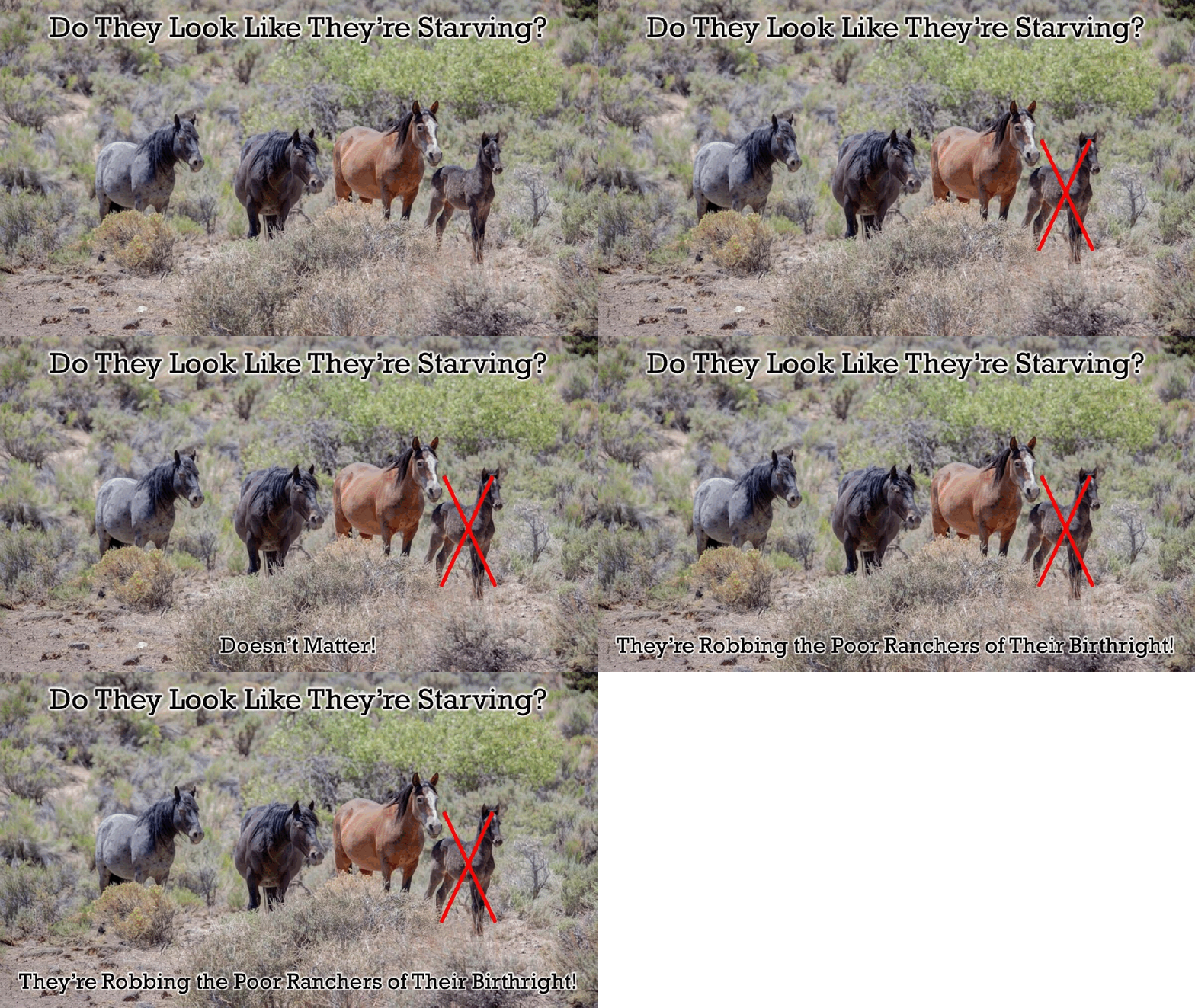
Foal-Free Friday, Predecessor to Horse-Free Friday

Advocates on the Virginia Range have been darting the mares for four years, starting in 2019.

With many now at risk of sterility, will the monster-in-charge at the Campaign Against America’s Wild Horses give the order to continue the assault?

Given their ability and willingness to get rid of wild horses with the Montana Solution, and their desire to impress the bureaucrats and ranchers, they will likely pursue their goal of herd destruction.

Next to the bureaucrats and ranchers, the advocates are the greatest threat to America’s wild horses, as noted earlier this week, not hunters, not shooters, not motorists, tourists, campers, hikers, drillers, loggers or miners.

RELATED: Foal-Free Friday, Fitting the Herds to the Resources Edition.

Mustangs Grazing on Virginia Range 10-15-22

Wild Horses Found Dead in Southeast Utah

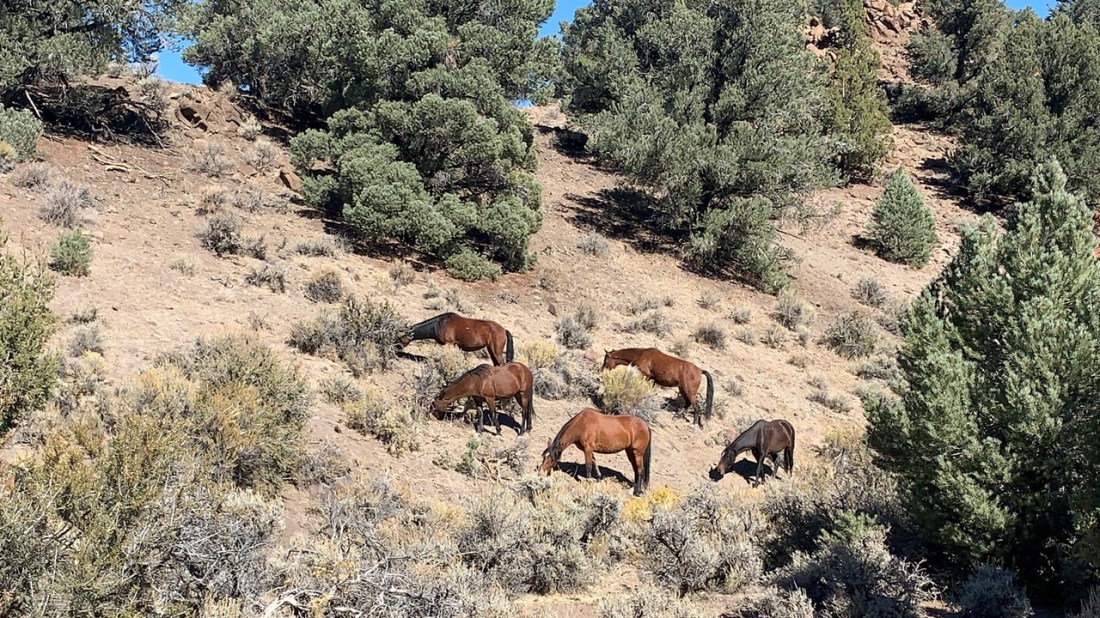
The remains of 16 animals have been discovered on an unnamed grazing allotment between the towns of Bluff and Montezuma Creek, according to a news release posted yesterday by Advocates for Wild Equines.

The horses may have crossed the San Juan River onto BLM land from the Navajo reservation or migrated there from canyons and forests to the west, where wild horses have been spotted.

The Western Watersheds map shows three allotments on the north side of the river between Bluff and Montezuma Creek.

Montezuma Creek Horse Shooting Map 10-20-22

The Allotment Master Report puts all three in the Improve category and the map indicates all AUMs have been assigned to cattle.

There are no HMAs or WHTs in this part of the state.

Many More Wild Horses Lost to Advocates Than Alpine Shooters

A report by KPNX News of Phoenix indicates 25 horses confirmed dead with 25 missing and presumed dead.

That’s fifty wild horses that should be in the forest but aren’t.

To the west, at the Salt River, the losses are higher but nobody complains.

The woman interviewed for the story, ringleader of the Salt River Wild Horse Darting Group, denies life to an estimated 80 wild horses every year with the Montana Solution.

That’s eighty wild horses that should be there but aren’t.  Every year.

To the north, on the Virginia Range, the losses are far greater.

Advocates with the Campaign Against America’s Wild Horses deny life to an estimated 600 wild horses every year with their safe, proven and reversible darting program.

That’s 600 wild horses that should be there but aren’t.  Every year.

The same thing is happening at Onaqui, Sand Wash Basin, McCullough Peaks, Pine Nut Mountains, Piceance, Little Book Cliffs, Spring Creek Basin and Pryor Mountains.

Who’s the greater threat to wild horses?  The advocates or the shooters?

RELATED: Alpine Reward Jumps to $35,000.

Bold Prediction for HR 9154

Ten days have passed since the bill was introduced but the text has not been published, so a little speculation is in order.

Consider this example from the North Lander Complex in Wyoming:

A. Forage allocations before HR 9154, neglecting wildlife:

  • Horses – 11.5%
  • Livestock – 88.5%

B. Forage allocations after HR 9154:

  • Horses – 11.5%
  • Livestock – 88.5%

Conclusion: The bill is of no use to America’s wild horses.

The problem is resource management.

RELATED: Status of HR 9154?

Allocating Resources 05-08-21

Alpine Reward Jumps to $35,000

A report by KPHO News of Phoenix does not indicate who pledged the additional funds.

Previously, the payout was $25,000.

The advocates are still upset that others are getting rid of the horses when they had offered earlier this year to do the same thing.

The incident must not interfere with the removal of wild horses by the Forest Service according to a representative of the Center for Biological Diversity, the group that instigated the roundup of the Jumping Mouse horses in March.

RELATED: Forest Service Confirms Facts as More Alpine Horses Found Dead.

UPDATE: Added video.

Mesa Verde Wild Horses Arrive at Mustang Camp

A report by KOB News of Albuquerque indicates they’re now in the hands of trainers who can’t accomplish anything without bags of alfalfa cubes over their shoulders.

The executive director said of one animal “The biggest problem with this horse is not getting it to come to you, it’s getting it to go away.”

Who could have predicted that?

RELATED: First Wild Horse Band Removed from Mesa Verde National Park.

UPDATE: Added video.

New YouTube Video Doing Well?

Less than two minutes long, it received 100 views in less than 12 hours.

Most videos on the channel don’t reach 50, ever.

New Video 100 Views 10-17-22

The film touches on the safe, proven and reversible fertility control program authorized by the Nevada Department of Agriculture and carried out by the Campaign Against America’s Wild Horses.

Despised by the bureaucrats, ranchers and advocates, Western Horse Watchers brings you the truth about wild horses, resource mismanagement and the Love Triangle on America’s public lands.

RELATED: Beneficiary of Virginia Range Darting Program Revealed.

Getting Rid of Wild Horses 03-18-22

Forest Service Confirms Facts as More Alpine Horses Found Dead

Wildlife activists say at least 25 horses have been killed inside the Apache-Sitgreaves National Forests, with 25 missing as of yesterday, according to a report published this morning by The Washington Post.

The article includes a photo of a dead foal provided by Alpine Wild Horse Advocates, an offshoot of the Salt River Wild Horse Darting Group, an affiliate of the Campaign Against America’s Wild Horses.

Simone Netherlands, ringleader, said the horses should be protected from killing and harassment but not from her and her army of nitwits: “They should be … managed through humane fertility control in the field, which is not only more humane but also more cost effective and more efficient in reducing the population in the long run.”

Protect Wild Horses from Advocates 08-29-21

Wildlife activists, indeed.

RELATED: Roadmap for Saving the Alpine Wild Horses?

Beneficiary of Virginia Range Darting Program Revealed

Trailcams have been picking up more cattle than horses in the last few months, mostly at night, but these images are unmistakable.

“As you start reducing the amount of available space and forage, then you need to manage the numbers to fit what’s available for the horses,” according to Tracy Wilson, ranching advocate and field marshal for the Campaign Against America’s Wild Horses.

Cattle on Virginia Range 08-18-22

Montgomery Pass Wild Horses Migrating Westward?

A report posted this morning by the San Francisco Chronicle indicates they’re taking up residence near Mono Lake, noting that in other western states, the herds have toppled pristine lands, commandeered forage for livestock and pose hazards to humans.

The story is no different here.

Their origin is thought to be the Montgomery Pass WHT/HMA.

The Western Watersheds map shows the arrangement.

Montgomery Pass Herd Migration 10-14-22

The photos show few if any foals.

The bad news is that advocates with the Campaign Against America’s Wild Horses are already eyeing the animals.

A representative stated “They have the same status as the bald eagle.  The fact that we would round them up with helicopters is just inhumane.”

The implication, of course, is that they’re ready to sink their claws into the herd and ruin it with the Montana Solution.

Foal-Free Friday, Fitting the Herds to the Resources Edition

In the September 15 story by KUNR Radio about the Virginia Range darting program, Tracy Wilson, Nevada State Director for the Campaign Against America’s Wild Horses, told the reporter that “As you start reducing the amount of available space and forage, then you need to manage the numbers to fit what’s available for the horses.”

The statement reflects their defeatist mentality and desire to please the bureaucrats and ranchers at the expense of America’s wild horses.

What if the government assigns 84% of their food on public lands to privately owned livestock?

“You need to manage the numbers to fit what’s available for the horses.”

They are failures and frauds.  Don’t give them a penny.

RELATED: Foal-Free Friday, Safe, Proven and Reversible Edition.

Virginia Range Darting Program 10-13-22