Refer to this letter to the editor of the Aspen Daily News, posted today.


Western Horse Watchers Association
Exposing the Hypocrisy, Lies and Incompetence of the Wild Horse Advocates
Refer to this letter to the editor of the Aspen Daily News, posted today.
Q.
Are you an advocate for wild horses or not? I can not tell from your website and some of the commentary.
A.
Hi L., the advocates are wrong about almost everything in the wild horse world, so, no, I don’t count myself among them.
You can see it in the news release for horses returned to Sand Wash Basin: Government gets rid of most of them and the advocates make sure they never come back, leaving the ranchers as the primary—if not principal—consumer of resources in the HMA.
The rate at which the new way of thinking can spread to other wild horse areas will be limited only by the number of kool-aid drinkers that can be recruited and trained on the use of darting rifles.

RELATED: Sand Wash Basin Aftermath.
The incident began on September 15, with 37 horses captured, no deaths and none shipped, according to figures at the gather page.
The capture and removals goals are 600 and the pre-gather population was 1,018.
RELATED: Jackson Mountains Emergency Roundup Starts Next Week.
An article posted yesterday by the Cody Enterprise says it’s up for a vote on September 20 but, as of today, an agenda for the meeting does not appear on their web site.
The plan documents the county’s position on wild horses and burros:
The chairman, taking a utilitarian approach, said the quality and health of local herds was much better under the purview of local ranchers and cowboys. “We had good stock, we don’t have that anymore.”
Horses deemed useful were adopted, the rest went to slaughter.
An advocate interviewed for the story sided with the ranchers, stressing the importance of—you guessed it—fertility control and proper management of the adoption program.
As for the allotments, just make sure the permitted amount of cows are on the land and they are off when they are supposed to be.
RELATED: Wild vs Feral Debate at Park County Commissioners Meeting.
UPDATE: Agenda for September 20 meeting now available.
Another 27 horses were captured today, according to the gather page, bringing the total to 215. One death was reported, with 214 shipped.
The capture goal was 189 and the removal goal was 173. Plans for returning horses to the HMA were not included.
Foals represented 22.8% of the horses captured. Of the adults, 47% were males and 53% were females.
Body condition scores were not provided.
The pre-gather population was thought to be 210. Genetic viability will certainly be a problem if only 16 horses are released.
RELATED: Four Mile Roundup Starts Next Week.
The incident began on September 8. Gather stats through September 14:
The death rate decreased from 1.9% to 1.2%.
Foals represented 21.2% of the horses gathered. Of the adults, 47.3% were male and 52.7% were female.
Body condition scores on Days 6 and 7 ranged from three to four.
Three HMAs are involved in the roundup.
Day 7 ended with 106 unaccounted-for animals.
Other statistics:
RELATED: Barren Valley Roundup Day 5.
The change follows a hit-and-run collision in July that killed the mare and injured her foal according to a story posted yesterday by Delmarva Now, an online news service of the Salisbury Daily Times.
Until 2016, when the darting program was stopped, the PZP zealots were getting rid of many more horses than motorists. This is true today wherever they ply their trade.
The herd continued to decline until this year, when it produced a 7.8% birth rate, slightly larger than the death rate.
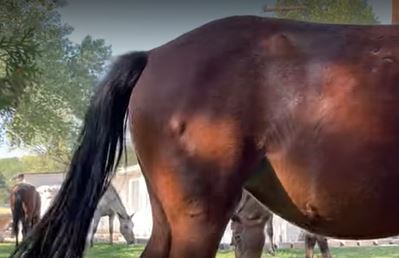
The advocates, undeterred by the facts, continue to push this snake oil on our wild horses, with benefits accruing to the public-lands ranchers.
The incident started today, with 188 horses captured, 187 shipped and one death, according to figures at the gather page.
The capture goal is 189 and the removal goal is 173, but the operation was not marked complete.
RELATED: Four Mile Roundup Starts Next Week.
It’s a classic example of wild horse mismanagement, with benefits accruing to the public-lands ranchers.
First, you assign four times more forage to livestock than the horses.
Next, you get rid of 80% of the horses.
Then, you return a few dozen, a token gesture, with mares inhibited by contraceptives.
The advocates, realizing that the best way to protect wild horses is to not have them, double down on their fertility control program.
If everything goes according to plan, there will be no more roundups—because there will be no new horses—and the ranchers will be the primary consumer of resources in the HMA for many years to come.
Brother Leo died unexpectedly three years ago and now some are wondering what will happen to the herd when Frank passes on, according to a story appearing in today’s edition of the Grand Forks Herald.
There are currently abut 300 head in his care, thought to be descendants of Sitting Bull’s horses.
Their predecessors were removed from Theodore Roosevelt National Park in the 1980s and 1990s. The horses you see in the park today are not related.
Insiders are looking for a benefactor to secure the horses’ future when the time comes.
Four horses were captured over a five-day period beginning on September 6, according to figures posted today at the gather page.
The method of capture is bait and the incident is not open to public observation.
The capture goal is 100 and the removal goal is 50.
Refer to this letter, appearing in today’s edition of the Steamboat Pilot.

The incident would remove over 3,500 wild horses from five HMAs in southwest Wyoming, as announced in July, but it’s not on the schedule published August 30.
The incident began on September 8. Gather stats through September 12:
Reports for Days 3, 4 and 5 were not published until today.
Three horses were put down on Day 2 due to pre-existing conditions. Another was euthanized on Day 5 for similar reasons, bringing the death rate to 1.9%.
Foals represented 20.9% of the horses gathered. Of the adults, 44.8% were male and 55.2% were female.
Body condition scores ranged from two to four.
Yesterday the trap was moved from Sand Springs to Sheepshead. Three HMAs are involved in the roundup.
Day 5 ended with 40 unaccounted-for animals.
Other statistics:
RELATED: Barren Valley Roundup Begins.
You might think from today’s episode of Mustang Monday that the horses found a place where they’re safe from the advocates, but stop the video at 4:27. What do you see?
There’s a war going on in those hills, led by the Campaign Against America’s Wild Horses and staffed by an army of kool-aid drinking volunteers.
All because some bureaucrat said there should be around 300 wild horses on the Virginia Range, ideally, and no more than 600.
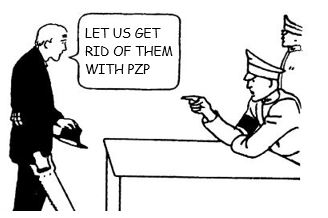
The lower end of that range corresponds to a stocking rate of one wild horse per thousand acres, identical to the target rate for horses on public lands. Imagine that.
The incident began on September 1. Gather stats through September 12:
No horses were caught on Days 10 and 12.
The death rate is 3.4%.
Foals represented 13.0% of the horses gathered. Of the adults, 45.0% were male and 55.0% were female.
Body condition scores were not reported.
Day 12 ended with seven unaccounted-for animals.
Other statistics:
RELATED: Stone Cabin Roundup Day 9.
At Steamboat Hot Springs with Olivia Gustin. Virginia Range in background.
Helicopter operations concluded today, according to the gather page, with 684 horses captured, 591 shipped, two deaths and 52 returned.
There were 39 unaccounted-for animals.
The capture goal was 783 and the removal goal was 733.
The pre-gather population in and around the HMA was thought to be 896.
RELATED: Sand Wash Roundup Announced.
She’s with the Sand Wash Darting Team, referred to in this audio segment by KDNK News as a wild horse protection group, along with the Campaign Against America’s Wild Horses and Return to Normal (Before WHB Act).
The BLM should have left more horses on the range, she argues, because this band of merry men can control their numbers with PZP.
Like the ranchers, the advocates want to get rid of the horses, but they want it done with safe and humane darting programs, not cruel and inhumane helicopter roundups.
These people are jumping through hoops to make sure the ranchers receive most of the resources in an area set aside for wild horses.
Why are you still giving them money?
RELATED: Sand Wash Basin Devoid of Life?

